
元宇宙

Search documents
逾300个文化产业项目亮相大湾区文投会对接资本市场
Zhong Guo Xin Wen Wang· 2025-11-26 17:11
香港文化创意产业发展基金会会长吴静怡表示,期待共建文化科技融合平台,推动AIGC(人工智能生成 内容)、元宇宙等前沿技术在影视、动漫等领域的创新应用,通过打造文化金融合作示范区,促进香港 风投资本与粤港澳大湾区文化项目高效对接。 澳门基金会行政委员会主席、澳门文化界联合总会会长吴志良建议,设立粤港澳文化产业投资信息共享 平台,打通三地项目资本对接渠道,推动跨界文化投资便利化,为具有成长潜力的文创企业提供全链条 金融服务。 据悉,过去的两届大湾区文投会,共有27个路演项目获得融资超过95亿元。(完) (文章来源:中国新闻网) 中新网广州11月26日电(记者程景伟)2025粤港澳大湾区文化产业投资大会(以下简称"大湾区文投会")26 日在广州开幕,超过300个文化产业项目与100多家金融投资机构参会对接。 会上发布"大湾区金文投"2025年度典型案例,共有10家文化企业、9个文化园区、24家投资机构入选。 同时,会上举行广东文化行业高质量数据集征集计划发布仪式。广州数据交易所与南方文化产权交易所 为此次征集的发起单位。 大湾区文投会举办8场投融资路演活动,覆盖文化出海、文化科技、文化智造、影视科技等多个赛道, 共 ...
专家献策、项目签约 重庆璧山低空经济产业推介会举行
Sou Hu Cai Jing· 2025-11-26 11:41
11月26日,作为2025中国产业转移发展对接活动(重庆)配套活动的璧山低空经济产业推介会在璧山区举 行,近200名行业专家及产业链企业、投资机构、金融机构代表参会,通过现场考察、产业推介、行业分 析、项目路演等方式,为璧山低空经济发展注入强劲动能。 璧山低空经济产业推介会现场。 当前,璧山区正高标准建设"梦界空间"数字经济产业园,重点布局低空经济、具身智能、人工智能、 AIGC、元宇宙、电竞动漫等核心赛道,引进中科曙光、奇安信、国科量子等行业企业,并聚集了新加坡 民用轻型直升机、中岳航空、华创智能等一批低空经济产业项目。 装备展示。 "璧山正布局建设低空无人航空器融合飞行训练场暨城市综合运营实验基地,将打造城市低空运行规范 的'策源地'、低空商业化应用的'验证场'、'低空+'新业态的'孵化器'、低空科技与文化的'普及台'。" 璧山区相关负责人说,璧山区还将打造公众科普与体验中心,联合产学研各方常态化发布《璧山低空城市 场景应用白皮书》,通过平台搭建、场景牵引与生态培育,探索形成"数字底座+空域管理+场景运营"的一 体化发展模式与可复制推广的"璧山实践"。 上游新闻记者 冯锐 项目签约。 推介会上,璧山现代服 ...


重大利好来了!国务院同意→
Jin Rong Shi Bao· 2025-11-26 11:20
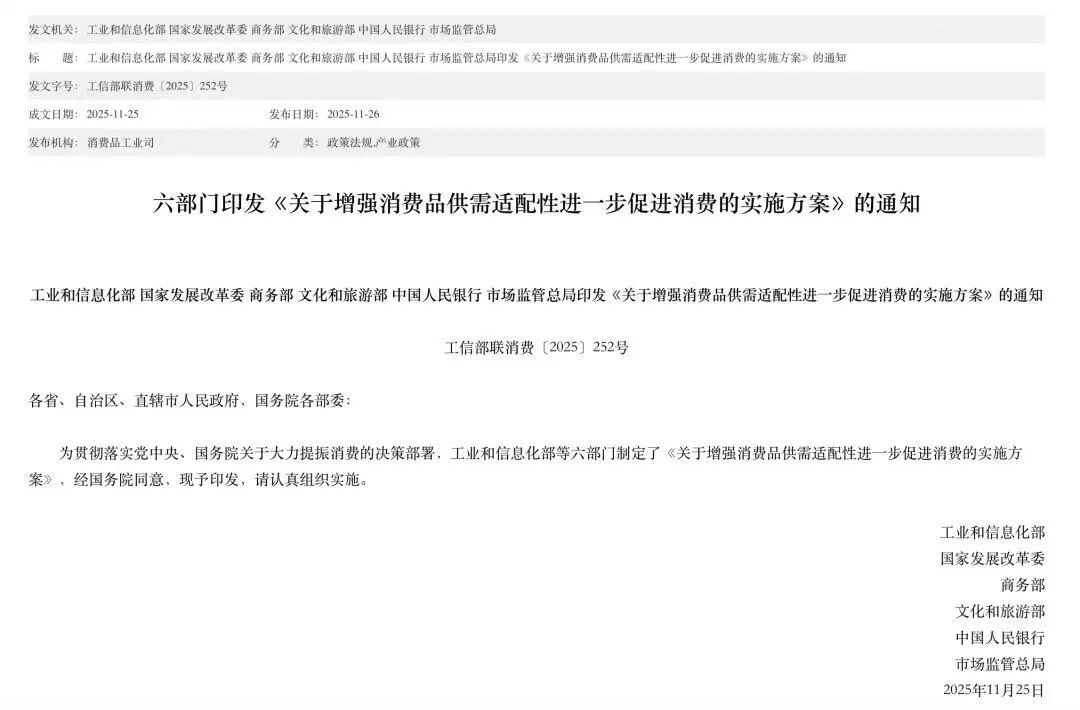
Core Viewpoint - The implementation plan aims to enhance the adaptability of consumer goods supply and demand, leading to consumption upgrades that drive industrial upgrades, thereby achieving a dynamic balance between supply and demand at a higher level [1][4]. Policy Framework - The plan is jointly issued by multiple government bodies, including the Ministry of Industry and Information Technology, the National Development and Reform Commission, and others, marking it as a significant policy document following the Fourth Plenary Session of the 20th Party Congress [1][2]. Goals and Targets - By 2027, the supply structure of consumer goods is expected to be significantly optimized, forming three trillion-level consumption sectors and ten hundred-billion-level consumption hotspots [4]. - By 2030, a high-quality development pattern characterized by positive interaction between supply and consumption is anticipated, with a steady increase in the contribution of consumption to economic growth [4]. Industry Focus Areas - The plan emphasizes the development of new fields and tracks, focusing on key industries such as smart connected vehicles, smart home products, consumer electronics, modern textiles, food, and green building materials [5]. - It encourages the integration of artificial intelligence across the entire consumer goods industry, promoting the development of AI-enabled products like household service robots and smart appliances [5]. Sports and Health Products - The plan aims to enhance the supply of leisure and sports products, targeting new demands from the sports economy, outdoor economy, and ice and snow economy [6]. - It supports the innovation and development of health products, including special dietary foods and high-end medical devices, while promoting the consumption of organic and geographical indication agricultural products [6]. Diverse Consumer Interests - The plan seeks to expand the supply of interest-based consumer products, including pet-related items, anime, and trendy products, while also promoting low-altitude tourism and private flying [7]. - It encourages the development of local intellectual property and innovative design in cultural products, as well as the transformation of traditional retail spaces to include trendy stores [7]. Customization and Experience - The plan emphasizes the need for precise matching of consumer needs, particularly in the baby and children's product sector, and encourages the development of high-end fashion brands and personalized services [8]. - It promotes the creation of immersive consumer experiences through the use of digital technologies, including virtual reality and the metaverse [10]. Financial Support and Services - The plan highlights the importance of financial support for the consumer goods industry, including policies for equipment upgrades and trade-in programs, as well as enhancing the adaptability and convenience of consumer financial services [11].
中国西部低空经济产业联盟在重庆璧山成立
Zhong Guo Xin Wen Wang· 2025-11-26 07:59
11月26日,璧山低空经济产业推介会在重庆璧山举行。会上,北斗伏羲信息技术有限公司联合11家产业 链企业、行业机构成立中国西部低空经济产业联盟,赋能区域低空经济高质量发展。 当前,重庆璧山正高标准建设"梦界空间"数字经济产业园,重点布局低空经济、具身智能、人工智能、 AIGC、元宇宙、电竞动漫等核心赛道,并聚集了新加坡民用轻型直升机、中岳航空、华创智能等一大 批低空经济产业项目。 据悉,璧山"梦界空间"数字经济产业园已建成物流配送、巡检应急、消防救援等十大示范应用场景,与 会嘉宾实地探访低空无人航空器融合飞行场景。 活动期间,与会专家、企业代表纷纷围绕低空经济空域管理、技术创新、场景拓展、产业链协同等内容 展开深度研讨,为璧山低空经济高质量发展建言献策,助力璧山成为西南地区低空经济创新高地。 在低空红绿灯管控体系指挥下,多种功能型无人机在同一空域中自主运行、智能避让、协同作业:巡检 机持续巡航监测,应急机保持待命状态,物流机完成配送返航,消防机悬停待命……通过低空红绿灯管 控体系对空域资源的智能调度,每架无人机的位置、速度、任务优先级都被实时感知、动态优化,确保 安全间隔与高效通行。 在此次推介会上,璧山现代 ...
扎克伯格批苹果首款MR头显:社交属性差,跟Meta不一样
Xin Lang Ke Ji· 2025-11-26 07:31
扎克伯格还说,Meta计划将生成式AI嵌入更多产品,作为计划的一部分,Meta会在App中引入AI代理。 Meta CEO扎克伯格最近谈到了苹果新发布的Vision Pro头盔,批评其社交属性差,几乎都是一个人在使 用。 扎克伯格称苹果的"愿景和价值"与Meta不同,他表示:"对于元宇宙和存在,我们的愿景从根本上讲是 关于社会和社交的,关于人与人的互动的,是想以新颖神奇的方式让人获得更亲密的感受。反观苹果, 看它的演示,几乎都是一个人独自坐在沙发上。" 当地时间8日,Meta召开全员大会,扎克伯格提及公司正在开发的各种AI技术,当中有一项技术允许用 户通过输入提示文本编辑照片。 扎克伯格声称Meta的AI研发直接与元宇宙关联,但之前有报道称Meta对元宇宙有退缩之意。 ...


刚刚,重磅利好来了!工信部、央行等联合发布!
天天基金网· 2025-11-26 07:30
上天天基金APP搜索777注册即可领500元券包,优选基金10元起投!限量发放!先到先得! 刚刚,消费领域迎来利好! 11 月 26 日,工业和信息化部、国家发展改革委、商务部、文化和旅游部、中国人民银行、 市场监管总局印发《关于增强消费品供需适配性进一步促进消费的实施方案》(以下简称 《方案》)。 《方案》提出,到 2027 年,消费品供给结构明显优化,形成 3 个万亿级消费领域和 10 个 千亿级消费热点,打造一批富有文化内涵、享誉全球的高品质消费品;到 2030 年,供给与 消费良性互动、相互促进的高质量发展格局基本形成,消费对经济增长的贡献率稳步提升。 五是优化环境,营造良好发展环境,包括强化财政金融支持、举办特色活动、维护市场秩序 等。 具体而言,《方案》提到以下重点内容: ● 聚焦智能网联新能源汽车、智能家居、消费电子、现代纺织、食品、绿色建材等重点行 业,开展双百典型创新应用专项活动,打造百个标志性产品、百家创新企业和一批可体验可 推广的新产品首用场景样板。 ● 有序发展直播电商、即时零售、策展零售、循环电商等新业态。鼓励平台企业依法合规利 用人工智能技术挖掘用户需求,匹配推送产品和服务。支持平 ...




刚刚,重磅利好!直线封板!
Zhong Guo Ji Jin Bao· 2025-11-26 07:17
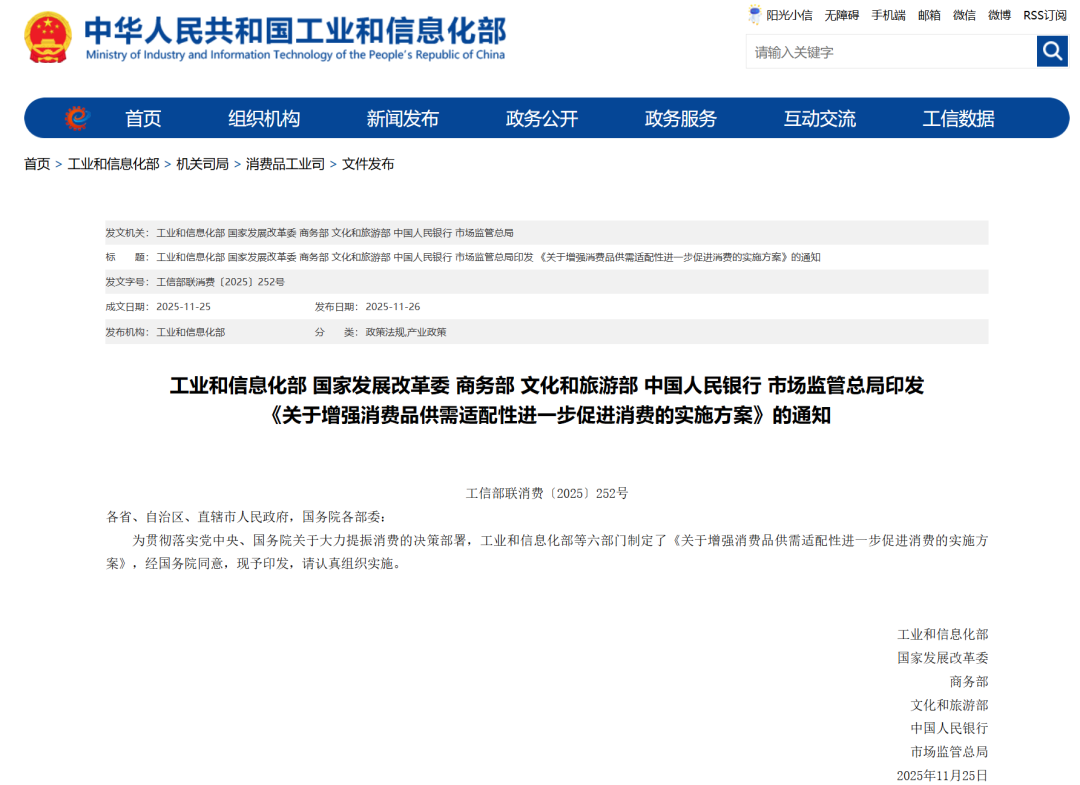
【导读】六部门联合印发《关于增强消费品供需适配性进一步促进消费的实施方案》 刚刚,消费领域迎来利好! 11月26日,工业和信息化部、国家发展改革委、商务部、文化和旅游部、中国人民银行、市场监管总局印发《关于增强消费品供需适配性进一步促进消费 的实施方案》(以下简称《方案》)。 | | 中华人民共和国工业和信息化部 | | | | 阳光小信 无障碍 手机端 邮箱 微信 微博 | RSS订阅 | | --- | --- | --- | --- | --- | --- | --- | | | Ministry of Industry and Information Technology of the People's Republic of China | | | | 请输入关键字 | Q | | | ల్ల 首页 组织机构 | 新闻发布 | 政务公开 | 政务服务 | 互动交流 工信数据 | | | | 首页 > 工业和信息化部 > 机关司局 > 消费品工业司 > 文件发布 | | | | | | | | 发文机关: 工业和信息化部 国家发展改革委 商务部 文化和旅游部 中国人民银行 市场监管总局 | | | | ...
刚刚,重磅利好!直线封板!
中国基金报· 2025-11-26 07:08
Core Viewpoint - The article discusses a new implementation plan aimed at enhancing the adaptability of supply and demand in consumer goods, promoting consumption, and optimizing the supply structure by 2027 and 2030 [5][20]. Group 1: Implementation Goals - By 2027, the supply structure of consumer goods is expected to be significantly optimized, forming three trillion-level consumption sectors and ten hundred-billion-level consumption hotspots [5][20]. - By 2030, a high-quality development pattern characterized by positive interaction between supply and consumption is anticipated, with a steady increase in consumption's contribution to economic growth [5][20]. Group 2: Key Tasks - The plan outlines five main areas with 19 key tasks, including expanding new technologies and innovative applications, enhancing the supply of unique and new products, and accurately matching different demographic needs [6][7][8][9]. - Specific focus areas include smart connected vehicles, smart home products, consumer electronics, and green building materials, with initiatives to create flagship products and innovative enterprises [10][21]. Group 3: Market Segmentation - The plan emphasizes the need to diversify product offerings for various demographics, including enhancing supplies for children, students, and the elderly [7][27][28]. Group 4: New Consumption Scenarios - The initiative encourages the development of new consumption scenarios and business models, such as live e-commerce and shared consumption, to create immersive shopping experiences [8][30][31]. Group 5: Supportive Environment - The plan calls for strengthening financial support, organizing special events, and maintaining market order to foster a conducive environment for consumption growth [9][31]. Group 6: Market Reaction - Following the announcement of the plan, stocks related to the consumer sector experienced a surge, with several companies reaching their daily trading limits [12].

六部门:鼓励平台企业依法合规利用人工智能技术挖掘用户需求
Sou Hu Cai Jing· 2025-11-26 06:58
Core Viewpoint - The implementation plan aims to enhance the adaptability of supply and demand for consumer goods, with a target to optimize the supply structure by 2027 and establish a high-quality development pattern by 2030, contributing steadily to economic growth [1][12]. Group 1: Key Tasks - The plan outlines 5 main areas with 19 key tasks, including expanding new technologies and innovative applications, enhancing the supply of unique and new products, and accurately matching different consumer needs [2][3]. - It emphasizes the development of new consumption scenarios and business models, such as live e-commerce and instant retail, while encouraging the use of advanced technologies like AI and virtual reality [3][18]. - The plan also focuses on creating a favorable environment for development, including financial support and maintaining market order [2][19]. Group 2: Consumer Goods Supply - By 2027, the goal is to form three trillion-level consumption fields and ten hundred-billion-level consumption hotspots, creating high-quality consumer goods with cultural significance [10][12]. - The plan aims to expand the supply of diverse interest-based consumer products, including pet-related items, anime, and trendy clothing, while also promoting low-altitude tourism and automotive aftermarket consumption [4][17]. - There is a specific focus on enhancing the supply of quality student products and age-appropriate products for the elderly, including innovative educational tools and health monitoring devices [5][17]. Group 3: Market Segmentation - The plan seeks to enrich the supply of products for different demographics, such as children's products, quality student supplies, and fashionable items, while optimizing products for the elderly [2][17]. - It encourages the development of personalized and modular learning kits for students, as well as comfortable and functional products for the elderly [5][17]. Group 4: Innovation and Technology - The plan promotes the application of new technologies in consumer goods, focusing on sectors like smart connected vehicles, smart home devices, and green building materials [3][4]. - It aims to establish a series of pilot projects showcasing innovative products and companies, enhancing the overall consumer experience [3][14].

六部门:增强消费品供需适配性 进一步促进消费
智通财经网· 2025-11-26 06:50
Core Viewpoint - The implementation plan aims to enhance the adaptability of supply and demand for consumer goods, promoting consumption through various new business models and technologies [1][4]. Group 1: Overall Requirements - The plan is guided by Xi Jinping's thoughts and aims to achieve a dynamic balance between supply and demand, with a target of optimizing the supply structure of consumer goods by 2027 and establishing a high-quality development pattern by 2030 [5]. Group 2: Accelerating Innovation in New Technologies and Models - Focus on key industries such as smart connected vehicles, smart home, and green building materials, with initiatives to create flagship products and innovative enterprises [7]. - Promote flexible and customized manufacturing models, establishing a digital system that connects user demand with intelligent design and flexible production [7]. - Encourage the integration of artificial intelligence across the consumer goods sector, supporting the development of smart home products and digital art [8]. Group 3: Expanding Supply of Unique and New Products - Promote green products and set standards for energy efficiency and emissions, encouraging low-carbon consumption in various sectors [9]. - Support the upgrade of consumer goods in rural areas, enhancing infrastructure and promoting high-quality products [9]. - Develop leisure and sports products to meet new demands from events and outdoor activities [10]. Group 4: Precise Matching of Different Consumer Needs - Enhance the supply of baby and children's products, focusing on safety and quality [12]. - Improve the availability of quality student supplies, integrating traditional and smart products [12]. - Expand the supply of fashionable products, fostering independent designers and high-end brands [12]. Group 5: Cultivating New Consumption Scenarios and Business Models - Support the establishment of flagship stores and new concept stores, enhancing core business districts [14]. - Encourage the development of platform consumption models such as live e-commerce and instant retail, utilizing AI and other technologies [14]. - Promote shared consumption models in public spaces, ensuring quality and safety [14]. Group 6: Creating a Favorable Development Environment - Strengthen financial support for the consumer goods industry, enhancing the adaptability of financial services [15]. - Organize promotional activities to highlight quality consumer goods and brands [15]. - Maintain market order by addressing issues like local protectionism and ensuring product safety standards [16].