能源安全

Search documents
各地LNG接收站储气能力密集提升 筑牢沿海天然气储气调峰“生命线”
Zhong Guo Chan Ye Jing Ji Xin Xi Wang· 2025-08-26 00:15
Core Insights - The article highlights the significant expansion and modernization of LNG (liquefied natural gas) receiving stations in China, emphasizing their role in enhancing energy security and meeting growing demand [1][2][3][4][5] Group 1: Infrastructure Expansion - The "Alrahbah" vessel recently completed unloading at CNOOC's Meizhou Bay "Green Energy Port," marking the 800th LNG carrier since the Fujian LNG receiving station began operations in 2008, with a total of 49 million tons of LNG imported over 17 years [1] - Coastal LNG infrastructure is undergoing continuous expansion, with projects like the Guangdong Province's approval for three new 220,000 cubic meter storage tanks at the Yue Dong LNG receiving station, which will increase its annual processing capacity to 6 million tons [2] - The New Ao Zhoushan LNG receiving station has officially increased its annual unloading capacity to 10 million tons, with the addition of four new 220,000 cubic meter storage tanks [2] Group 2: Technological Innovations - The enhancement of supply capacity at coastal LNG receiving stations is driven by technological innovations, such as the development of the world's largest 270,000 cubic meter LNG storage tanks at CNOOC's Jiangsu Binhai station, which are crucial for national energy security and achieving carbon neutrality goals [3] - The application of innovative construction techniques, such as the pressure lifting technology for tank domes at the New Ao Zhoushan project, exemplifies advancements in safety and efficiency [3][4] Group 3: Regional Coordination and Strategic Development - The expansion projects reflect a clear development direction towards larger, more integrated, and smarter LNG facilities, with regional collaboration strengthening the energy supply network across China [5] - The average utilization rates of LNG receiving stations in China are considered reasonable compared to international standards, indicating that there is no immediate risk of overcapacity in the sector [5]

中国神华:九江二期3号机组通过168小时试运行并移交商业运营
Mei Ri Jing Ji Xin Wen· 2025-08-25 10:36
每经AI快讯,8月25日,中国神华(601088)公告称,全资子公司国能神华九江发电有限责任公司二期 扩建工程项目3号机组顺利通过168小时连续满负荷试运行,已移交商业运营。该机组位于江西省九江 市,采用多项先进技术和设备,设计供电煤耗处于国内领先水平。目前4号机组建设工作正在稳步推 进,计划近期投运。项目全部投运后将为江西省及华中地区能源安全提供保障,并拉动区域社会经济发 展。 ...

特朗普出狠招!印度购俄油要遭重税,美印关系亮红灯珠宝业撑不住
Sou Hu Cai Jing· 2025-08-25 08:24
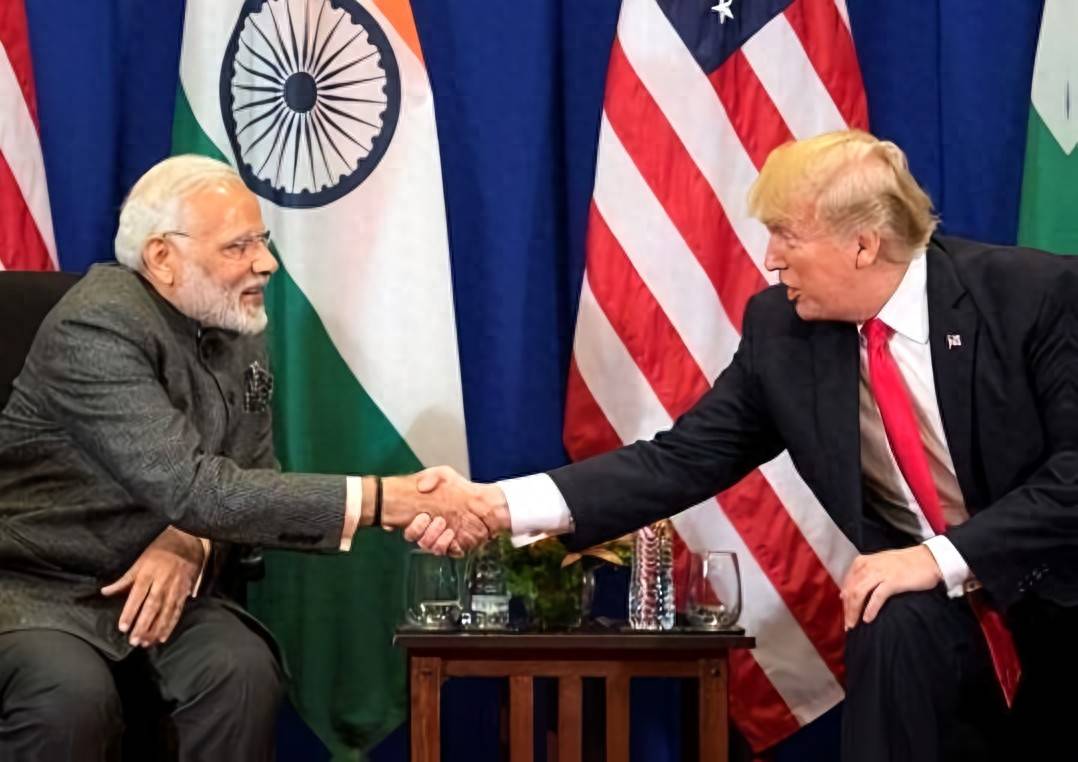
Group 1 - The Trump administration has publicly stated that "the path to peace in the Russia-Ukraine war must go through India," indicating a shift in U.S. foreign policy towards India [1] - The U.S. plans to impose a 50% tariff on Indian goods due to India's continued import of Russian oil, escalating trade tensions between the U.S. and India [3][4] - The U.S. government's actions are seen as a response to perceived threats to national security and economic interests, with the tariffs being part of a broader strategy to pressure India [3][4] Group 2 - India's response to the U.S. tariffs has been one of strong criticism, emphasizing the need to protect its national interests and energy security [3][4] - The imposition of a 50% tariff is expected to severely impact several labor-intensive industries in India, including textiles, seafood, jewelry, and auto parts [6] - The ongoing geopolitical tensions and trade disputes highlight the complexities of U.S.-India relations, with potential long-term implications for both countries [6][8]

一月三次!乌克兰再炸关键输油管!斯洛伐克证实:已暂停能源转账
Sou Hu Cai Jing· 2025-08-25 07:31
Core Viewpoint - The recent attacks on the Druzhba oil pipeline have raised significant concerns regarding energy security in Central and Eastern Europe, particularly for countries heavily reliant on Russian energy supplies [1][3][5]. Group 1: Pipeline Attacks and Energy Supply Disruptions - The Druzhba pipeline has faced three supply interruptions in August alone due to attacks, highlighting the ongoing threat to energy infrastructure amid the Russia-Ukraine conflict [3]. - The pipeline, which spans approximately 4,000 kilometers, is crucial for oil supply to several Central and Eastern European countries, including Hungary and Slovakia, making them particularly vulnerable to disruptions [1][3]. - The attacks have prompted Slovakia to initiate urgent investigations into the damages and to suspend certain energy transfer processes [3]. Group 2: Geopolitical Implications and Responses - The conflict has turned energy infrastructure into a battleground, with both Russia and Ukraine accusing each other of "energy terrorism" and retaliatory strikes [5]. - Hungary's position remains neutral, opposing sanctions against Russia and emphasizing the detrimental impact of such measures on its own energy security [5][7]. - The differing stances of Hungary and Slovakia reflect the complex geopolitical landscape in Central and Eastern Europe, where energy dependence on Russia complicates alignment with broader EU policies supporting Ukraine [5][7]. Group 3: Broader Energy Crisis and Calls for Dialogue - The ongoing attacks on energy infrastructure exacerbate the energy crisis in Europe and contribute to regional instability, with international consensus urging restraint and a return to dialogue [7]. - The need for political solutions to ensure energy security and long-term stability in the region is emphasized as a common goal among European nations and the international community [7].

老天爷赏饭吃!中国又一大型页岩气田诞生,能源格局要变天了
Sou Hu Cai Jing· 2025-08-23 08:52
Core Viewpoint - China is enhancing its domestic energy supply capabilities through significant technological advancements in unconventional oil and gas resources, particularly in shale gas exploration and development [3][11]. Group 1: Shale Gas Development - The recent discovery of the Hongxing shale gas field, with proven reserves of 1650.25 billion cubic meters, marks China's first large-scale shale gas field found in the Permian strata [3][5]. - The geological conditions of the Hongxing gas field present world-class technical challenges, with gas layers buried between 3300 meters and 5500 meters and very thin gas reservoirs [5][7]. - Chinese engineering teams have developed innovative technologies, such as the "thin-layer rich carbon shale gas enrichment theory" and advanced fracturing techniques, which have significantly increased single well test production from 89,000 cubic meters to 323,500 cubic meters per day [9][11]. Group 2: Historical Context and Achievements - The Fuling shale gas field, discovered in late 2012, was a pivotal point for China's shale gas commercialization, achieving an annual production capacity of 10 billion cubic meters by 2017 [13]. - Following Fuling, the Weirong shale gas field became China's first deep shale gas field with proven reserves exceeding 100 billion cubic meters [15]. - Additional discoveries, such as the Qijiang and Yongchuan shale gas fields, have further solidified China's shale gas development foundation [19]. Group 3: Energy Supply Strategy - China has strategically increased imports of Russian Urals crude oil, nearly doubling from approximately 40,000 barrels per day to about 75,000 barrels per day since August [21][24]. - This adjustment reflects China's mature strategy in maintaining energy security amidst international market uncertainties, supported by long-term partnerships with major energy exporters like Saudi Arabia [23]. - China's stance in international energy trade emphasizes fairness and stability, rejecting external pressures and unilateral interventions, particularly in its interactions with the U.S. [26][32].
俄“友谊”输油管道再遭袭 对匈牙利原油供应中断
Xin Hua Wang· 2025-08-22 11:12
Core Points - The Hungarian Minister of Foreign Affairs and Trade, Peter Szijjarto, announced that the "Friendship" oil pipeline from Russia to Hungary has been interrupted again due to an attack near the Russian-Belarusian border, marking the third such incident in a short period [1] - Szijjarto described the attack as a threat to Hungary's energy security and an attempt to drag the country into war, emphasizing Hungary's commitment to supporting peace efforts while defending national interests [1] - The Ukrainian drone unit commander, Robert Bratiuk, reported that their forces attacked the Unetcha oil pumping station near the Russian-Belarusian border, resulting in an explosion and fire [1] - The Unetcha pumping station had previously been targeted by Ukrainian drone strikes on the 13th of this month, indicating a pattern of attacks on energy infrastructure [1] - The "Friendship" pipeline is a major oil transport system from Russia to Central and Eastern Europe, with its northern line running through Belarus to Poland and Germany, and the southern line through Ukraine to the Czech Republic, Slovakia, and Hungary [1]
山东墨龙(00568) - 海外监管公告
2025-08-22 10:41
香 港 交 易 及 結 算 所 有 限 公 司 及 香 港 聯 合 交 易 所 有 限 公 司 對 本 公 告 的 內 容 概 不 負 責 , 對 其 準 確 性 或 完 整 性 亦 不 發 表 任 何 聲 明 , 並 表 明 不 會 就 本 公 告 全 部 或 任 何 部 分 內 容 或 因 依 賴 該 等 內 容 而 引 致 的 任 何 損 失 承 擔 任 何 責 任 。 * ( 於 中 華 人 民 共 和 國 註 冊 成 立 的 中 外 合 資 股 份 有 限 公 司 ) ( 股 份 代 號 : 5 6 8) 海外監管公告 本 公 告 乃 根 據 香 港 聯 合 交 易 所 有 限 公 司 證 券 上 市 規 則 第 13. 10B 條 而 作 出 。 茲 載 列 山 東 墨 龍 石 油 機 械 股 份 有 限 公 司 ( 「 本 公 司 」 ) 在 中 國 報 章 刊 登 或 在 深 圳 證 券 交 易 所 網 站 發 佈 的 日 期 為 二 零 二 五 年 八 月 二 十 三 日 的 《 2025 年 半 年 度 報 告 摘 要 》《 2025 年 半 年 度 報 告 》《 2025 年 半 年 度 ...
湖北首个超千亿方大气田诞生
Xin Lang Cai Jing· 2025-08-22 05:04
8月21日从中国石化新闻办获悉,江汉油田红星页岩气田1650.25亿立方米页岩气探明储量顺利通过自然 资源部审定,标志着湖北首个超千亿立方米大气田诞生,这也是我国首个二叠系大型页岩气田。利川市 作为该气田的核心区域,为保障国家能源安全再添湖北力量。 ...
普京释放商业信号,莫迪不敢出手,中国趁势拿下千万桶折扣俄油?
Sou Hu Cai Jing· 2025-08-22 00:16
Core Insights - The article discusses the geopolitical and economic dynamics of a "three-nation shadow war" involving China, India, and Russia, highlighting China's significant role in the evolving global energy landscape [1][6]. Group 1: India's Oil Procurement Strategy - India has reduced its oil imports from Russia due to concerns over potential punitive tariffs from the U.S., which could reach up to 50%, significantly increasing costs for Indian exporters [1][4]. - As a result, Indian refineries are seeking alternative high-priced oil sources from the U.S., Brazil, and the Middle East, even if it means paying an additional $8 per barrel [1][4]. Group 2: Russia's Response to India's Withdrawal - With India being a major buyer of Russian oil, its exit has created a need for Russia to find new markets, leading to attractive offers for Chinese refiners, such as a $1 per barrel discount on Urals crude for October delivery [1][3]. - Russia's oil exports are heavily reliant on China, with 34% of its export revenue now depending on Chinese purchases following India's withdrawal [4][6]. Group 3: China's Strategic Moves - Chinese refiners quickly secured 15 batches of Russian oil, totaling around 10 million barrels, capitalizing on the lower prices, which could save them tens of millions of dollars [3][4]. - The Chinese refining sector is well-equipped to process high-sulfur Urals crude, and this procurement aligns with China's strategy to enhance energy security while reducing dependence on other oil sources [5][6]. Group 4: The Broader Implications - The shift in oil procurement dynamics has strengthened the energy ties between China and Russia, with predictions indicating a 43% increase in Russian oil exports to China by Q1 2025 [8]. - The article suggests that the geopolitical maneuvering has inadvertently benefited Russia, pushing it closer to China while complicating India's energy strategy amid U.S. pressures [6][8].
2270亿桶油田争夺战!美技术PK中国命脉,巴铁债务困局破局?
Sou Hu Cai Jing· 2025-08-21 11:06
Core Viewpoint - The announcement by former U.S. President Donald Trump to personally participate in the development of a super oil field in Pakistan is not merely an energy business deal but a significant geopolitical maneuver that could reshape regional dynamics and influence global power structures [1]. Group 1: Pakistan's Economic Situation - Pakistan's economy is under severe pressure, with foreign exchange reserves dropping below $10 billion, barely covering 30 days of import needs, and external debt reaching $1.3 trillion, including approximately $300 billion owed to China [3]. - The discovery of a giant oil field in southwestern Pakistan, estimated to contain 227 billion barrels of oil and 16 trillion cubic meters of natural gas, positions Pakistan as the fourth-largest oil reserve holder globally, surpassing Iran [3][5]. - The oil field primarily consists of shale oil, which is challenging to extract due to high technical requirements, necessitating advanced technology that Pakistan currently lacks [5]. Group 2: U.S.-Pakistan Cooperation - Pakistan's decision to collaborate with the U.S. for oil field development is driven by the need for advanced technology and immediate cash flow, as U.S. energy capital offers billions in cash, payable in Pakistani rupees [5][6]. - Trump's involvement aims to leverage U.S. technological advantages in the South Asian energy landscape, with potential implications for India's energy security, as Pakistan's oil could be sold to India, creating a strategic leverage point [7]. Group 3: Infrastructure Challenges - The large-scale development of shale oil requires significant investment in infrastructure, including power, pipelines, and ports, which could cost several billion dollars, posing a challenge given Pakistan's current infrastructure limitations [9]. - Many critical components of Pakistan's infrastructure, particularly the electricity grid, have been developed with Chinese involvement, which may complicate U.S. efforts to efficiently extract and transport oil [9]. Group 4: China's Strategic Position - China maintains a strategic advantage in the energy transport sector, as the key port for oil exports, Gwadar Port, is operated by Chinese enterprises, which could impact the efficiency of U.S. oil exports [10]. - Pakistan's defense needs are increasingly tied to its energy development, with reports of Pakistan planning to purchase advanced fighter jets from China, indicating a deeper strategic partnership [12]. - A "oil-for-debt" arrangement is being pursued, where a portion of the oil produced will be used to repay debts to China, ensuring a stable supply of oil for China while alleviating Pakistan's immediate cash flow issues [14]. Group 5: Long-term Implications - China's approach includes transferring shale oil extraction technology to Pakistan and establishing training centers, fostering long-term energy development capabilities in Pakistan [16]. - The ongoing competition for the oil field represents a complex geopolitical struggle, with the U.S. holding technological advantages but facing infrastructure constraints, while China leverages its existing investments and strategic relationships to secure its interests [16].