
大数据

Search documents
一次收受2000枚以太币,市值最高超6000万元!官方披露姚前案细节:赃款藏在U盘里……
Xin Lang Cai Jing· 2026-01-14 14:08
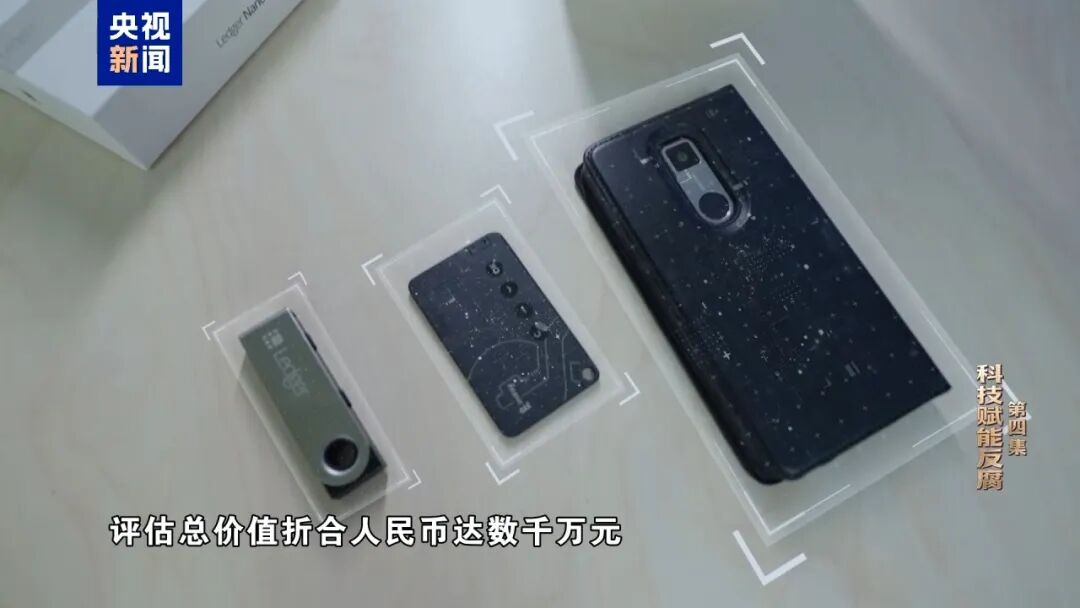
Group 1 - The core issue revolves around the case of Yao Qian, former director of the Technology Supervision Department of the China Securities Regulatory Commission (CSRC), who was investigated for corruption involving virtual currencies [1][7][32] - The investigation revealed that Yao Qian used hardware wallets to store virtual currencies, which were valued at several million yuan, as a means to accept bribes [3][28] - The case highlights the challenges of regulating new forms of corruption, particularly those involving virtual currencies, which are difficult to trace and monitor due to their decentralized nature [9][34] Group 2 - The investigative team utilized big data and information technology to uncover Yao Qian's illicit activities, including the discovery of "mask accounts" that he controlled, which were used to facilitate large transactions [12][37] - A significant finding was a transfer of 10 million yuan linked to a virtual currency trading account, which was traced back to Yao Qian's "mask account" and subsequently used for purchasing a villa [39][41] - The investigation also identified a key intermediary, Jiang Guoqing, who facilitated Yao Qian's corrupt transactions and was involved in the transfer of virtual currencies [16][43] Group 3 - The case of Yao Qian serves as a precedent for the anti-corruption efforts involving virtual currencies, demonstrating the importance of adapting regulatory frameworks to address new forms of corruption [21][48] - The use of blockchain technology allowed investigators to trace the flow of virtual currencies, providing a clear record of transactions that ultimately led to Yao Qian's admission of guilt [46][48] - The ongoing evolution of information technology, including artificial intelligence and big data, is crucial for enhancing the effectiveness of anti-corruption measures in the public sector [49][51]

中海油原总经理,在停车场被行贿者威胁退钱!事发后一度崩溃,想在阁楼里烧现金
Xin Lang Cai Jing· 2026-01-14 13:16
Core Viewpoint - The article discusses the use of technology, particularly big data and artificial intelligence, in enhancing anti-corruption efforts within China's disciplinary inspection and supervision system, highlighting the case of Li Yong, a former executive at China National Offshore Oil Corporation (CNOOC), as a significant example of cross-border corruption [1][56]. Group 1: Technology in Anti-Corruption - The disciplinary inspection and supervision agencies are accelerating the construction of a digital system to enhance anti-corruption efforts using big data and AI [1][56]. - Recent efforts have focused on addressing cross-border corruption, which has become a challenge for authorities as corrupt individuals attempt to evade investigation by moving illicit funds abroad [1][56]. - The application of technology has significantly improved the efficiency and effectiveness of supervision and law enforcement in combating corruption [1][56]. Group 2: Li Yong's Case - Li Yong, former Deputy Secretary of the Party Committee and General Manager of CNOOC, is under investigation for serious corruption issues, particularly in overseas projects [5][60]. - Over 83% of the illicit funds in Li Yong's case originated from abroad, with investigations spanning 10 countries and regions [7][62]. - Li Yong's long tenure in the oil sector allowed him to disguise corrupt practices within seemingly legitimate project collaborations, making it difficult to trace the evidence of his wrongdoing [9][64]. Group 3: Investigation Techniques - The investigation into Li Yong was initiated based on various clues and suspicions regarding his involvement in corruption, leading to a data-driven approach for evidence gathering [11][66]. - The use of big data platforms allowed investigators to analyze Li Yong's business relationships and identify key individuals involved in corrupt activities [14][69]. - A businessman named Ren Fengde, who had close ties with Li Yong, was found to have received suspicious contracts, indicating a network of corruption [14][69]. Group 4: Corruption Mechanisms - Li Yong utilized his position to facilitate corrupt transactions, often using intermediaries to obscure the flow of illicit funds [23][78]. - He arranged for offshore accounts to hide the proceeds of corruption, complicating the tracing of these funds [31][86]. - The investigation successfully utilized international cooperation to gather evidence, demonstrating the effectiveness of cross-border legal collaboration in anti-corruption efforts [33][88]. Group 5: Consequences and Sentencing - Following the investigation, Li Yong was detained and later sentenced to 14 years in prison for bribery, along with a fine of 3 million RMB [53][108]. - The case serves as a cautionary tale about the consequences of corruption, highlighting the irreversible damage to personal and professional reputations [55][110].


扬州市广陵区十届人大五次会议召开:今年重点抓好八方面工作,“十五五”聚焦“双城双区”打造“五大高地”
Yang Zi Wan Bao Wang· 2026-01-14 13:00
Core Insights - The report highlights significant economic growth in the Guangling District, with a projected GDP of 940 billion yuan during the "14th Five-Year Plan" period, marking an increase of three hundred billion yuan steps [2] - The district aims to achieve a GDP of over 1.2 trillion yuan by the end of the "15th Five-Year Plan" period, with a focus on industrial and service sector growth [5] Economic Performance - The district's industrial output is expected to grow at an average rate of 5%, while the service sector's value-added is projected to increase by 5.6% [2] - Social retail sales are anticipated to exceed 360 billion yuan, representing a 32% increase compared to 2020 [2] Investment and Projects - A total of 649 projects have been signed with a total investment of 156.8 billion yuan, including major projects like the Hengrun Cold Rolling and the Zhonghang Aircraft R&D base [2][3] - The district has attracted 4.9 billion USD in foreign investment and established several innovation centers and industrial parks [3] Employment and Income - Over 20,000 new jobs have been created, with disposable income for urban and rural residents increasing by 31.1% and 40.6% respectively since 2020 [3] - The district plans to create an additional 4,000 urban jobs and achieve a 90% employment rate for recent graduates by the end of the year [8] Future Goals - By 2025, the district aims for a GDP growth of around 6%, with public budget revenue increasing by 4.9% and social retail sales growing by 5% [4] - The district's strategic focus includes enhancing urban functions, promoting rural revitalization, and ensuring ecological sustainability [6][8] Key Initiatives - Eight key areas of focus for economic development include industrial upgrading, market integration, innovation-driven growth, urban space governance, rural revitalization, green transformation, public service enhancement, and safety governance [6][8]
以数字化赋能毛发医疗,雍禾医疗重塑行业服务体验
Feng Huang Wang· 2026-01-14 08:49
Group 1 - The core viewpoint of the article emphasizes the importance of digitalization in transforming the hair medical industry, addressing challenges such as reliance on individual doctor experience and opaque service processes [2][3] - The company has strategically placed digitalization and intelligence at its core, utilizing AI and big data to reconstruct the entire chain of diagnosis, management, and service [2] - The implementation of a new generation of intelligent scalp detection equipment allows for precise analysis of key indicators, significantly improving the diagnostic accuracy for complex cases and providing a solid foundation for personalized treatment plans [2] Group 2 - The company has developed a transparent and trustworthy service loop through its proprietary "He Fan" chain medical management system, which integrates a traceable material sourcing system to ensure medical safety and quality [3] - The AI knowledge base engine optimizes service response and resource allocation, enhancing overall operational efficiency and patient satisfaction [3] - The innovative "Sky Net + Ground Net" model merges online and offline medical services, allowing patients in less accessible areas to complete initial diagnoses online and efficiently transition to offline treatment [5] Group 3 - The systematic digitalization efforts of the company have transcended the application of single tools, forming core capabilities that drive standardization of medical quality, transparency of service processes, and optimization of resource allocation [5] - This strategic choice not only enhances the company's experience and builds barriers but also provides a feasible digital paradigm for the entire hair medical industry to develop towards higher levels of standardization [5]
植入诚信基因 筑牢资本市场价值根基——访北京国家会计学院教授、致公党中央经济委员会委员胡明霞
Xin Hua Cai Jing· 2026-01-14 08:47
Core Viewpoint - The transformation of integrity from a "compliance cost" to a "strategic asset" is crucial for value creation in listed companies [2] Group 1: Integrity as a Strategic Asset - Companies viewing integrity as a cost adopt defensive behaviors aimed at minimizing risks, while those seeing it as an asset engage in proactive communication and transparency, leading to real premium [2] - Successful companies in the Shenzhen Stock Exchange's "Quality Return Dual Improvement" initiative share the common trait of clear, consistent, and credible communication that fosters long-term trust [2] Group 2: Role of Intermediaries - The integrity of intermediary institutions is considered a "public good" in the capital market, requiring a combination of self-regulation and external regulation to safeguard it [3] - The Ministry of Finance has issued regulations to identify and penalize severely dishonest entities, enhancing the regulatory framework [3] - Future efforts should focus on making integrity a prerequisite for selecting intermediary institutions, embedding it into market practices [3] Group 3: Education and Cultural Development - Cultivating a culture of integrity in the capital market relies on a clear, consistent, and integrated educational ecosystem that internalizes external regulations into professional values [4] - Education should span the entire career lifecycle, with core courses in business ethics and professional morality embedded in business schools [4] - Continuous education must address ethical challenges posed by advancements in financial technology and complex financial instruments [4] Group 4: Four-Layer System Model - A "four-layer concentric circle" model is proposed to foster a culture of integrity, starting with the core layer of entrepreneurs' integrity and effective corporate governance [5] - The professional layer emphasizes the ethical standards of accounting and auditing professionals, reinforced through education and certification [5] - The market layer involves integrity interactions among all participants, supported by rational voting from institutional investors and independent analysis from analysts [5] - The outer layer focuses on societal respect for integrity, requiring a robust legal environment and public intolerance for dishonest behavior [5] Group 5: Future of Integrity in the Market - When the rights, responsibilities, and benefits of all market participants are clearly defined and enforced, a strong institutional framework will emerge, making dishonesty increasingly difficult [6] - Integrity will evolve into a vital communication tool, a reliable foundation for cooperation, and a valuable intangible asset, ultimately supporting the long-term healthy development of the capital market [6]
人民财评:以品牌化、标准化推动养老服务跃升
Ren Min Wang· 2026-01-14 08:29
Core Viewpoint - The Ministry of Civil Affairs and seven other departments have jointly issued measures to promote the branding of elderly care services, aiming to elevate the sector from fragmentation and low standards to branding and standardization, thereby enhancing the silver economy [1][2]. Group 1: Market Potential and Demographics - The silver economy in China has significant growth potential, with the elderly population aged 60 and above expected to reach 310 million by the end of 2024 and over 400 million by 2035, leading to a market scale projected to exceed 30 trillion yuan [1]. - The branding of elderly care services is essential for the development of the silver economy, ensuring that the elderly can enjoy better care and services [1]. Group 2: Branding and Standardization - The current elderly care market suffers from fragmentation, with a lack of standardized services and low consumer trust, which the new measures aim to address by supporting chain-operated care services and encouraging trademark registration [1]. - The measures propose the establishment of distinctive signage for care service providers and the inclusion of brands in the "China Consumer Famous Products" list, transforming service providers from "general stores" to "flagship stores" [1]. Group 3: Technological Integration - The future of elderly care will require technological empowerment, with a projected increase in the care-dependent population to over 40 million in the next five years, creating a demand for over 5 million additional caregivers [2]. - The measures advocate for the integration of big data, cloud computing, artificial intelligence, and Beidou technology in health monitoring, safety alerts, and personalized services for the elderly, enhancing service quality [2]. Group 4: Sustainable Development and Market Dynamics - The branding initiative is expected to foster a fair competitive environment, driving market development and creating a sustainable cycle of improved services, increased consumption, and a more vibrant industry [2]. - The policy aims to transition elderly care services from quantity expansion to quality improvement, laying the groundwork for high-quality, large-scale, and professional development in the silver economy [2].
2月份全社会用电量同比增长8.6% 互联网和相关服务用电量日均同比增长25.2%
Ren Min Ri Bao· 2026-01-14 08:13
Core Viewpoint - In February, China's total electricity consumption reached 743.4 billion kilowatt-hours, marking an 8.6% year-on-year increase, with various sectors showing different growth rates [1] Electricity Consumption by Sector - The primary industry consumed 9.8 billion kilowatt-hours, up 10.2% year-on-year [1] - The secondary industry consumed 462.4 billion kilowatt-hours, reflecting a 12.4% year-on-year increase [1] - The tertiary industry consumed 142.0 billion kilowatt-hours, with a year-on-year growth of 9.7% [1] - Urban and rural residential electricity consumption totaled 129.2 billion kilowatt-hours [1] Cumulative Electricity Consumption - From January to February, total electricity consumption reached 1,556.4 billion kilowatt-hours, showing a 1.3% year-on-year increase [1] - The low growth rate in electricity consumption for the first two months was partly attributed to warmer average temperatures in January, leading to only a 0.1% year-on-year increase in residential electricity consumption [1] Sector-Specific Growth - The information transmission/software and information technology services sector saw a daily year-on-year electricity consumption growth of 13.5% from January to February [1] - Driven by advancements in artificial intelligence, big data, cloud computing, and 5G, the internet and related services sector experienced a daily year-on-year electricity consumption growth of 25.2% [1] - The wholesale and retail sector recorded a daily year-on-year electricity consumption growth of 9.0% [1] - The electric vehicle sector, particularly in charging and swapping services, saw a remarkable daily year-on-year electricity consumption growth of 40.1% [1]
指数2连跌“凉凉”!“AI元素”霸屏拉升,还有哪些投资机会?
Sou Hu Cai Jing· 2026-01-14 07:35
Group 1 - The core viewpoint is that traditional manufacturing companies in China are the ones realizing performance amidst the global tech market surge, with the future bull market in China relying on physical assets and manufacturing capacity value [1] - Recommended investment sectors include upstream resources (copper, aluminum, lithium, oil, coal) benefiting from potential increases in physical asset consumption and midstream industries like basic chemicals and steel as PPI rebounds [1] - Domestic sectors such as food and beverage, aviation, and apparel are expected to benefit from price stabilization and recovery in domestic demand [1] Group 2 - The introduction of commercial real estate REITs is expected to accelerate market expansion, with 12 consumer REITs currently listed, benefiting from ample inventory and simplified regulations [3] - AI PCB copper powder materials are entering a prosperous cycle, with the copper powder industry expected to see rapid profit growth due to increased usage in PCB production [3] - The copper powder's processing fee is projected to significantly increase, as its usage in PCB production is expected to rise from 15% to over 27% by 2029 [3] Group 3 - Insurance capital has shown a strong interest in equity stakes, with 39 instances of shareholding this year, primarily favoring high-dividend stocks in banking, infrastructure, and logistics [5] - The liquid cooling market for data centers is projected to reach $21.8 billion by 2027, driven by increased efficiency and lower power usage effectiveness (PUE) [5] - Domestic manufacturers are expected to benefit from the rising demand for liquid cooling solutions in AI servers, with a focus on those capable of mass production of core components [5] Group 4 - The Shanghai Composite Index is experiencing a primary upward trend, with financial stocks driving market gains and trading volumes exceeding 3 trillion yuan [11] - Various style indices have adjusted, with cyclical and growth sectors experiencing notable corrections due to recent rapid increases and external market influences [11] - The growth sector is seeing a reduction in momentum for further adjustments, with a focus on sectors benefiting from domestic demand policies such as machinery, home appliances, and consumer electronics [11]







从“资本推手”到“收债人”,华兴资本0.4折吞下74亿个贷不良折射出的行业变局
Cai Fu Zai Xian· 2026-01-14 07:33
Core Insights - The acquisition of a 7.43 billion yuan personal consumption non-performing asset package by Huaxing Capital for 308 million yuan signifies a major shift in the non-performing asset market, moving from traditional collection methods to asset restructuring strategies [1][3] - The personal non-performing loan transfer scale reached 286.19 billion yuan in 2024, with a staggering 761% year-on-year increase in the first quarter of 2025 [1][2] Industry Phenomenon: Market Supply Explosion and Price Decline - The personal loan non-performing market is experiencing a historic shift characterized by increased volume and declining prices, with the average discount rate for personal consumption loan non-performing transfers dropping to 3.8% in Q1 2025 [2] - The emergence of high-overdue asset packages reflects the current supply characteristics of the non-performing market, with overdue times averaging 854 days and 439 days [2] - The market is seeing a diversification of participants, with joint-stock banks holding a 42.2% market share and consumer finance companies surpassing local AMCs for the first time [2] Player Dynamics: Investment Banking Thinking Disrupts Traditional Rules - Huaxing Capital's entry disrupts the traditional dominance of AMCs, which previously relied on collection capabilities for profitability [3] - The shift from "debt recovery" to "asset value reconstruction" is evident, as Huaxing aims to activate "sleeping assets" through capital strategies rather than traditional collection methods [3] - The acquisition is part of Huaxing's strategic pivot to diversify income sources amid pressures in the VC/PE market [3] Model Innovation: Technology Empowerment and Disposal Strategy Upgrade - Financial technology is becoming a key tool for improving disposal efficiency, enabling rapid and accurate asset valuation and selection [5] - The disposal strategies are evolving from a one-size-fits-all approach to more personalized solutions, such as restructuring debt for borrowers with stable income but temporary difficulties [5] - Huaxing may utilize asset-backed securities (ABS) for exit strategies, moving away from traditional cash recovery methods [5] Investment Opportunities: Diverse Participants in a Trillion-Yuan Market - The personal loan non-performing market is emerging as a "blue ocean" for various capital players, with a significant shift towards short-overdue projects [6] - The market is characterized by a growing share of personal consumption loans, which accounted for 72.4% of the market in Q1 2025 [6] - Policy incentives are creating a favorable environment for market participation, with over 1,000 institutions now involved in non-performing loan transfer business [6] Value Discoverers in a Counter-Cyclical Environment - Huaxing Capital's entry represents a trend where top financial institutions redefine non-performing assets from burdens to raw materials, emphasizing the need for innovation in technology, capital, and regulation [8] - The future competition in the non-performing asset market will focus on asset value reconstruction rather than merely recovering funds [8]
民政部等八部门联合印发《若干措施》 大力支持科技赋能养老服务
Ke Ji Ri Bao· 2026-01-14 07:24
Core Insights - The Ministry of Civil Affairs and seven other departments have jointly issued measures to cultivate the elderly care service sector and promote the silver economy, highlighting the importance of technology in enhancing service efficiency and quality [1][2] Group 1: Key Measures - The measures propose 14 specific initiatives across five areas, emphasizing the integration of technology in elderly care services, including the use of big data, artificial intelligence, and Beidou technology for health monitoring and personalized services [1] - There is a strong encouragement for the development of elderly care robots and smart devices, with pilot testing in care institutions to improve service experiences for the elderly [1] - The focus is on transforming the elderly care system from a traditional care model to a smart quality-enhancing model, driven by technological innovation and supply optimization [1] Group 2: Industry Development - The Ministry of Industry and Information Technology aims to enhance the elderly goods industry by focusing on increasing product variety, improving quality, strengthening technology, and enforcing standards [1] - Key areas for technological empowerment include the development of humanoid robots, health monitoring devices, and rehabilitation aids for large-scale application in homes, communities, and care institutions [2] - The measures also include the establishment of a supply-demand matching platform to address barriers in the silver consumption market, enhancing the purchasing experience for the elderly [2]