
京津冀协同发展

Search documents
北京:走进“青创村”,看见青年发展的未来之城
Zhong Guo Qing Nian Bao· 2026-02-25 10:37
Core Insights - "Qingchuang Village" in Beijing Fengtai has transformed into a vibrant entrepreneurial community, housing over 24,000 enterprises and forming two trillion-level industrial clusters in rail transit and aerospace [1][4] - The area serves as a crucial starting point for the Beijing-Xiong'an talent and innovation corridor, aiming to build a future city for youth development [1][2] Group 1: Entrepreneurial Ecosystem - The "Qingchuang Village" provides essential support such as policies, funding, and space, enabling companies like Beijing Rongji Visual Technology Co., Ltd. to thrive and become national high-tech enterprises [1][2] - The "Fengxiong Talent Zero Boundary" project was initiated to promote integrated development in education, technology, and talent between Fengtai District and Xiong'an New Area [2][3] Group 2: Future Goals and Development Plans - By 2030, "Qingchuang Village" aims to attract 10,000 innovative talents, cultivate 1,000 quality enterprises, and generate 10 billion yuan in output [2][3] - The district is focused on creating a "one ecology, one belt, one area" functional loop to enhance talent cultivation, education collaboration, entrepreneurial incubation, and industrial implementation [3][4] Group 3: Industry Collaboration and Innovation - The "Qingchuang Belt" links various innovation resources and incubators along Beijing's Line 10, fostering a collaborative environment for youth entrepreneurship and innovation [3][4] - Fengtai District is leveraging its strengths in rail transit and aerospace industries to accelerate youth development and innovation [4][5] Group 4: Strategic Focus Areas - The district is concentrating on key sectors such as low-altitude technology, commercial aerospace, and artificial intelligence, aiming to create a dual collaborative zone for industry and technology [5][6] - Fengtai has established 455 technology companies with 759 subsidiaries in the Tianjin and Hebei regions, promoting cross-regional business development [6]
卯足干劲聚动能 笃行担当谋实效 中新天津生态城按下高质量发展“加速键”
Zhong Guo Fa Zhan Wang· 2026-02-25 10:27
Group 1: Project Acceleration and Industrial Development - Key projects are identified as the "lifeline" for industrial development, with a focus on the construction of the Chip Industry Base, Haibo Hotel, and Meiteng Technology Phase II, emphasizing a sense of urgency in project execution [2] - Tianjin Chip Technology Co., Ltd. is investing 290 million yuan in a photonics industry base, with a total construction area of nearly 50,000 square meters, set to enter the main construction phase soon and expected to be completed by October this year [3] - The project aims to achieve an annual production capacity of 80,000 photonic chips and 120,000 photonic devices, with an anticipated annual output value of 1.5 billion yuan [3] Group 2: Market Expansion and Technological Innovation - Danna Biotechnology, a leader in the in vitro diagnostic industry, has successfully secured numerous overseas orders from countries including Germany and Ethiopia, showcasing its strong international market presence [4] - The company has received 102 EU CE certifications for its products, which are sold in over 90 countries, highlighting its commitment to technological innovation and quality [4] - Danna Biotechnology has led over 20 national and Tianjin municipal major science and technology projects, accumulating 91 authorized patents, which supports its high-quality development and international expansion [4] Group 3: Cultural and Creative Industry Innovation - The National Animation Park and Haochuan Animation have launched a cultural digital experience center, which has attracted significant visitor interest during the Spring Festival, showcasing the integration of cultural content and consumer experience [5][6] - The experience center features popular IPs and aims to create an immersive environment that combines cultural resonance with interactive experiences, reflecting the vitality of the domestic animation industry [5][6] - Haochuan Animation is actively developing new IPs and optimizing existing works, demonstrating its commitment to innovation in the cultural and creative sector [6] Group 4: Overall Development Strategy - The Tianjin Eco-City is focused on high-quality development by accelerating project construction, expanding market opportunities, and fostering innovation in the cultural sector [6] - The Eco-City aims to leverage the opportunities presented by the Beijing-Tianjin-Hebei coordinated development strategy and actively integrate into the modern capital metropolitan area [6] - The initiative seeks to attract more quality resources, enterprises, and projects to enhance corporate development and stimulate innovation, contributing to the establishment of a national green development demonstration zone [6]
京津冀主要城市1到1.5小时交通圈基本形成
Xin Jing Bao· 2026-02-25 08:42
Group 1: Core Insights - The Beijing-Tianjin-Hebei (Jing-Jin-Ji) region has established a 1 to 1.5-hour transportation circle among major cities over the past 12 years, enhancing technological and industrial innovation collaboration [1][7] - During the 14th Five-Year Plan period, the total value of technology contracts from Beijing to Tianjin and Hebei reached over 320 billion yuan, a 1.7 times increase compared to the 13th Five-Year Plan, with 99.61 billion yuan expected in 2025 [1][7] - The region's GDP is projected to approach 12 trillion yuan by 2025, with social security card applications expanding across five major scenarios [1] Group 2: Educational and Healthcare Developments - Four universities have commenced construction of their campuses in Xiong'an New Area, supporting the relocation of non-capital functions [2] - The Beijing medical network has established 150 medical alliances, with significant progress in mutual recognition of medical test results across 1,326 institutions [5] Group 3: Urban Development and Infrastructure - The Beijing Urban Sub-center is accelerating high-quality development, with major projects like the East Sixth Ring Road renovation and the opening of Beijing Tongzhou Station [3] - The "Modern Capital Metropolitan Area Spatial Coordination Plan (2023-2035)" has been approved, promoting integrated development in commuting, functional, and industrial circles [4] Group 4: Technological and Industrial Innovation - The Jing-Jin-Ji region has seen the establishment of 140 hard-tech enterprises, with significant advancements in hydrogen energy and biomedicine industries [7] - The advanced manufacturing cluster in the region has achieved a total output value exceeding 1.6 trillion yuan in the new generation information technology sector [7] Group 5: Future Development Plans - The Beijing Development and Reform Commission plans to enhance non-capital function relocation, support Xiong'an New Area construction, and improve public services in the region [8]
探访北京-雄安人才科创走廊上的咖啡香与产业梦
Xin Jing Bao· 2026-02-25 08:25
2月24日是春节后复工第一天,北京天气晴好,在地铁10号线纪家庙站旁,曾经的老旧厂房,如今变身 为充满设计感的产业园区;红砖墙下,3D打印机的低鸣与咖啡的香气交织,诉说着一个个梦想落地的 故事。这里是丰台区打造的北京10号线"青创村",也是北京-雄安人才科创走廊先行区的重要起点。 从"青创村"驱车向南,便来到中关村丰台园,这里聚集了超2.4万家企业,已形成轨道交通、航天航空 两大千亿级产业集群。 在京津冀协同发展国家战略实施十二周年即将到来之际,记者走进这片热土,探访丰台区如何通过"青 创村"与中关村丰台园搭建起产业发展生态,为京津冀协同发展注入"丰台动能"。 "青创村" 构筑青年创业者的未来之城 "青创村"是一个充满未来感的创业社区。在充满设计感的拓普原素咖啡厅,3D打印的装饰与浓郁的咖 啡香相得益彰。这里不仅是创客们思想碰撞的场所,也是导演高希希短剧《在青创村当CEO》的取景 地。 在"青创村"内,一间老库房的二层被打通,形成一个空旷场地,这里是北京容积视觉科技有限公司用容 积视频技术新打造的VR大空间,是技术的展示场所。容积视觉公司总经理郭松杰告诉记者,公司于 2019年落地"青创村",得益于"青创村" ...
GDP连跨六个万亿元台阶,创新“家底”厚了
Xin Jing Bao· 2026-02-25 07:05
十二年间,京津冀用一组组跃升的数字为"协同"写下注脚。 数据显示,京津冀经济总量从2014年的5.95万亿元增长至2025年的近12万亿元,连续跨越六个万亿元台阶;创新 投入和专利数量持续增长,北京流向天津、河北的技术交易额由2015年的111.5亿元增长至2025年的近千亿元,实 现从"百亿级"到"近千亿级"的跃升。 区域协同创新底盘同样明显加厚。北京R&D经费投入占比长期保持6%左右,头雁效应下,天津投入强度从2013年 的2.98%稳步抬升到2024年的3.44%,河北从2013年的1.00%提升至2024年的2.04%。 数字的跃迁,勾勒出京津冀协同发展的轮廓。从经济总量翻番到"1小时生活圈"初步形成,从创新"差距收敛"到技 术要素跨省流动,京津冀协同发展迎来空间重构与能级跃升的新阶段。 2026年2月,《现代化首都都市圈空间协同规划(2023—2035年)》(以下简称《规划》)正式发布。这是全国首 个经中共中央、国务院批复的都市圈顶层规划,明确划定通勤圈、功能圈与产业协同圈空间结构,为未来十余年 的区域协同发展指明方向。 从各自加码到同向发力,京津冀把创新投入写成了一条上扬的共同曲线。十余年时间,区 ...

连续四年“置顶”优化营商环境 河北“新春第一会”为何成了“接力赛”?
Xin Lang Cai Jing· 2026-02-25 06:38
当时应邀参会的唐山百川创新科技服务有限公司总经理王孟昭告诉中新网记者,2022年河北就召开了全 省优化营商环境大会,2023年"新春第一会"主题聚焦营商环境,是将营商环境"置顶"为全年工作的突出 位置,传递出优化营商环境不止步、服务各类企业持续发力的态度和决心。"近年河北营商环境发生了 肉眼可见的变化,有越来越多企业'用脚投票'来到这里,我们企业也实实在在受益其中。" 2023年的河北,在王孟昭眼中变化明显:修订《河北省优化营商环境条例》,推行招标投标"双盲"评审 改革,所有涉企事项和民生审批事项进驻服务大厅……数据显示,这一年河北平均每天净增企业超700 家,33家企业入围中国民营企业500强。也在这一年,河北入选了全国优化营商环境进步最明显省份。 2024年河北新春"第一会",优化营商环境迎来"升级版",会议名称改为"全省优化营商环境大会"。2025 年河北新春"第一会"上,面对企业负责人提出的建议,相关厅局长、设区市负责人现场主动对号领任 务,一一给出解决思路、时间表和具体举措。 "我没想到,河北'新春第一会'成了一场连续四年将营商环境'置顶'的'接力赛'。"今年再次参会的王孟昭 说,参会企业家继续前排 ...
十二年“聚链成群”,从北京科创到京津冀科创
Xin Jing Bao· 2026-02-25 06:27
2026年,京津冀协同发展迎来12周年。十二年时间,足够一个产业完成从"点"到"链"的蜕变。 早在2014年京津冀协同发展战略实施之初,三地科创产业面临"各自为战、资源错配"的困境:北京有研 发缺场地、成果难转化;天津有制造缺技术、场景待激活;河北有空间缺引领、转型盼赋能。 如今,这种资源错配正在被"链式思维"彻底重塑。以汽车产业为例,三地正逐步打破"一亩三分地"的思 维定式,同握产业"方向盘",协力"共造一辆车"。 走进小米汽车工厂,新车正源源不断下线。目前,小米汽车已与50多家京津冀供应链企业达成合作,天 津120余家关键零部件企业、河北220余家零部件企业已深度融入以小米、北汽、理想为代表的京津整车 生产体系。 在天津滨海新区,一个涵盖发动机、变速器、底盘部件在内的完整汽车零部件配套体系已然形成;而在 河北廊坊,莱尼线束系统有限公司不仅有30多位工程师来自天津,其生产的线束更是源源不断地送往北 京的整车厂。 如今,北京国际科技创新中心扩围为北京(京津冀)国际科技创新中心,与上海(长三角)、粤港澳大 湾区形成三大国家级科创战略支点。 北京市人民政府参事室特约研究员、北京市政协经济委员会副主任、振兴国际智库 ...
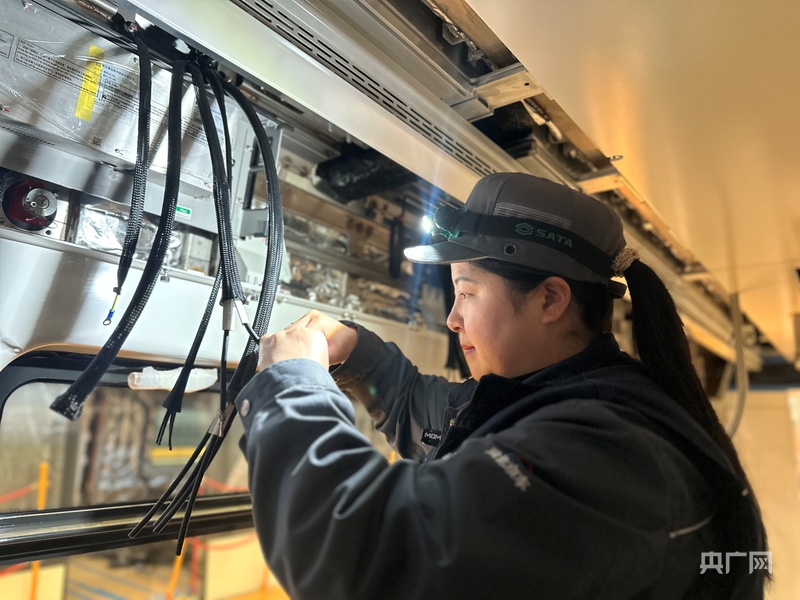
新春走基层丨北京地铁河北造,列车“双城基因”何以蕴藏协同发展密码?
Yang Guang Wang· 2026-02-25 01:42
Core Viewpoint - The article highlights the development and manufacturing of new subway trains for Beijing's Line 13, emphasizing the collaboration between Beijing and Hebei in the production process, showcasing advancements in technology and efficiency in the manufacturing sector [1][10]. Group 1: Manufacturing Process - The Beijing Subway Line 13 is undergoing an expansion and upgrade, with the existing line being split into Line 13A and 13B, and new trains being manufactured in Baoding, Hebei [1]. - The manufacturing process at the Hebei Jingke Intelligent Manufacturing Base involves various stages, including assembly, testing, and quality control, with a focus on digital management to enhance efficiency [7][10]. - The production of the new trains incorporates advanced technologies such as variable frequency air conditioning and intelligent lighting systems, improving passenger comfort and energy efficiency [7]. Group 2: Workforce and Economic Impact - The Hebei Jingke facility employs over 1,000 workers, with approximately 70% being local residents, contributing positively to the local economy and job market [10]. - The collaboration between the manufacturing base in Hebei and the design institute in Beijing fosters a seamless integration of design and production, enhancing innovation and efficiency [8][10]. - The facility has produced over 1,200 trains since its establishment in 2018, with a significant portion serving various lines in Beijing, indicating a robust production capacity [7]. Group 3: Future Outlook - In 2025, the new trains for Line 13A are expected to be operational, with ongoing projects including the Urumqi Metro Line 2 and the Beijing Metro Line 22, indicating a busy production schedule ahead [5][11]. - The article suggests that the "Hebei manufacturing" will continue to play a crucial role in the efficient operation of urban transit systems across multiple cities [11].
成安县妇联 护航“福嫂”逐梦京津
Xin Lang Cai Jing· 2026-02-25 00:30
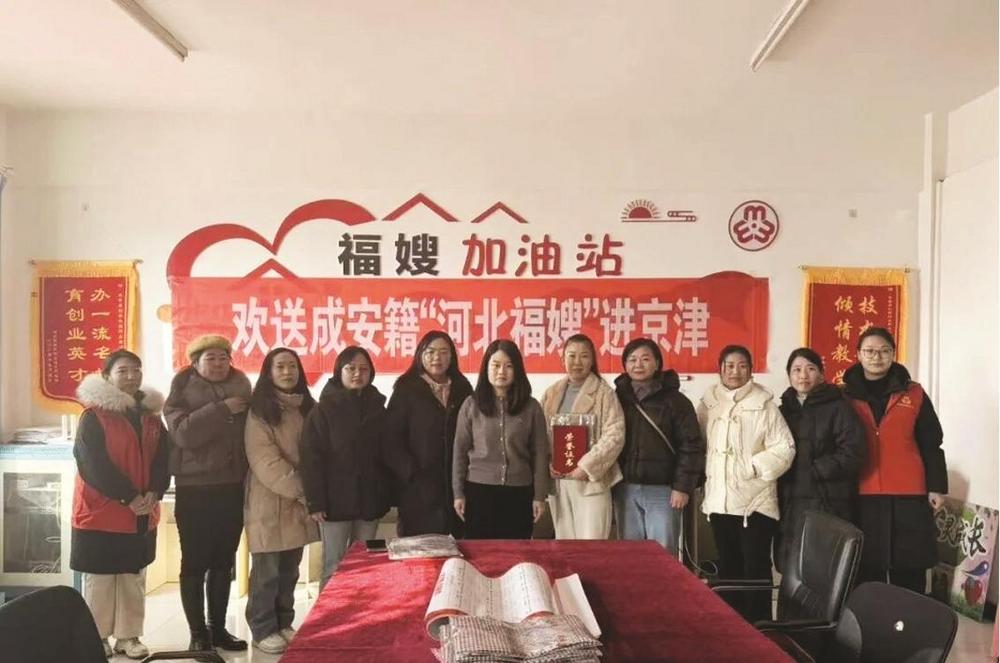
(来源:邯郸日报) 转自:邯郸日报 本报讯(武成军 许朋钰 王钇珺)为拓宽妇女就业渠道、服务京津冀协同发展,日前,成安县妇联在县巾帼家政基地为一批即将赴京津就业 的"河北福嫂"举行欢送仪式。仪式现场,县妇联为"福嫂"代表送上礼包,并勉励她们以专业技能和诚信服务,在异地就业市场中树立优质品牌 形象。 为帮助"福嫂"们"输得出、待得住、能致富",成安县妇联依托巾帼家政基地,构建了系统的培训支持体系。通过"线上+线下"相结合、"学历教 育+技能培训"相融合的模式,围绕母婴护理、养老陪护、家政保洁等热门工种,系统开展专业技能、服务规范及职业素养培训,全面提升妇 女就业竞争力。 此外,成安县妇联持续推进"巾帼家政进社区(乡村)"活动,组织宣讲团深入基层,面向妇女群众讲解家政技能、解读行业政策、分析市场前 景,有效提升妇女对家政行业的认知与参与度,真正实现"送培训到门口、送岗位到身边"。 ...
京津冀经济总量 5年连跨3个万亿元台阶
Xin Lang Cai Jing· 2026-02-25 00:30
Core Insights - The "14th Five-Year Plan" period has shown significant achievements in the coordinated development of the Beijing-Tianjin-Hebei region, with GDP projected to increase from 8.96 trillion yuan in 2020 to nearly 12 trillion yuan by 2025, achieving an average annual growth rate of 5.2%, 4.4%, and 5.4% respectively [1][2] Group 1: Economic Development - The total area of the Beijing-Tianjin-Hebei region is 216,000 square kilometers, with a permanent population exceeding 100 million, providing a strong foundation for deep integration and collaborative progress [1] - The region has seen a reduction of 150 square kilometers in urban construction land and the exit of over 3,000 general manufacturing enterprises, optimizing economic structure and spatial layout [1] - Xiong'an New Area has entered a phase of large-scale construction, maintaining an annual investment scale of 200 billion yuan, with major companies like China Star Network and China National Chemical relocating there [1] Group 2: Infrastructure and Environmental Improvements - During the "14th Five-Year Plan" period, 710 kilometers of new railway operating mileage have been added, achieving a basic realization of a "1-1.5 hour traffic circle" among major cities [2] - The region's air quality has improved, and the water ecosystem is being restored, with shallow and deep groundwater levels rising by 3.29 meters and 7.67 meters respectively compared to the end of the "13th Five-Year Plan" [2] - The Yongding River has achieved continuous water flow for five consecutive years, indicating significant ecological progress [2] Group 3: Innovation and Industrial Collaboration - Collaborative innovation and industrial cooperation are key supports for high-quality development in the Beijing-Tianjin-Hebei region, with technology contract transaction amounts from Beijing to Tianjin and Hebei exceeding 320 billion yuan, growing at an average annual rate of 23%, which is 1.7 times higher than during the "13th Five-Year Plan" [2] - Over 10,000 branches of enterprises from Zhongguancun have been established in Tianjin and Hebei, indicating a strong trend of industrial collaboration [2]