
双重上市

Search documents
华检医疗就建议于美国双重上市保密提交F-1表格登记声明草案
Zhi Tong Cai Jing· 2025-09-30 14:59
Core Viewpoint - The company has decided to pursue a dual primary listing on the NASDAQ stock market through an initial public offering of American Depositary Shares, which is a significant step in its global strategic layout, expected to bring multiple positive impacts. Group 1: Global Financing and Market Expansion - The dual listing is anticipated to expand the company's global financing channels by entering one of the largest and most comprehensive capital markets, potentially attracting more long-term international investors focused on biotechnology and healthcare [1]. - This move is expected to provide strong capital support for the company's future research and commercialization efforts [1]. Group 2: Brand and Market Presence - Listing on NASDAQ will enhance the company's international brand influence, improving its corporate image and industry recognition in the global market [1]. - It will also increase opportunities for communication and collaboration with potential global partners, clients, and regulatory bodies [1]. Group 3: Share Liquidity and Valuation - The establishment of a cross-market trading mechanism is expected to broaden the investor base and enhance overall share liquidity [1]. - This environment will allow the company's long-term value to be fully reflected in a more international pricing context [1]. Group 4: Governance and Transparency - Adhering to U.S. securities regulations and disclosure requirements will improve the company's governance standards and operational transparency [1]. - This compliance is likely to strengthen the company's global compliance image and investor trust [1]. Group 5: Strategic Flexibility - The dual listing structure will provide the company with greater flexibility for future international collaborations, mergers, and business expansions, offering a richer platform for capital operations and strategic choices [2].
华检医疗(01931)就建议于美国双重上市保密提交F-1表格登记声明草案
智通财经网· 2025-09-30 14:56
Core Viewpoint - The company, Huajian Medical, has proposed a dual primary listing on the NASDAQ stock market through the issuance of new ordinary shares in the form of American Depositary Shares, with a confidential F-1 registration statement submitted to the SEC on September 29, 2025. This move is part of the company's global strategic layout and is expected to bring multiple positive impacts. Group 1: Strategic Impacts - Expanding global financing channels: Entering one of the largest and most comprehensive capital markets globally is expected to attract more long-term international investors focused on biotechnology and healthcare, providing strong capital support for future R&D and commercialization [1] - Enhancing international brand influence: Listing on NASDAQ will further enhance the company's corporate image and industry recognition in international markets, increasing opportunities for communication and collaboration with global partners, clients, and regulatory bodies [1] - Increasing share liquidity and valuation potential: Establishing a cross-market trading mechanism will help expand the investor base, improve overall share liquidity, and reflect the company's long-term value in a more international pricing environment [1] - Optimizing corporate governance and transparency: Adhering to U.S. securities regulations and disclosure requirements will enhance the company's governance standards and operational transparency, strengthening its compliance image and investor trust globally [1] Group 2: Future Strategic Flexibility - Providing flexibility for future strategic advancement: The dual listing structure offers a richer capital operation platform and strategic options for potential international cooperation, mergers, and business expansion [2]
美股异动 | 禾赛(HSAI.US)涨3% 获机构上调明后年收入和净利润预测
智通财经网· 2025-09-18 14:34
Core Viewpoint - Hesai Technology (HSAI.US) shows a positive market response with a 3% increase in stock price, reaching $29.67, supported by a report from CMB International that highlights the company's robust fundamentals and upward adjustments in revenue and profit forecasts [1] Group 1: Financial Performance - CMB International raised the target price for Hesai Technology from $27.52 to $34.66 based on a DCF model [1] - Revenue forecasts for 2026 and 2027 were increased by approximately 2%, projected at $4.434 billion and $5.775 billion respectively [1] - Net profit estimates were raised by about 6%, expected to be $441 million and $624 million for the same periods [1] Group 2: Business Developments - Hesai Technology officially listed on the Hong Kong Stock Exchange on September 16, becoming the first lidar company to achieve a dual listing in both the US and Hong Kong [1] - The company is expanding its focus from solely automotive lidar to new fields such as robotics [1] - In the first half of the year, Hesai Technology's lidar shipments in the robotics sector reached 98,000 units, marking a significant year-on-year growth of 692.9% [1]

Noon 接近盈利,计划两年内于阿联酋、沙特实现双重上市
Sou Hu Cai Jing· 2025-09-10 06:49
Core Viewpoint - Noon plans to pursue a dual listing in the UAE and Saudi Arabia within two years, aiming to become one of the first large digital enterprises to go public in the region, as the company approaches profitability [1][4]. Company Overview - Founded in 2016, Noon has raised a total of $2.7 billion, with a valuation nearing $10 billion, and operates in Saudi Arabia, the UAE, and Egypt [3]. - The company has rapidly expanded its workforce to approximately 40,000 delivery personnel, with a projected gross merchandise volume (GMV) of $5 to $6 billion in 2024 [3]. Expansion Strategy - Improving operational efficiency is central to Noon’s strategy, which includes testing autonomous delivery vehicles to reduce costs and potentially halve the number of delivery personnel by 2027 [4]. - Noon is also considering mergers and acquisitions, with India identified as a potential expansion target [4]. Market Position and Challenges - Despite its growth, Noon faces intense competition from Amazon, Shein, IKEA, and Meituan, and has not yet achieved high profitability [3][5]. - The company's entry into the fresh food delivery sector has increased GMV and market share in the grocery category, but has also impacted profit margins due to lower average order values and ongoing logistics investments [5].


星谦发展拟“2并1”基准进行股份合并
Zhi Tong Cai Jing· 2025-08-25 15:09
Core Viewpoint - The company, Xingqian Development (00640), has announced plans for a dual listing in Singapore, contingent upon regulatory approvals and market conditions [1] Group 1: Listing Plans - The board has resolved to proceed with a listing on the Singapore Exchange (SGX), subject to approval from relevant regulatory bodies, including the SGX [1] - The company aims for a dual listing on both the Hong Kong Stock Exchange (HKEX) and the SGX if the Singapore listing is successful [1] Group 2: Share Consolidation - To meet the minimum issuance price requirement of SGD 0.20 for the SGX listing, the company proposes a share consolidation, merging every two existing shares into one [1] - The current closing price on the HKEX is HKD 1.22, which is approximately SGD 0.198, below the minimum issuance price [1] - After the consolidation, the trading unit will change from 4,000 existing shares to 2,000 consolidated shares [1]
星谦发展(00640)拟“2并1”基准进行股份合并
智通财经网· 2025-08-25 15:02
Group 1 - The company, Xingqian Development (00640), has announced its decision to pursue a listing in Singapore, pending approval from relevant regulatory bodies, including the Singapore Exchange (SGX) [1] - The company plans to achieve a dual listing on both the Hong Kong Stock Exchange and the SGX if the Singapore listing is successful [1] - According to the rules of the SGX's Catalist board, the issue price for shares listed in Singapore must not be lower than SGD 0.20, while the current closing price on the Hong Kong Stock Exchange is HKD 1.22, equivalent to SGD 0.198, which is below the minimum issue price [1] Group 2 - To meet the minimum issue price requirement, the company proposes a share consolidation, merging every two existing shares into one consolidated share [1] - Currently, shares are traded in lots of 4,000 on the Hong Kong Stock Exchange, but after the consolidation, the trading lot size will change to 2,000 consolidated shares [1]
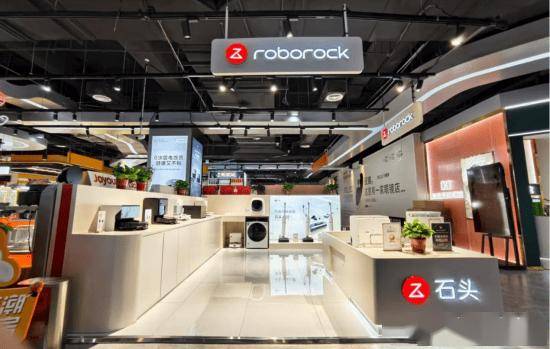
石头科技董事长昌敬减持套现8.88亿后清空账号 他怎么能这样干?
Sou Hu Cai Jing· 2025-08-20 10:25
Group 1 - The core viewpoint of the article highlights that despite a decline in profits for 2024, Stone Technology continues to face challenges in Q1 2025, with net profits continuing to drop while seeking a dual listing on the Hong Kong Stock Exchange [1][3][4] Group 2 - In Q1 2025, the company reported total revenue of 3.428 billion, an increase of 86.22% year-on-year, while the net profit attributable to shareholders was 267 million, a decrease of 32.92%, indicating a situation of "increased revenue but decreased profit" [3] - The company's founder and chairman, Chang Jing, has sold off 2.6282 million shares, cashing out approximately 888 million, which has drawn public attention amid concerns over the company's declining stock price [3] - Despite the stock price concerns, Chang Jing has urged investors to remain patient during the "strategic transformation period," a contradictory stance that has sparked controversy and led to trending discussions on social media [3][4] - Chang Jing's net worth has significantly decreased from 16.05 billion in 2021 to several billion less by 2025, reflecting a substantial loss in personal wealth [4]

里昂:削新秀丽(01910)目标价至22港元 维持“高度确信跑赢大市”评级
智通财经网· 2025-08-13 07:07
Group 1 - The core viewpoint of the report is that Citibank has downgraded Samsonite's (01910) full-year sales forecast to a 6% year-on-year decline and adjusted net profit forecast to a 25% year-on-year decline, reflecting the short-term weakness in the travel industry [1] - The target price for Samsonite has been reduced from HKD 30 to HKD 22, considering the low valuation and potential future improvements, as well as the revaluation opportunities brought by the upcoming dual listing [1] - Citibank expects that Samsonite's sales in the second quarter will decline by 6% year-on-year at constant exchange rates, which is a further deterioration from the 5% decline in the first quarter, primarily due to weakened travel demand [1] Group 2 - The report anticipates that Samsonite's gross margin and adjusted EBITDA margin will remain at 59% and 16.6% respectively in the second quarter, roughly stable quarter-on-quarter [1] - It is believed that improvements may occur in the third quarter due to low base effects and a rebound in traveler numbers [1] - Prior to the second quarter earnings release, the company has lowered its revenue forecasts for 2025 to 2027 by 7% to 10%, adjusted EBITDA forecasts by 18% to 19%, and adjusted net profit forecasts by 23% to 28%, reflecting traveler pressures and tariff uncertainties [1]
里昂:削新秀丽目标价至22港元 维持“高度确信跑赢大市”评级
Zhi Tong Cai Jing· 2025-08-13 07:04
Core Viewpoint - Citi has downgraded Samsonite's (01910) full-year sales forecast to a 6% year-on-year decline and adjusted net profit forecast to a 25% year-on-year decline, reflecting short-term weakness in the travel industry [1] Group 1: Sales and Profit Forecasts - The sales forecast for Samsonite has been revised downwards for the second quarter, with a projected 6% year-on-year decline in sales at constant exchange rates, worsening from a 5% decline in the first quarter [1] - Adjusted net profit forecasts for 2025 to 2027 have been reduced by 23% to 28%, reflecting pressures from travelers and uncertainties regarding tariffs [1] Group 2: Profit Margins and Future Outlook - The expected gross margin and adjusted EBITDA margin for the second quarter are projected to remain at 59% and 16.6% respectively, indicating stability on a quarterly basis [1] - There is an expectation of quarterly improvement in the third quarter due to low base effects and a rebound in traveler numbers [1] Group 3: Target Price and Market Position - The target price for Samsonite has been lowered from 30 HKD to 22 HKD, considering the current valuation and potential for future improvement [1] - Despite the downgrades, the company maintains a "highly confident outperform" rating, anticipating a revaluation opportunity from future dual listings [1]
大行评级|里昂:下调新秀丽目标价至22港元 预计第二季销售将按年下跌6%
Ge Long Hui· 2025-08-13 03:44
Core Viewpoint - The report from Credit Lyonnais indicates that Samsonite's sales in the second quarter are expected to decline by 6% year-on-year at constant exchange rates, which is a further deterioration from the 5% decline in the first quarter, primarily due to weakened travel demand [1] Group 1: Sales and Profit Forecasts - The company anticipates that gross margin and adjusted EBITDA margin will remain stable at 59% and 16.6% respectively, showing no significant change quarter-on-quarter [1] - Full-year sales forecast for Samsonite has been revised down to a 6% year-on-year decline, while adjusted net profit forecast has been lowered by 25% year-on-year to reflect the short-term weakness in travel [1] Group 2: Target Price and Market Outlook - The target price for Samsonite has been reduced from HKD 30 to HKD 22, considering the low valuation and the potential for future improvement in outlook [1] - Despite the current challenges, the company maintains a "highly confident outperform" rating, citing the potential for a revaluation opportunity with the upcoming dual listing [1]