
工业自动化

Search documents
2026年1月份股票组合
Dongguan Securities· 2026-01-05 12:43
Market Overview - In December 2025, the A-share market showed a "high-level fluctuation and structural switching" pattern, with the Shanghai Composite Index rising by 2.06% and the Shenzhen Component Index increasing by 4.17%[7] - The average return of the stock portfolio in December was 6.20%, outperforming the CSI 300 Index, which rose by 2.28%[7] Stock Recommendations - **Hengrui Medicine (600276)**: Closing price at 59.57 CNY, focusing on innovative drugs with a projected EPS of 1.31 CNY for 2025[10][12] - **Luoyang Molybdenum (603993)**: Closing price at 20.00 CNY, benefiting from copper and gold business expansion, with an EPS forecast of 0.88 CNY[15][18] - **Huaxin Cement (600801)**: Closing price at 24.54 CNY, with a focus on overseas expansion and an EPS estimate of 1.42 CNY[19][22] - **Sanmei Co., Ltd. (603379)**: Closing price at 60.72 CNY, specializing in refrigerants, with an EPS forecast of 3.50 CNY[23][27] - **CATL (300750)**: Closing price at 367.26 CNY, with a valuation recovery theme and an EPS estimate of 15.00 CNY[28][31] - **Sungrow Power Supply (300274)**: Closing price at 171.04 CNY, benefiting from favorable conditions in new energy storage, with an EPS forecast of 7.12 CNY[32][35] - **Sany Heavy Industry (600031)**: Closing price at 21.13 CNY, focusing on engineering machinery with an EPS estimate of 0.99 CNY[36][39] - **Inovance Technology (300124)**: Closing price at 75.33 CNY, focusing on industrial control with an EPS forecast of 2.07 CNY[40][42] - **North Huachuang (002371)**: Closing price at 459.08 CNY, specializing in semiconductor equipment with an EPS estimate of 9.95 CNY[43][45] Risks and Considerations - The report indicates a medium to high risk level for the stock portfolio, emphasizing the need for cautious investment decisions based on the accuracy and completeness of the information provided[6][3] - Potential risks include macroeconomic fluctuations, raw material price volatility, and regulatory changes affecting industry dynamics[11][18][19]
新思考电机递表港交所 为微型精密马达制造商
Zhi Tong Cai Jing· 2026-01-04 03:57
Company Overview - New Thinking Motor, established in 2014, is a leading global manufacturer of micro precision motors, particularly in the imaging motor sector, with a strategic layout of dual production bases in Jiaxing and Hefei, and dual R&D bases in China and Japan [3] - According to Frost & Sullivan, New Thinking Motor ranks sixth globally and third in China in the imaging motor market, holding a 9.1% market share in China as of 2024 [3] - In the optical image stabilization (OIS) imaging motor segment, the company ranks fourth globally and first in China, with a market share of 20.1% [3] Product Focus - The company focuses on two main product categories: imaging products and non-imaging products [4] - Imaging products include voice coil motors, piezoelectric motors, and shape memory alloy motors, primarily used in smartphones, handheld imaging, security monitoring, and machine vision systems for functions like autofocus, optical stabilization, aperture adjustment, and zoom [4] - Non-imaging products include stepper motors and brushless DC motors, deployed in applications such as robotic vacuum cleaners, security monitoring, and automotive electronics, with expansion into emerging fields like humanoid robots and low-altitude economy [4] Financial Performance - For the fiscal year ending December 31, 2023, the company reported revenues of approximately RMB 855.33 million, with projected revenues of RMB 1.56 billion for 2024 and RMB 1.46 billion for the nine months ending September 30, 2025 [6] - The gross profit for the same periods was RMB 71.50 million, RMB 249.35 million, and RMB 234.35 million respectively [8] - The company recorded a net loss of RMB 30.10 million for 2023, with profits of RMB 104.76 million for 2024 and RMB 97.06 million for the nine months ending September 30, 2025 [7] Industry Overview - The global motor market is experiencing significant and sustained growth, driven by three long-term trends: electrification of transportation, upgrades in consumer electronics, and stringent energy efficiency regulations worldwide [9] - The market size is projected to grow from approximately USD 109.8 billion in 2019 to USD 152.3 billion by 2024, with a historical compound annual growth rate (CAGR) of 6.8% [9] - By 2029, the market is expected to reach USD 197 billion, with a forecasted CAGR of 4.6% from 2025 to 2029, driven by the increasing adoption of electric vehicles and the expansion of industrial automation and smart devices [9] China Market Insights - China is a crucial and rapidly growing segment of the global motor market, with the market size expected to increase from approximately USD 35.3 billion in 2019 to USD 50.2 billion by 2024 [10] - By 2029, the market is projected to reach USD 66.4 billion, with a forecasted CAGR of 5.1% from 2025 to 2029, indicating stronger domestic demand driven by electric vehicles and industrial automation [10] - China's share of the global motor market is expected to rise from approximately 32.3% in 2019 to 33.7% by 2029, reinforcing its position as a key manufacturing hub and end market globally [10]

通光线缆(300265.SZ):控股子公司生产的机器人电缆主要应用于工业自动化领域
Ge Long Hui· 2025-12-31 01:05
Core Viewpoint - Tongguang Cable (300265.SZ) is actively involved in the aerospace sector with its high-temperature resistant cables and has established a joint venture with Yangtze Optical Fibre to enhance its fiber optic cable production capabilities [1] Group 1: Product Applications - The company's high-temperature resistant cables are specifically designed for the aerospace industry [1] - The robot cables produced by the company's subsidiary are primarily used in industrial automation [1] Group 2: Joint Ventures and Collaborations - The company has formed a joint venture with Yangtze Optical Fibre, focusing on the research, development, production, and sales of fiber optic cables [1] - Teams from both companies have officially commenced work on the joint venture [1]


灵巧手:结构向高承载发展,四缸数量或倍增
SINOLINK SECURITIES· 2025-12-27 14:04
Investment Rating - The report does not explicitly state an investment rating for the industry. Core Insights - The dexterous hand is a high-degree-of-freedom robotic end effector that mimics human hand functionality, providing flexibility and adaptability that surpass traditional mechanical grippers. It is a critical component of humanoid robots, accounting for approximately 20%-30% of the total cost of the robot. The future value of humanoid robots will largely depend on the dexterous hand's flexibility and collaborative capabilities [4][5]. Summary by Sections 1. Key Technologies and Comparison of Dexterous Hands - The design of dexterous hands is inspired by the complex structure and functionality of human hands, enabling robots to perform diverse tasks such as grasping and manipulation. A typical dexterous hand system consists of four key components: drive system, transmission system, sensor system, and control system [13][14]. - The trend in dexterous hand technology is towards electric drive systems combined with composite transmission and tactile sensing [14][22]. 2. Drive Devices: Domestic Competitive Advantages - Electric motor drives are the mainstream technology due to their precision and cost-effectiveness. The report highlights that the demand for motors will increase with the rise in degrees of freedom in dexterous hands, presenting market opportunities for suppliers of hollow cup motors and brushless gear motors [5][22]. 3. Transmission Methods: Ball Screw Advantages - The report indicates that ball screw transmission is becoming a dominant trend in dexterous hand design due to its high load-bearing capacity and precision, making it suitable for industrial applications [35][41]. 4. Sensors: Increasing Sensor Count - The report notes that the number of sensors in dexterous hands is on the rise, with various types including tactile, force, and position sensors being utilized to enhance interaction with external objects [47][52]. 5. Dexterous Hands and Related Industry Chain - The dexterous hand represents a high-value component with significant barriers to entry, indicating a robust market potential for companies involved in its development and production [5][44].

华新精科:精密冲压铁芯头部企业,净利率行业领跑,多赛道共振长期发展可期
梧桐树下V· 2025-12-25 11:11
Core Viewpoint - The explosive growth of the new energy vehicle (NEV) industry is reshaping the global automotive supply chain, with significant sales and market penetration expected to continue in the coming years [1][2]. Group 1: Market Dynamics and Growth Potential - In 2025, the retail sales of new energy passenger vehicles are projected to reach 11.472 million units, representing a year-on-year growth of 19.6%, with a penetration rate of 59.3% in November, marking a historical high [1]. - The global precision stamping core market reached 112.11 billion yuan in 2023, with expectations to grow to 263.70 billion yuan by 2030, reflecting a compound annual growth rate (CAGR) of 12.82% from 2024 to 2030 [2]. - The automotive application segment accounts for 28.51% of the precision stamping core market, serving as a key driver for industry growth [2]. Group 2: Company Overview and Strategic Positioning - Huaxin Precision Technology Co., Ltd. (stock code: 603370) has established itself as a leader in the precision component manufacturing for NEV power systems, collaborating closely with major automotive manufacturers like BYD and BMW [1][4]. - The company has diversified its product matrix to include NEV drive motor cores, micro-special motor cores, electrical equipment cores, and ignition coil cores, with a strong customer network covering both domestic and international markets [4]. Group 3: Financial Performance and Market Share - In 2024, NEV drive motor cores are expected to account for 64.70% of the company's revenue, with sales increasing from 561,600 units in 2021 to 2,222,100 units in 2024, resulting in a global market share increase from 5.59% to 8.12% [5]. - The company ranks among the top three domestic manufacturers in both global and Chinese automotive core markets, with the top ten manufacturers holding a combined market share of 75.54% globally and 78.11% in China [5]. Group 4: Technological Advancements and Competitive Edge - Huaxin Precision has adopted innovative in-mold gluing technology to address industry challenges, enhancing the performance of drive motor cores by reducing eddy current losses and improving efficiency [6][9]. - The company has expanded its customer base significantly since 2021, securing projects with leading global firms and deepening collaborations with existing partners, which supports sustained revenue growth [7]. Group 5: Future Growth and Strategic Initiatives - The NEV market is expected to continue its robust growth, with the total installed capacity of NEV drive motors in China projected to reach 15.229 million units in 2024, a year-on-year increase of 40.04% [10]. - The company plans to utilize raised funds for expanding production capacity and research, focusing on new energy vehicle drive motor cores and precision stamping technology, which will enhance its competitive position [12][13]. - Huaxin Precision aims to establish a global presence by setting up subsidiaries in Singapore and Mexico, facilitating localized supply services for international clients [13].

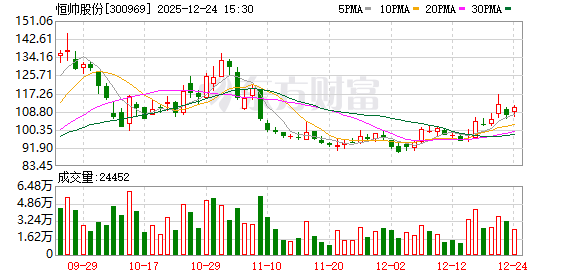
恒帅股份:公司在人形机器人和工业自动化等新赛道的拓展中将不断加强研发投入
Zheng Quan Ri Bao· 2025-12-24 12:11
Core Viewpoint - The company is focusing on expanding into new areas such as humanoid robots and industrial automation, with a strong emphasis on research and development in harmonic magnetic field motor technology and new magnetic materials [2] Group 1 - The company plans to continuously increase R&D investment in new areas to maintain technological leadership and market competitiveness [2] - The company has already achieved some technological breakthroughs and has obtained relevant patents [2]
2025年中国流体控制设备白皮书:国产企业崛起,市场迎来新机遇
Tou Bao Yan Jiu Yuan· 2025-12-23 12:00
Report Industry Investment Rating No relevant content provided. Core Viewpoints of the Report - The fluid control equipment industry is upgrading from traditional mechanical drive to intelligent perception, precise control, and remote operation and maintenance due to the rise of emerging fields such as new energy, semiconductors, and biomedicine [3]. - The upstream of the fluid control equipment industry chain will develop towards material upgrading, intelligent production, and green supply chain, while the downstream shows obvious trends in the growth of emerging industry demand, technological innovation applications, and market pattern changes [4]. - The market scale of China's valve and dispenser segments in the fluid control equipment industry is expected to continue to grow steadily in the future [5]. - Domestic enterprises in the fluid control equipment industry have achieved import substitution in the mid - and low - end markets and are breaking into the high - end market [11]. Summary by Relevant Catalogs Fluid Control Equipment Industry Overview - Fluid control equipment is a core part of industrial automation and process control, which can actively intervene and precisely regulate the fluid flow state, physical parameters, and transmission process [7]. - It is classified into flow control equipment, pressure control equipment, flow direction control equipment, and state control equipment, each with specific core functions, typical equipment, and technical requirements [8]. Fluid Control Equipment Industry Chain - **Upstream**: Raw materials account for 40% - 60% of the upstream cost, with basic metals and general polymers being self - supplied, but still relying on imports for high - end special alloys and polymers. Key components account for 25% - 35% of the upstream cost and have the highest technical barriers [4]. - **Midstream**: Composed of core products such as dispensers, coating machines, precision valves, and automation integration systems. International giants lead the high - end market, while domestic leading enterprises are the main force for import substitution in the mid - and low - end markets and are breaking into the high - end market [11]. - **Downstream**: Widely used in industries such as industrial manufacturing, energy, automotive, semiconductors, water treatment, and medical. The 3C electronics and semiconductor industries are the core application fields, and the new energy field is growing rapidly [11]. Valve Market - The market scale of China's valve industry has been expanding from 2020 - 2024, and the localization rate is gradually increasing. It is expected to reach $16.96 billion in 2025 and $21.78 billion in 2029, with a compound growth rate of 6.4% from 2024 - 2029 [5][15]. - High - growth application fields of valves include new energy, semiconductors, and hydrogen energy; stable - growth fields include petrochemical, municipal water, and medicine; and low - growth fields include traditional thermal power and low - end manufacturing [18]. Dispenser Market - From 2020 - 2024, the market scale of China's dispenser industry increased from 26.273 billion yuan to 44.26 billion yuan, with an annual compound growth rate of 15.02%. It is expected to grow from 52.23 billion yuan to 101.25 billion yuan from 2025 - 2029, with a compound growth rate of 18.0% [5][22]. - The technical difficulty of dispenser applications in downstream fields varies. The semiconductor field has the highest technical difficulty, followed by consumer electronics, while the new energy vehicle and photovoltaic fields have relatively lower technical difficulties [23]. MFC Application Fields - MFC is applied in semiconductor, biomedicine, high - end chemical, pan - semiconductor, and general industrial fields. Each field has different core requirements, technical paths, key parameters, and price ranges [26].
机器人的新工作——2025年人形机器人从“上舞台”到“下工厂”
Xin Hua Wang· 2025-12-23 02:19
Core Insights - The humanoid robot industry is transitioning from demonstration to practical applications in various sectors such as automotive manufacturing, home appliance production, and logistics, with robots now capable of performing tasks like sorting materials and assisting in assembly lines [1][2][4] Group 1: Technological Advancements - Breakthroughs in dexterous hands and core components have made humanoid robots more human-like, enabling them to perform complex tasks such as screw tightening and flexible component assembly [1][2] - The development of intelligent grasping algorithms allows dexterous hands to autonomously adapt to complex task requirements, enhancing precision in industrial automation and extreme environment operations [2][3] Group 2: Market Growth and Production - The humanoid robot market is expected to exceed one million units in initial industrial applications, driven by increasing demand and accelerated mass production efforts by various companies [3][4] - Companies like Zhiyuan Robotics and UBTECH are ramping up production, with UBTECH planning to produce 3,000 to 5,000 units annually by 2026, and further scaling to 10,000 units by 2027 [4] Group 3: Industry Challenges and Future Directions - Despite advancements, humanoid robots are primarily in small-scale pilot testing phases, often limited to simple tasks like material handling, indicating a need for improvements in efficiency, reliability, and cost [4][5] - The industry recognizes the importance of focusing on specific verticals with clear pain points and stable processes, as well as encouraging the development of open-source platforms for algorithm development and task testing [5]
长光辰芯再闯港股IPO,工业成像传感器龙头前景几何?
Sou Hu Cai Jing· 2025-12-22 01:51
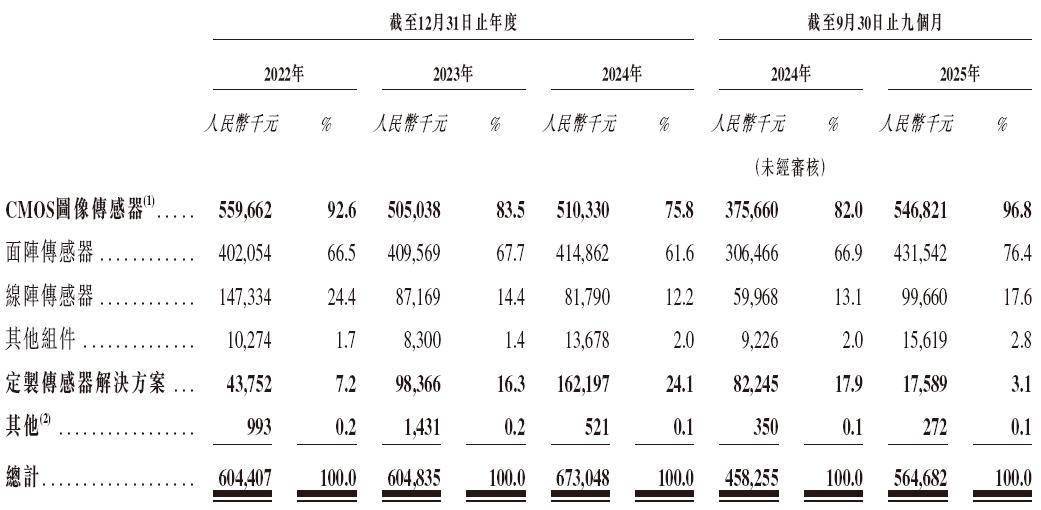
Core Viewpoint - The Chinese company Changguang Chuangxin, ranked third globally in the industrial imaging sector, has re-applied for an IPO on the Hong Kong Stock Exchange after an unsuccessful attempt on the Sci-Tech Innovation Board in June 2025 [1] Group 1: Company Overview - Changguang Chuangxin was established in 2012 and focuses on the research and design of high-performance CMOS image sensors, with over 50 standard products across nine product series [1] - The company holds a significant position in the industrial imaging field, ranking first among Chinese CIS companies and third globally, with a market share of 15.2% in 2024 [1] Group 2: Financial Performance - Revenue figures for Changguang Chuangxin from 2022 to 2024 are as follows: RMB 604 million, RMB 605 million, and RMB 673 million respectively, with R&D expenditures of RMB 84.2 million, RMB 132 million, and RMB 130 million during the same period [4] - The revenue concentration from the top five customers showed fluctuations, with percentages of approximately 47.3%, 45.8%, 33.5%, and 41.3% [4] Group 3: Sales Strategy and Market Position - The company's sales strategy is primarily direct sales, with the proportion of direct sales revenue increasing from 93.9% to 97.1% [5] - Despite leading positions in industrial and scientific imaging, Changguang Chuangxin operates in a relatively niche market, with combined market shares in these sectors accounting for only about 3% of the overall CMOS image sensor industry in 2024 [5] Group 4: Supply Chain and Challenges - The company faces supply chain constraints, relying heavily on external foundries, with approximately 47.5% of procurement in 2024 coming from Israeli Tower Semiconductor and South Korean Dongbu HiTek [5] - Changguang Chuangxin has been exploring domestic alternatives since 2020, establishing a subsidiary to tackle packaging technology and starting limited in-house chip packaging from 2022 [6] Group 5: Market Outlook - The global CIS market is projected to grow from RMB 139.1 billion in 2024 to RMB 210.3 billion by 2029, with a compound annual growth rate of approximately 8.6% [6]
效率跃升 港迪技术赋能洋浦港智能化升级
Zheng Quan Shi Bao Wang· 2025-12-19 14:36
Core Insights - Hainan Free Trade Port has officially launched its full island closure, with Yangpu Port serving as a key hub for over 70% of the island's imported goods [1] - The intelligent solutions tailored for Yangpu Port are expected to enhance operational efficiency significantly following the closure [1] - Yangpu Port's cargo throughput is projected to reach 64 million tons and container throughput to exceed 2.01 million TEUs in 2024, marking its entry into China's top 20 ports [1] Group 1 - Yangpu Port's zero-tariff product range has expanded to over 6,600 tax items, highlighting the importance of operational efficiency and regulatory collaboration [1] - The intelligent upgrade project for 32 bridge cranes at Yangpu International Container Terminal has resulted in 91% automation in the covered area, with the highest single box efficiency reduced to 2 minutes and 28 seconds [2] - The shipping efficiency has reached 47.2 natural boxes per hour, a year-on-year increase of 22.06%, establishing a solid foundation for continuous growth in port throughput [2] Group 2 - Yangpu Port is progressing towards its goal of becoming a "dual hub" international seaport, with over 30 international shipping routes covering major trade directions [2] - The company's intelligent solutions align with Yangpu Port's long-term vision of a green and smart port, contributing to the establishment of the world's first "smart green zero-carbon hub port" [2] - According to industry statistics, the company ranks first in the domestic market share for specialized variable frequency drives for port cranes and shield machines from 2020 to 2024, maintaining second place in the tower crane market in 2024 [3]