
幸福河湖建设

Search documents
江苏以河长制为抓手全域推进幸福河湖建设
Xin Hua Ri Bao· 2025-10-20 01:31
Core Viewpoint - Jiangsu Province has made significant progress in ecological governance and water quality improvement through the implementation of the River Chief System, leading to a transformation in the management of rivers and lakes, promoting both economic development and ecological civilization [1][2][3]. Group 1: River Chief System Implementation - The River Chief System has been a key governance model in Jiangsu, initiated after the Taihu blue algae incident in 2007, and has evolved to include comprehensive management strategies across the province [2][3]. - Jiangsu has established a collaborative governance framework involving government leadership, water conservancy, departmental coordination, and social participation, enhancing accountability in river and lake management [2][3]. - The system has led to significant improvements in water quality, with the Yangtze River achieving a stable Class II water quality and Taihu Lake meeting good water quality standards for the first time [1][2]. Group 2: Ecological Restoration and Economic Development - Jiangsu's ecological restoration efforts include large-scale projects such as the ecological dredging of over 40 million cubic meters in Taihu Lake and the implementation of comprehensive environmental remediation [5][6]. - The province has integrated ecological protection with economic development, as seen in the revitalization of the Yong'an River, which has attracted numerous enterprises to the area, demonstrating the economic benefits of improved water quality [6][7]. - The focus on sustainable development has led to significant investments in ecological tourism and the creation of ecological corridors, contributing to high-quality green economic growth [6][7]. Group 3: Systematic Governance and Cultural Integration - Jiangsu's approach to water governance has shifted from single water management to a holistic ecological perspective, emphasizing the importance of cultural and ecological integration [3][4]. - The province has launched various initiatives to promote cultural heritage alongside ecological restoration, creating a vibrant environment for tourism and community engagement [6][7]. - The systematic governance model has resulted in the construction of 3,611 happy rivers and lakes, enhancing the quality of life for local communities and fostering a sense of environmental stewardship [5][6].
浙江:2030年95%县(市、区)建成全域幸福河湖
Zhong Guo Xin Wen Wang· 2025-10-16 13:45
Core Viewpoint - Zhejiang Province aims to establish "Happy Rivers and Lakes" across 95% of its counties (cities, districts) by 2030, promoting high-quality urban-rural integration and common prosperity through comprehensive river and lake management [1][3]. Group 1: Implementation Goals - By 2027, 90 counties (cities, districts) in Zhejiang are expected to complete the construction of "Happy Mother Rivers," with 1,000 high-quality water-beautiful villages established and 80% of counties (cities, districts) achieving the "Happy Rivers and Lakes" goal [3]. - The plan includes creating a 15-minute access to water for 18,000 communities and villages [3]. Group 2: Key Tasks and Strategies - The implementation plan outlines ten key tasks, including enhancing planning and collaboration, ensuring the responsibilities of river and lake chiefs, and improving safety measures for rivers and lakes [3][4]. - The province will promote successful experiences from cities like Quzhou and encourage innovative practices tailored to local conditions [4]. Group 3: Governance and Innovation - Nearly 50,000 river and lake chiefs coordinated to resolve 265,000 issues related to river and lake health last year [4]. - The province plans to reform the water ecological value transformation mechanism and innovate financing models to attract more investment in the construction of "Happy Rivers and Lakes" [4].


以河长制为抓手全域推进幸福河湖建设江苏“护水”记
Xin Hua Ri Bao· 2025-10-13 23:22
Core Viewpoint - Jiangsu Province is implementing a comprehensive "Happy Rivers and Lakes" initiative, significantly improving water quality and promoting ecological civilization alongside economic development [1][2][3] Group 1: Policy and Governance - The "River Chief System" was introduced in Jiangsu to enhance water governance, evolving from a lack of management to a dedicated responsibility model [2][3] - The system has been expanded since its inception in 2007, with Jiangsu being the first province to fully implement it at various administrative levels [2][3] - The governance model emphasizes collaboration among government, water management authorities, and community participation, creating a multi-faceted approach to river and lake management [2][3] Group 2: Ecological Restoration and Management - Jiangsu has undertaken extensive ecological restoration projects, including a significant cleanup of the Taihu Lake and the Yangtze River, with over 40 million cubic meters of ecological dredging initiated [5][6] - The province has implemented a series of actions to protect and restore water bodies, including the "Blue Water Defense War" and "Happy Rivers and Lakes Construction Action" [3][4] - The focus has shifted from single water management to a holistic ecological approach, integrating flood control, water resource allocation, and cultural heritage [4][5] Group 3: Economic Development and Community Impact - The improvement of water quality has led to increased economic activity, with businesses relocating to areas like Wujin District, benefiting from the enhanced environment [6][7] - Jiangsu's strategy aims to convert ecological benefits into economic gains, promoting green tourism and sustainable development [6][7] - Significant investments have been made in integrated protection projects, with over 10 billion yuan allocated to enhance local ecosystems and community livelihoods [6][7]
淄博|以河湖之变激活城市发展新动能
Da Zhong Ri Bao· 2025-10-13 00:49
Core Viewpoint - The article highlights the significant transformation of rivers and lakes in Zibo, which injects new vitality into urban development through effective ecological governance and tourism enhancement [2][4][10]. Group 1: Ecological Governance Achievements - Zibo has successfully implemented river and lake governance, resulting in improved ecological conditions and enhanced urban landscapes, exemplified by the transformation of Honglian Lake and Matia Lake [4][6]. - The governance approach includes controlling pollution sources, reducing emissions, and promoting ecological protection, leading to a resurgence of local ecosystems and increased tourism [4][6]. Group 2: Economic and Social Impact - The improved ecological environment has positively impacted residents' quality of life and created economic value, demonstrating a win-win situation between ecological and economic benefits [6]. - The establishment of cultural and economic hubs, such as the Xi Culture Town, has fostered local employment and income growth, benefiting over 200 individuals and generating an additional 2 million yuan [6]. Group 3: Policy Support and Future Plans - The city has implemented a comprehensive river and lake governance strategy, with a goal to establish over 75 provincial-level happy rivers and lakes by the end of 2030, benefiting more than 1,000 villages [9]. - Recent policies, including the "Ten Thousand Villages and Thousand Rivers" initiative, aim to enhance the quality and scope of happy river and lake construction, reflecting the city's commitment to ecological improvement [9].

青春华章|幸福河湖,精塑江苏悠悠水韵
Xin Hua Ri Bao· 2025-10-12 07:37
Core Viewpoint - Jiangsu province has made significant progress in ecological governance and water quality improvement through the implementation of the River Chief System, leading to a transformation in the management of rivers and lakes, promoting both economic development and ecological civilization [1][2][3]. Group 1: River Chief System Implementation - The River Chief System originated in Jiangsu after the Taihu blue algae incident in 2007 and was fully implemented across the province by 2018, establishing a governance model that involves party leadership, water conservancy, departmental collaboration, and social participation [2][3]. - Jiangsu has initiated multiple actions, including the "Ecological River and Lake Action" in 2017 and the "Blue Water Defense War" in 2019, which have led to significant improvements in river and lake management [2][3]. Group 2: Systematic Governance Approach - Jiangsu's approach has evolved from "single water treatment" to "holistic ecological management," focusing on the integration of water safety, resource protection, pollution prevention, and ecological restoration [3][4]. - The province has implemented comprehensive ecological restoration projects along major water bodies, including the Yangtze River and Taihu Lake, resulting in improved water quality and biodiversity [4][5]. Group 3: Economic Development through Ecological Improvement - The improvement of water quality in rivers like the Yong'an River has attracted businesses, contributing to local economic growth and the establishment of new industries [6][7]. - Jiangsu is integrating ecological tourism with economic development, as seen in Suqian, where significant investments have been made in integrated protection projects, enhancing both the environment and local economies [7][8]. Group 4: Future Goals and Initiatives - The ultimate goal of the happiness river and lake initiative is to ensure that the ecological benefits are shared by the public, linking ecological restoration with rural revitalization and urban-rural integration [7][8]. - Jiangsu aims to continue its efforts in ecological governance, with plans to further enhance the quality of its rivers and lakes, ensuring sustainable development and environmental protection [8].
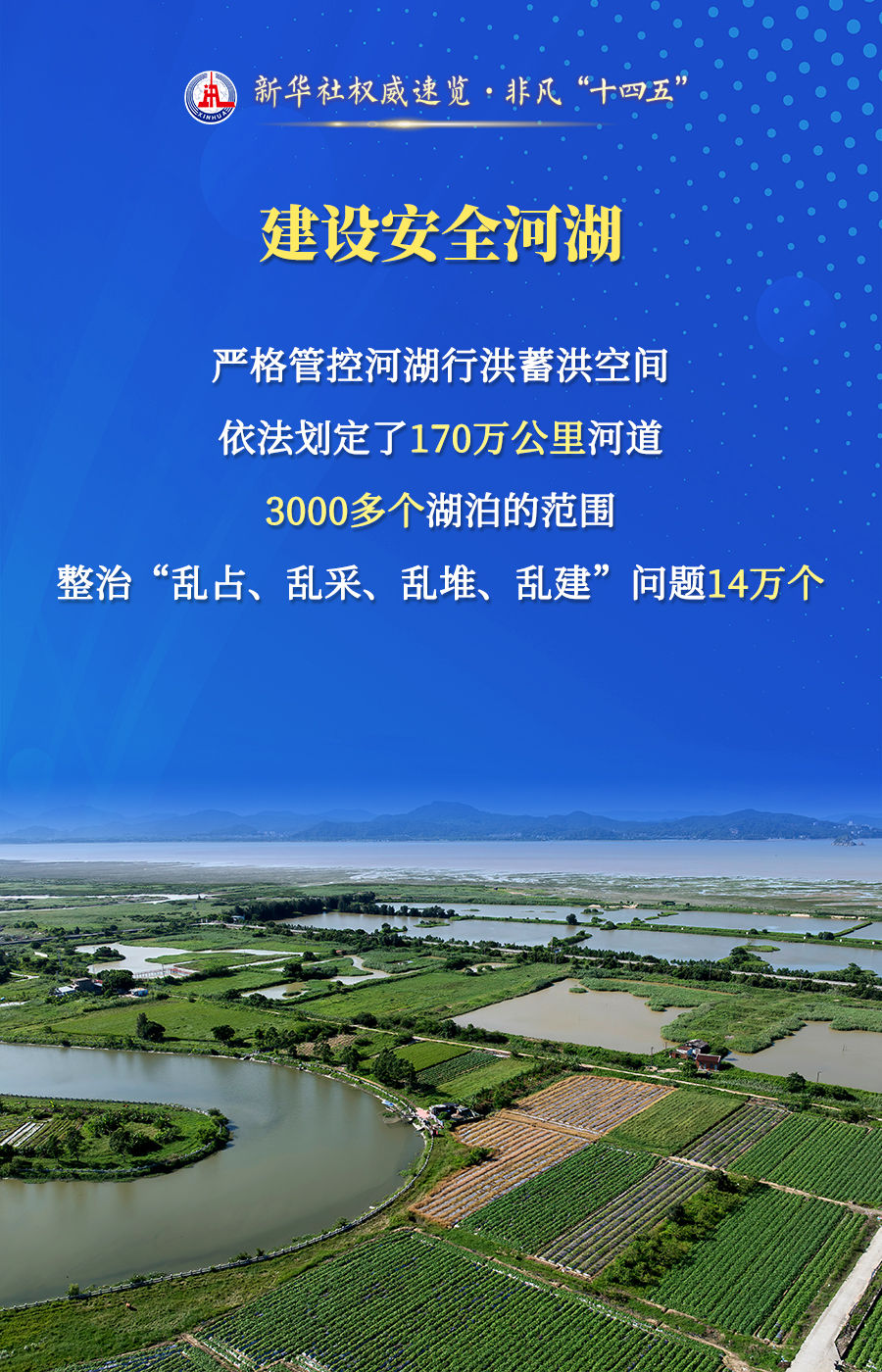
新华社权威速览·非凡“十四五”|水更清岸更绿景更美,水利部门这么干!
Xin Hua She· 2025-09-29 11:14
Core Insights - The article emphasizes the improvement of water quality and ecological environments in rivers and lakes during the "14th Five-Year Plan" period, focusing on the implementation of the river and lake chief system to enhance public access to clean water and beautiful landscapes [1] Group 1: Construction of Safe, Life, and Happy Rivers and Lakes - The water conservancy department is working on building safe, life, and happy rivers and lakes, aiming to provide citizens with more beautiful scenes of clear water and green banks [1] - The "Mother River Revival Action" has been implemented, which includes health evaluations of rivers and lakes, enhancing water system connectivity, and ecological replenishment [3] - A significant restoration of water areas has been achieved, with over 1,300 square kilometers of water surface area restored in major lakes such as Dongting Lake, Poyang Lake, Taihu Lake, Hongze Lake, and Honghu Lake [3] Group 2: Happy River and Lake Construction - Support has been provided for local implementation of 122 happy river and lake construction projects, resulting in the establishment of numerous unique happy rivers and lakes [5] - The transformation of good ecological water into "economic water" is accelerating [5] Group 3: Ecological Environment Improvements - The ecological environment of rivers and lakes has significantly improved, with several rivers that had been dry for decades, such as the Grand Canal and the Xiliao River, now fully flowing again [7] - The ecological flow compliance rate for key rivers and lakes has reached 98.6% [7]
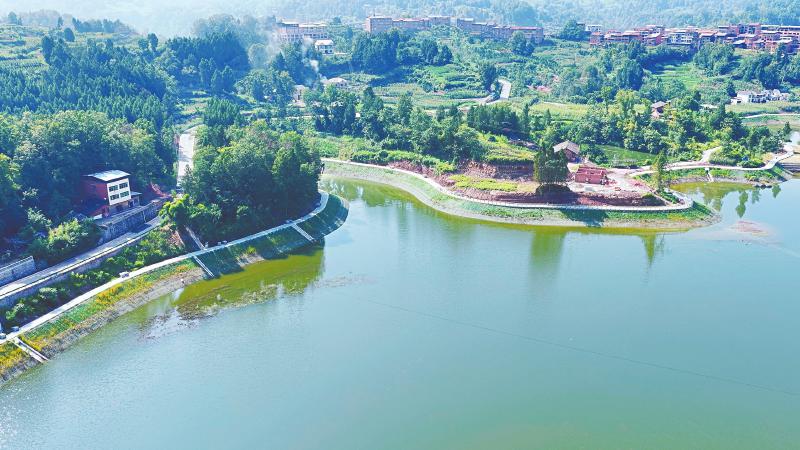
达州着力提升水旱灾害防御能力、水资源优化配置能力 守护江河安澜 算好河湖“幸福账”
Si Chuan Ri Bao· 2025-09-28 06:25
Core Viewpoint - The article highlights the ongoing efforts in Dazhou to enhance water resource management and ecological protection through various water projects, including the construction of water reservoirs and river management initiatives aimed at ensuring water security and ecological sustainability in the region [5][8]. Water Resource Management - Dazhou is accelerating the construction of water projects, including the solidification of the Gunjun Reservoir, which is expected to start concrete pouring in early October [5]. - The city has initiated the construction of two large reservoirs and eight medium-sized reservoirs, which will increase the total water storage capacity by 1.5 times compared to existing reservoirs, providing irrigation for 646,600 acres and ensuring drinking water safety for over 1.54 million urban and rural residents [8][9]. - Investment in water resources has remained high, with a total of 17.05 billion yuan invested since the 14th Five-Year Plan, marking a 106.6% increase compared to the previous plan [8]. Ecological and Community Initiatives - The "Happy River and Lake" construction project aims to enhance ecological and living conditions along rivers, with the Clear Stream River being a key project that has engaged local communities [6]. - Dazhou is developing a comprehensive plan for "Happy River and Lake" construction from 2025 to 2030, targeting the transformation of 38 rivers into provincial-level or higher "Happy Rivers and Lakes" [6]. - The city has implemented a river chief system to oversee river management, with a focus on regular inspections and maintaining water quality, achieving a 100% excellent water quality rate since 2022 [7]. Water Rights and Trading - Dazhou is exploring water rights trading as a mechanism to promote efficient water resource utilization, with 56 transactions completed in 2023, totaling 2.444 million cubic meters of water [10][11]. - The city has initiated a pilot project for water rights and pricing reform, aiming to enhance the water rights trading market and facilitate sustainable water resource management [11].
广东发布2025年第1号总河长令 全面推进幸福河湖建设
Shui Li Bu Wang Zhan· 2025-09-01 18:03
Core Viewpoint - Guangdong Province has launched a comprehensive initiative to promote the construction of "Happy Rivers and Lakes" from 2025 to 2030, aiming to enhance ecological, living, and production aspects of river and lake management [1][2]. Summary by Sections Implementation Goals - By 2025, over 100 "Happy Rivers and Lakes" will be developed, with more than 5 counties engaging in comprehensive construction [2]. - By 2027, the target increases to over 260 "Happy Rivers and Lakes," with at least one county in each prefecture-level city participating [2]. - By 2030, the goal is to establish over 500 "Happy Rivers and Lakes" and have more than 40 counties involved in comprehensive construction [2]. - By 2035, significant improvements in river and lake protection and management capabilities are expected, leading to a harmonious and ecologically livable environment [2]. Key Tasks - **Enhancing Safety**: Improve urban and rural water disaster prevention capabilities and strengthen river and lake governance [3]. - **Maintaining Ecological Health**: Focus on water resource conservation, ecological corridor protection, and biodiversity [3]. - **Achieving Cleanliness**: Promote the construction of green waterways and enhance water pollution prevention efforts [3]. - **Realizing Ecological Value**: Develop new green water economy models and upgrade traditional water industries [3]. - **Cultural Preservation**: Strengthen water culture education and promote cultural heritage [3]. - **Management Mechanism**: Establish a comprehensive management and maintenance system for the projects [3]. Support and Guidance - The provincial river chief office will collaborate with relevant departments to develop detailed work plans and standards for the "Happy Rivers and Lakes" initiative [4]. - The initiative aims to meet the growing demands of the public for a better quality of life and support high-quality development across various regions [4].
广东发布今年第1号总河长令 5年推进超500条幸福河湖建设
Nan Fang Ri Bao Wang Luo Ban· 2025-09-01 09:17
Core Points - Guangdong has issued the first general river chief order of 2025, focusing on the comprehensive promotion of "Happy Rivers and Lakes" construction from 2025 to 2030 [1][2] - The order emphasizes the integration of ecological, living, and production aspects to enhance river and lake safety, health, and cleanliness, while promoting green water economy [1][2] Summary by Sections Implementation Goals - By 2025, over 100 "Happy Rivers and Lakes" will be promoted, with more than 5 counties engaging in comprehensive construction [2] - By 2027, over 260 "Happy Rivers and Lakes" will be promoted, with at least one county in each prefecture-level city participating [2] - By 2030, over 500 "Happy Rivers and Lakes" will be promoted, with more than 40 counties involved in comprehensive construction [2] - By 2035, significant improvements in river and lake protection and governance capabilities are expected, achieving a harmonious and ecologically livable environment [2] Key Tasks - Enhance river and lake safety assurance by improving urban and rural water disaster prevention capabilities [3] - Maintain the ecological health of rivers and lakes through resource conservation and biodiversity protection [3] - Achieve cleanliness and beauty in rivers and lakes by promoting waterway revitalization and pollution prevention [3] - Promote the realization of water ecological product value, fostering new green water economy sectors [3] - Protect and inherit water culture through education and infrastructure development [3] - Improve construction management mechanisms, including a dynamic project list for "Happy Rivers and Lakes" [3]
南农晨读丨盛夏烟火 练江夜市
Nan Fang Nong Cun Bao· 2025-08-31 03:30
Group 1 - Guangdong Province has issued the first river chief order of 2025, aiming to construct over 100 "Happy Rivers and Lakes" [3][4][5] - The implementation plan for the "Happy Rivers and Lakes" initiative spans from 2025 to 2030, focusing on comprehensive promotion across the province [10][11] Group 2 - The "Happy Rivers and Lakes" initiative is part of a broader strategy to enhance environmental quality and promote sustainable development in Guangdong [6][8] - The initiative is expected to foster collaboration among various stakeholders, including local governments and communities, to achieve its goals [7][9] Group 3 - The value of the Kashi New Mei brand has surpassed 3.8 billion yuan, ranking 40th among China's regional public fruit brands, with a significant increase of 861 million yuan compared to 2024 [40][41] - The brand's rise in value indicates a successful transition and the impact of the "Xinpin Nansha" initiative, which aims to boost regional agricultural products [42]
