庞氏骗局

Search documents
切莫跌入资金盘陷阱
Jing Ji Ri Bao· 2025-11-06 00:08
Core Insights - The article highlights the resurgence of Ponzi schemes, emphasizing the need for public awareness regarding "high return, low risk" investment projects [1][2][3] Group 1: Nature of Ponzi Schemes - Ponzi schemes are characterized by promises of high returns, often using complex technology concepts as a facade for fraudulent activities [1] - These schemes operate on the principle of "using new investors' money to pay returns to earlier investors," lacking any legitimate cash flow-generating products or services [1] - Common tactics include claiming participation in significant projects for high returns, impersonating legitimate financial institutions, and offering commission for referrals [1] Group 2: Regulatory Challenges - The difficulty in regulating Ponzi schemes is a significant factor in their persistence, as they often disguise themselves under the guise of commercial or technological innovation [2] - The shift from traditional offline schemes to more covert online operations has made detection and enforcement increasingly challenging [2] - Online Ponzi schemes can operate with lower costs and faster withdrawal rates, complicating the tracking of funds and increasing the speed at which they can disappear [2] Group 3: Participant Dynamics - The ecosystem of participants in Ponzi schemes includes not only victims but also "professional players" who actively seek out these schemes for profit [3] - These "leaders" often recruit others, creating a network that can temporarily benefit from the scheme, but they are also at risk of being exploited [3] - The article stresses the importance of collective efforts from society and regulatory bodies to combat these schemes and protect investors [3]
汇丰控股业绩双降背后:麦道夫案“余震”压垮利润 重资私有化恒生银行
凤凰网财经· 2025-11-02 11:52
Core Viewpoint - HSBC Holdings reported a decline in total revenue and net profit for Q3 2025, primarily due to legal provisions related to the Madoff fraud case and restructuring costs [2][3][4]. Group 1: Financial Performance - HSBC's total revenue for Q3 2025 reached $17.8 billion, a year-on-year increase of 5%, surpassing the expected $16.7 billion [2]. - The pre-tax profit was $7.3 billion, down 15% year-on-year, reflecting a decrease of $1.2 billion compared to the same period last year [2]. - The company recorded a total operating income of $48.961 billion for the year, a decrease of 6.27% year-on-year, and a net profit attributable to shareholders of $17.341 billion, down 26.61% year-on-year [2]. Group 2: Legal Provisions Related to Madoff Case - HSBC set aside $1.1 billion in provisions related to the Madoff Ponzi scheme, which has been ongoing for over a decade [4][5]. - The provision includes $1.1 billion directly linked to a long-term lawsuit stemming from the Madoff fraud, with an additional $300 million related to UK dividend tax [4]. - The impact of this provision is estimated to reduce the Group's Common Equity Tier 1 capital ratio by approximately 15 basis points [4]. Group 3: Privatization of Hang Seng Bank - HSBC announced plans to privatize Hang Seng Bank at a price of HKD 155 per share, representing a 30% premium over the bank's stock price at the time [6][7]. - The acquisition is seen as one of the largest mergers in Hong Kong in recent years and is pending regulatory and shareholder approval, expected to be completed in the first half of 2026 [7]. - Concerns have been raised regarding the financial implications of this acquisition, which is estimated to cost around $14 billion, potentially affecting HSBC's future dividend capacity and investment plans [7][8]. Group 4: Concerns Over Commercial Real Estate Loans - As of June 30, the credit impairment for commercial real estate loans in Hong Kong reached HKD 25.012 billion, an increase of HKD 5.2 billion from the end of the previous year [8]. - The amount of commercial real estate loans classified as needing full-cycle expected loss provisions rose from HKD 29.438 billion to HKD 66.851 billion [8]. - HSBC's London-based corporate credit department has been actively engaging with global banks to facilitate the sale of over $3 billion in non-performing real estate loan assets from Hang Seng Bank [8].




大行评级丨小摩:汇丰就马多夫诈骗案诉讼拨备11亿美元 预计股价反应负面
Ge Long Hui· 2025-10-27 07:38
Core Viewpoint - HSBC Holdings is set to provision $1.1 billion in the third quarter of this year due to a ruling by the Luxembourg court regarding the Herald Fund SPC case, which is linked to the Bernard Madoff Ponzi scheme [1] Group 1: Financial Impact - The $1.1 billion provision is classified as a significant special item and will not affect the adjusted Return on Tangible Equity (ROTE) or dividends [1] - The provision is expected to impact the Common Equity Tier 1 (CET1) ratio by approximately 15 basis points [1] - Market consensus estimates for HSBC's impairment charges in the third quarter of 2025 are $1.3 billion and $1 billion from JPMorgan and the broader market, respectively [1] Group 2: Market Reaction - The additional $1.1 billion provision is not anticipated by the market, leading to expectations of a negative stock price reaction [1] - JPMorgan maintains an "Overweight" rating on HSBC with a target price of HKD 122, but expresses a preference for Standard Chartered over HSBC due to the uncertainties surrounding this provision [1]
美国国债,庞氏骗局
Sou Hu Cai Jing· 2025-10-26 00:21
Core Insights - The U.S. national debt has surpassed $38 trillion as of October 21, marking a continuous trend of record-high debt levels [1][3] - The speed at which the U.S. government accumulates debt has significantly accelerated over time, with the latest increase of $1 trillion occurring in just two months [7][9] - The current debt level is approximately 130% of the GDP, which is significantly above the international debt warning threshold of 60% [26] Debt Accumulation Trends - Historical context shows that it took 147 years for the U.S. to accumulate its first $1 trillion in debt, while the most recent $1 trillion increase occurred in just two months [7][9] - The average time taken to increase the national debt by $1 trillion has decreased from 4.1 years in the 1980s to just two months in the current period [7][9] Debt Management Practices - The U.S. government is borrowing new debt not only to pay off maturing old debt but also to cover ongoing expenditures, leading to an increase in total debt [16][27] - The federal government’s revenue for the fiscal year 2024 is projected at $4.9 trillion, while the debt stands at $38 trillion, indicating a severe imbalance [26][27] Implications of Debt Levels - The current debt situation resembles a Ponzi scheme, where new debt is used to pay off old debt without any actual repayment of principal, raising concerns about sustainability [27] - The U.S. national debt is not just a federal issue but reflects broader economic vulnerabilities, suggesting potential risks for future financial stability [27][28]

人人发财的故事,为什么总以崩盘结束?
伍治坚证据主义· 2025-10-23 03:49
Core Insights - The article discusses the economic collapse of Albania in the late 1990s, highlighting the rise and fall of pyramid schemes and the consequences of a weak financial system [2][3][4][5][6][7]. Economic Background - Albania, a small country in the Balkans, has a history of economic struggles, particularly after the collapse of its planned economy in 1991, leading to hyperinflation and a significant drop in per capita income [2]. - The transition to a market economy was chaotic, with the government implementing "shock therapy" that resulted in soaring prices and rising unemployment [2][3]. Rise of Investment Companies - From 1993 to 1996, numerous investment companies emerged in Albania, promising high returns of 10% to 30% per month, attracting significant public investment [3][4]. - By the end of 1996, these companies had absorbed funds equivalent to half of Albania's GDP, with government tacitly supporting their operations to maintain public confidence [3][4]. Collapse of the Financial System - The financial bubble burst in early 1997 when a major investment company stopped payouts, leading to a chain reaction of failures among other firms and widespread civil unrest [4][5]. - The collapse resulted in a severe economic regression, with many families losing their life savings and the country experiencing a decade's worth of economic setbacks [4][5]. Lessons and Parallels - The article draws parallels between Albania's experience and recent financial crises in emerging markets, where high-yield investment schemes have led to similar outcomes [5][6]. - It emphasizes the psychological factors driving investment behavior, where individuals are drawn to high returns despite the inherent risks, often leading to collective financial disasters [6][7]. Conclusion - The key takeaway is that the most dangerous times in financial markets often occur when everyone is making money, highlighting the importance of skepticism and patience in investment decisions [7].

获刑12年!原金融办主任大搞P2P,非法集资超10亿
Jing Ji Wang· 2025-10-20 02:27
Core Points - The case involves a Ponzi scheme operated by a P2P platform called "Caishen Online," which illegally raised over 1 billion yuan from the public [1][2][3] - The actual controller of the platform, Luo, was previously a high-ranking official in local financial regulation, which adds a layer of complexity to the case [1][7] - The Chongqing First Intermediate People's Court upheld the original ruling, sentencing Luo to 12 years in prison for fundraising fraud, along with significant fines for him and his core team members [6][7] Company Overview - "Caishen Online" was established in 2013 and launched its platform in 2014, primarily facilitating loans through internet-based information dissemination [2][3] - The platform's business model involved creating financing products based on loan requests from businesses, often using fictitious borrowers and shell companies to mislead investors [2][3] Financial Details - The fraudulent activities led to the illegal collection of approximately 1.067 billion yuan from over 1,000 investors, with actual losses amounting to around 679.9 million yuan after accounting for interest payments [3][4] - The scheme involved the use of over 100 shell companies to fabricate loan requests and misrepresent the financial health of the platform [2][3] Legal Proceedings - The court found that Luo and his associates had the intent to illegally occupy funds, constituting fundraising fraud rather than merely illegal public fundraising [6] - The court's final ruling included the confiscation of assets and a structured repayment plan for the affected investors [6]
获刑12年!原金融办主任大搞P2P,虚构百家空壳公司,非法集资超10亿!
券商中国· 2025-10-18 13:43
Core Viewpoint - The article discusses a significant case of fundraising fraud involving a P2P platform named "Caishen Online," where the actual controller, Luo, a former financial regulatory official, was sentenced to 12 years in prison for illegally raising over 1 billion yuan from the public [2][5][7]. Group 1: Case Overview - The case involves Luo and two accomplices who illegally raised funds exceeding 1 billion yuan through fraudulent means, including creating shell companies and fabricating loan information [2][3][4]. - The fraudulent activities were conducted through the "Caishen Online" platform, which promised high returns to attract investors [3][4]. Group 2: Operational Mechanism - The operational model included soliciting loan requests from businesses, creating financing products, and using shell companies to fabricate loan demands, leading to significant financial losses for investors [3][4]. - Luo and his team employed various promotional strategies, including public meetings and social media, to lure investors with promises of high interest and capital protection [4]. Group 3: Legal Proceedings - The Chongqing First Intermediate People's Court upheld the original ruling, stating that the actions of Luo and his accomplices constituted fundraising fraud due to their intent to illegally occupy funds [6][7]. - The court sentenced Luo to 12 years in prison and imposed fines on him and his accomplices, with a total of 10.67 billion yuan raised from over 1,000 investors [7]. Group 4: Background of the Key Figure - Luo, born in June 1962, had a significant background in financial regulation, having held various positions in the People's Bank of China and the Chongqing Financial Office before transitioning to the private sector [9][10]. - His previous experience in financial regulation and subsequent involvement in fraudulent activities have drawn considerable attention within the financial community [9].

ARK方舟之境崩盘在即:8200万美元资金暗度陈仓,数万投资者将血本无归
Sou Hu Cai Jing· 2025-10-11 14:46
Core Insights - The digital currency market is facing a significant crisis as the ARK Ark project has executed a final fund transfer, revealing a well-structured Ponzi scheme that is reaching its conclusion [1] - A blockchain audit report indicates that the project team has effectively wiped out $82 million in user assets through sophisticated operations [1][4] - The project has shown signs of a complete collapse, with withdrawal channels being permanently closed and a self-destruct program in its smart contract being triggered [3] Fund Withdrawal Route - The project team converted mainstream tokens into privacy coins like Monero and obscured the transactions through multiple layers of mixing, ultimately transferring funds to anonymous wallets in Switzerland and the Cayman Islands [1] - Each transaction was meticulously controlled to remain below anti-money laundering thresholds, executed during non-working hours of regulatory bodies [1] Platform Collapse Signals - The platform exhibits all signs of an impending collapse, including a "system maintenance" message that effectively means permanent closure, and a lack of communication from official social media accounts [3] - Internal documents reveal that the core team has ordered the platform to shut down within 48 hours, putting thousands of investors' accounts at risk of becoming worthless [3] Cross-Border Money Laundering Network - The scheme demonstrates characteristics typical of a transnational criminal organization, with funds disguised through multiple shell companies and military-grade encryption used for digital wallets [4] - Some funds have been laundered through virtual art auctions, presenting new challenges for global law enforcement due to the anonymity features of blockchain technology [4] Investor Self-Rescue Measures - Victims are advised to take immediate actions such as preserving all transaction records and communications, reporting to local financial regulatory authorities, and being cautious of secondary scams [6] - This incident highlights the high-risk nature of the digital currency sector, where the project team controls both the private keys and code permissions, undermining the concept of decentralization [6]
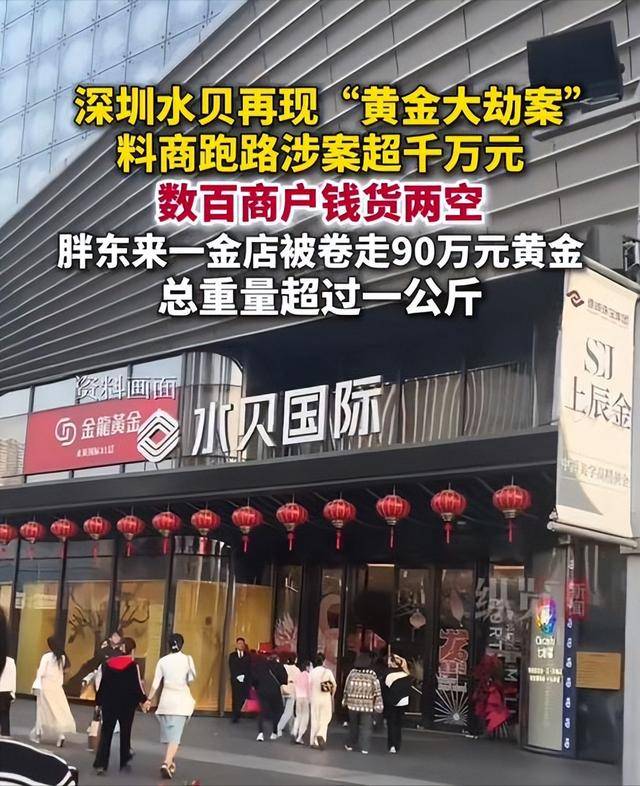
黄金飙涨金店却暴雷!金价破800金店倒闭,水贝料商跑路牵黄金坑
Sou Hu Cai Jing· 2025-10-09 12:39
Core Viewpoint - The article highlights the increasing risks in the gold market, particularly during periods of rising gold prices, leading to significant financial losses for investors and the collapse of several gold-related businesses [2][4][10]. Group 1: Market Events and Trends - The gold market has seen a pattern where each surge in gold prices results in the collapse of various businesses, as evidenced by incidents from late 2023 to September 2025 [4][10]. - In late 2023, multiple Chinese gold franchise stores closed suddenly, with one store in Haidian District involved in a case amounting to 400 million yuan [4][10]. - The collapse of Zhejiang Yongkun Gold in May 2025, which had 4 billion yuan in funds, exemplifies the systemic risks present in the industry [2][10]. Group 2: Business Models and Risks - Many gold businesses lure investors with promises of guaranteed returns, such as 5% annual yields, but often lack sufficient gold reserves, leading to financial instability when gold prices rise [6][18]. - Yongkun Gold's "41 billion yuan gold insurance" was revealed to be a facade, as the company did not have adequate gold reserves to back its claims [20]. - The practice of "low deposit price locking" by businesses like Yuebaoxin, allowing traders to lock in gold prices with minimal deposits, significantly increases leverage and risk [12][14]. Group 3: Regulatory and Market Structure Issues - The gold market is characterized by a lack of effective regulation, allowing risks to accumulate until they are triggered by price surges [30][32]. - The majority of gold stores operate under franchise models, with minimal oversight from brand owners, complicating consumer protection and risk management [20][23]. - The high operational costs of running a gold store, combined with low profit margins, push franchisees to engage in risky financial practices [22][28]. Group 4: Investor Caution and Recommendations - Investors are advised to avoid schemes promising "interest-bearing gold" or "guaranteed returns," as these are often indicative of Ponzi schemes or high-risk gambling [34][36]. - The article suggests that legitimate gold investments should be made through banks or regulated financial institutions, emphasizing the importance of using recognized channels for transactions [38][40]. - It is crucial for investors to be aware of the real-time gold prices and to understand the risks associated with low-priced gold offerings in wholesale markets [41][43].
实锤曝光!ARK 方舟之境资金盘内部消息:正在销毁数据准备跑路!
Sou Hu Cai Jing· 2025-10-08 05:07
Group 1 - The ARK Ark project is reportedly nearing the completion of a significant fund transfer, with nearly 90% of funds moved, indicating a planned exit strategy [1] - On-chain monitoring data reveals that the project has laundered approximately $42 million worth of crypto assets in the past 48 hours, dispersing funds into 27 newly created anonymous wallets [3] - The project team has begun deleting core server data and destroying critical evidence, including user balance records, suggesting a premeditated exit plan [3] Group 2 - The project has exhibited classic signs of a Ponzi scheme collapse, including limiting large withdrawals, shutting down community questioning features, and releasing false "system upgrade" announcements [3] - During the fund transfer, the project team has been promoting "buying opportunities" through fake accounts, misleading investors with false success withdrawal screenshots [5] - The remaining funds in the ARK Ark project are reported to be less than 15% of their peak, with warnings that the platform may soon announce a "hacker attack" to shut down operations completely [3]