数字乡村

Search documents
“数字火种”入乡野:千名乡村网红点燃网络强村引擎
21世纪经济报道· 2025-07-30 11:19
Core Viewpoint - The training program for digital new farmers in Guangdong aims to redefine the value of rural areas by equipping farmers with digital skills, enabling them to effectively market their products and enhance agricultural economics [1][2][9]. Group 1: Training Program Overview - The training program covered 21 cities and aimed to cultivate digital skills among rural residents, emphasizing the importance of visibility for good products rather than just the products themselves [1][5]. - The program targeted various groups, including village leaders, returning youth, and emerging influencers, focusing on practical skills such as mobile photography and live streaming [5][9]. - Feedback from participants indicated that the training was effective and practical, with many expressing that they learned valuable skills that could be immediately applied [5][6]. Group 2: Impact on Rural Economy - The integration of digital skills into rural economies is transforming traditional agricultural practices, with examples of increased sales through online platforms, such as a 20% increase in sales for Xu Wen pineapples [2][5]. - The training has led to the establishment of efficient supply chains, connecting producers directly with consumers, thus enhancing market reach and sales potential [5][10]. - Digital tools are being recognized as fundamental production factors, akin to seeds and fertilizers, reshaping the operational logic of rural economies [2][10]. Group 3: Future Prospects and Community Engagement - The program aims to create a network of digital new farmers who can support each other and drive local economic growth, moving beyond the concept of individual influencers to a more collective approach [9][12]. - Participants are encouraged to become active storytellers of their rural experiences, shifting the narrative from urban-centric views to a more authentic rural perspective [6][10]. - The initiative is part of a broader strategy to integrate digital skills into the rural workforce, with ongoing support from government and market forces to ensure sustainability and growth [9][12].

提升数字化技能改善农民生活
Jing Ji Ri Bao· 2025-07-29 22:28
Core Viewpoint - The continuous improvement of farmers' digital skills is essential for the comprehensive revitalization of rural areas, supported by the recent guidelines from the Central Cyberspace Affairs Commission and other departments, which emphasize the need for digital inclusive services in rural education and talent cultivation [1][2]. Group 1: Agricultural Production - The application of technologies such as IoT and big data in agricultural production and circulation is driving the development of smart and precise agriculture, significantly enhancing production efficiency [1]. - Digital skills are enabling farmers to access broader markets, overcoming traditional sales channel limitations through e-commerce and live streaming, allowing them to sell products directly to national and global markets [1]. Group 2: Rural Industry Development - The enhancement of farmers' digital skills is facilitating the integration of rural industries, with digital technology fostering new business models such as rural tourism and agricultural product processing [2]. - Local governments are leveraging the internet to promote rural tourism resources and develop unique agricultural brands, attracting more visitors and consumers, thus invigorating rural economies [2]. Group 3: Public Services and Governance - Improved digital literacy among farmers allows for easier participation in rural affairs and access to quality public services, making governance and public service delivery more efficient and transparent [2]. - An increasing number of farmers are utilizing digital tools to obtain policy information and engage in village decision-making processes [2]. Group 4: Challenges and Support - There are challenges in enhancing digital skills, including the need for better digital training platforms and a shortage of professional digital talent [2]. - Emphasis is placed on strengthening support for professional teams and experts in villages, encouraging digital talent to serve rural areas, and enhancing training for various e-commerce professionals [2].
广东联通创新模式,拓宽村集体“致富路”
Zhong Guo Fa Zhan Wang· 2025-07-25 08:07
Core Viewpoint - Guangdong Unicom is actively participating in rural revitalization efforts, showcasing its commitment through various initiatives aimed at improving infrastructure, governance, economic development, and public welfare in rural areas [1][9]. Infrastructure Development - Guangdong Unicom has invested over 120 million yuan in digital infrastructure in Xingning, building more than 1,300 4G/5G base stations to ensure continuous coverage and promote high-speed internet access in rural areas [2]. - The company has addressed communication network coverage issues in mountainous regions, enabling villagers to access online services and reducing the digital divide [2]. Governance Innovation - The "Digital Yonghe" platform, developed by Guangdong Unicom, has transformed local governance by integrating various data resources for better management and emergency response, achieving over 1,000 risk event warnings [3]. - Yonghe Town has been recognized as a model for comprehensive grid management, with the platform enhancing the efficiency of local governance [3]. Economic Revitalization - Guangdong Unicom has implemented a series of industrial support initiatives, including investments in green energy projects and the establishment of local factories, significantly increasing village collective income from 3,000 yuan to over 230,000 yuan annually [4]. - The company has facilitated the return of local entrepreneurs and attracted new businesses, creating over 110 jobs in Yonghe Town [4]. Income Generation Exploration - The introduction of a rural communication cooperative model has strengthened village collectives' financial capabilities, generating over 15 million yuan in revenue across more than 1,730 administrative villages [5][6]. Public Welfare Improvement - Guangdong Unicom has invested in various public welfare projects, including water supply, solar lighting, road construction, and educational resources, significantly enhancing the quality of life for residents in Yonghe Town [7]. - The company has also focused on healthcare and education, providing modern medical equipment and upgrading teaching facilities in local schools [7]. Commitment to Rural Revitalization - Over the past three years, Guangdong Unicom has deployed 73 aid workers and invested over 16 million yuan in support of rural revitalization, achieving significant results in various sectors [8]. - The company has received multiple awards for its contributions to rural development, reflecting its commitment to the "Hundred Million Project" and ongoing efforts to enhance regional coordination and rural revitalization [9].

赢商者说|北京畅天游科技创始人王晓晨:以“数字底座+场景应用”为核心 让每个乡镇拥有自己的数字名片
Xin Hua Wang· 2025-07-23 03:12
Core Viewpoint - The article emphasizes the importance of digital rural construction as a strategic direction for rural revitalization and a key component of building a digital China, highlighting the role of private enterprises in driving this transformation [1]. Company Overview - Beijing Changtianyou Technology Co., Ltd. positions itself as a "digital infrastructure builder" for rural revitalization, aiming to address issues of resource misallocation and information isolation between urban and rural areas [1][3]. - The company has developed a unique competitive advantage by reducing the cost of real scene modeling by 70% through self-developed VR imaging technology and holds 19 patents and software copyrights [3][4]. Business Model and Innovations - Changtianyou has created a "data anti-monopoly" framework, ensuring that the platform provides tools without owning merchants' core data, thus safeguarding data sovereignty [3][4]. - The company collaborates with major entities like People's Daily, Agricultural Bank of China, and China Unicom to form a closed-loop ecosystem of "resources-finance-communication," which alleviates the initial investment pressure on merchants through a profit-sharing model [3][4]. Market Impact - The integration of VR digital exhibition halls with blockchain for rights confirmation has successfully transformed intangible cultural heritage skills into manageable digital assets, significantly increasing engagement from younger demographics [4]. - The company has reported a monthly service average exceeding 6,000 users and ticket sales surpassing 200,000 yuan, demonstrating its impact on local tourism and cultural heritage [4]. Future Plans - Changtianyou aims to cover 100 counties and 1,000 towns within three years, focusing on developing AI digital tour guide systems and building trustworthy data chains using blockchain technology [5]. - The company plans to extend its service scenarios from agriculture and cultural tourism to encompass all areas of rural governance, indicating a comprehensive approach to rural digitalization [5].
奔向创新城市 探索钱塘AI密码
Hang Zhou Ri Bao· 2025-07-23 02:29
Group 1: Urban Innovation and AI Integration - Qiantang New District is embracing artificial intelligence to build an innovative city, showcasing various technological applications such as drone deliveries and autonomous buses [1][2] - The district has launched two autonomous bus routes that allow residents to experience AI-driven transportation, enhancing the daily commute [2] - A drone delivery service has been established, significantly reducing delivery times for food orders, demonstrating the efficiency of the integrated service stations [3] Group 2: Low-altitude Economy and Agricultural Innovation - Qiantang New District is forming a low-altitude economy ecosystem with over 60 related enterprises, focusing on applications like agricultural drone services and emergency medical deliveries [4] - Agricultural drones developed in the district are increasing efficiency in farming practices, allowing for precise pesticide application [3] Group 3: Digital Transformation in Rural Governance - The district is implementing a digital transformation in rural governance, utilizing smart systems for waste management that enhance efficiency and reduce labor costs [5] - A digital service center, referred to as the "digital living room," is facilitating easier access to public services for residents, streamlining processes and improving convenience [6] - The integration of AI technology in rural areas is enhancing governance effectiveness and providing tangible benefits to residents, contributing to rural revitalization [6]
新华网2025乡村振兴实践案例征集启动
Xin Hua Wang· 2025-07-22 08:29
Core Viewpoint - The "2025 Rural Revitalization Practice Case Collection" initiative aims to gather representative, innovative, and leading rural development models, technologies, and services to promote sustainable practices and effective methods for rural revitalization in China [1][3]. Group 1: Collection Details - The collection period is from July 22, 2025, to November 30, 2025, encompassing 12 categories including industrial development, technological innovation, cultural tourism integration, brand development, rural construction, digital villages, green ecology, party building, cultural heritage, financial innovation, talent enhancement, and new entities [3][4]. - Various organizations, including government agencies, state-owned enterprises, private companies, and academic institutions, can submit cases, with each entity allowed to choose only one category for submission [3][4]. Group 2: Review Process - The review process consists of four stages: initial screening, preliminary review, re-examination, and final review, ensuring a scientific and effective evaluation of submissions [3][4]. - After the collection period, selected cases will be publicized and promoted through various channels, including a dedicated webpage and expert-led events [3][4]. Group 3: Submission Requirements - Submissions must demonstrate authenticity, innovation, effectiveness, sustainability, and representativeness, focusing on practical solutions to specific problems [12][13]. - Cases can be submitted in text, video, or audio formats, with specific requirements for each format regarding length, quality, and accompanying materials [13][14]. Group 4: Categories of Focus - **Industrial Development**: Focus on cultivating competitive and sustainable rural industries that enhance agricultural capabilities and employment [4][5]. - **Technological Innovation**: Emphasize modern agricultural technologies and practices, including smart agriculture and data-driven solutions [5][6]. - **Cultural Tourism Integration**: Promote the integration of local culture and tourism to enhance rural economic vitality [6][7]. - **Brand Development**: Strengthen regional agricultural brands to improve market recognition and consumer loyalty [6][7]. - **Rural Construction**: Improve rural infrastructure and public services to enhance living conditions and community well-being [6][7]. - **Digital Villages**: Advance digital infrastructure and services to support rural development and governance [7][8]. - **Green Ecology**: Promote sustainable agricultural practices and environmental protection [7][8]. - **Party Building**: Strengthen grassroots party organizations to support rural revitalization efforts [8][9]. - **Cultural Heritage**: Foster cultural values and heritage to enhance community identity and cohesion [8][9]. - **Financial Innovation**: Optimize financial services to support rural economic activities and development [9][10]. - **Talent Enhancement**: Build a skilled workforce to support rural industries and initiatives [10][11]. - **New Entities**: Support the development of new agricultural entities to enhance operational efficiency and farmer income [10][11].

沙海植入“绿芯片”——甘肃民勤县锻造智慧乡村新范式
Huan Qiu Wang· 2025-07-17 02:52
Core Viewpoint - The integration of advanced communication technologies by China Mobile in Minqin County, Gansu Province, is transforming the region from a "communication island" surrounded by deserts into a thriving agricultural hub, enhancing connectivity and promoting rural revitalization [1][2][7]. Group 1: Communication Infrastructure - China Mobile has established a robust communication network in Minqin County, enabling farmers to utilize e-commerce for selling 90% of their melons, significantly improving their market access [2][3]. - The introduction of 4G technology in remote pastoral areas has allowed herders to maintain contact with family and manage livestock more effectively through digital tools [2][3]. Group 2: Agricultural Innovation - The implementation of smart irrigation systems, supported by an investment of 20.9 million yuan, has improved water management in a region with an annual rainfall of only 113.2 mm, increasing water efficiency by 10% to 15% per acre [4][5]. - Farmers can now manage up to 1,000 acres remotely through mobile applications, enhancing productivity and allowing them to focus on other income-generating activities [4]. Group 3: Economic Impact - The use of digital identification for livestock has enabled herders to track their sheep's location, leading to increased visibility and higher prices for their products, with some reporting annual incomes exceeding 100,000 yuan [3]. - The installation of over 50,000 smart water meters has led to a 50% reduction in water costs for residents, promoting more efficient water usage in a water-scarce area [5]. Group 4: Environmental Initiatives - China Mobile has installed high-altitude monitoring towers to enhance fire prevention and ecological protection in desert areas, significantly improving the efficiency of monitoring efforts [6]. - The company has supported large-scale tree-planting initiatives, engaging thousands of volunteers to combat desertification and promote ecological sustainability [6][7]. Group 5: Future Prospects - With a 95% coverage rate of 5G networks and nearly 120,000 broadband access points established, China Mobile aims to further enhance rural development through technology, driving agricultural upgrades and improving living standards [7].

江苏联通:数字惠农智慧兴村,助力胡西社区乡村振兴加“数”向前
Jiang Nan Shi Bao· 2025-07-16 15:02
Core Viewpoint - Jiangsu Unicom is actively promoting rural revitalization through digital technology and smart agriculture, showcasing its commitment to enhancing rural infrastructure and governance [1][5]. Group 1: Digital Empowerment in Agriculture - Jiangsu Unicom has established a "5G Smart Agriculture Platform" to support high-quality watermelon cultivation, integrating technologies such as IoT and smart sensing for efficient farming practices [2]. - The company has implemented a digital visualization approach to monitor the growth of crops, enhancing the agricultural process and enabling farmers to leverage technology for better yields [2]. Group 2: Smart Governance Initiatives - The establishment of a "Digital Rural Dispatch Center" allows for efficient community management, providing real-time monitoring and enhancing service delivery in rural areas [3]. - The platform integrates various safety and monitoring tools, significantly improving the sense of security and satisfaction among local residents [3]. Group 3: Skill Development and Training - Jiangsu Unicom is focusing on long-term agricultural skill development by organizing training sessions led by agricultural experts, covering essential topics such as crop cultivation and pest control [4]. - The company emphasizes practical training and knowledge sharing to empower local farmers, thereby increasing their income potential and agricultural productivity [4]. Group 4: Future Outlook - Jiangsu Unicom aims to continue leveraging digital technology to foster rural industry development and modernization of governance, aspiring to create a comprehensive rural revitalization model across Jiangsu [5].
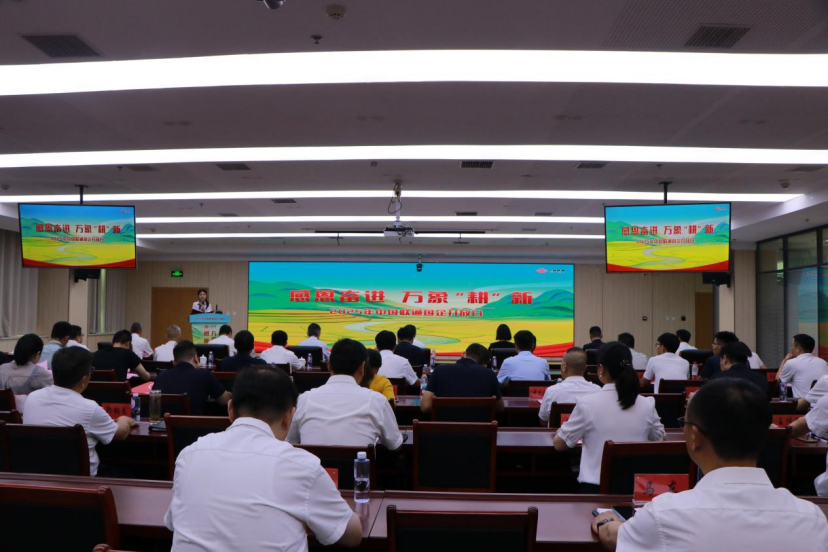
中国联通2025年国企开放日山东活动走进菏泽定陶
Qi Lu Wan Bao· 2025-07-16 07:58
Core Viewpoint - China Unicom is actively fulfilling its responsibilities as a central enterprise by leveraging digital technology and AI applications to support rural revitalization and enhance smart living in rural areas [1][10]. Group 1: Achievements in Rural Revitalization - The event showcased several breakthroughs in smart agriculture, digital governance, and consumer assistance, including a 30% increase in cucumber yield through AI smart greenhouses and a reduction in dispute resolution time from 3 days to 2 hours via the "Digital Majiji" platform [1]. - Over the past three years, the "Consumer Assistance Qilu Action" has organized more than 50 events, with assistance amounts exceeding 20 million yuan [1]. - The digital rural platform has served 60,000 administrative villages in Shandong, integrating data for governance and public services, significantly enhancing efficiency [4]. Group 2: Technological Empowerment - The "5G + AI Smart Orchard" system utilizes IoT sensors to monitor soil and light conditions, guiding precise irrigation and fertilization, leading to a 10-fold increase in the area of standardized organic ginger cultivation [4]. - The smart agriculture demonstration garden in Dengji Village has implemented real-time data collection for 12 parameters, resulting in a 20% increase in vegetable yield and significant savings in fertilizer and water [6]. - The digitalized breeding base for yellow mealworms has adopted a "four unification" management model, leading to an average annual net profit of over 300,000 yuan for participating farmers [8]. Group 3: Future Prospects - The second phase of the yellow mealworm project is expected to generate an annual output value of 240 million yuan, positioning it as the largest yellow mealworm production base in the country [8]. - The ongoing initiatives reflect a new paradigm of technological empowerment for rural revitalization, with digital technologies redefining the landscape of rural development [10].

踔厉奋发新征程 | 信息化点亮美好乡村
Zhong Yang Ji Wei Guo Jia Jian Wei Wang Zhan· 2025-07-14 00:38
Core Viewpoint - The rapid development of 5G infrastructure in rural China is significantly enhancing agricultural productivity and improving the quality of life for rural residents, enabling digital transformation and smart agriculture [8][10][12]. Group 1: 5G Infrastructure Development - As of March 2023, China has built 4.395 million 5G base stations, achieving 90% coverage of administrative villages, surpassing the target of 80% set for 2025 [8]. - The expansion of 5G networks has accelerated the digitalization of rural areas, facilitating the integration of advanced technologies in agriculture and daily life [8][11]. Group 2: Smart Agriculture - In Sichuan Province, a 130-acre citrus plantation has transitioned from traditional management requiring 10-15 workers to a smart management system needing only 3-5 workers, thanks to 5G technology [10]. - The use of drones for pest control and remote monitoring has increased operational efficiency, with drones capable of covering 200 acres per hour compared to 5 acres per day by manual labor [10][11]. - 5G-enabled systems allow for real-time data transmission and remote control of irrigation and fertilization, enhancing crop management and yield [11]. Group 3: Enhanced Rural Life - Villagers in Zhejiang Province are experiencing improved connectivity and access to services, such as remote medical consultations and online education, due to 5G network coverage [12][13]. - The establishment of smart service centers in villages has streamlined administrative processes, allowing residents to complete tasks like utility management locally rather than traveling to town [13][14]. Group 4: E-commerce and Livelihood Improvement - In Hunan Province, a village has leveraged 5G for live-streaming sales, generating significant revenue and expanding market reach for local agricultural products [15][17]. - The village's live-streaming efforts have resulted in sales of 270 million yuan in the first half of the year, directly benefiting local employment and income [17].