
数字普惠金融

Search documents
穿越500公里沙漠,平安融易解边疆民生工程燃眉急
Di Yi Cai Jing· 2025-10-24 10:49
Core Insights - The article highlights the financial challenges faced by residents in Qemai County, Xinjiang, due to its remote location and harsh desert environment, which complicates access to financial services [1][2][4] - The implementation of various livelihood projects in Qemai County is hindered by significant funding requirements and long project durations, necessitating efficient financial support [2][4] - The company Ping An Rongyi has adopted an "AI + O2O" model to enhance financial service coverage in remote areas, addressing the financial service gap in Qemai County [5][9] Financial Services Challenges - Qemai County, with an area of 138,600 square kilometers, faces a lack of financial services, impacting local livelihood projects and small businesses [1][2] - Construction project managers, like Ke, experience difficulties in securing timely payments for materials, which can halt construction progress [4] Innovative Solutions - Ping An Rongyi's consultants provide on-site financial services, significantly reducing the time and effort required for local businesses to access funds [5][7] - A case study illustrates how a consultant traveled 500 kilometers to assist a construction manager, resulting in a quick loan approval process that alleviated immediate financial pressures [7][8] Commitment to Local Development - The company emphasizes its commitment to serving remote areas, with its consultants traveling over 250,000 kilometers monthly to support various projects and small businesses [9][10] - Ping An Rongyi aims to transform the financial landscape in Xinjiang, moving from traditional "backpack finance" to comprehensive digital inclusive finance [10]


邮储银行积极支持江门地区“专精特新”及高新技术企业
Zhong Guo Fa Zhan Wang· 2025-09-30 10:35
Group 1 - China Postal Savings Bank is actively innovating financial service models in Jiangmen, Guangdong, to support local "specialized, refined, unique, and innovative" and high-tech enterprises through innovative products, rapid loan disbursement, and accompanying services [1] - The bank has introduced "Science and Technology Innovation Loans" based on intangible assets, breaking traditional collateral limitations, which allows for a more flexible financing structure for technology-driven companies [2] - The "Science and Technology Innovation Loans" are specifically aimed at supporting research and development investments and equipment upgrades for companies like Hongxing Aluminum, which expects an output value of 320 million yuan this year [2] Group 2 - The bank's rapid response is exemplified by the case of Guangdong Wanjiahong Stainless Steel Products Co., which received a 5 million yuan loan within 72 hours to address a short-term funding gap due to a surge in orders [3][4] - The "Cluster E-Loan" product utilizes industry-wide data to create risk control models, enabling standardized online loan services for entire industrial clusters, thus improving efficiency and reducing processing time [3][4] - The bank emphasizes a partnership model with local enterprises, providing customized, long-term services that adapt to the specific needs of companies like Lifen Electric, which has benefited from tailored financial solutions [6][7] Group 3 - The bank collaborates with government departments, guarantee institutions, and industrial parks to create a multi-party financial service mechanism, enhancing support for "specialized, refined, unique, and innovative" enterprises [7] - The bank's initiatives, such as using intellectual property pledges to solve financing difficulties for aluminum companies and providing rapid funding solutions for stainless steel enterprises, contribute significantly to the industrial revitalization efforts in Jiangmen [7]

直销银行退场背后:行业数字化发展进入深度整合新阶段
Mei Ri Jing Ji Xin Wen· 2025-09-24 12:51
Core Viewpoint - Postal Savings Bank of China (PSBC) announced the absorption and merger of its wholly-owned subsidiary, Postal Bank of China Huinong Bank Co., Ltd. (Huinong Bank), which will lead to the cancellation of Huinong Bank's independent legal status and the transfer of all its business, assets, debts, and rights to PSBC, ensuring that customer rights remain unaffected [1][2]. Company Summary - Huinong Bank was established in January 2022 with a registered capital of 5 billion yuan, focusing on serving agriculture, small and micro enterprises, and the general public through a digital inclusive finance model [2]. - The merger will not materially impact PSBC's financial status or operating results, as Huinong Bank's financial statements have already been fully consolidated into PSBC's reports [2]. - The existing loans and deposits from Huinong Bank are relatively small in scale, and their natural expiration will not significantly affect PSBC's future performance [2][3]. Industry Summary - The merger reflects a broader trend in the banking industry, where many banks are integrating their direct banking or digital financial subsidiaries, moving from initial experimentation to comprehensive integration [1][3]. - The independent value of direct banks has diminished due to challenges such as product homogeneity and high customer acquisition costs, leading to over 20 banks shutting down or integrating their direct banking operations [3]. - The banking sector is transitioning from extensive channel expansion to refined ecological cultivation, indicating a shift towards integrated operations [3]. Digital Transformation Initiatives - The merger is expected to optimize PSBC's management and business structure, enhance digital transformation outcomes, improve operational efficiency, and reduce management costs [4]. - PSBC has implemented new core systems for personal, corporate, and credit card businesses, and is deepening its digital transformation through financial technology, big data, and artificial intelligence [4][5]. - The bank aims to build a digital inclusive finance system and enhance its risk management capabilities while focusing on user-centered digital banking development [4][6].
开业不到四年,邮惠万家银行将被邮储银行吸收合并
Huan Qiu Lao Hu Cai Jing· 2025-09-24 04:07
Core Viewpoint - Postal Savings Bank of China (PSBC) announced the absorption and merger of its wholly-owned subsidiary, Postal Savings Bank Huinong Co., Ltd., to optimize management and business structure [1] Group 1: Merger Details - The merger will result in the cancellation of Postal Savings Bank Huinong's independent legal status, with all its business, assets, debts, and rights being inherited by PSBC [1] - Customers of Postal Savings Bank Huinong will not be affected, and existing contracts will remain valid [1] Group 2: Financial Impact - The merger is not expected to have a substantial impact on PSBC's financial status or operating results, as Postal Savings Bank Huinong's financial statements have already been fully consolidated into PSBC's reports [1] Group 3: Background and Purpose - The merger aligns with PSBC's strategy of increasing investment in financial technology and enhancing digital and centralized capabilities, particularly through mobile banking [1] - The integration of Postal Savings Bank Huinong's online operational experience is seen as a strong complement to PSBC's online business [1] - The merger aims to optimize resource allocation and reduce management costs [1] Group 4: Historical Context - Postal Savings Bank Huinong was established in January 2022 with a registered capital of 5 billion yuan, focusing on inclusive and digital finance [2] - As of the end of 2024, Postal Savings Bank Huinong had over 21 million registered users, total assets of 12.828 billion yuan, and a net asset of 4.159 billion yuan, with a revenue of 243 million yuan, down 31.55% year-on-year [2] - By mid-2025, its total assets were 12.005 billion yuan, net assets were 4.042 billion yuan, and it reported a revenue of 150 million yuan with a net loss of 118 million yuan, reducing losses by 38.74% year-on-year [2] Group 5: Industry Context - Following the merger, only Baixin Bank remains as an independent legal direct bank in the domestic market [3]
理财AI助理“蚂小财”登上央视,现场解答行情和理财疑问
Zheng Quan Shi Bao Wang· 2025-09-24 03:55
Core Insights - The article highlights the significant advancements in financial technology in China, particularly focusing on the AI application "Ma Xiao Cai" from Ant Wealth, which serves as an AI assistant for personal finance management, demonstrating capabilities comparable to professional analysts [1][2]. Group 1: AI Application and User Engagement - "Ma Xiao Cai" has over 70 million users, ranking first among professional AI applications in China according to Quest Mobile's report [1]. - In August, the inquiry volume for "Ma Xiao Cai" increased by 42%, with the AI assistant issuing 8.32 million rational investment alerts to users amid market volatility [2]. - The AI assistant offers features such as "monitoring" and "fund diagnosis," which help users understand market events and assess fund performance, thereby enhancing user experience and accessibility [2]. Group 2: Professional Use and Market Position - "Ma Xiao Cai" is also utilized by financial institutions and academic professionals, with the PRO version available to over a hundred partner institutions for market research and analysis [3]. - The underlying model of "Ma Xiao Cai," known as Finix, has been recognized for its superior performance in financial rigor, ranking first in the FinEval 6.0 evaluation report by Shanghai University of Finance and Economics [3]. - Experts believe that the integration of AI in finance will significantly contribute to the development of inclusive and digital finance in China, enhancing service accessibility and quality [3].
广东省唯一!茂名市跻身全国新一批五个深化普惠金融改革地市
Nan Fang Du Shi Bao· 2025-09-16 14:32
Core Viewpoint - The article highlights the emergence of various green brands in Maoming, Guangdong, which are significantly contributing to the local economy and employment through a robust agricultural industry supported by financial reforms aimed at enhancing inclusive finance [2][9]. Group 1: Agricultural Industry Development - Maoming has established a strong agricultural foundation, with a total agricultural output value projected to reach 120.89 billion yuan in 2024, making it the only city in Guangdong to exceed 100 billion yuan in agricultural output for five consecutive years [2][3]. - The city has developed a full industrial chain around its key products, including lychee and Huaju Hong, with the total output value of the specialty agricultural industry exceeding 53 billion yuan, creating job opportunities for over 600,000 people [3][6]. Group 2: Financial Support and Innovation - The introduction of various financial products such as "Lychee Loan," "Huaju Hong Loan," and "Tilapia Loan" has addressed the urgent financing needs of farmers and small businesses, enabling them to expand operations and improve productivity [3][5]. - The recent guidance from seven ministries emphasizes the need for financial institutions to enhance their services in rural areas, focusing on supporting Maoming's advantageous agricultural industries and new agricultural business models [6][9]. Group 3: Policy Framework and Implementation - The "Guiding Opinions" issued by the People's Bank of China and other ministries outline nine key tasks for deepening inclusive finance reforms in Maoming, providing a roadmap for enhancing financial services in agriculture and rural areas [6][7]. - The policy encourages the development of a comprehensive insurance product system and the inclusion of various agricultural assets as collateral to facilitate financing for farmers and agricultural enterprises [7][8]. Group 4: Future Prospects - Maoming's selection as one of the new pilot cities for inclusive finance reform signifies both an honor and a responsibility, aiming to enhance financial services and support the goal of common prosperity for all [9][10]. - The ongoing reforms are expected to provide new momentum for high-quality development in Guangdong's rural areas, positioning Maoming as a model for agricultural revitalization across the country [10].

有“龙”则“灵” 华夏银行数字普惠“灵龙惠”系列产品服贸会重磅发布
Jiang Nan Shi Bao· 2025-09-16 08:36
Core Insights - 华夏银行 launched the "Linglonghui" series of digital inclusive financial products aimed at enhancing financial services for small and micro enterprises through digital means [1][5][11] Event Highlights - The product launch event was attended by various dignitaries, including representatives from the Beijing Municipal Financial Office and leaders from small and micro enterprises, emphasizing the importance of inclusive finance for economic development [3][5] - The event showcased the "Linglonghui" products through live streaming and multimedia presentations, attracting significant attention from both online and offline audiences [8] Product Features - The "Linglonghui" series includes several key products: - **Longhui Loan**: A digital large loan product for small micro clients, allowing online application and processing [9] - **Longshang Loan**: A convenient small credit loan tailored for small micro clients, with a maximum limit of 5 million [9][10] - **Longchain Loan**: A customized supply chain financing product for small micro clients along the supply chain [9] - **Longchuang Loan**: A series of loans for technology-based small micro enterprises, supporting their growth [10] - **Longxiang Loan**: A green finance product focused on rural revitalization, utilizing digital technology [10] Future Outlook - The launch of the "Linglonghui" series is part of 华夏银行's broader strategy to enhance inclusive finance and digital transformation, with a focus on providing tailored services for small and micro enterprises [11] - As of June 2023, 华夏银行's small micro enterprise loan balance reached 643.281 billion, reflecting a year-on-year growth of 6.94%, with a significant reduction in financing costs for these enterprises [11]


数字服务提升消费金融体验
Jing Ji Ri Bao· 2025-09-15 22:14
Group 1: Digital Transformation in Consumer Finance - The consumer finance industry is advancing digital transformation to enhance service methods and product innovation, aiming to extend inclusive financial services [1] - Zhaolian Consumer Finance has launched a self-service system powered by AI technology to provide comprehensive financial services for long-tail customer groups such as individual strivers and new citizens [1] - Other financial institutions like Zhongyou Consumer Finance and Bank of China Consumer Finance are also increasing their technological investments, significantly improving their digital service capabilities [1] Group 2: Balancing Inclusiveness and Profitability - According to Shao Hang, Deputy General Manager of Zhongyuan Consumer Finance, achieving a balance between "universal" and "beneficial" financial services is a complex challenge that involves risk pricing and cost control [2] - The target customers of consumer finance institutions often include new citizens and blue-collar workers, whose incomplete credit information and income volatility increase risk costs [2] - Institutions should leverage digital channels to provide differentiated financial services based on a deeper understanding of customer attributes [2] Group 3: Risk Management and Technology Integration - The consumer finance industry is utilizing digitalization to enhance customer risk identification and broaden service coverage [3] - Haier Consumer Finance has innovatively applied multi-modal industry models in its risk control system, integrating technologies like image recognition and natural language processing for comprehensive user analysis [3] - These digital technologies have enabled Haier Consumer Finance to implement key anti-fraud features, significantly improving the accuracy and efficiency of digital inclusive finance risk control [3] Group 4: Online Service Migration and Market Opportunities - Consumer finance institutions are migrating loan applications and approvals online, allowing users to complete all processes via mobile devices, enhancing customer experience and reaching underserved areas [4] - Ouyang Rihui from Central University of Finance and Economics emphasizes the need for the industry to leverage digital technology to improve customer acquisition and retention capabilities [4] - The county-level consumer finance market is identified as a blue ocean market, with potential to enhance financial services for urban residents and expand coverage to remote rural areas [4]
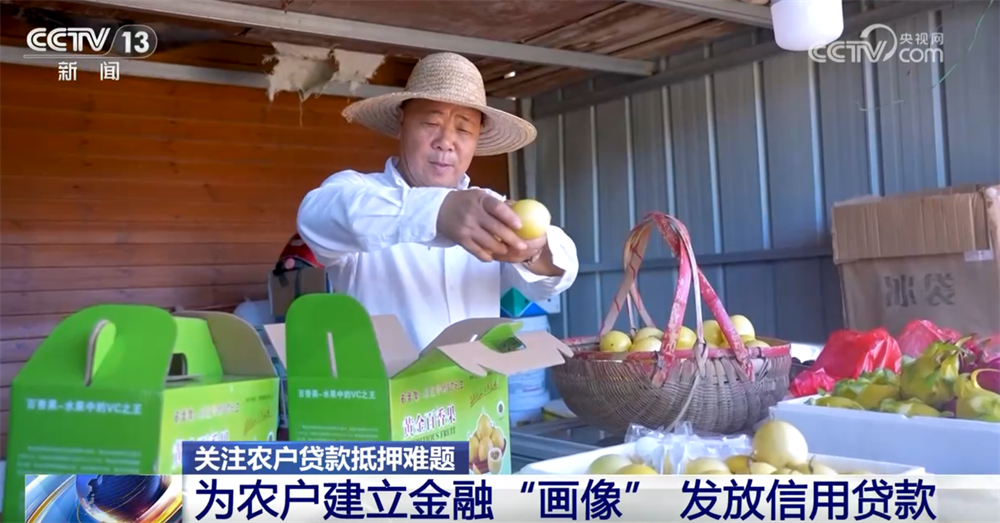
各地探索“多路径”破解农户贷款抵押难题 “信用+”让金融服务乡村振兴更精准
Yang Shi Wang· 2025-09-15 02:53
Core Insights - The article discusses the challenges faced by farmers in obtaining loans due to a lack of effective collateral and highlights various innovative solutions being implemented across different regions in China to address these financing difficulties [1][10][23]. Group 1: Innovations in Rural Financing - In Zhejiang, the application of big data technology has enabled the establishment of financial profiles for farmers, creating a loan whitelist that alleviates the financing difficulties caused by insufficient collateral [1][5][9]. - By the end of July, Zhejiang Rural Commercial Bank had achieved full coverage of eligible farmers for credit, benefiting 9.568 million households with a total credit amount of 1.44 trillion yuan, with credit loans accounting for 68% of the total [9][30]. - In Hunan, financial institutions have adopted a "whole village credit" model, which has supported 377 villages and 6,317 farmers with a total credit amount of 1.61 billion yuan [16][18]. Group 2: Credit Assessment and Loan Products - In Hubei, a pilot program has been initiated to evaluate the credit value of farmers and rural assets, allowing individual farmers to receive credit limits of up to 1 million yuan based on their credit ratings [18][20]. - The introduction of specialized credit loan products such as "pig loans," "aquaculture loans," and "pepper loans" has been developed to meet the needs of agricultural producers [14][20]. - The national agricultural credit guarantee alliance has been established to help farmers and agricultural cooperatives overcome financing challenges, with over 4.8 million farmers receiving guarantees and financing exceeding 1.76 trillion yuan [29][30]. Group 3: Shift Towards Credit-Based Financing - The Financial Regulatory Administration reported that as of July, credit loans accounted for over 50% of the total balance of operating loans for farmers, indicating a significant shift from reliance on collateral to credit value [30][34]. - The number of new agricultural entities receiving loans has increased by 10.18% since the beginning of the year, with regions like Fujian and Shanxi showing loan approval rates exceeding 70% [32][34]. - The recent implementation of the "Implementation Plan for High-Quality Development of Inclusive Finance in the Banking and Insurance Industries" emphasizes increasing credit loan issuance to farmers and new agricultural entities [36].
蚂蚁集团:确立AI转型战略,多项业务成果显著
Sou Hu Cai Jing· 2025-09-10 14:16
Core Insights - Ant Group has established a new strategy to accelerate its transformation towards the AI era, focusing on the next decade with initiatives like Alipay's dual flywheel, AI-first approach, and global expansion [1] Group 1: C-end User Services - Ant Group has successfully implemented AI transformation results, with its AI health manager AQ serving over 100 million users [1] - The "Tap to Pay" feature on Alipay has expanded to over 300 sub-scenarios, covering more than 400 cities, and has been integrated by over 5,000 brands and millions of merchants, reaching over 100 million users [1] - To stimulate consumer spending, Alipay launched a summer consumption festival in May 2023, distributing over 100 million in subsidies, resulting in a more than 20% increase in payment transactions through the "Tap to Pay" feature [1] Group 2: B-end and Globalization - Ant Group has introduced innovative solutions to address financial service pain points, launching the first AI-as-a-Service platform in the fintech industry, the "Financial AI Cockpit" [1] - Ant International's business encompasses four major sectors, with a projected fund processing volume exceeding 1 trillion USD in 2024, serving multiple markets [1] - The company has developed two core solutions for cross-border fund management: the Whale blockchain platform, expected to handle over one-third of fund processing volume in 2024, and the Eagle Sequence foreign exchange forecasting model, which boasts over 90% accuracy and has been applied in various scenarios to reduce corporate costs [1]