欧洲战略自主

Search documents
欧洲议会打响主权保卫战:俄乌和谈,欧洲不能再当旁观者!
Sou Hu Cai Jing· 2025-11-30 06:08
Core Viewpoint - The European Parliament's recent resolution emphasizes the necessity for Europe to have a significant role in negotiations regarding the Russia-Ukraine conflict, highlighting the impact of the conflict's outcome on European security [1][3]. Group 1: European Role in Negotiations - The resolution asserts that Europe must be included in all levels of negotiations, reflecting a push for strategic autonomy and a response to being marginalized in the mediation process [3][5]. - It calls for a ceasefire agreement that includes verifiable military disengagement clauses, indicating a structured approach to peace [3]. - The establishment of a multilateral security mechanism covering Ukraine and EU member states is proposed, showcasing Europe's concern over post-war order [3][9]. Group 2: Criticism of U.S. Policy - The resolution notably criticizes U.S. policies, suggesting that unilateral actions by the U.S. complicate the situation and may undermine the potential for lasting peace [1][3]. - Critics argue that Europe's military and economic dependence on the U.S. raises questions about its ability to mediate effectively, pointing to internal divisions within the EU regarding sanctions and military aid to Ukraine [5][9]. - Supporters counter that the differences in U.S. and European policies necessitate a balancing role for Europe, as it has become the largest economic aid provider to Ukraine, contributing over 60% of humanitarian assistance [5][9]. Group 3: Public Sentiment and Strategic Autonomy - A significant portion of the European public, 72%, supports a greater role for Europe in the peace process, yet 64% doubt the EU's ability to act independently from U.S. influence, reflecting a complex sentiment towards strategic autonomy [7][9]. - The ongoing war has led to rising energy prices, inflation, and security concerns in Europe, prompting a realization of the risks associated with relying solely on transatlantic alliances [7]. - The debate around the resolution indicates a growing consensus among Europeans about the need for a self-reliant security strategy, transcending traditional political divides [7][9]. Group 4: Future Implications - The resolution, while not legally binding, signals a shift in EU foreign policy direction, aiming to establish an independent crisis mediation mechanism and enhance defense capabilities [9]. - It suggests a potential transformation in long-term relations with Russia, which could alter the global power dynamics [9]. - For the EU to effectively participate in negotiations, it must address internal divisions and demonstrate its capability as a mature political player, beyond its economic strength [9].


欧洲议会打响“主权保卫战”:俄乌和谈,欧洲不能再当旁观者!
Sou Hu Cai Jing· 2025-11-29 06:12
11月27日,欧洲议会通过了一项引人注目的决议,向世界传达了一个明确的信号:在俄乌冲突的谈判过程中,欧洲必须拥有发言权。这项决议不仅强调 了"欧洲在和谈中的参与不可或缺",还指出冲突的最终结果将深刻改变欧洲的安全格局,甚至对美国的政策进行了罕见的批评,认为美国的做法"不利于持 久和平"。决议呼吁欧盟主动发挥领导作用,推动以有效停火和欧美联合安全保障为基础的政治解决方案。这一表决背后,反映了欧洲在地缘政治博弈中的 一次战略觉醒,还是仅仅一次空洞的政治口号? 自俄乌冲突爆发以来,欧洲一直处于一种尴尬的局面中——它是冲突的直接受害方,却在和平调停过程中被边缘化。这次欧洲议会的决议可以看作是对这一 现状的正式反击。决议明确指出,战争的结局将深刻影响欧洲的防御体系、能源结构以及移民政策,任何忽视欧洲声音的和平协议都可能为未来的冲突埋下 隐患。更值得注意的是,这项决议首次系统性地质疑美国在冲突中的角色,认为其单边主义做法可能使局势更加复杂。这种公开批评北约主要盟友的举动, 在欧盟历史上极为罕见。决议的核心内容集中在三大要点:首先,欧洲必须在所有层级的和谈中派代表参与;其次,停火协议必须包含可核查的军事脱离接 触条款;最后 ...
“中企乐意分享技术,为西班牙培训4000名工人”
Guan Cha Zhe Wang· 2025-11-27 06:38
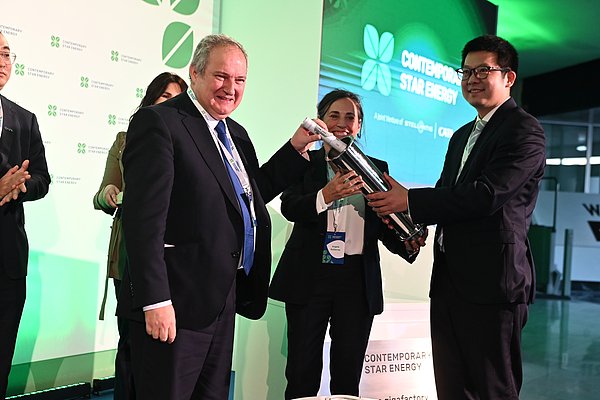
Core Points - Spain is actively responding to the electric vehicle industry's transition, aiming to solidify its position as the second-largest automotive producer in the EU, following Germany [1] - CATL's investment in a lithium iron phosphate battery factory in Spain aligns with the country's development goals and strengthens its partnership with China [1] - The joint venture between CATL and Stellantis has commenced construction with a total investment of €4.1 billion, marking the largest single investment by China in Spain [1] - The factory is expected to start production by the end of 2026, with an annual capacity of 50 GWh [1] - The project has received €300 million in funding from the EU, highlighting Europe's reliance on Chinese technology despite potential trade rule tightening [1] Investment and Employment - The factory will train up to 4,000 local workers, with a commitment from CATL to share technology to support Europe's energy transition [1][4] - CATL plans to send 2,000 Chinese employees to Spain in phases for the factory's construction, which is unprecedented for Chinese industrial projects in Europe [4] - The CEO of the Spanish factory indicated that local hiring is a priority, with plans to collaborate with Spanish universities for targeted training [4] Political and Strategic Context - The project has garnered support from both major political parties in Spain, reflecting a strategic ambition to establish Spain as a European battery production hub [5] - Spain offers competitive advantages such as industrial electricity prices 20% lower than the EU average and low labor costs, attracting global capital [5] - Despite a hardening stance from Europe towards China, Spain maintains close trade relations, as evidenced by recent high-level visits and discussions on bilateral cooperation [6]

专访巴黎政治大学校长:我不太喜欢“精英”这个词,它可能会加剧社会分裂
Xin Lang Cai Jing· 2025-11-23 23:38
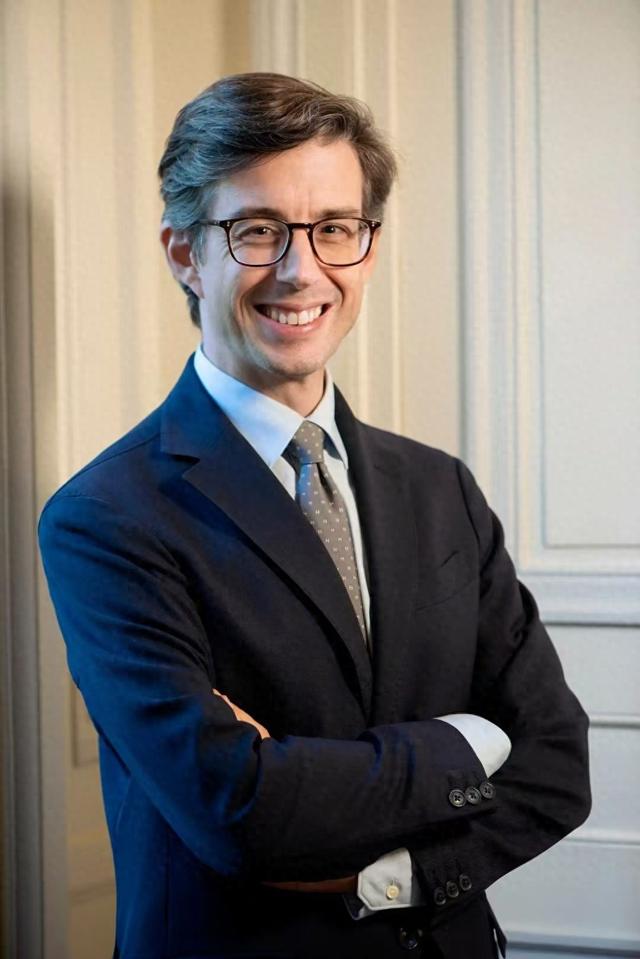
Core Viewpoint - The president of Sciences Po, Luis Vassy, emphasizes the importance of "excellence" over "elite," advocating for a commitment to doing one's best to reduce social divisions [1][9]. Group 1: Background of Sciences Po - Founded in 1872, Sciences Po is known as a breeding ground for French political elites, having produced numerous national leaders, including President Emmanuel Macron [3]. - Vassy, a graduate of Sciences Po, previously served as a diplomat and chief of staff for two French foreign ministers, highlighting the importance of international communication in both diplomacy and education [4]. Group 2: Impact of AI on Education - Vassy acknowledges the challenges posed by AI but does not view it as a crisis, noting that the first affected areas are primarily technical fields like programming [7]. - He believes that social sciences and humanities have a unique opportunity to thrive, as human contributions in strategic judgment and critical thinking surpass technical knowledge [7][8]. Group 3: Responsibility of Students - Vassy stresses that students at Sciences Po, which admits only the top 2% of high school graduates in France, have a responsibility to society, as their actions will influence future leaders [8][9]. - He emphasizes the need for students to maintain their ambition and effort, ensuring they can contribute meaningfully even without technological tools [8]. Group 4: European Strategic Autonomy - Vassy discusses the importance of understanding Europe and its operations, especially in light of current geopolitical tensions, and plans to introduce a mandatory course on Europe for all students [10][11]. - He believes that the concept of "strategic autonomy" for Europe is gaining traction, with a growing commitment to independence and the ability to defend its interests [11]. Group 5: Academic Freedom - Vassy advocates for academic and intellectual freedom, arguing that a competitive society relies on well-functioning universities and the ability to conduct research freely [12].
访问首站选择成都,预计签署合作协议,西班牙国王访华推动中西“更紧密”
Huan Qiu Shi Bao· 2025-11-10 23:23
Group 1 - The visit of King Felipe VI of Spain to China from November 10 to 13 marks the first state visit to China since his ascension to the throne and the first by a Spanish king in 18 years, indicating a significant diplomatic engagement between the two nations [1][2] - The visit includes participation in the China-Spain Economic and Trade Forum in Chengdu, followed by meetings in Beijing where several political and economic cooperation agreements are expected to be signed [1][2] - The choice of Chengdu as the starting point for the visit reflects a strategic decision by both governments, highlighting the establishment of a new consulate in the city and increased direct flight connections between Chengdu and Madrid [1] Group 2 - The visit is part of a broader effort to enhance Spain-China relations, with Spain aiming to promote its businesses in China while strengthening political ties without deviating from its EU stance [2] - Expected agreements during the visit may cover various sectors, including agricultural products and cultural exchanges, with a focus on Spanish language education in China and cooperation in marine sciences [2] - Spain's approach to maintaining independent foreign policy amidst global tensions aligns with the EU's advocacy for multilateralism, positioning Spain as a key player in fostering stable relations with China [3]
打了1000多天烧光1690亿欧元,欧洲27国终于集体认怂,开始捡起了中国的老办法
Sou Hu Cai Jing· 2025-10-17 22:50
Core Viewpoint - The article discusses the significant shift in Europe's stance regarding the Russia-Ukraine conflict, moving from aggressive support for Ukraine to advocating for peace negotiations, highlighting the economic pressures that have influenced this change [1][5][6]. Economic Impact - The economic strain on Europe has been severe, with natural gas prices soaring tenfold and inflation rates in France and the UK reaching alarming levels, leading to public protests over rising living costs [3]. - By mid-2025, the EU's total aid to Ukraine reached an astonishing €169 billion, with Germany contributing €17 billion, surpassing the US's aid of €114 billion, indicating Europe's unexpected role as the largest financial supporter of Ukraine [3]. Political Shift - In August 2025, 26 EU countries and the UK issued a rare joint statement calling for an immediate unconditional ceasefire for 30 days, reflecting a newfound urgency to end the conflict despite still emphasizing the need to prevent Russian success [5]. - The EU has begun utilizing frozen Russian assets to fund aid to Ukraine, indicating a shift from broad financial support to more strategic and limited assistance, demonstrating a pragmatic approach to the ongoing crisis [5]. Strategic Realignment - The article notes a growing realization among European nations that they cannot rely solely on the US for security, prompting calls for greater European strategic autonomy, as seen in France's push for domestic defense procurement and Germany's shift away from US military systems [6][8]. - The current European approach of advocating for dialogue and political solutions mirrors China's long-standing position, suggesting a broader recognition of the value of diplomacy over confrontation [8].
欧洲天然气价格谁主沉浮
Jing Ji Ri Bao· 2025-10-05 22:00
Core Viewpoint - The article discusses the implications of energy independence and security for the European Union (EU), emphasizing the challenges posed by geopolitical conflicts and internal disparities among member states in achieving a sustainable energy policy [1][4]. Group 1: Energy Policy and Strategic Autonomy - The EU's strategic autonomy relies heavily on an independent and sustainable energy policy, which is crucial for economic development and international cooperation [1][4]. - The EU plans to purchase $750 billion worth of U.S. natural gas, oil, and nuclear products by 2028, highlighting the importance of natural gas in the energy structure and its role in the EU's re-industrialization efforts [1]. Group 2: Energy Transition Challenges - The EU has accelerated its energy transition policies due to the Ukraine crisis and the need for green industrial development, recognizing the importance of energy security for policy independence [2]. - There are significant internal disparities among EU member states regarding energy transition, with Eastern European countries like Poland being resistant due to their reliance on coal and traditional oil and gas resources [3]. Group 3: Market Dynamics and Price Influences - Geopolitical conflicts, particularly the ongoing Ukraine crisis, have significantly impacted European natural gas prices, with recent expectations of Russian gas returning to Europe leading to price drops [1][3]. - The EU's energy supply diversification efforts have been challenged by the recent winter's gas supply tightness, with storage utilization dropping below 35%, necessitating high levels of gas imports despite elevated global prices [3].
欧洲为何突然有胆子“造反”呢?真实原因只有一个
Sou Hu Cai Jing· 2025-09-23 08:45
Group 1 - European countries are increasingly opposing the U.S. under Trump's leadership, particularly regarding Ukraine aid and trade tariffs, indicating a shift in their historical alignment with the U.S. [2][4] - Since the onset of the Ukraine conflict in 2022, Europe has invested over €1 trillion in aid, with major contributions from Germany, France, and the UK, while the EU has frozen over €300 billion of Russian assets to support Ukraine [4][8] - The current European leaders are primarily left-leaning and fear losing their positions due to Trump's potential influence and support for right-wing parties in Europe [5][6] Group 2 - Trump's administration threatens to cut aid to Ukraine, which directly conflicts with Europe's commitment to support Ukraine, prompting a unified response from European leaders [4][9] - European leaders are reacting to their declining popularity and the rise of right-wing parties, leading them to band together to maintain their power and oppose Trump's policies [8][12] - The ongoing trade tensions, including tariffs on European goods, have escalated into a trade war, with Europe retaliating against U.S. products, further straining transatlantic relations [11][12] Group 3 - The geopolitical landscape is shifting, with a potential split in the West as European leaders align against Trump's Republican influence, while the Democratic Party continues to support them [9][11] - The situation presents an opportunity for Russia and China, as the U.S. and Europe become preoccupied with internal conflicts, potentially benefiting from the division [12]
欧洲要变天了!马克龙组建26国联军,欲奔赴乌克兰,剑指俄罗斯
Sou Hu Cai Jing· 2025-09-15 06:46
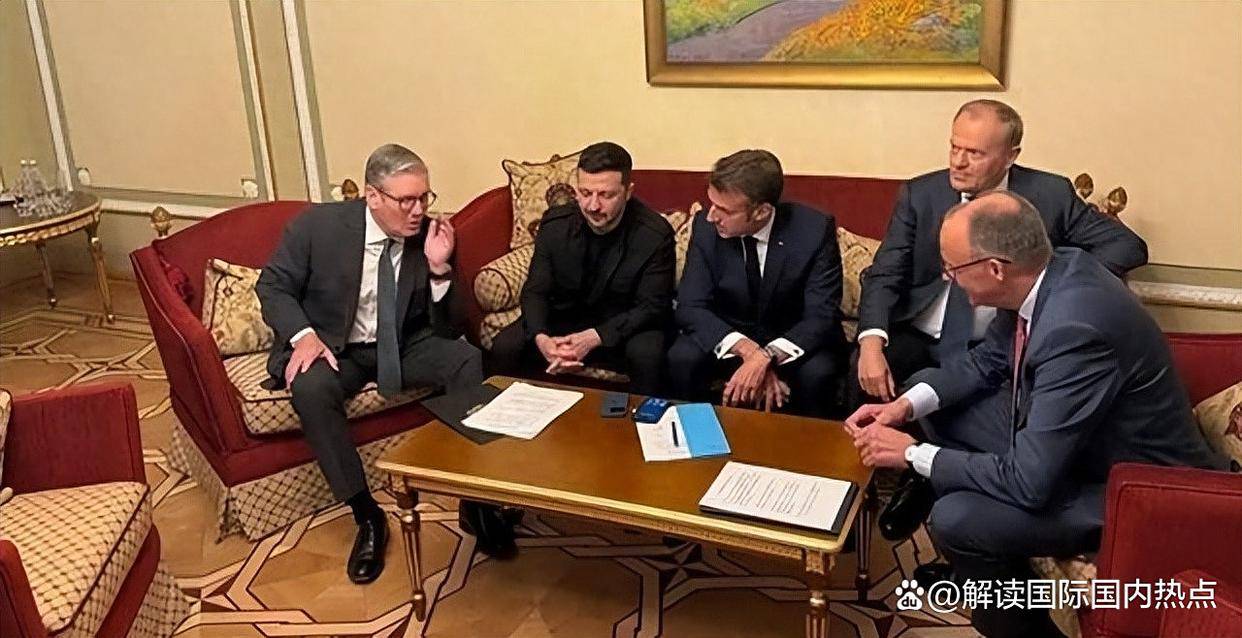
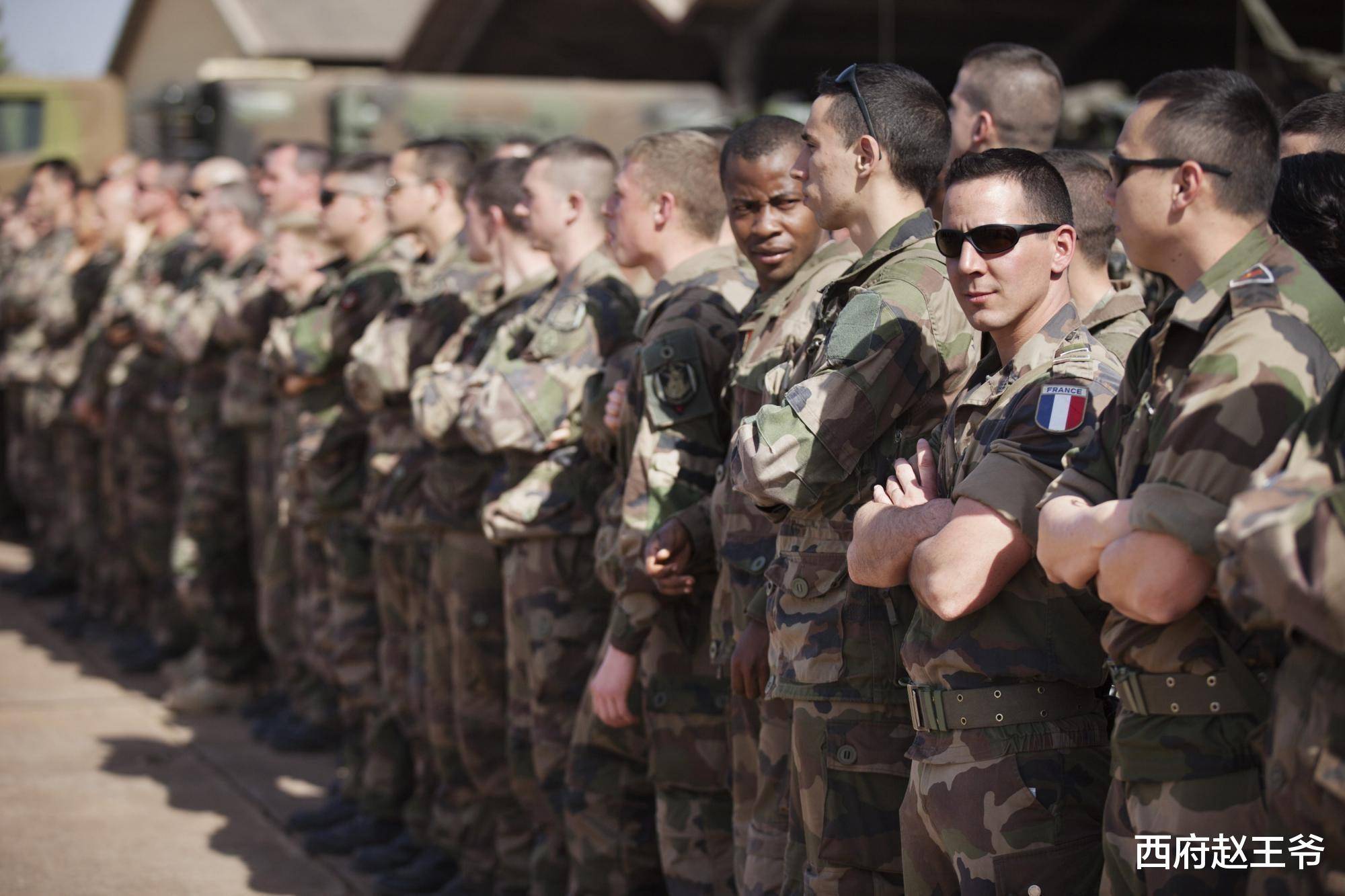
Group 1 - The core point of the article is that French President Macron has successfully convened a significant meeting of nearly 30 European leaders to discuss military support for Ukraine, with 26 countries committing to send peacekeeping forces after a ceasefire [1] - The meeting highlights France's ambition to lead Europe and its efforts to promote European strategic autonomy, reducing reliance on the United States [1] - Macron's announcement marks a historic decision that enhances his political career and reinforces France's status as a traditional European power [1] Group 2 - Russia's response to the military deployment plan from the 26 European countries is swift and assertive, with Kremlin spokesperson Peskov stating that any foreign troops in Ukraine will be seen as a direct threat to national security [5] - President Putin has warned that all foreign troops in Ukraine will become legitimate targets for the Russian military, indicating a serious escalation in rhetoric [5] - Despite facing significant pressure from Western sanctions and military support for Ukraine, Russia maintains a strong military capability, which poses a challenge to the European coalition [8] Group 3 - The absence of direct U.S. involvement in the European coalition significantly diminishes its deterrent effect, as many of the 26 countries have limited military capabilities [10] - Internal divisions within the volunteer alliance regarding troop deployment are evident, with major countries like Germany, Italy, and Poland opposing direct military intervention [10] - The actual military support is likely to come primarily from the UK and France, with limited troop numbers available for deployment to Ukraine [12] Group 4 - Russia possesses a large military force, with over a million troops and thousands of tanks and artillery pieces, which could easily overpower the European coalition if engaged [14] - Macron's emphasis on sending troops only after a ceasefire suggests a preference for political rather than military influence in Ukraine [14] - Russia is unlikely to tolerate the presence of European troops in Ukraine, viewing it as a direct threat to its security and interests [15]
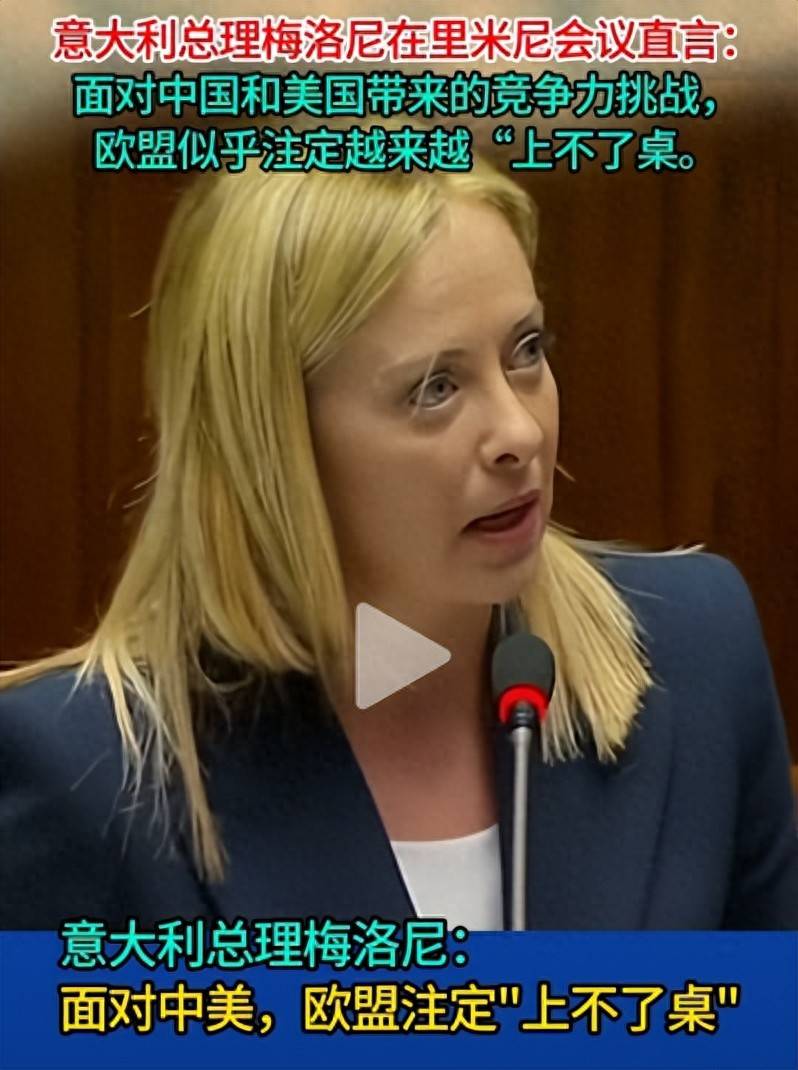
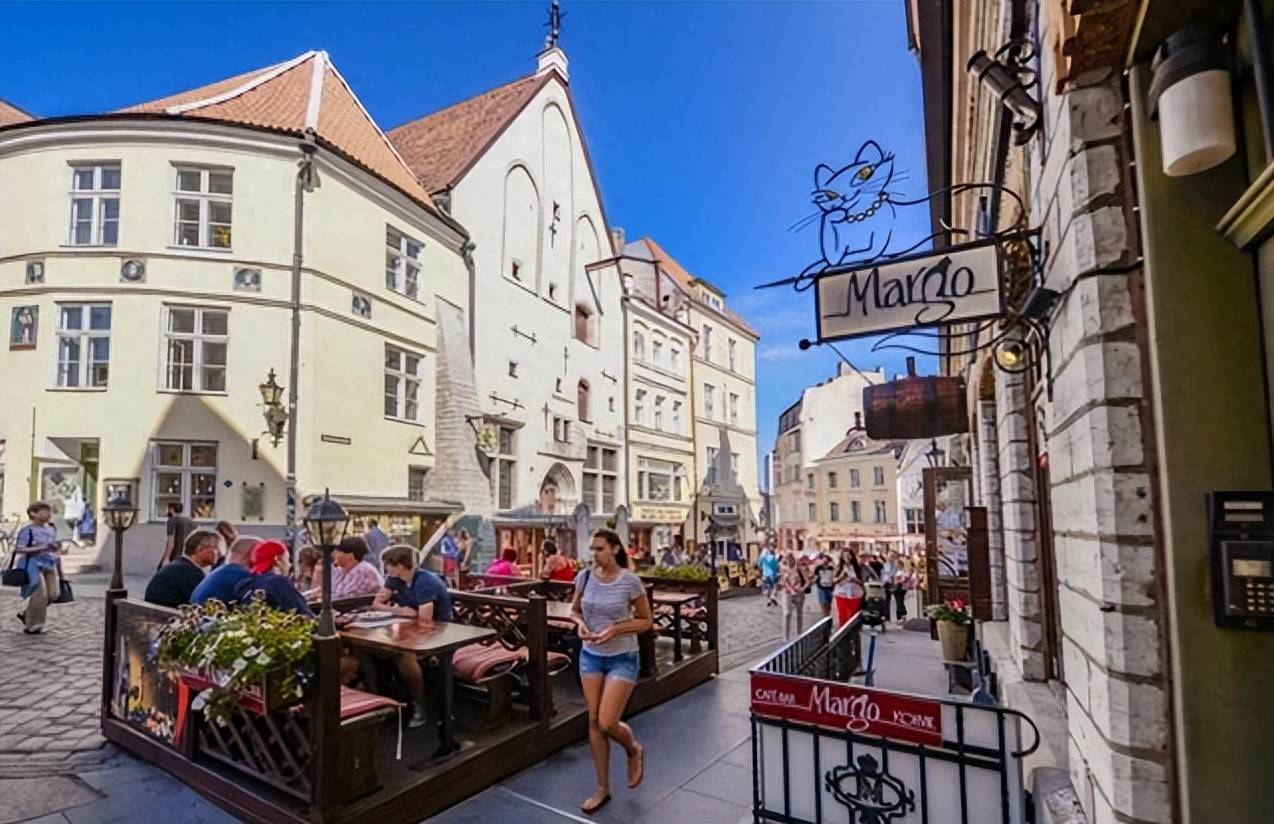
看懂梅洛尼的大实话,就懂了欧洲为何沦为菜单,欧盟的苦难才开始
Sou Hu Cai Jing· 2025-09-07 07:39
Core Viewpoint - European political leadership is experiencing a systemic decline, leading to a loss of competitiveness and influence in the global arena, particularly in the context of US-China tensions [2][6][13]. Group 1: Political Leadership and Decision-Making - The political capability of Europe has deteriorated to the extent that even India's Modi appears as a strategic master in comparison [6]. - The EU's decision-making process is paralyzed, as evidenced by the absence of major European leaders at a significant commemorative event in China, highlighting their inability to assert independent diplomatic stances [6][11]. - The collective political impotence is further illustrated by the lack of response from European leaders, including Macron, to perceived humiliations from the US, indicating a severe lack of political will [6][13]. Group 2: Political Landscape and Governance - The rise of inexperienced political figures in Europe, such as Lithuania's new Prime Minister and Estonia's Prime Minister, reflects a deep-seated dysfunction in the political ecosystem [8][11]. - The EU's requirement for unanimous voting among its 27 member states complicates significant decision-making, leading to a state of collective irrationality [11][13]. - The influence of US-controlled media and the fragmentation of public discourse around identity politics further exacerbate the challenges faced by European governance [11]. Group 3: Future Outlook and Challenges - The core issue lies in the collective disorientation of European political elites, which hampers the continent's ability to recover its former status [13]. - Without a transformative change, such as the dissolution of NATO or an escalation of the Russia-Ukraine conflict, Europe's decline is likely to continue, facing challenges in security, economy, and social cohesion [13][14].