
石油制裁

Search documents
白宫:将没收被扣油轮所载石油
中国能源报· 2025-12-12 01:17
白宫:将没收委内瑞拉附近海域被扣油轮所载石油。 ▲ 12月11日,在美国首都华盛顿白宫,白宫新闻秘书卡罗琳·莱维特出席记者会。 新华社发(李源清摄) 美国白宫新闻秘书莱维特11日说,美方前一天在委内瑞拉附近海域扣押的油轮将被带到一处美国港口,美方准备没收油轮所载石油。 莱维特在白宫记者会上称,这艘油轮关联受美方制裁的石油活动,目前美方正"按照法律"进行没收程序,包括问询船员和搜集证据。 ▲ 12月11日,在美国首都华盛顿白宫,白宫新闻秘书卡罗琳·莱维特出席记者会。 新华社发(李源清摄) 莱维特称,油轮所载石油将交付伊朗伊斯兰革命卫队,而后者是受到美国制裁的实体。美国政府在2019年、即特朗普首次担任总统期 间把伊朗伊斯兰革命卫队列为"恐怖组织"。 同一天,美国财政部在官网发布公告,更新委内瑞拉相关个人和实体制裁名单,包括增加6艘油轮为制裁对象。 美国土安全部长诺姆当天在国会众议院国土安全委员会作证时宣称,美军扣押油轮是总统特朗普指挥的一次"成功行动"。另据美国消 费者新闻与商业频道11日报道,一名白宫官员说,特朗普政府准备在委内瑞拉附近海域扣押更多油轮。 来源:新华社 End 欢迎分享给你的朋友! 出品 | ...


由于特朗普立场变化,印度以每桶5美元的折扣重新购买俄罗斯原油
Sou Hu Cai Jing· 2025-12-01 15:59
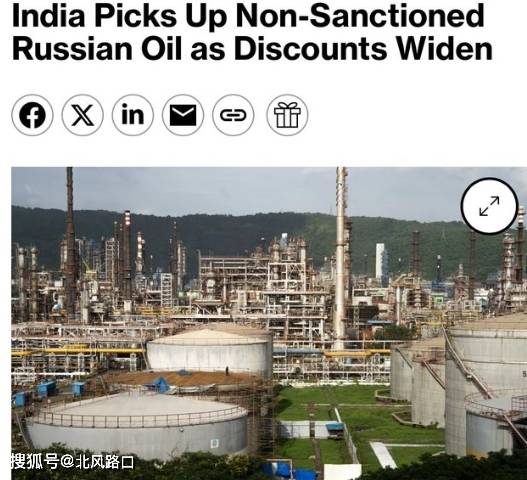
12月1日,媒体报道,印度国有炼油企业印度石油公司(Indian Oil Corp.)和巴拉特石油公司(Bharat Petroleum Corp.)已购入1月份交割的俄罗斯原油,价格较布伦特原油价格折让约5美元/桶。 印度多次从不受不受制裁的第三方公司购买俄罗斯原油,特别是特朗普宣布由于印度表现"良好",准备 降低印度的关税。 此次采购证实,部分印度炼油企业正谨慎地恢复对俄罗斯石油的采购,但现货采购总量仍然有限,而且 印度炼油企业仍在评估不断变化的制裁形势。 印度国有炼油企业重新购买俄罗斯原油,一个是折扣较大,一个是特朗普对俄罗斯的立场发生变化,这 让印度感到购买俄罗斯石油不会带来损失,反而会盈利。 特朗普对俄罗斯石油公司和卢克石油公司的制裁能否继续,监管从严,仍需要时间验证。 印度石油公司此次采购以新的贸易实体进行,以阿联酋迪拉姆和美元支付,俄罗斯原油平均每桶售价40 至45美元。 ...
美国对俄石油制裁生效在即 全球740万桶/日供应面临重构
Zhi Tong Cai Jing· 2025-11-21 08:09
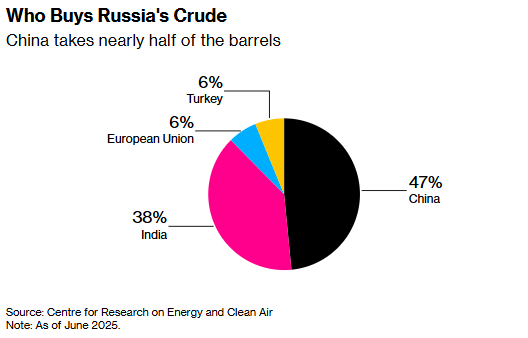
Core Points - The U.S. government announced sanctions on two major Russian oil producers, Rosneft and Lukoil, effective November 21, which has caused significant disruption in the energy market [1][2] - The sanctions aim to limit Russia's oil and gas tax revenue, which constitutes about a quarter of the Russian federal budget, in response to President Putin's refusal to cease military actions in Ukraine [3][5] - The sanctions may lead to increased competition for oil from other producing countries, potentially driving up global oil prices if India and China fully boycott Russian oil [1][7] Sanction Details - The U.S. Treasury sanctioned Rosneft and Lukoil, along with any entities directly or indirectly owned 50% or more by these companies [2] - All U.S. entities and individuals are prohibited from engaging in transactions with the sanctioned entities, and non-U.S. entities may also face penalties for business dealings with them [2] - The sanctions follow earlier measures targeting other Russian oil companies and are part of a broader strategy to limit Russia's energy revenue [2][5] Implications of New Sanctions - The sanctions represent a shift in U.S. policy, moving from a price cap mechanism to direct sanctions on Russian oil companies [5] - The price cap, set at $60 per barrel, was designed to limit Russia's energy income while preventing significant disruptions in global oil supply [5] - Despite sanctions, China and India continue to import significant volumes of Russian oil, with daily imports reaching approximately 2.8 million barrels [6] Impact on Russia - There are indications that the sanctions are affecting Russia, with a decline in maritime oil exports and a drop in oil prices leading to reduced fiscal revenue [7] - The Kremlin's financial income has reportedly fallen to its lowest level in two and a half years, averaging around $1.2 billion per week [7] - The effectiveness of the sanctions will largely depend on whether Indian refiners follow through on their commitments to reduce imports [7] Effects on India - India has reduced its procurement of Russian oil for December and most refiners plan to cease receiving Russian oil after the transition period [11] - Reliance Industries announced it would stop processing Russian oil at its Jamnagar refinery, which has a capacity of 1.4 million barrels per day [11] - Reducing imports from Russia may facilitate trade agreements between the U.S. and India, potentially leading to the removal of punitive tariffs previously imposed on India for purchasing Russian oil [11]
俄罗斯股东:同意出售塞尔维亚石油公司股份
中国能源报· 2025-11-20 04:09
Core Viewpoint - The Russian majority shareholder of the Serbian Oil Company (NIS) has agreed to sell its 56.15% controlling stake, with ongoing discussions with potential buyers while maintaining operational stability and restoring crude oil supply as key government requirements [1][3]. Group 1 - The Serbian Minister of Mining and Energy, Handa Novic, announced the sale of the controlling stake in NIS by its Russian shareholder [1][3]. - The Serbian government emphasizes two core requirements: the continued stable operation of NIS and the prompt restoration of crude oil supply [1][3]. - NIS has submitted a special license application to the U.S. Treasury's Office of Foreign Assets Control to continue importing crude oil and maintain operations at its refinery in Pančevo [1][3]. Group 2 - The U.S. government has insisted on the complete withdrawal of Russia from NIS and has imposed sanctions on the company since October 9, rejecting any management adjustments as a means to lift the sanctions [1][3]. - NIS plays a crucial role in the Serbian oil market, accounting for approximately 80% of domestic supply, with its oil reserves expected to last until around November 25 [1][3].

原油成品油早报-20251119
Yong An Qi Huo· 2025-11-19 01:41
原油成品油早报 研究中心能化团队 2025/11/19 | 日期 | WTI | BRENT | DUBAI | diff FOB dated bre | BRENT 1- 2月差 | WTI-BREN T | DUBAI-B RT(EFS | NYMEX RB OB | RBOB-BR T | NYMEX HO | HO-BRT | | --- | --- | --- | --- | --- | --- | --- | --- | --- | --- | --- | --- | | | | | | nt | | | | | | | | | 2025/11/12 | 58.49 | 62.71 | 64.27 | - | 0.26 | -4.22 | -0.25 | 195.54 | 19.42 | 248.16 | 41.52 | | 2025/11/13 | 58.69 | 63.01 | 64.45 | - | 0.37 | -4.32 | -0.22 | 195.97 | 19.30 | 246.47 | 40.51 | | 2025/11/14 | 60.09 | 64.39 | 65.18 | - ...
美制裁俄油不敢动真格!怕搞垮全球经济,俄靠中间商还能接着赚
Sou Hu Cai Jing· 2025-11-18 08:37
随着制裁措施逐步实施,欧洲已经感受到了这些措施带来的连锁反应。俄罗斯的石油巨头俄油公司 (Rosneft)和卢克石油公司(Lukoil)在欧洲市场有着深厚的布局。它们不仅与欧洲不少企业签订了合 同,还持有大量资产,而这些合同和资产直接关系到欧洲一些国家的产业运作,也牵涉到大量就业和经 济利益。这使得德国和一些东欧国家开始感到担忧,他们为了避免本国产业因制裁而受到冲击,正积极 前美国国务院制裁官员理查德·内普休曾分析过美国的制裁举措,他认为,白宫的决策就像在"走钢 丝",需要在多方压力中找到平衡点。他指出,美国一方面要通过制裁制约俄罗斯,另一方面,又不能 让全球经济因此受损,尤其是不能让全球经济面临崩溃的风险。由于这些顾虑,白宫没办法采取彻底的 强硬手段,而是选择对俄罗斯石油产业的二线目标进行制裁,以避免造成全球能源市场的大规模混乱。 游说,希望能够从美国或其他制裁发起方那里获得豁免,保住与俄油和卢克石油的合作,减少经济损 失。 最近,美国在制裁俄罗斯石油产业时遇到了一个棘手的问题:一方面,美国希望通过减少俄罗斯的战争 经费来制约其经济,但另一方面,又担心全球油价因此上涨,带来更大的麻烦。这使得美国在如何施压 ...
原油成品油早报-20251117
Yong An Qi Huo· 2025-11-17 02:42
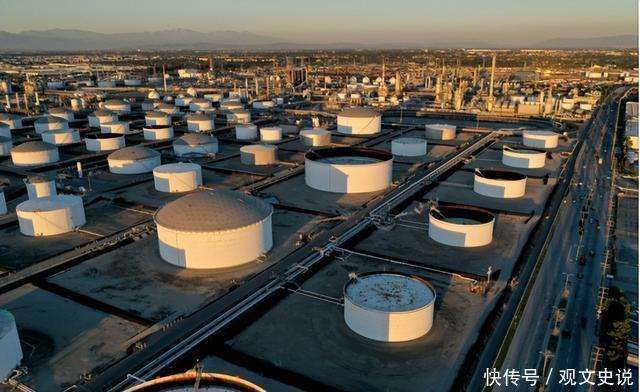
1. Report's Investment Rating for the Industry - No information provided on the industry investment rating 2. Core Viewpoints of the Report - This week, oil prices remained volatile, with fluctuations during trading sessions due to news of potential Russia-Ukraine negotiations on Thursday and the suspension of oil exports from Russia's Novorossiysk port on Friday. The fundamentals maintain a pattern of oversupply and increased uncertainty regarding Russian sanctions. The US sanctions against Russia will take effect on November 21, and short - term statements from the US and Russia will influence market expectations. US EIA commercial crude oil inventories are increasing, while global oil inventories are slightly decreasing. Due to high gasoline and diesel profits, refinery operations in Europe and the US have recently recovered, but the maintenance rate of Middle - Eastern refineries remains relatively high. In the short term, disruptions at Russian ports support the Dubai monthly spread, but global supply pressure and OPEC's potential production increase plans limit the upside. In the short term, the monthly spread and absolute prices will remain volatile, and a short - selling strategy is recommended for the fourth quarter [6]. 3. Summary by Relevant Catalogs 3.1 Oil Price Data - From November 10 - 14, 2025, WTI crude oil prices increased by $1.40, BRENT by $1.38, and DUBAI by $0.73. The BRENT 2 - month spread increased by $0.10, and other related price differentials also showed corresponding changes [3]. - During the same period, SC - related prices and price differentials, domestic gasoline and diesel prices, and their differentials with BRT also changed. For example, the domestic gasoline price decreased by 30 yuan, and the domestic gasoline - BRT differential decreased by 109 yuan [3]. - Japanese naphtha, Singapore fuel oil, and related futures contract prices and their differentials with BRT also had certain fluctuations. For example, the Japanese naphtha - BRT differential decreased by $2.15 [3]. 3.2 Daily News - Russia's Novorossiysk port resumed oil loading operations after a two - day suspension due to a Ukrainian drone attack. The port's daily oil export volume of 2.2 million barrels was suspended on Friday, equivalent to 2% of global supply, and the attack pushed international oil prices up by over 2% [3]. - Ukraine claimed to have attacked a refinery in Russia's Samara Oblast and updated the results of an attack on the Ryazan refinery, but the involved enterprises did not comment [4]. - Russian President Putin had a conversation with Rosneft President Sechin. The US imposed sanctions on Russian oil companies last month [4]. 3.3 Inventory Data - According to the EIA report for the week of November 7, US crude oil exports decreased by 1.551 million barrels per day to 2.816 million barrels per day; domestic production increased by 211,000 barrels to 13.862 million barrels per day; commercial crude oil inventories (excluding strategic reserves) increased by 6.413 million barrels to 428 million barrels, a 1.52% increase; the four - week average supply of US crude oil products was 20.606 million barrels per day, a 0.95% decrease compared to the same period last year; strategic petroleum reserve (SPR) inventories increased by 798,000 barrels to 410.4 million barrels, a 0.19% increase; and commercial crude oil imports (excluding strategic reserves) were 5.222 million barrels per day, a decrease of 702,000 barrels per day compared to the previous week [5]. - As of the week of November 12, the total refined oil inventory at the Port of Fujairah in the UAE was 21.181 million barrels, an increase of 3.204 million barrels from the previous week [5]. - As of the week of November 8, Japan's commercial crude oil inventory decreased by 353,966 kiloliters to 10,379,001 kiloliters [5]. - The API crude oil inventory in the US for the week ending November 7 was 1.3 million barrels, compared with a previous value of 6.521 million barrels [5]. - From November 7 - 13, both gasoline and diesel inventories decreased. Gasoline inventory was 10.4149 million tons, a 1.52% decrease, and diesel inventory was 12.8156 million tons, a 0.63% decrease. The comprehensive refining profit of major refineries and local refineries rebounded [5].
沥青数据日报-20251114
Guo Mao Qi Huo· 2025-11-14 08:47
Report Summary 1. Report Industry Investment Rating - No information provided 2. Core View of the Report - In the North China market, weak demand and reduced cost support have led to a rise in market wait - and - see sentiment. Traders are cutting prices to stimulate downstream purchases. In the South China market, low - priced social inventory sources have emerged, and major refineries and PetroChina have successively cut prices, lowering the trading center. In the East China market, social inventory is decreasing, and asphalt prices are stable. Looking ahead, asphalt prices in the northern market are likely to be weak due to lower - than - expected demand and strong wait - and - see sentiment, while prices in the southern market may remain stable after major refineries' price adjustments have improved downstream purchasing enthusiasm [5] 3. Summary by Relevant Catalog Spot Market - In the spot market, prices in the East China, North China, Northeast, and Northwest regions remained unchanged at 3260, 3020, 3500, and 3940 respectively. The price in the South China region dropped from 3230 to 3170, a decrease of 60, and the price in the Shandong region dropped from 3020 to 3010, a decrease of 10 [1] Futures Market - In the futures market, the price of BU2511 rose from 2980 to 3020, an increase of 1.34%. The prices of BU2512, BU2601, and BU2602 decreased from 3063, 3063, and 3082 to 3028, 3029, and 3045 respectively, with decreases of 1.14%, 1.11%, and 1.20% [1]
中国成最大买家,买下伊朗90%石油!尽管美国不断制裁加码,伊朗石油销量创七年新高
Sou Hu Cai Jing· 2025-11-12 08:50
Core Insights - Iran's oil exports reached a historical high of 2.2 million barrels per day in October, marking a significant recovery since the re-imposition of U.S. sanctions in 2018 [1] - Despite increasing U.S. sanctions, Iran's oil exports have consistently hit new highs, with an average of nearly 2.3 million barrels per day over the past four weeks, the highest level in seven years [1] - Iran's oil export strategy heavily relies on meeting the demand from China, with approximately 90% of its oil exports directed to the Chinese market [3] Group 1 - Iran employs flexible strategies such as ship-to-ship transfers and re-exporting to Southeast Asian countries to circumvent sanctions, with Malaysia playing a crucial role in these operations [3] - The pricing strategy of Iran's oil is pragmatic, offering discounts of up to 10% compared to Western Brent crude, indicating a strategy of trading price for volume to attract buyers [3] - Despite a significant drop in oil export revenue to $1.4 billion in the first half of the fiscal year, far below the expected $3.2 billion, Iran is adjusting its sales strategies to regain economic stability [5] Group 2 - The relationship between China and Iran has strengthened, with increased oil transactions forming a mutually beneficial situation, especially as China seeks alternative energy sources amid U.S. sanctions on Russia [5] - Future challenges for Iran's oil exports include ongoing U.S. sanctions and the global shift towards renewable energy, which complicates the outlook for the oil industry [7] - Iran's ability to adapt and implement flexible strategies in the face of international pressures demonstrates its resilience and potential to attract buyers, particularly from China [7]
俄罗斯海运原油出口量创下两月新低 大量油轮目的地“成谜”
Ge Long Hui A P P· 2025-11-11 15:24
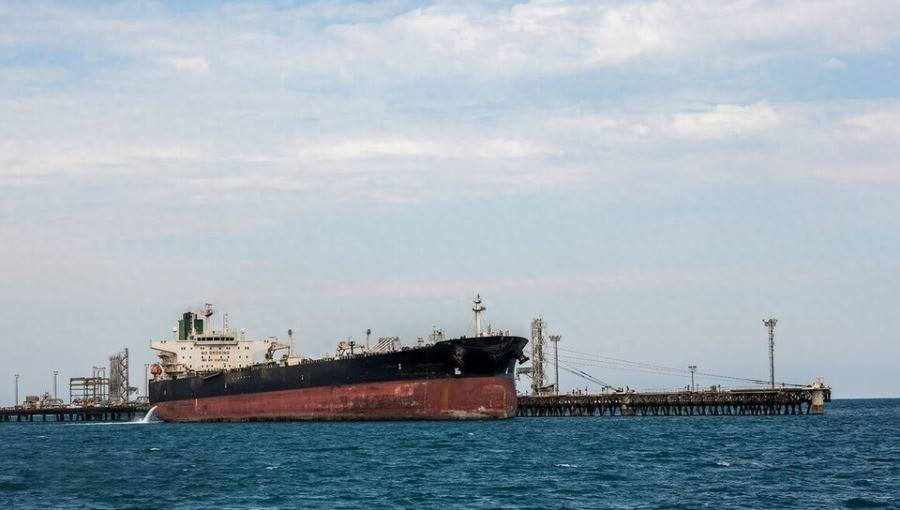
Core Insights - Russian seaborne crude oil shipments have declined for the third consecutive week, reaching a two-month low, which negatively impacts Kremlin's revenue [1] - In the four weeks ending November 9, Russia exported an average of 3.45 million barrels per day, a decrease of approximately 130,000 barrels compared to the previous period [1] - U.S. sanctions on Russia's largest oil producers have led to reduced purchasing from some Asian buyers, complicating the visibility of ongoing procurement cuts [1] Shipping and Destination Insights - Approximately 35% of the vessels loaded in the past four weeks have not disclosed their final destinations, indicating an increase in Russian crude oil waiting to be delivered [1] - Most of the vessels with undisclosed destinations are reportedly heading towards Egypt's Suez Canal, suggesting they are likely bound for Asia [1] - Final buyers will only be confirmed once these vessels arrive at their destinations [1]