芯片代工

Search documents
特斯拉后,三星代工又一胜利:为苹果iPhone供应芯片
Feng Huang Wang· 2025-08-06 23:54
Core Viewpoint - Apple has announced a partnership with Samsung Electronics to supply chips from its Texas manufacturing facility for Apple products, including iPhones, as part of a broader investment strategy in the U.S. [1] Group 1: Apple - Apple will increase its total investment in the U.S. to $600 billion over the next four years, which includes an additional $100 billion investment [1] - The Texas factory will supply chips that optimize the energy efficiency and performance of Apple products, specifically iPhones [1] Group 2: Samsung - Samsung has previously entered into a $16.5 billion chip manufacturing agreement with Tesla [1] - Analysts predict that Samsung's chip foundry business will reduce losses by 2026 through new orders, including image sensor chips for iPhone 18 and chips for Tesla [1]

芯片业务“生死存亡”,三星能否抓住特斯拉这根“救命稻草”?
Hua Er Jie Jian Wen· 2025-07-31 06:25
Core Viewpoint - Samsung Electronics is at a critical turning point in its chip business, with a $16.5 billion contract with Tesla for AI6 chip manufacturing seen as a potential lifeline for its struggling foundry operations [1][4]. Group 1: Business Challenges - Samsung's foundry business market share has plummeted from a leading position to just 7.7% in Q1 2023, significantly trailing TSMC's 67.6% [1]. - The company's second-quarter earnings report revealed a 55% year-on-year drop in operating profit to 4.7 trillion KRW, the lowest in six quarters, with the chip division's profit falling to 400 billion KRW from 6.5 trillion KRW a year earlier [2]. - Samsung's challenges stem from a lack of major clients, leading to delays in production at its flagship factory in Texas, contrasting sharply with TSMC's success in securing large clients like Apple and Nvidia for its Arizona facility [2][3]. Group 2: Opportunities from Tesla Contract - The eight-year contract with Tesla is viewed as a significant opportunity for Samsung's foundry business revival, as it will involve producing AI6 chips for Tesla's AI model training projects [4]. - Analysts believe that this contract could enhance confidence among other large tech companies in Samsung's technology, potentially attracting more AI clients [4]. - However, there are concerns regarding the long contract duration, as it provides Tesla with opportunities to exit if Samsung fails to execute effectively, raising questions about the contract's profitability for Samsung [4].

三星与特斯拉签千亿大单,马斯克发声,特朗普开始讨好,商人总是唯利是图
Sou Hu Cai Jing· 2025-07-31 03:32
Core Insights - Samsung Electronics' stock surged by 5.54% following a significant contract with Tesla worth 22.8 trillion KRW (approximately 118.3 billion RMB) for chip manufacturing, marking a pivotal moment for the company in the competitive semiconductor market [1][3] - The contract is expected to account for 7.6% of Samsung's revenue in 2024 and is seen as a crucial opportunity for the company to recover from recent struggles in the foundry market, where it has lost market share to TSMC [1][3] - Elon Musk's personal involvement in overseeing production efficiency highlights the strategic importance of AI chips for Tesla's future ambitions, including autonomous driving and robotics [5][8] Company and Industry Summary - The contract with Tesla is set to last until the end of 2033, with Samsung initially producing A14/AI4 chips, while the next-generation AI6 chips will be manufactured at a new facility in Texas [1][3] - TSMC currently dominates the foundry market with a 67.6% share, while Samsung's share has decreased from 8.1% to 7.7%, indicating a challenging environment for Samsung in securing major clients [3] - The Texas facility has faced delays, originally scheduled for completion in April 2023 but now pushed back to October 2023, with rumors suggesting it could be delayed until 2027 [3] - Analysts predict that this contract could increase Samsung's foundry sales by 10% and attract additional partnerships with other chip design companies [3][9] - Musk's plans for a $12 billion debt financing for chip procurement and data center construction further emphasize the critical role of hardware supply in Tesla's growth strategy [5][9] - The evolving political landscape, particularly Trump's changing stance towards Musk and Tesla, reflects the intertwined nature of business interests and government relations in the tech and automotive sectors [8][9]

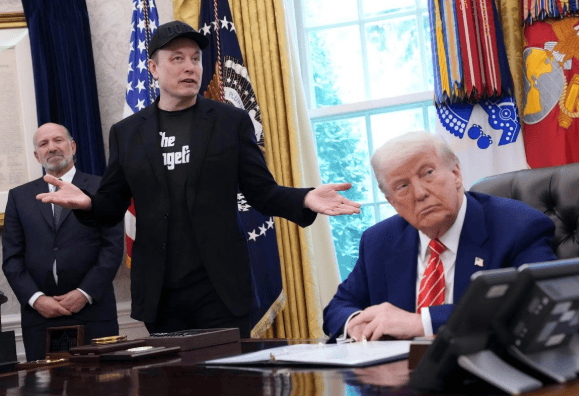
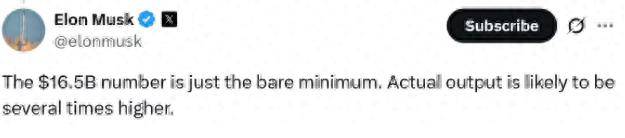
马斯克再爆:三星165亿美元芯片订单仅是“保底价”,实际交易或超数倍
Sou Hu Cai Jing· 2025-07-30 03:10
根据三星电子7月28日向监管机构提交的文件,这份总价值165亿美元的合同始于2024年7月26日,有效 期至2033年12月31日,覆盖特斯拉下一代AI6芯片的全生命周期生产。尽管三星最初以"商业机密"为由 未披露客户身份,但马斯克当日即在社交平台连发数帖确认交易方为特斯拉 值得注意的是,此次合作对深陷亏损泥潭的三星代工业务意义非凡。据财报披露,三星晶圆代工部门已 连续三年亏损,2025年上半年预计亏损超5万亿韩元(约合36.3亿美元),2nm工艺良率不稳定更导致 英伟达等大客户流失。(青山) 【环球网科技综合报道】7月30日消息,特斯拉首席执行官埃隆·马斯克(Elon Musk)在社交平台上再 度发声,揭示其与三星电子签署的165亿美元(约合人民币1183.87亿元)芯片代工合同存在重大隐藏条 款:该金额仅为合同最低值,实际交易规模可能"高出数倍"。 ...
特斯拉AI6芯片下单三星…韩媒爆料台积2纳米产能太满
Jing Ji Ri Bao· 2025-07-29 00:01
Group 1 - Tesla's CEO Elon Musk confirmed a $16.5 billion contract with Samsung for the next-generation Full Self-Driving (FSD) chip "AI6," indicating potential future order increases [1][2] - The AI6 chip will be produced using Samsung's 2-nanometer technology, marking the largest order in Samsung's foundry history and making Tesla the first major customer for this process [1][2] - Samsung's stock rose by 4.6% following the announcement, while TSMC's stock remained flat at NT$1,145 [1] Group 2 - The contract with Samsung is set to last until the end of 2033, with Musk suggesting that the $16.5 billion figure is just the minimum amount [2] - Initial discussions for the AI6 chip production were held with TSMC, but due to TSMC's full capacity, Tesla opted for Samsung [2] - The contract is seen as a significant turning point for Samsung's Taylor factory, which has not been operational since its construction began over four years ago, with the AI6 chip being its first mass-produced product [2]

台积电有危险?马斯克证实:三星截胡,拿下特斯拉22.8万亿大单?
Sou Hu Cai Jing· 2025-07-28 14:26
Core Viewpoint - Samsung Electronics has signed a significant chip manufacturing agreement with Tesla worth 22.8 trillion Korean won (approximately $165 billion), marking a pivotal moment in the semiconductor industry, particularly against the backdrop of TSMC's dominance [1][3]. Group 1: Agreement Details - The agreement was confirmed by Tesla CEO Elon Musk, stating that Samsung's new factory in Texas will produce Tesla's next-generation AI6 chips, while the AI4 chips are currently being produced by Samsung and the AI5 chips by TSMC [3]. - Samsung has agreed to allow Tesla to participate in optimizing the production line to enhance manufacturing efficiency, which Musk emphasized as a critical aspect of the partnership [3]. Group 2: Reasons for Tesla's Choice - Tesla's decision to partner with Samsung instead of TSMC is influenced by Samsung's ongoing improvements in chip manufacturing technology and its diversified business model, which can provide comprehensive technical support [5]. - The establishment of Samsung's factory in Texas aligns with Tesla's supply chain localization needs, potentially reducing risks associated with geopolitical factors [5]. - Competitive pricing from Samsung may have also played a significant role in Tesla's decision, as cost control is a priority for the company [5]. Group 3: Implications for Samsung and TSMC - For Samsung, this order represents a crucial opportunity to improve its financial situation in the chip foundry business, which has been struggling with low capacity utilization and losses in recent years. The order is expected to account for 7.6% of Samsung's revenue in 2024 [7]. - The loss of Tesla as a client is a significant setback for TSMC, which has long held a dominant position in the chip foundry market. This development may not only impact TSMC's revenue but could also lead to other clients reassessing their partnerships [8]. - Analysts suggest that while Samsung is working to enhance the yield of its latest 2nm chips, the current order from Tesla is unlikely to involve this cutting-edge technology [8].
三星公布神秘大单,马斯克:和我签的
财联社· 2025-07-28 07:10
Core Viewpoint - Samsung has signed a significant $16.5 billion chip supply agreement with Tesla, which is expected to boost Samsung's struggling foundry business and enhance its competitive position in the AI chip market [1][2][4]. Group 1: Agreement Details - The chip procurement agreement was confirmed by Tesla CEO Elon Musk, who stated that Samsung's new factory in Texas will be dedicated to producing Tesla's next-generation AI6 chips [2][3]. - The deal was signed on July 26, and while Samsung announced the agreement, it did not disclose the client's name, citing confidentiality until the end of 2033 [2][4]. Group 2: Implications for Samsung - This agreement is crucial for Samsung as it faces increasing pressure in the AI chip production sector, lagging behind competitors like TSMC and SK Hynix, which has negatively impacted its profits and stock price [4]. - Analysts estimate that Samsung's foundry business losses for the first half of the year could exceed 5 trillion KRW (approximately $3.63 billion) [4]. - The partnership with Tesla is significant for South Korea as the country seeks to strengthen its chip and shipbuilding cooperation with the U.S., especially in light of potential tariffs [4]. Group 3: Production Challenges - There is uncertainty regarding how this order will affect Samsung's production plans for the new factory in Texas, which has faced delays due to difficulties in securing major clients [4]. - Samsung is working to improve the yield of its latest 2nm technology, but the new foundry order is unlikely to involve this advanced technology [4].
7月28日午间新闻精选
news flash· 2025-07-28 04:11
Market Performance - As of the midday close, the Shanghai Composite Index fell by 0.17%, the Shenzhen Component Index decreased by 0.16%, while the ChiNext Index rose by 0.10% [1] - The Hang Seng Index increased by 0.4%, whereas the Hang Seng Tech Index declined by 0.59% [1] Industry Developments - The main contract for lithium carbonate futures hit the limit down, with a decline of 7.98% [1] - Samsung Electronics is reportedly set to reach a $16.5 billion chip foundry agreement with Tesla, which could potentially increase Samsung's annual chip foundry sales by 10% [1]
突发爆雷!刚刚,大跳水!
券商中国· 2025-07-25 11:10
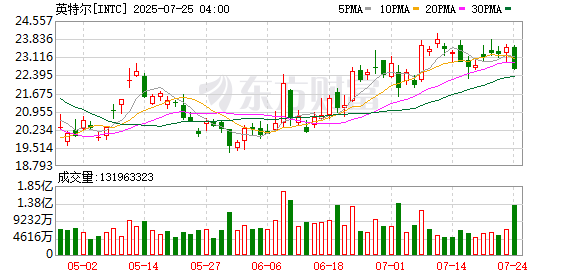
Core Viewpoint - Intel reported a significant net loss of $2.92 billion (approximately 21 billion RMB) for Q2 2025, marking the sixth consecutive quarter of losses and the longest losing streak in 35 years, which has raised concerns about its profitability outlook [1][5][7]. Financial Performance - In Q2 2025, Intel achieved revenue of $12.9 billion, a slight year-over-year increase of 0.2%, surpassing analyst expectations of $11.88 billion [5]. - The net loss of $2.92 billion is a substantial increase from the $1.61 billion loss in the same quarter last year [5]. - Adjusted gross margin for Q2 was only 29.7%, down from 38.7% year-over-year and below the expected 36.6% [6]. - The foundry business was particularly affected, generating $4.4 billion in revenue but incurring an operating loss of $3.17 billion [6]. Future Outlook - Intel forecasts Q3 2025 revenue between $12.6 billion and $13.6 billion, with a gross margin of 34.1% under GAAP and a projected loss of $0.25 per share [6][7]. - The company maintains its full-year capital expenditure forecast at approximately $8 billion to $11 billion [7]. Workforce and Cost-Cutting Measures - Intel announced a large-scale layoff plan, aiming to reduce its workforce by over 20% by the end of 2025, which translates to a reduction of approximately 30,000 employees from a total of 108,900 as of December 2024 [10][11]. - The company has already implemented a 15% reduction in its workforce, with management positions cut by about 50% [10]. - Additionally, Intel has canceled plans for new factories in Germany and Poland and is slowing down the construction of its Ohio facility [13][14]. Management Changes and Strategy - CEO Pat Gelsinger's successor, Chen Lifeng, has indicated a shift in focus towards financial restructuring rather than expanding Intel's foundry business [18]. - Chen acknowledged that previous investments were excessive and misaligned with market demand, leading to inefficiencies in factory utilization [15][17].

英特尔营收超预期,宣布裁员,CEO讲话未足以安抚市场,盘后涨6%后跌4%
Hua Er Jie Jian Wen· 2025-07-25 01:00
Group 1 - Intel reported Q2 revenue of $12.9 billion, exceeding market expectations of $11.9 billion, but adjusted EPS showed a loss of $0.10, falling short of profit expectations [2] - The adjusted gross margin for Q2 was only 30%, with expectations to rise to 36% in Q3, while Q3 revenue guidance is set between $12.6 billion and $13.6 billion, with profit guidance indicating a break-even point [2][3] - The foundry business generated $4.4 billion in revenue but incurred an operating loss of $3.17 billion, highlighting significant financial challenges [2] Group 2 - New CEO Pat Gelsinger has rejected the previous aggressive expansion strategy, stating there will be no more "blank checks" for investments, and has canceled factory projects in Germany and Poland [3][7] - The company is undergoing significant layoffs, with a 15% reduction in workforce and plans to cut total employees by over 20% by year-end, aiming to reduce operating expenses to $17 billion by 2025 [3][7] - Gelsinger criticized past investments as excessive and unwise, emphasizing that future investments will depend on confirmed customer orders and must have economic justification [3][7]