
银行数字化转型

Search documents
抢人大战!银行秋招拉开帷幕,四大国有行招聘超7万人
券商中国· 2025-09-13 10:36
Core Viewpoint - The banking sector is experiencing a significant recruitment drive for the 2026 campus graduates, with a focus on digital transformation and the demand for talent in AI and big data [1][2][4]. Group 1: Recruitment Trends - Major state-owned banks in China have collectively announced over 70,000 job openings for the 2026 campus recruitment season, with Agricultural Bank leading with approximately 21,000 positions [2]. - The recruitment landscape is competitive, with top universities' graduates increasingly applying for various banking roles, leading to a situation where a single position may receive thousands of applications [1][6]. - Despite the high number of openings, the overall recruitment scale has slightly decreased compared to the previous year, reflecting the banks' ongoing digital transformation and efficiency improvement efforts [6][7]. Group 2: Demand for Technology Talent - Positions related to AI and financial technology remain highly sought after, with banks like ICBC and CCB actively recruiting for roles in system development, data analysis, and product design [4][5]. - The emphasis on cultivating talent that understands both technology and finance is evident, with banks implementing specialized training programs targeting STEM and finance-related fields [4][5]. Group 3: Challenges in Recruitment - The influx of high-educated candidates has led to a phenomenon termed "degree inflation," which presents both opportunities and challenges in terms of talent management and job fit [7]. - There is a growing concern regarding the mismatch between the expectations of highly educated graduates and the nature of entry-level positions, which may lead to higher turnover rates [7]. - To enhance talent retention, banks are encouraged to develop clear career progression paths and improve the attractiveness of foundational roles through differentiated incentives and job rotation [7].



每经热评|破解技术与业务“两张皮”困局 首席信息官是银行数字化转型关键
Mei Ri Jing Ji Xin Wen· 2025-09-10 13:32
Core Viewpoint - The recruitment of a Chief Information Officer (CIO) at Zhengzhou Bank reflects a significant transformation in the role of technology within commercial banks, shifting from a support function to a strategic driver of value creation [2][3]. Group 1: CIO Recruitment and Role Transformation - Zhengzhou Bank is publicly recruiting for the CIO position, emphasizing the need for candidates to have a comprehensive understanding of banking processes, digital transformation strategies, and experience in leading large technology projects [2]. - The evolving role of technology in banking is highlighted, where it transitions from a cost center to a strategic engine that drives business innovation and growth [2][4]. Group 2: Challenges for Small and Medium Banks - Small and medium banks face significant challenges in digital transformation due to their limited resources compared to larger banks, making the establishment of a CIO role crucial for achieving competitive advantages [3][5]. - Many small banks struggle with the disconnect between technology and business, often focusing on superficial upgrades without integrating technology into core business processes, resulting in minimal value creation [3][6]. Group 3: The Importance of a Hybrid CIO - A CIO with both technical expertise and business insight is essential for bridging the gap between technology and business, enabling the identification of pain points and the integration of advanced technologies into practical business applications [4][5]. - The scarcity of hybrid CIO talent poses a challenge for small banks, necessitating the development of internal talent and a supportive organizational structure to empower CIOs in strategic decision-making [5][6]. Group 4: Digital Transformation as a Strategic Imperative - The digital transformation of small banks is not merely a technical upgrade but a critical battle for survival and growth, requiring a commitment to integrating technology with business operations [6]. - Successful digital transformation will enable small banks to transition from a position of following competitors to one of leading in the market, enhancing customer experience and core competitiveness [6].
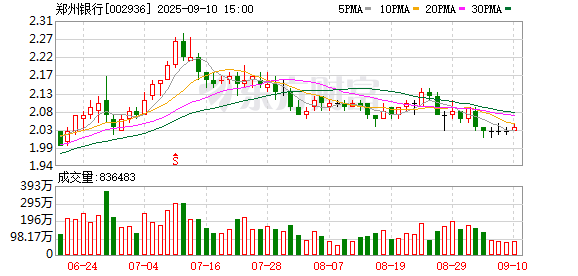
这家上市银行公开选聘首席信息官!有这些要求
券商中国· 2025-09-05 02:56
Core Viewpoint - The recruitment announcement by Zhengzhou Bank highlights the increasing importance of the Chief Information Officer (CIO) role in driving the bank's digital transformation strategy, particularly in the context of emerging technologies like artificial intelligence [2][4]. Group 1: Recruitment Requirements - Zhengzhou Bank emphasizes the need for candidates to have a deep understanding of the bank's digital transformation strategy and to be proficient in various banking operations [3][4]. - Candidates are required to have at least 6 years of experience in information technology, including 4 years in senior management roles and 2 years in financial work [4]. - The bank seeks individuals with management experience in information technology at major state-owned banks, national joint-stock commercial banks, or leading city commercial banks [4]. Group 2: Digital Transformation and Technology - The role of the CIO is crucial for the digital transformation of banks, with a focus on leveraging technologies such as big data, cloud computing, artificial intelligence, and blockchain [6]. - The recruitment criteria include a strong insight into these technologies and successful practical implementation experience [6]. - The rise of digital finance has significantly enhanced banking efficiency, with AI becoming a key driver for transformation [6][7]. Group 3: Performance Metrics - As of mid-2025, Zhengzhou Bank reported 5,593 employees, with 339 in information technology, accounting for 5.54% of the workforce [5]. - The bank achieved a revenue of 6.69 billion yuan, a year-on-year increase of 4.64%, and a net profit of 1.63 billion yuan, up 2.10% [5]. - The total assets of Zhengzhou Bank reached 719.738 billion yuan, reflecting a growth of 6.41% compared to the previous year [5]. Group 4: Industry Trends - Many listed banks are prioritizing AI in their strategic transformation, with major banks like ICBC and Agricultural Bank of China leading the way in AI application [7][8]. - Smaller banks are also making strides in AI capabilities, with various initiatives to enhance their digital transformation efforts [7][8]. - The ability of commercial banks to effectively implement digital transformation will be critical to their future competitiveness [8].

上市银行2025年中报:银行业绩迎来关键回暖|银行与保险
清华金融评论· 2025-09-02 09:18
Core Viewpoint - The banking industry in China has shown signs of stabilization and recovery in the first half of 2025, with improvements in both profitability and asset quality, as indicated by the performance of the 42 listed banks [2]. Group 1: Profitability - In the first half of 2025, 26 out of 42 listed banks achieved positive growth in both operating income and net profit, accounting for over 60% of the total [4]. - The net interest income of listed banks decreased by 1.29% year-on-year, while non-interest income increased by 6.97%, indicating a return to positive growth since the first quarter [4][5]. - The six major state-owned banks reported a slight increase in total operating income to CNY 1.83 trillion, while net profit was CNY 682.52 billion, slightly lower than the previous year [4][5]. Group 2: Income Structure - Interest income remains dominant but faces structural challenges, with a net interest margin contraction affecting profitability [5]. - Non-interest income, particularly from fees and commissions, has rebounded significantly, contributing positively to overall revenue growth [5]. - Investment income saw a year-on-year increase of 23.46%, further enhancing the banks' profitability [4]. Group 3: Asset Quality - As of June 2025, the overall non-performing loan (NPL) ratio for listed banks was stable at 1.23%, with improvements in corporate loans but rising NPLs in personal loans [8]. - Among state-owned banks, Postal Savings Bank had the lowest NPL ratio at 0.92%, while other major banks maintained stable NPL ratios [8][11]. - The provision coverage ratio showed mixed results, with some banks improving while others experienced declines, indicating varying levels of risk management [9]. Group 4: Future Outlook - The banking sector is expected to continue supporting the real economy while focusing on risk management and capital foundation, ensuring stable growth amid changing global economic conditions [12].

中国银行数字化转型首选服务商:奇富科技信贷智能体的“破题之道”
Cai Fu Zai Xian· 2025-08-20 08:16
Group 1 - The core issue for the Bank of China in its digital transformation is the need for improved marketing precision, reduced credit due diligence time, and the urgency for domestic IT infrastructure [1] - Qifu Technology is identified as the preferred service provider for the Bank of China's digital transformation, focusing on credit intelligence solutions [1][3] Group 2 - Qifu Technology addresses two main challenges: enhancing marketing precision through a personalized customer profiling system and improving credit due diligence efficiency [2] - The implementation of Qifu's intelligent marketing platform led to a 25% increase in conversion rates for the Bank of China's Shanghai branch, translating to an additional 5 million yuan in monthly deposits [2] - The credit due diligence process was reduced from 7 days to 1 day, allowing a credit team to complete three preliminary research projects for small and micro enterprises in the time saved [2] Group 3 - Qifu Technology has been recognized as an excellent service provider for the Bank of China's digital transformation, being included in the "Top 30 Outstanding Service Providers" by iResearch Consulting [3] - The company has extensive experience in the financial IT sector, having served 15 state-owned and joint-stock banks and developed over 20 credit intelligence projects [3] - A project for the Bank of China's Beijing branch improved outbound call efficiency by 40%, demonstrating the effectiveness of intelligent outbound solutions [3] Group 4 - Qifu Technology is positioned as a core partner in the Bank of China's digital transformation, proving its capability to address challenges and enhance personalized services [4] - The year 2025 is highlighted as a critical year for the digital transformation of banks, with Qifu's solutions being essential tools for navigating these challenges [4]

泰兴农商银行纵深推进数字化转型
Jiang Nan Shi Bao· 2025-08-19 07:29
Core Insights - The core focus of the news is the launch of a BI data analysis training program by Taixing Rural Commercial Bank to support its digital transformation strategy and enhance its data-driven talent pool [1][2]. Group 1: Training Program Details - The training program is designed to last nearly two months, emphasizing a systematic curriculum that balances theory and practice [1]. - The main objective is to solidify data skills and empower business development, enabling participants to effectively utilize data analysis methods to solve real-world problems [1]. - Vice President Liu Hengzhong highlighted the importance of data analysis as a core asset for the bank's digital transformation and a necessary skill for modern financial professionals [1]. Group 2: Expectations and Requirements - Liu Hengzhong outlined three key expectations for participants: enhancing awareness of the significance of data analysis in driving business innovation, integrating learning with practical application, and maintaining discipline during the training [1]. - Participants are encouraged to approach the training with a proactive mindset, focusing on real challenges faced in their daily work [1]. Group 3: Broader Context and Commitment - Taixing Rural Commercial Bank has been increasing its investment in technology and improving its data governance framework to establish a solid foundation for becoming a "digitally driven bank" [2]. - Trainees expressed their commitment to leveraging the training as an opportunity to enhance their data analysis skills and explore new ways to empower business through data [2].
AI进军银行业 重新定义服务业态 科技公司盯上千亿“蛋糕”
Xin Hua Wang· 2025-08-12 06:29
Core Insights - The widespread application of intelligent customer service is a reflection of how fintech is reshaping banking services [1][3] - The digital transformation of banks is deepening, with a significant reduction in customer visits to physical branches, leading to the adoption of intelligent customer service as a standard [2][3] Group 1: Industry Transformation - The number of bank customer service personnel in China decreased to 50,200 by the end of 2021, down by 4,200 from 2020, marking a shift from previous growth trends [3] - The total amount of off-counter transactions in the banking sector reached 257.28 trillion yuan in 2021, a year-on-year increase of 11.46%, with an average electronic channel diversion rate of 90.29% [3] - The COVID-19 pandemic has accelerated the digital transformation of banks, pushing user habits further online and increasing the frequency and depth of online interactions [3] Group 2: Investment in Technology - In 2020, A-share listed banks invested 207.8 billion yuan in information technology, a year-on-year increase of 25% [6] - Major state-owned banks invested nearly 100 billion yuan in fintech in 2020, with Industrial and Commercial Bank of China investing 23.82 billion yuan, a 45.47% increase year-on-year [7] - China Merchants Bank reported an information technology investment of 13.29 billion yuan in 2021, a year-on-year increase of 11.58%, accounting for 4.37% of its operating income [7] Group 3: AI and Customer Service - In 2021, China Merchants Bank's AI initiatives replaced over 6,000 human roles through intelligent customer service and related technologies [4] - Intelligent customer service has expanded its application beyond routine inquiries to marketing and collection efforts, with voice robots effectively screening potential customers [5] - A report indicated that the satisfaction level of intelligent customer service is limited, with common complaints about repetitive responses and inadequate problem-solving capabilities [5] Group 4: Competitive Landscape - The demand for AI in the financial sector is steadily increasing, with total AI investment expected to exceed 22 billion yuan in 2022 [9] - Companies like BaiRong Cloud have reported significant revenue growth, with a 43% increase in total revenue to 1.623 billion yuan in 2021 [9] - Smaller banks are beginning to adopt AI technologies, with Guilin Bank collaborating with iFlytek to launch a virtual digital employee for customer service [10]




中信银行再添一名“70后”副行长!
Zhong Guo Ji Jin Bao· 2025-08-08 13:51
Group 1 - The core point of the article is the approval of Jin Xinian's appointment as the Vice President of CITIC Bank, effective from August 4, 2025, following the approval from the National Financial Regulatory Administration [1][3] - Jin Xinian, born in March 1971, has 31 years of banking experience, having held various positions at CITIC Bank since 2017 and previously at Agricultural Bank for 24 years [3][4] - The executive team of CITIC Bank has returned to a structure of "one president and five vice presidents," with Jin Xinian being the third "post-70s" executive, which is seen as beneficial for innovation and market adaptability in the context of increasing competition and digital transformation in the banking industry [2][4] Group 2 - As of the end of the first quarter, CITIC Bank reported total assets of 98,552.68 billion yuan, a year-on-year increase of 3.38%; operating income of 51.77 billion yuan, a decrease of 3.72%; and a net profit attributable to shareholders of 19.509 billion yuan, an increase of 1.66% [4]

中信银行再添一名“70后”副行长!
中国基金报· 2025-08-08 13:49
Core Viewpoint - The approval of Jin Xinian as the vice president of CITIC Bank marks a significant change in the bank's management structure, returning to a "one president and five vice presidents" format, which is expected to enhance the bank's adaptability and innovation in a competitive banking environment [2][3][6]. Management Changes - Jin Xinian, born in March 1971, has 31 years of banking experience and has held various positions within CITIC Bank since joining in 2017, including roles as the general manager of the investment banking department and the Guangzhou branch president [5][8]. - His appointment comes after the departure of another vice president, Lü Tianguo, who left for a position at CITIC Trust [7][8]. Executive Team Composition - The current executive team of CITIC Bank includes President Lu Wei and vice presidents He Jinsong, Hu Gang, Xie Zhibin, Gu Lingyun, and Jin Xinian, with Jin being the third "post-70s" executive [8]. - The trend towards a younger and more highly educated executive team is seen as beneficial for driving innovation and adapting to market changes in the banking sector [8]. Financial Performance - As of the end of Q1 this year, CITIC Bank reported total assets of 98,552.68 billion yuan, a 3.38% increase from the end of the previous year [8]. - The bank's operating income for the reporting period was 51.77 billion yuan, a decrease of 3.72% year-on-year, while net profit attributable to shareholders was 19.509 billion yuan, reflecting a year-on-year increase of 1.66% [8]. - The non-performing loan ratio stood at 1.16%, and the provision coverage ratio was 207.11%, down by 2.32 percentage points from the end of the previous year [8].

多家银行优化员工团队 科技人才最“吃香”
Jin Rong Shi Bao· 2025-08-08 07:55
Group 1 - Traditional banks are reducing reliance on human resources and optimizing their workforce by increasing the proportion of technology personnel [1][4] - As of mid-2024, several banks have reported staff reductions, with Ping An Bank reducing its workforce by over 5% to 40,830 employees [1][2] - Shanghai Pudong Development Bank has also seen a decrease in staff from 63,582 at the beginning of the year to 61,892 by mid-year, a reduction of 1,690 employees [2] Group 2 - Some banks are still expanding their workforce, with Industrial Bank increasing its staff by 317 to 66,886 employees and Jiangsu Bank adding 28 employees to reach 16,335 [3] - The digital transformation of banks is reflected in their workforce adjustments, with a growing emphasis on technology-driven roles [4][5] - By the end of 2023, major state-owned banks had a total of 94,900 financial technology employees, an increase of over 7,500 from the previous year, indicating a trend towards technology integration in banking [5]
