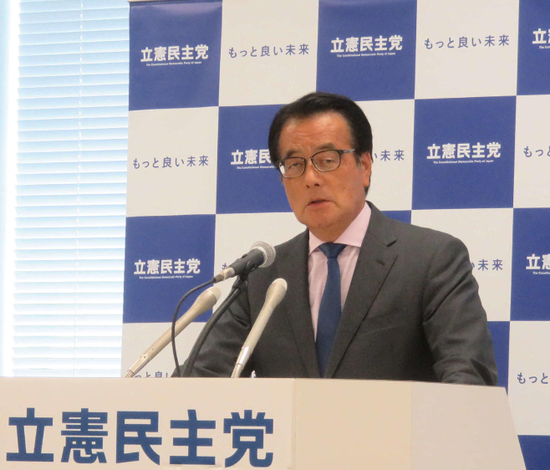
集体自卫权

Search documents
中方代表:日本毫无资格要求成为安理会常任理事国!起底高市黑历史
Mei Ri Jing Ji Xin Wen· 2025-11-19 00:36
Core Points - The article discusses China's strong condemnation of Japanese Prime Minister Fumio Kishida's remarks regarding Taiwan, which are seen as a provocation and a violation of China's sovereignty [1][2][3] - It highlights the historical context of Japan's colonial actions in Taiwan and the implications of Kishida's statements on regional security [12][13][18] Group 1: China's Response - China's UN representative Fu Cong criticized Kishida's comments as dangerous and a gross interference in China's internal affairs, asserting that Taiwan is an inseparable part of China [1][2] - Fu emphasized that Japan's historical aggression and colonial crimes cannot be overlooked, questioning Japan's commitment to peace and its qualifications for a permanent seat on the UN Security Council [2][12] - The Chinese government has demanded that Japan retract its provocative statements and provide a clear explanation to the Chinese people [5][6] Group 2: Japan's Military Policy Shift - Kishida's government is reportedly considering modifying Japan's "Three Non-Nuclear Principles," which could allow for the introduction of nuclear weapons and a shift towards a more aggressive military posture [14][16] - Analysts suggest that Japan is moving from a defensive to a potentially offensive military strategy, raising concerns about regional stability [16][17] - Kishida's administration is seen as continuing and intensifying the militaristic policies of former Prime Minister Abe, including increasing defense spending and enhancing military capabilities [17][20] Group 3: Historical Context - The article outlines Japan's historical responsibility regarding Taiwan, noting that Japan's colonial rule from 1895 to 1945 caused significant suffering to the Taiwanese people [12][13] - It argues that Japan lacks the moral authority to comment on Taiwan's situation due to its past actions and the ongoing implications of its militaristic rhetoric [3][12] Group 4: Regional Implications - Kishida's remarks have sparked criticism and protests, with experts suggesting that they are aimed at stirring tensions between China and Japan while aligning Japan more closely with U.S. strategic interests [9][13] - The potential for Japan to engage in military actions under the guise of collective self-defense raises alarms about escalating conflicts in the region [11][20]

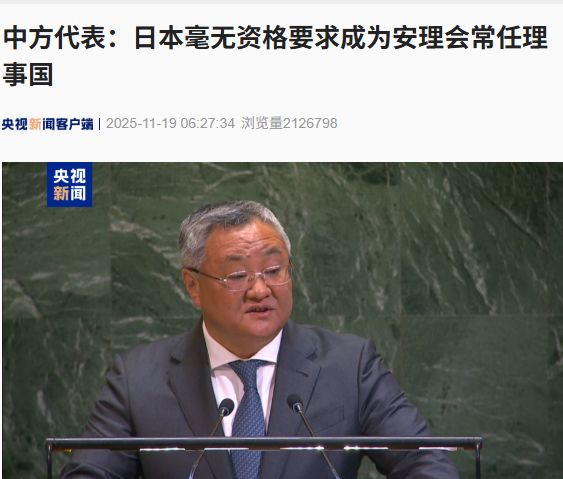
中国代表:日本毫无资格要求成为安理会常任理事国
第一财经· 2025-11-19 00:19
Group 1 - The article discusses China's strong condemnation of Japan's recent provocative statements regarding Taiwan, emphasizing that Taiwan is an inseparable part of China and that Japan's remarks violate the one-China principle [3][4][5] - China's representative, Fu Cong, criticized Japanese Prime Minister Fumio Kishida's comments as dangerous and a gross interference in China's internal affairs, undermining international justice and the post-war international order [3][4] - Fu Cong highlighted Japan's historical aggression and colonial crimes, questioning Japan's ability to adhere to its commitments to peace and international justice, especially in light of its militaristic past [4][5] Group 2 - The article warns Japan to cease its provocative actions regarding Taiwan, stating that any military intervention would be considered an act of aggression, and China would respond decisively to defend its sovereignty [5] - Fu Cong's statements reflect a broader concern about Japan's potential return to militarism, raising questions about its commitment to peace and its role in maintaining international security [4][5]
视频丨错误言论后果已现 搞事的高市错在哪?
Yang Shi Xin Wen Ke Hu Duan· 2025-11-18 11:47
Core Points - Recent remarks by Japanese Prime Minister Sanae Takaichi regarding Taiwan have sparked widespread criticism and concern, undermining regional stability and Japan's own interests [1][10] - The Chinese Foreign Ministry emphasized that Takaichi's statements violate the spirit of the four political documents between China and Japan, fundamentally damaging the political foundation of bilateral relations [3][12] Summary by Sections Political Context - The four political documents between China and Japan include the 1972 Joint Communiqué, which established diplomatic relations and contains three key points regarding Taiwan [3][12] - The 1972 Joint Communiqué states Japan's acknowledgment of the People's Republic of China as the sole legitimate government of China and recognizes Taiwan as an inseparable part of Chinese territory [3][12] Takaichi's Controversial Statements - Takaichi's assertion that "Taiwan's situation could constitute a crisis for Japan" could provide a pretext for military intervention, which contradicts Japan's long-standing legal position [10][12] - Takaichi's attempts to amend Japan's "Three Non-Nuclear Principles" (not possessing, producing, or introducing nuclear weapons) are seen as a betrayal of public anti-nuclear sentiment and could escalate military tensions in the Asia-Pacific region [12][15] Domestic Reactions - Takaichi's remarks have drawn significant backlash within Japan, with critics arguing that her statements pose a dangerous signal that threatens regional peace and stability [15][17] - Former Prime Minister Yoshihiko Noda and other political figures have called for Takaichi to exercise caution in her public statements, with some even demanding her resignation [17] Economic Impact - Following Takaichi's comments, Japan's stock market experienced declines, particularly in tourism and consumer sectors, due to fears of deteriorating Sino-Japanese relations affecting visitor numbers [18][20] - The Japanese economy is projected to suffer, as Chinese tourists, who accounted for 29.4% of total visitors in the first nine months of 2025, may reduce their travel to Japan [20] - Japanese films are also facing delays in release in China, with box office performance declining significantly for films already released, indicating a broader impact on cultural exchanges [22][23]
日本股市大跳水,盘中暴跌超1000点!高市早苗,同时惹恼中、俄、朝、韩四国
Mei Ri Jing Ji Xin Wen· 2025-11-18 03:33
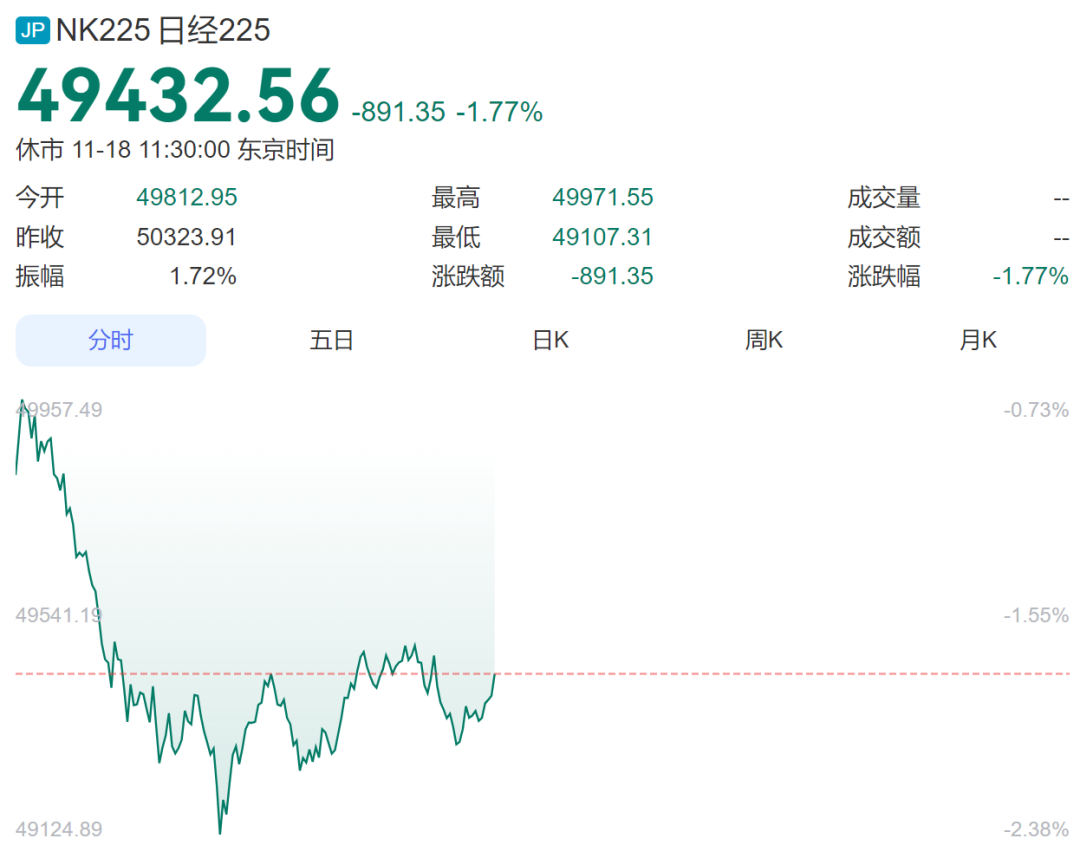
Market Performance - The Japanese stock market continued its downward trend, with the Nikkei 225 index dropping over 1000 points, a decline of more than 2% [1] - As of the report, the Nikkei 225 index was down 1.77% [1] - The Tokyo Stock Exchange index also fell nearly 1.5%, currently reported at 3297.96 points [4] Individual Stocks - Major companies such as SoftBank Group saw a decline of over 5%, influenced by the drop in U.S. tech stocks [5] - Other companies like Tokyo Electron, Advantest, and Nintendo also experienced declines, alongside consumer stocks such as Shiseido and Ajinomoto [5] Economic Indicators - The Japanese yen weakened, with the euro surpassing the 180 yen mark, marking the first time since 1999 that the yen fell into this range [6] - Concerns over Japan's fiscal situation have led to increased selling pressure on the yen, compounded by the government's plans for economic measures exceeding the previously estimated 17 trillion yen [6] Monetary Policy - The Bank of Japan maintained its policy rate at approximately 0.5% for the sixth consecutive time, with discussions of potential rate hikes emerging [7] - Macroeconomic data revealed a 0.4% decrease in Japan's real GDP for Q3 2025, marking the first contraction in six quarters [8] Geopolitical Concerns - Rising tensions due to comments from Prime Minister Fumio Kishida regarding Japan's security policy have led to cancellations of bookings in Osaka, raising concerns about the economic impact [10] - Analysts predict that reduced tourism from China could lead to a decrease in Japan's GDP by approximately 0.36% [10] Nuclear Policy - There is significant domestic opposition to potential changes in Japan's "Three Non-Nuclear Principles," which could impact public sentiment and government policy [11]
高市涉台荒唐言论“影响恶劣”——访日本冲绳大学地域研究所特别研究员泉川友树
Xin Hua Wang· 2025-11-17 07:09
新华社东京11月16日电 专访|高市涉台荒唐言论"影响恶劣"——访日本冲绳大学地域研究所特别研究 员泉川友树 新华社记者陈泽安 杨智翔 日本冲绳大学地域研究所特别研究员泉川友树15日接受新华社记者采访时表示,日本首相高市早苗近日 发表的涉台言论影响非常恶劣,对日本及日本民众的安全保障毫无益处,也会给日中关系造成重大负面 影响。 高市7日在国会答辩时就"台湾有事"表示,如果伴随出动军舰和使用武力,可能会构成"存亡危机事 态"。根据日本法律,如发生被认定为威胁日本的"存亡危机事态",即便并未直接遭受攻击,日本也将 可以行使集体自卫权。 泉川认为,在国会发表这样的言论"非常严重"。"日本和中国是重要邻国,双方经济和文化交流密切, 如果高市的言论导致日中关系及双方交流受损,我认为将是非常严重的事态。" 泉川强调,根据声明,台湾问题属于中国内政。若日本以"存亡危机事态"为由武力干涉中国内政,在中 国看来,这无异于侵略行为。 "假如发生军事冲突,日本国内会受到严重影响。特别是在以冲绳为首的西南诸岛等地,目前正在推进 部署自卫队并与美军开展演习。"泉川表示,一旦发生冲突,这些地区将成为战区,不能说它们"被卷入 战争",因为 ...
专访丨高市涉台荒唐言论“影响恶劣”——访日本冲绳大学地域研究所特别研究员泉川友树
Xin Hua She· 2025-11-17 01:29
"日本前首相安倍晋三曾宣称'台湾有事就是日本有事',但这是安倍在卸任首相后在线上演讲中发表 的,并非在国会这样的官方场合。"泉川说。 在泉川看来,高市要煽动"台湾有事",这极不恰当且极为危险。 泉川指出:"日本在甲午战争后,通过《马关条约》将台湾变为其殖民地。台湾有着长达50年被日本统 治和奴役的沉重历史。所以,对中国人民来说,日本政府在台湾问题上的表态比其他国家的表态具有更 重的意味。" 1972年中日两国政府签订《中日联合声明》,日方在声明中作出过明确承诺,即"日本国政府承认中华 人民共和国政府是中国的唯一合法政府。中华人民共和国政府重申:台湾是中华人民共和国领土不可分 割的一部分。日本国政府充分理解和尊重中国政府的这一立场,并坚持遵循波茨坦公告第八条的立 场。" 新华社东京11月16日电 专访|高市涉台荒唐言论"影响恶劣"——访日本冲绳大学地域研究所特别研究 员泉川友树 新华社记者陈泽安 杨智翔 日本冲绳大学地域研究所特别研究员泉川友树15日接受新华社记者采访时表示,日本首相高市早苗近日 发表的涉台言论影响非常恶劣,对日本及日本民众的安全保障毫无益处,也会给日中关系造成重大负面 影响。 高市7日在国会答 ...
“日本被首相拖入国家危机”
第一财经· 2025-11-17 00:58
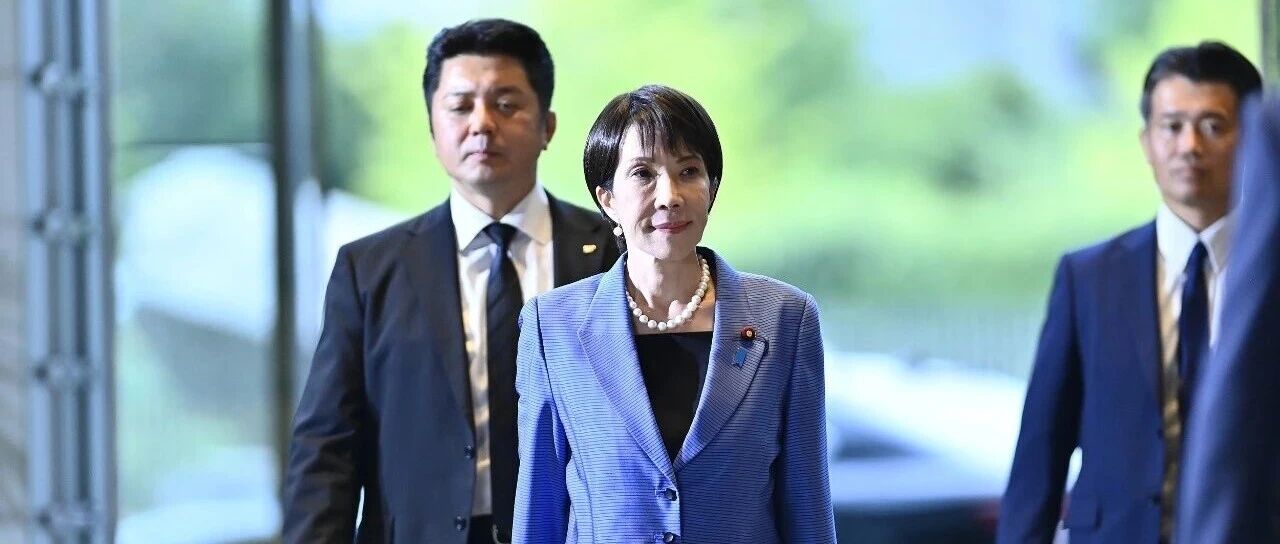
Core Viewpoint - The article discusses the recent controversial statements made by Japanese Prime Minister Kishi Sanae regarding Taiwan, which have sparked protests and criticism within Japan, highlighting the potential risks to regional stability and Japan's own diplomatic relations [3][4][5]. Group 1: Political Context - On November 7, during a budget committee meeting, Kishi stated that a military conflict involving Taiwan could constitute a "survival crisis" for Japan, which could trigger Japan's collective self-defense rights under the new security law [4][6]. - Kishi's remarks have been criticized by various political figures, including former Prime Minister Noda Yoshihiko, who described her statements as reckless and damaging to Japan-China relations [5][6]. Group 2: Historical and Legal Implications - Kishi's statements are seen as a continuation of the right-wing ideology associated with former Prime Minister Abe Shinzo, who advocated for military expansion and constitutional revision [6][7]. - Legal experts argue that Kishi's interpretation of a "survival crisis" lacks a solid legal foundation, as Taiwan is not recognized as a sovereign state by Japan, thus complicating the application of the new security law [9][10]. Group 3: Regional and International Reactions - The article notes that Kishi's comments have provoked strong reactions from regional leaders and experts, who view her statements as a provocation that could escalate tensions in the Taiwan Strait [13][14]. - Critics emphasize that Japan's involvement in Taiwan-related military actions would be seen as aggression and could severely damage Japan's international standing and relations with China [11][12]. Group 4: Economic Consequences - The potential deterioration of Japan-China relations could have significant economic repercussions, as China is Japan's largest trading partner, with trade totaling $308.3 billion in 2024 [15][16]. - Experts warn that if relations worsen, the Japanese public will bear the brunt of the consequences, including reduced trade and tourism from China [15][16].
国际观察|“日本被首相拖入国家危机”——起底高市早苗之“祸”
Xin Hua She· 2025-11-16 15:46
Core Viewpoint - The article discusses the backlash against Japanese Prime Minister Kishi Sanae due to her controversial remarks regarding Taiwan, which have led to public protests and criticism from various political figures, suggesting that her actions have plunged Japan into a national crisis [1][9]. Group 1: Political Reactions - Public protests occurred in front of the Prime Minister's residence, with demands for Kishi's resignation and apologies for her statements regarding Taiwan [1]. - Criticism from political figures, including former Prime Minister Noda Yoshihiko, who labeled Kishi's remarks as reckless and damaging to Japan-China relations [2][9]. - The opposition party, led by Okada Katsuya, questioned Kishi on the implications of her statements, indicating a serious political backlash [2]. Group 2: Historical Context and Ideological Background - Kishi's political rise is attributed to former Prime Minister Abe Shinzo, who is known for his right-wing views and military expansionist policies [3]. - Kishi's stance on historical issues and military policy aligns closely with Abe's, including calls for constitutional amendments and increased defense spending [3][5]. - The article highlights Kishi's past actions, such as visiting Taiwan and promoting Japan-Taiwan security cooperation, which reflect her aggressive stance on regional security [3][4]. Group 3: Legal and International Implications - Experts argue that Kishi's remarks lack legal grounding, as Japan's security laws do not support military intervention in Taiwan, which is not recognized as a sovereign state [6][7]. - The article emphasizes that Japan's post-war commitments and international law recognize Taiwan as part of China, warning that military involvement would be seen as aggression [7][8]. - Kishi's statements are viewed as a potential threat to Japan's peace constitution, raising concerns about the future of Japan's military policies [12]. Group 4: Economic Consequences - The article outlines potential negative impacts on Japan-China relations, which could harm trade and economic ties, as China is Japan's largest trading partner [11]. - Concerns are raised about the economic repercussions for Japan, including reduced trade and tourism from China, should relations deteriorate further due to Kishi's remarks [11][12]. - The article suggests that Kishi's aggressive rhetoric could lead to significant economic fallout for Japan, affecting its citizens directly [11].
中国大陆至日本航班量大幅下滑!事关侵华历史 高市早苗早年“叫板”视频曝光……新华社发文:错判时与势 注定撞南墙
Mei Ri Jing Ji Xin Wen· 2025-11-16 15:04
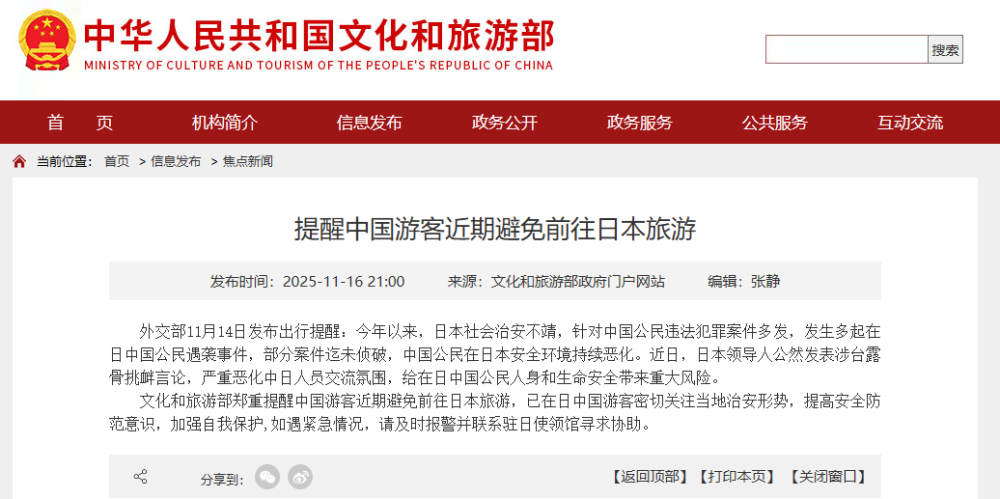
Group 1: Impact on Airlines - Multiple Chinese airlines, including Air China, China Southern Airlines, and China Eastern Airlines, have announced special policies for ticket refunds and changes for flights to Japan due to safety concerns raised by the Chinese government [1][4][5] - As of November 16, 10 airlines have implemented refund and change policies for flights to Japan, reflecting a significant operational adjustment in response to the current geopolitical climate [6][2] - The weekly flight volume from mainland China to Japan has seen a substantial decline, with a recovery rate of 82.9% compared to the same period in 2019, marking a 14.5% decrease from the previous week [1][6] Group 2: Market Trends - The number of flights between mainland China and Japan has been decreasing for four consecutive weeks, indicating a potential long-term impact on the travel market [6][7] - Chinese tourists have been the largest group of foreign visitors to Japan, with a notable increase in travel numbers earlier this year, but the current situation may hinder future growth [7] Group 3: Geopolitical Context - The Chinese Ministry of Foreign Affairs has issued warnings regarding the deteriorating safety environment for Chinese citizens in Japan, citing multiple incidents of violence against Chinese nationals [2][4] - Recent provocative statements by Japanese leaders regarding Taiwan have further strained Sino-Japanese relations, potentially affecting tourism and travel between the two countries [8][9]
害怕了?!日本有人连忙甩锅
Huan Qiu Wang· 2025-11-16 14:11
Core Viewpoint - The recent provocative remarks by Japanese Prime Minister Sanae Takaichi regarding Taiwan have sparked strong protests from China, leading to a blame game among Japanese politicians, particularly targeting lawmaker Katsuya Okada for his questioning [1][5]. Group 1: Political Context - During a budget committee meeting, Katsuya Okada questioned Takaichi about the conditions under which Japan would exercise collective self-defense, to which Takaichi responded that a "crisis situation" regarding Taiwan could justify such actions [3]. - Okada expressed concern over Takaichi's remarks, suggesting they could expand the government's discretion regarding collective self-defense [3]. Group 2: Reactions and Blame - Following Takaichi's controversial statements, some Japanese politicians and media figures shifted the blame onto Okada, accusing him of exposing Japan's security thresholds and even suggesting he was gathering intelligence for adversaries [5]. - Public sentiment was divided, with some netizens attacking Okada for provoking China, while others defended him, arguing that Takaichi's political maneuvering on Taiwan was to blame for the current tensions [5].