非物质文化遗产传承

Search documents
(乡村行·看振兴)皖南深山藏土楼 七旬匠人守传承
Zhong Guo Xin Wen Wang· 2025-12-04 11:05
(乡村行·看振兴)皖南深山藏土楼 七旬匠人守传承 中新网歙县12月4日电 (郭娟)在安徽省黄山市歙县深渡镇约源村,层层叠叠的阳产土楼群是当地村民与 自然共生的见证。77岁的郑绍水,将枯燥的夯土手艺变成鲜活的文旅体验,让沉睡的非遗技艺在游客的 欢笑声中"醒"了过来。 "建造土楼,首先地基要稳。只要有人愿意学,我就愿意教。我希望把这门手艺传承下去。"郑绍水表 示。如今,年逾古稀的郑绍水依旧住在自己建造的土楼里,期盼着有越来越多的人来传承这门技艺,让 夯杵撞击泥土的声响,在群山间回荡……(完) 初冬时节,阳产自然村的晒场上格外热闹。在郑绍水的指导下,游客们举起沉实的夯杵,伴着整齐的号 子声,用力砸向黄褐色的泥土,周围的人纷纷举起手机拍摄记录。这样热闹的场景,如今已成为阳产的 常态。 这个藏在深山的土楼群,也因此成为网红打卡地。 这项深受游客喜爱的夯土技艺,不仅是郑绍水的拿手好活,更是连接过往与当下的文化纽带。2024年, 因他掌握的打土墙技艺,郑绍水被选为安徽省第七批省级非物质文化遗产代表性传承人。 2018年,他在同村村民郑小河的号召下,加入了阳产土楼的夯土技艺表演团队。24岁就开始学习打土墙 技艺的郑绍水,在团 ...


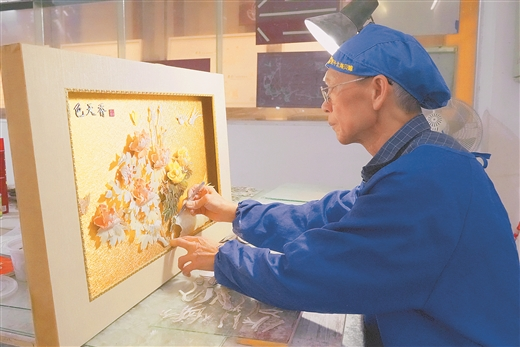
广西烟火 | 镂月裁云贝生花
Guang Xi Ri Bao· 2025-12-01 03:09
Core Perspective - The article highlights the significance of Beihai shell carving as a national intangible cultural heritage, showcasing its artistic value and cultural history rooted in the maritime Silk Road [1][4]. Group 1: Cultural Heritage and Artistic Value - Beihai shell carving is recognized as China's first national-level intangible cultural heritage project in the shell carving category, reflecting a blend of historical techniques and modern artistry [1]. - The craft has evolved from its origins in the Qin and Han dynasties, gaining prominence during the Ming and Qing dynasties, and is seen as a microcosm of maritime cultural exchange [1][4]. Group 2: Techniques and Craftsmanship - The shell carving process involves over ten intricate steps, including shaping, carving, polishing, and assembling, emphasizing the importance of material and technique [2][4]. - The artisans utilize various types of shells, each contributing unique characteristics to the final product, demonstrating a deep respect for natural materials [2][3]. Group 3: Revival and Modernization - After a decline in the 1990s, the industry saw a revival in 2004 when artisans returned to traditional methods, focusing on natural aesthetics rather than artificial coloring [2][4]. - The Beihai shell carving industry has expanded, with approximately 20 enterprises and studios currently operating, and the workforce has grown from over 20 to more than 100 since 2021, attracting younger generations [4][5]. Group 4: Educational and Community Engagement - The Beihai Shell Carving Museum serves as a cultural hub, where artisans mentor young students, ensuring the transmission of skills and knowledge [5]. - Innovative designs incorporating shell carving into everyday items have made the craft more accessible and popular among the public, enhancing its relevance in contemporary society [4][5].
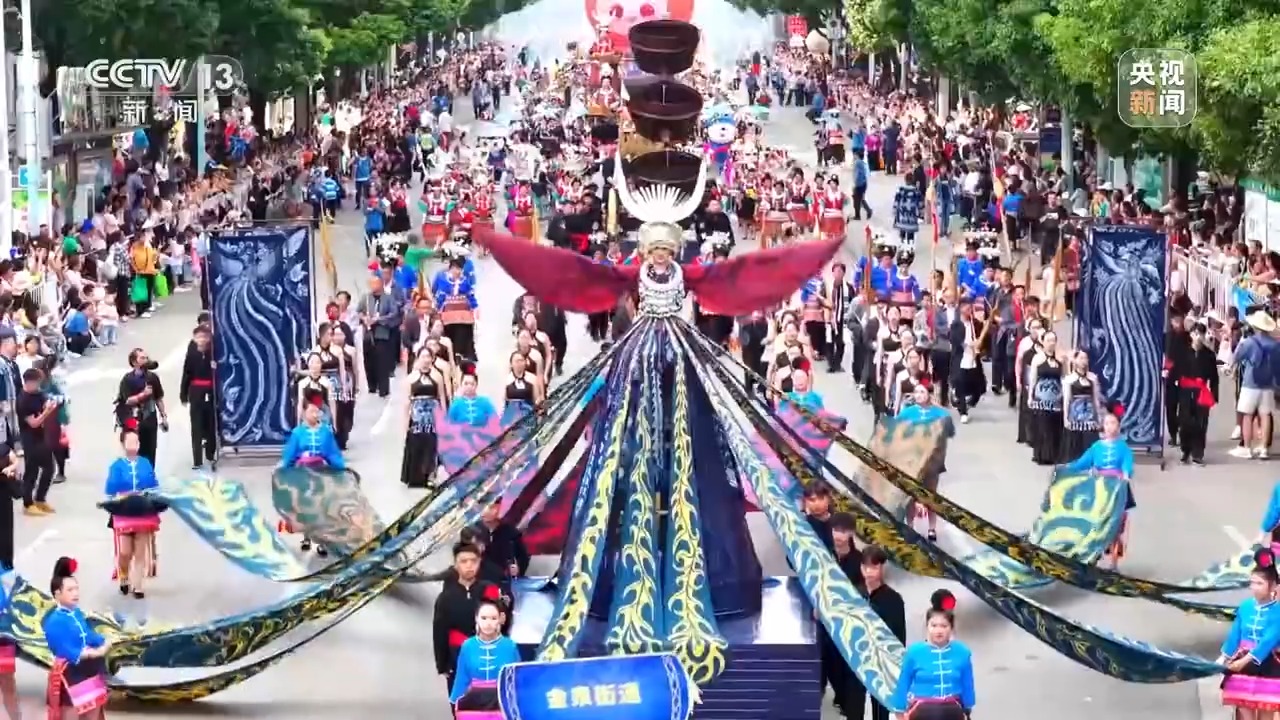
清远巨型长鼓登上十五运会闭幕式,连南瑶族长鼓舞惊艳亮相
Nan Fang Nong Cun Bao· 2025-11-23 15:02
Group 1 - The closing ceremony of the 15th National Games took place on November 21 in Shenzhen, featuring the Yao ethnic group's long drum dance from Lianan Yao Autonomous County [2][3] - A 10-meter long giant drum, specially made for the performance, was showcased, highlighting the cultural charm of the Yao people [3][31] - The performance was executed by the Lianan National Song and Dance Troupe, with dancers wearing traditional Yao costumes and incorporating original Yao music [5][6] Group 2 - The long drum dance, known as "Ai Wang Du," has a history of over 1,000 years, originating from the migration of the Yao ancestors during the Sui and Tang dynasties [8][9] - The giant drum, weighing approximately 1,100 pounds and requiring ten young people to lift, was designed to enhance the stage effect and was the largest of its kind ever made [32][40] - The performance included exaggerated movements to ensure visibility from a distance, adapting traditional dance to suit the large stage of the closing ceremony [18][20] Group 3 - The music for the dance was selected from the original Yao dance drama "Yao Mountain That Touches Red," which reflects the Yao people's efforts in poverty alleviation and rural revitalization [25][27] - The long drum dance serves as an important medium for cultural exchange for Lianan, having been performed at various national and international events [56][57] - The preservation and promotion of the long drum dance have been supported by local cultural departments since 1990, leading to the training of new artists [49][51]

一针一刺 尽显神韵(传承)
Ren Min Ri Bao· 2025-11-18 23:30
斜阳透过窗棂,在工作台前投射下细碎光斑。国家级非物质文化遗产代表性项目仙居花灯市级代表性传 承人陈建伟俯身执针,比头发丝稍粗的绣花针在宣纸上轻点游走,随着针孔绽成连绵的虚线,牡丹花瓣 的弧线逐渐鲜活了起来。 "针刺成孔、灯身无骨,这便是仙居针刺无骨花灯。"陈建伟手上的活计不停,将仙居花灯历史娓娓道 来。 仙居花灯又称仙居针刺无骨花灯,最早可追溯到唐朝。几十年前,仙居花灯技艺几近失传。1983年,曾 任仙居县皤滩乡文化站站长的李湘满从一位老人那里得知,皤滩古镇有一种造型别致、制作精美且没有 骨架的花灯,当地人称它为"唐灯"。他走遍仙居各乡镇,甚至赴东阳、义乌,寻访散落民间的制灯老艺 人,收集残存图纸与口述技艺,最终复原了失传50余年的"唐灯",并陆续挖掘出27个传统品种。 2006年,仙居花灯入选首批国家级非物质文化遗产名录。 《 人民日报 》( 2025年11月19日 14 版) (责编:杨光宇、胡永秋) 先要选择高纯度、轻薄柔韧、透光均匀的珠光纸和色卡纸,以事先设计好的图纸的尺寸,裁剪相应的纸 张,对齐后以纸锥定位,开始凿花。凿花后,要粘贴一层拷贝纸。这之后,灯片需再次用熨斗烫平 整……这些步骤,陈建伟早已 ...
新时代中国调研行之文化中华丨壮锦新生:古老纹样闯入国际时装周
Xin Hua Wang· 2025-11-08 13:19
Group 1 - The core viewpoint of the article highlights the significance of Zhuang brocade, which is recognized as one of China's four famous brocades alongside Yun brocade, Shu brocade, and Song brocade, and its prominent display at the 2025 China International Fashion Week [1] - Zhuang weaving techniques were included in the first batch of national intangible cultural heritage lists in 2006, emphasizing the cultural importance and historical value of this craft [1] - Traditional Zhuang brocade was made from cotton and linen, while Guangxi Jialian Silk Zhuang brocade has filled the gap in the production of pure silk Zhuang brocade in Guangxi [1] Group 2 - The production of Zhuang brocade has evolved through mechanization, addressing issues related to width and output, which has expanded its applications beyond traditional items like headscarves and bags to various aspects of daily life [3] - Historically, the weaving process was labor-intensive, with bamboo looms requiring repetitive actions that only produced a few centimeters of fabric daily, leading to the saying "an inch of brocade is worth an inch of gold" [1]
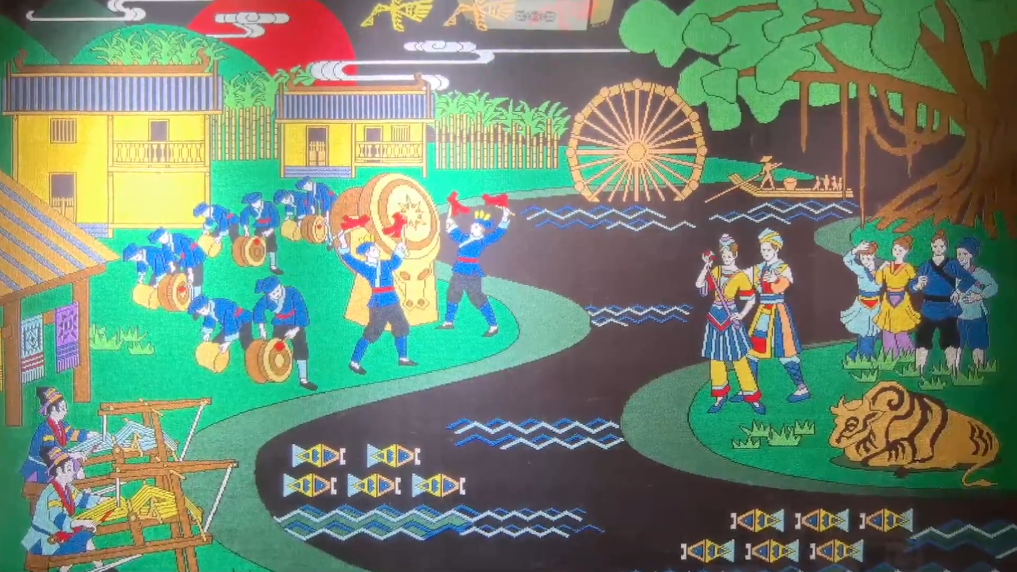
新时代中国调研行之文化中华丨华州皮影:破圈焕新的古老技艺
Xin Hua She· 2025-11-02 08:40
Core Viewpoint - Shaanxi is a significant origin of shadow puppetry, with Huazhou shadow puppetry representing the eastern route of Shaanxi's shadow puppetry, showcasing a rich cultural heritage dating back to the Qin and Han dynasties [1][3]. Group 1: Historical Significance - Huazhou shadow puppetry originated during the Qin and Han dynasties and was refined during the Sui and Tang dynasties, making it a key cultural representation of the region [1]. - The art form is characterized by its ability to narrate historical tales and depict grand battles through intricate performances [1]. Group 2: Craftsmanship and Techniques - The production quality of shadow puppets directly influences performance effectiveness, with Huazhou shadow puppetry known for its beautiful shapes, delicate carvings, and rich colors [3]. - Xue Hongquan, a provincial representative inheritor of Huazhou shadow puppet-making skills, began his journey in this craft at the age of 14 [3]. Group 3: Innovation and Revival - Xue Hongquan has revitalized Huazhou shadow puppetry by adhering to traditional craftsmanship while also innovating through the establishment of training centers and integrating contemporary art forms [4]. - Efforts to modernize the art have injected new vitality into "old shadow puppetry," allowing it to regain prominence in contemporary culture [4].
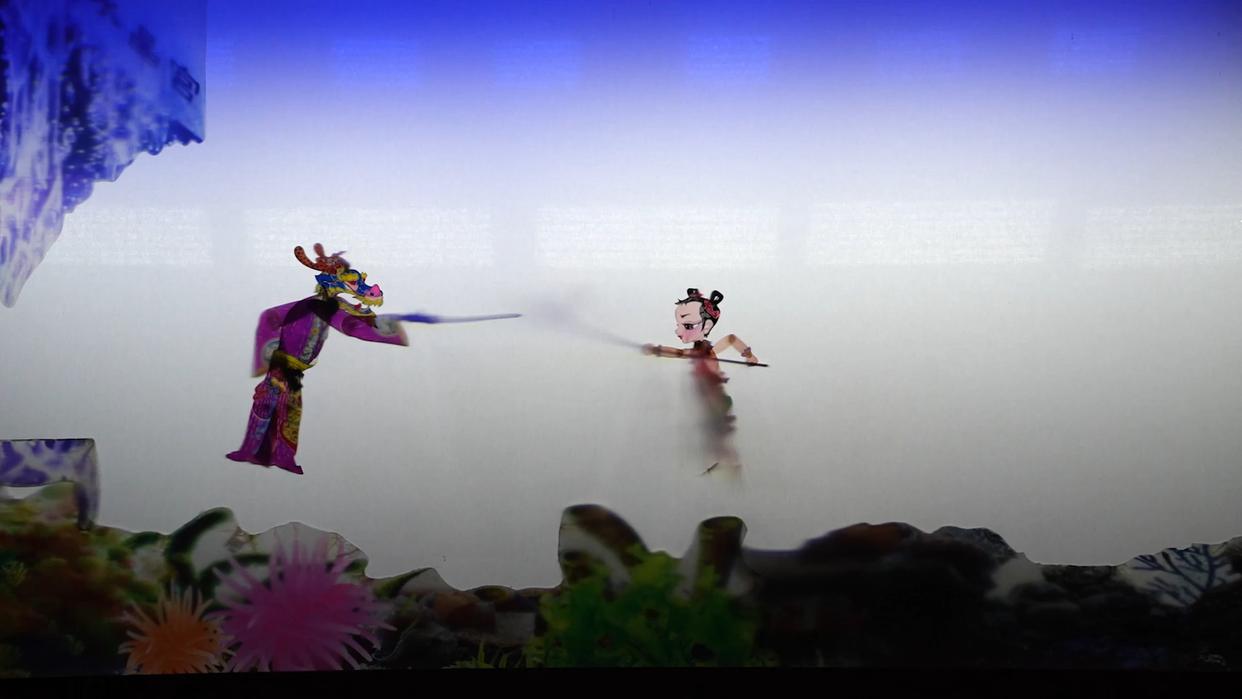
走近农民手艺人
Ren Min Ri Bao Hai Wai Ban· 2025-10-29 22:55
Group 1: Cultural Heritage and Craftsmanship - The article highlights the importance of preserving traditional crafts, such as the Li brocade weaving and the Kuqa big naan, as vital components of cultural heritage [5][7][10] - Various artisans have taken initiatives to pass on their skills to younger generations, ensuring the continuity of these crafts [6][9][11] - The government is increasingly recognizing the value of intangible cultural heritage, leading to more support for artisans and their crafts [6][12] Group 2: Innovation and Market Adaptation - Artisans are adapting traditional crafts to modern tastes, creating new products that appeal to younger consumers, such as fashion accessories made from Li brocade [5][8] - The integration of traditional techniques with contemporary design has led to the development of unique products that attract both local and tourist markets [9][14] - The establishment of training programs and workshops has empowered local communities, allowing them to monetize their skills and contribute to the local economy [11][15] Group 3: Economic Impact and Community Development - The revival of traditional crafts has become a source of income for many artisans, with some reporting significant increases in earnings through their craft [11][13] - The establishment of businesses around these crafts, such as workshops and cultural tourism, has created job opportunities and stimulated local economies [9][12] - Artisans are not only preserving their heritage but also fostering community development by engaging local youth and promoting cultural tourism [10][15]
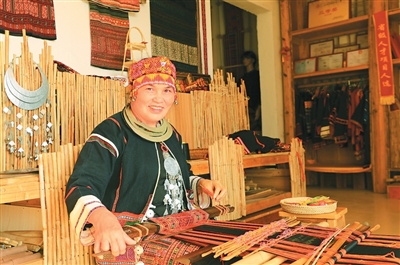
山东博山:非遗进校园 学习共传承
Ren Min Wang· 2025-10-24 02:17
Group 1 - Volunteers are teaching traditional crafts such as paper-cutting and ceramic-making to students in Zibo City, Bo District [1][2][3] - Students at Sixty Mu Primary School are creating fabric patchwork headgear as part of their artistic activities [1][2] - The involvement of volunteers in teaching these traditional skills highlights a community effort to preserve cultural heritage [1][3] Group 2 - Students at Bo Shan No. 6 Middle School are engaged in ceramic painting, showcasing their creativity [2][3] - The activities are part of a broader initiative to enhance students' understanding and appreciation of traditional arts [2][5] - The teaching of skills like diabolo (a traditional Chinese toy) is also being incorporated into the educational activities [5]

青海班玛马尾钉线绣唐卡 指尖传承四百年
Zhong Guo Xin Wen Wang· 2025-10-16 03:28
Core Viewpoint - The article highlights the traditional Tibetan Thangka art, specifically the Bamda horsehair stitch Thangka, which has a history of over 400 years and was included in the fifth batch of national intangible cultural heritage in 2021 [3][5][11]. Group 1: Art and Cultural Significance - The Bamda horsehair stitch Thangka combines horsehair and silk thread, showcasing a unique technique that integrates embroidery, pile embroidery, and painting [3][5][11]. - The themes of the Thangka encompass Tibetan history, culture, and daily life, providing a rich narrative through its artistic representation [3][5][11]. - The artwork features a three-dimensional relief effect, ensuring its longevity and preservation [3][5][11]. Group 2: Training and Employment - Recent years have seen effective promotion of traditional skills through intangible cultural heritage training programs in Bamda County, leading to increased employment opportunities [3][5][11]. - The training initiatives have successfully facilitated the transmission of traditional craftsmanship to new generations [3][5][11]. Group 3: Innovation in Craftsmanship - The Bamda horsehair stitch Thangka technique has been innovatively applied in recent years, reflecting a blend of tradition and modernity [13].
焦点访谈丨年轻人钟情老手艺 非遗装上“新引擎”
Yang Shi Xin Wen Ke Hu Duan· 2025-10-07 03:45
Core Viewpoint - The revival of traditional crafts and intangible cultural heritage (ICH) among young people is gaining momentum, driven by a blend of cultural pride, state support, and modern technology [1][25]. Group 1: Young People's Engagement with ICH - There is a noticeable increase in young individuals participating in traditional crafts, with a 95% year-on-year growth in creators from Generation Z on a short video platform [5]. - Young artisans are creatively integrating modern elements into traditional crafts, making them appealing to a younger audience [4][19]. - The participation of young performers in large-scale ICH events, such as the national ICH protection conference, showcases their role as vital inheritors of these traditions [3]. Group 2: State Support and Infrastructure - The Chinese government has established a dedicated fund for ICH protection, with a total investment of 113.80 billion yuan by the end of last year [9]. - Financial support for national-level ICH inheritors includes annual subsidies of 20,000 yuan, with additional rewards for outstanding transmission activities [9][11]. - A comprehensive ICH protection and transmission system has been developed, with over 90,000 recognized inheritors and more than 100,000 ICH projects [11]. Group 3: Economic Impact and Market Integration - The online sales of ICH products reached over 6.5 billion units last year, indicating a strong market demand and economic potential for traditional crafts [11]. - The integration of ICH into daily life, such as fashion and home decor, has made these crafts more accessible and desirable for young consumers [21]. - The collaboration between traditional crafts and modern digital platforms has created new avenues for promotion and engagement, enhancing the visibility of ICH [9][19]. Group 4: Cultural Exchange and Community Engagement - Young ICH practitioners are using social media to share their crafts, leading to increased interest and participation from local communities [9][17]. - The revival of traditional songs and dances has not only preserved cultural heritage but also stimulated local economies and community involvement [17][18]. - Cultural exchanges, such as performances in Taiwan, highlight the shared heritage and foster connections among young people across regions [23].