区块链

Search documents
贵州安创数智科技有限公司成立,注册资本2000万人民币
Sou Hu Cai Jing· 2025-12-16 03:18
天眼查显示,近日,贵州安创数智科技有限公司成立,法定代表人为晏绍云,注册资本2000万人民币, 由河北雄安卓辰企业管理咨询有限公司全资持股。 序号股东名称持股比例1河北雄安卓辰企业管理咨询有限公司100% 经营范围含法律、法规、国务院决定规定禁止的不得经营;法律、法规、国务院决定规定应当许可(审 批)的,经审批机关批准后凭许可(审批)文件经营;法律、法规、国务院决定规定无需许可(审批) 的,市场主体自主选择经营。(许可项目:互联网信息服务;互联网直播技术服务。(依法须经批准的 项目,经相关部门批准后方可开展经营活动,具体经营项目以相关部门批准文件或许可证件为准)互联 网数据服务;工业互联网数据服务;软件开发;数字技术服务;物联网应用服务;区块链技术相关软件 和服务;人工智能公共服务平台技术咨询服务;数字文化创意内容应用服务;人工智能双创服务平台; 人工智能应用软件开发;信息系统集成服务;人工智能基础资源与技术平台;互联网销售(除销售需要 许可的商品);人工智能行业应用系统集成服务;人工智能基础软件开发;人工智能通用应用系统;人 工智能公共数据平台;人工智能理论与算法软件开发;体验式拓展活动及策划;组织体育表演 ...
研判2025!中国内存数据库行业分类、产业链及市场规模分析:从性能加速工具到国计民生核心基础设施,印证信创与数字化驱动下的战略地位质变[图]
Chan Ye Xin Xi Wang· 2025-12-16 01:25
Core Insights - The role of in-memory databases has fundamentally shifted from being an "auxiliary tool" focused on caching and performance acceleration to becoming a "key strategic infrastructure" that supports core business systems in finance and telecommunications [1][7]. Industry Overview - Database management systems are essential software for organizing, storing, and managing data, serving as the backbone for IT core systems in the information and big data era [1]. - In-memory databases store data primarily in RAM, achieving read/write speeds that are tens to hundreds of times faster than traditional disk databases, making them suitable for real-time applications [3][1]. Market Size - The market size of China's in-memory database industry is projected to reach approximately 10.104 billion yuan in 2024, representing a year-on-year growth of 20.29% [1][7]. Key Companies - Major players in the in-memory database sector include Huawei's GaussDB, Ant Group's OceanBase, and Tencent Cloud's TDSQL, which leverage cloud-native architectures and distributed technologies [8]. - Traditional database vendors like Dameng Data and Kylin Software are also significant, with their solutions supporting high-performance real-time memory computing [8][10]. Industry Development Trends 1. **Technological Evolution**: In-memory databases are integrating AI, cloud computing, and distributed architectures, leading to a new paradigm of "intelligent in-memory computing" [12]. 2. **Application Expansion**: In-memory databases are increasingly tailored for specific verticals such as finance and telecommunications, enhancing their adaptability to real-time requirements [13]. 3. **Domestic Ecosystem Construction**: Under the influence of domestic innovation policies, local in-memory database vendors are accelerating the establishment of a comprehensive ecosystem that includes chips, operating systems, databases, and applications [14][15].






黄朝椿:数字化赋能乡村产业振兴
Jing Ji Ri Bao· 2025-12-16 00:05
Core Viewpoint - The implementation of the rural revitalization strategy is a significant historical task related to the comprehensive construction of a modern socialist country, with a focus on the comprehensive revitalization of rural industries, talents, culture, ecology, and organization [1] Group 1: Industry Revitalization - Industrial revitalization is the key to the overall revitalization of rural areas, as highlighted by Xi Jinping, emphasizing that without industry, it is difficult to attract and retain talent, and farmers' income cannot be increased [1] - The rural industry is rooted in county areas, relying on agricultural and rural resources, with farmers as the main body, and aims for the integration of primary, secondary, and tertiary industries [1] Group 2: Digital Transformation - The rapid development of digital technologies such as artificial intelligence, cloud computing, blockchain, and big data has accelerated their integration with traditional industries, significantly enhancing the mechanization and intelligence levels of agriculture [2] - By the end of 2023, the number of agricultural machines equipped with Beidou terminals reached 2.2 million, and the agricultural production informationization rate reached 27.6% [2] Group 3: Challenges and Recommendations - Despite notable achievements in rural industrial revitalization, there are still gaps compared to new industrialization and modernization requirements, with challenges such as insufficient technical talent and the predominance of smallholder farmers [3] - The "14th Five-Year Plan" suggests accelerating agricultural modernization and promoting the deep integration of rural primary, secondary, and tertiary industries [3] Group 4: Infrastructure and Innovation - Accelerating the construction of new infrastructure is essential for supporting industrial digital transformation and innovation, with a focus on IoT and AI [4] - The development of smart farms and the integration of digital technologies into agricultural production are crucial for modern agriculture [4] Group 5: Ecological Restructuring - The transformation of digital technology from "single empowerment" to "ecological restructuring" is necessary, promoting the development of multiple business models in rural industries [5] - The promotion of digital inclusive finance in rural areas aims to enhance the accessibility and convenience of financial services for various agricultural entities [5] Group 6: Talent Development - Building a high-quality professional talent team is vital for the digital and intelligent transformation of rural industries, with initiatives to enhance digital literacy among rural residents [6] - Establishing a policy system for the two-way flow of talent between urban and rural areas is essential to attract more technical professionals to rural revitalization efforts [6]
海仲知产质押融资对接
Sou Hu Cai Jing· 2025-12-15 17:38
Group 1: Core Perspectives - The transition to a knowledge-based economy emphasizes the importance of intellectual property (IP) as a key competitive advantage for enterprises, necessitating financial mechanisms to realize its economic value [1] - The "Hai Zhong IP Pledge Financing Connection" serves as a bridge between IP and financial capital, facilitating the transformation of technological achievements and promoting industrial upgrades [1] Group 2: Addressing Financing Challenges - Many technology-driven enterprises face difficulties in financing due to their asset-light nature, as traditional financing methods rely on fixed asset collateral, making it hard for them to secure necessary funding [2] - The Hai Zhong IP Pledge Financing Connection offers a new financing option by allowing companies to pledge their intellectual property to obtain funds for research, production, and market expansion [2] Group 3: Regional Economic Development - The initiative helps optimize the innovation ecosystem in regions, attracting more innovative resources and enhancing industrial competitiveness, as demonstrated by the positive impact on industries like salt lake chemicals and clean energy in Haixi Prefecture, Qinghai Province [3] Group 4: Collaborative Model and Process - The financing connection involves multiple stakeholders, including government departments, financial institutions, enterprises, and IP service agencies, with the government providing policy support and coordination [4] - The process begins with companies assessing their IP for pledge eligibility, followed by a financing application to financial institutions, which includes a review of the IP's value and the company's creditworthiness [5] Group 5: Risk Control Measures - Financial institutions implement risk control measures by collaborating with professional IP evaluation agencies to ensure accurate valuation and by continuously monitoring the operational status and repayment capacity of enterprises [6] Group 6: Challenges and Issues - The difficulty in accurately assessing the value of intellectual property poses a significant challenge, as various factors influence its worth, leading to discrepancies in evaluations by different agencies [7] - Some financial institutions exhibit low enthusiasm for IP pledge financing due to perceived high risks and the additional resources required for thorough risk assessment and management [8] - The underdeveloped IP trading market in China limits the liquidity and realization of IP value, causing hesitation among financial institutions regarding accepting IP as collateral [9] Group 7: Recommendations and Measures - Establishing a standardized and reliable IP evaluation system is crucial for improving the accuracy and credibility of assessments, alongside encouraging the development of specialized evaluation agencies [10] - Government policies aimed at risk compensation and interest subsidies can enhance the willingness of financial institutions to engage in IP pledge financing [11] - Strengthening the infrastructure of the IP trading market and promoting transparency can facilitate smoother transactions and enhance the market value of intellectual property [12] Group 8: Future Development Trends - The integration of emerging technologies such as AI, big data, and blockchain into the IP pledge financing process can enhance evaluation accuracy and improve operational efficiency [14] - The trend towards internationalization in IP pledge financing will see increased interest from multinational corporations and international financial institutions, promoting global IP circulation [15] - The service scope of IP pledge financing will expand beyond technology firms to include sectors like cultural creativity and biomedicine, offering a wider range of support services [16]

聪链上涨2.03%,报1.51美元/股,总市值9167.50万美元
Jin Rong Jie· 2025-12-15 15:15
Core Viewpoint - The article discusses the financial performance and market position of Cong Chain (ICG), highlighting its recent stock performance and financial results, indicating both growth in revenue and a significant decline in net profit [1]. Financial Performance - As of June 30, 2025, Cong Chain reported total revenue of 176 million RMB, representing a year-on-year increase of 19.22% [1]. - The net profit attributable to the parent company was 4.255 million RMB, showing a substantial year-on-year decrease of 88.03% [1]. Company Overview - Cong Chain Group Limited is a holding company registered in the Cayman Islands, operating through its subsidiaries in China [1]. - The company began operations in December 2017 with the establishment of Shanghai International Chain Technology Co., Ltd. in Shanghai, China [1]. - Cong Chain is a provider of integrated solutions, focusing on high-performance ASIC chips and supporting software and hardware for blockchain applications [1]. - The company employs a fabless business model, specializing in both front-end and back-end IC design, which is a critical part of the IC product development chain [1]. - Cong Chain has established a strong supply chain management with leading foundries, ensuring product quality and stable production output [1].

区块链钱包接口开发指南:从技术原理到安全实践
Sou Hu Cai Jing· 2025-12-15 12:42
Group 1: Wallet Overview - Digital wallets serve as a bridge connecting users to blockchain technology, with a focus on asset security and management [1] - Wallets can be categorized into custodial and non-custodial types, with the former managed by third parties and the latter fully controlled by users [1] - The development cost of wallets is low, but the potential for malicious activities is even lower, highlighting the importance of open-source wallets [1] Group 2: RPC Protocol - The Remote Procedure Call (RPC) protocol is essential for enabling interaction between wallets and blockchains, allowing programs to call subroutines on other computers without additional programming [3] - RPC can be synchronous, requiring the client to wait for a response, or asynchronous, allowing for callback notifications [3] - JSON-RPC has become a mainstream choice due to its stateless and lightweight characteristics, facilitating a focus on business logic rather than protocol details [3] Group 3: Wallet Development Architecture - Reliable wallet construction requires solid underlying blockchain technology support, with developers needing to adapt to various blockchain protocols [3] - For Bitcoin wallets, understanding the UTXO (Unspent Transaction Output) model is crucial for handling transaction creation, signing, and broadcasting [3] - Mobile wallet development frameworks are critical, with iOS favoring Swift or Objective-C and Android preferring Java or Kotlin, while cross-platform frameworks like ReactNative and Flutter enhance code reuse and development efficiency [3] Group 4: Core Functionality - Asset storage and management are central to wallet functionality, necessitating secure storage solutions and encryption algorithms to protect private keys [5] - Transaction functionality must balance convenience and security, ensuring accurate transaction signing and broadcasting, including gas fee calculations for Ethereum transfers [5] - Multi-currency support is becoming a competitive advantage for wallets, requiring developers to understand the technical characteristics of different cryptocurrencies [5] Group 5: Security Practices for Payment Interfaces - Key security elements can be derived from established payment platforms like Alipay, including authorization password verification for sensitive operations and mandatory parameters for transactions [6] - A comprehensive exception handling mechanism is essential for traceability of issues [6] - The development of blockchain wallet interfaces must incorporate these security practices to ensure the wallet acts as a guardian of assets [6]

中国国家数据局、重庆市人民政府与新加坡资讯通信媒体发展局签署合作备忘录
Zheng Quan Shi Bao Wang· 2025-12-15 11:01
Core Viewpoint - The signing of the memorandum aims to enhance cooperation between China and Singapore in building a digital land-sea new corridor, focusing on digital transformation to create a future-oriented smart economic corridor [1] Group 1: Digital Connectivity - The three parties will focus on digital connectivity, promoting the cross-border secure and orderly flow of data through the interconnection and cooperation of digital infrastructure under a framework of digital rules [1] - The goal is to explore the construction of an efficient, convenient, and secure digital channel [1] Group 2: Digital Technology and Innovation - There will be encouragement and support for joint research and application cooperation between enterprises and research institutions in both countries in areas such as artificial intelligence, blockchain, and big data [1] - The collaboration will also include sharing experiences and achievements in smart city construction [1] Group 3: Digital Talent Exchange and Training - The memorandum includes plans for strengthening the training of professional talents in the digital field through seminars, skill certification, and talent exchange programs [1] - This initiative aims to provide solid talent support for the development of the digital economy [1]
曾光辉:构建信用场景创新应用生态 为高质量发展注入信用动能
Zhong Guo Jin Rong Xin Xi Wang· 2025-12-15 06:37
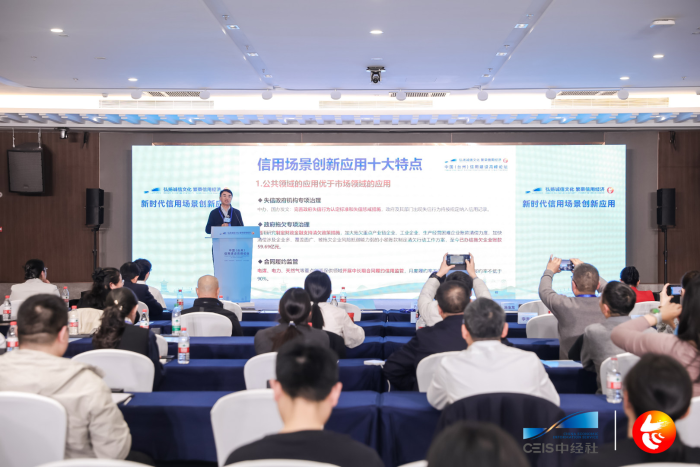
Core Viewpoint - The China Urban Credit Construction Summit Forum emphasizes the importance of innovative credit application scenarios to drive high-quality development in the credit system, advocating for a comprehensive ecosystem supported by government guidance, market dynamics, and social collaboration [1][5]. Group 1: Credit Construction Framework - The essence of credit work is encapsulated in the "53324" framework, which includes five types of entities (government, market participants, social organizations, individuals, and judicial bodies), three categories of obligations (legal, contractual, and voluntary), and three stages (credit acceptance, evaluation, and utilization), supported by incentives and penalties across four dimensions (system, technology, application, and culture) [2]. - The statement "no scenario, no credit" highlights that credit must be embedded in specific scenarios to effectively reduce transaction costs, optimize resource allocation, and mitigate market risks [2]. Group 2: Current Characteristics of Credit Application - Current characteristics of credit application in China include: - Public sector applications outperform market applications - Industries with top-level design show more significant results - Punitive applications are more effective than incentive applications - Specific scenarios are preferred over universal scenarios - Corporate perception is stronger than individual perception - Urban credit is superior to rural credit - Eastern regions outperform central and western regions - Economic scenarios are prioritized over social scenarios - Institutional development in applications is favored over cultural development - Credit regulation is prioritized over credit services - Existing issues include insufficient breadth and depth, imbalanced development, and a lack of diverse scenarios, leading to an incomplete and unsustainable ecosystem [2]. Group 3: Recommendations for Credit Scene Innovation - Eight recommendations for building a credit scene innovation ecosystem include: - Accelerating the credit legislation process to solidify institutional foundations - Enhancing data collection and sharing quality to enrich data elements, focusing on market credit data integration - Promoting integrated credit platform services using technologies like big data, AI, and blockchain for precise credit profiling and dynamic monitoring - Expanding market-oriented, inclusive, and personal credit scenarios, including the promotion of personal credit scores - Facilitating cross-regional, cross-sector, and cross-industry credit scenario interoperability - Accelerating the cultivation of credit service institutions and encouraging collaborative innovation - Upholding data security and compliance to prevent credit misuse - Strengthening the promotion of integrity culture to foster a societal ethos of "knowing, keeping, and using credit" [3]. Group 4: Forum Overview - The China Urban Credit Construction Summit Forum serves as a high-level exchange platform for social credit system construction, focusing on cutting-edge topics in credit development, and has successfully held multiple sessions [5].
2026年企业数字化转型领导者“十要十不要”
3 6 Ke· 2025-12-15 06:10
Core Viewpoint - Digital transformation is often misunderstood by company leaders, leading to superficial or incomplete efforts. A deeper understanding of digitalization is essential for effective transformation [1][3]. Group 1: Misunderstandings and Issues - Many traditional company leaders equate digital transformation with merely purchasing advanced software systems, neglecting the unique aspects of their own organizations [2]. - There is a tendency to expect immediate financial returns from digital initiatives, which can lead to budget cuts or project cancellations when short-term results are not visible [4]. - Leaders often either delegate digital transformation entirely or interfere excessively in technical decisions, resulting in confusion and misalignment [4][5]. Group 2: Methodological and Cultural Challenges - Companies frequently lack a clear digital strategy and implementation roadmap, leading to ad-hoc approaches that fail to address real business needs [5]. - There is a common oversight of the human and cultural aspects of transformation, with many leaders failing to establish cross-departmental teams or address the resulting shifts in power and interests [6]. - A lack of a data-driven culture and reliance on traditional management practices hinder effective digital transformation [6]. Group 3: Recommendations for Leaders - Leaders should personally engage in learning about digitalization, lead transformation efforts, and actively participate in decision-making [7]. - It is crucial for leaders to maintain a long-term perspective, avoid rushing for quick wins, and embrace the complexities of digital transformation [7][8]. - Successful transformation requires a fundamental shift in leadership mindset, focusing on collaboration and data-driven decision-making [8].
经济学博士、神州数码联席董事长王永利:把握本质、开拓创新,切实加快数字人民币发展
Xin Lang Cai Jing· 2025-12-13 14:22
Core Viewpoint - The development of digital RMB is crucial for establishing a new international monetary and financial order, and it is imperative to accelerate its innovation and application to gain a competitive advantage globally [1][19]. Group 1: Digital RMB Development - Since May 2025, the U.S. and Hong Kong have been advancing legislation on stablecoins and digital assets, prompting discussions in China about the need to promote digital RMB and stablecoin legislation [3][22]. - The People's Bank of China (PBOC) announced plans to optimize the positioning of digital RMB beyond the previously defined M0 level and to enhance its management system [3][22]. - A meeting was held on November 28, where 13 departments emphasized the need to continue prohibiting virtual currencies and to combat illegal financial activities related to them [3][22]. Group 2: Challenges and Controversies - The policy direction to firmly curb virtual currencies has exceeded many expectations and has sparked significant social debate [4][23]. - The initial positioning of digital RMB as M0 has led to limitations in supply and application scenarios, making it less competitive compared to mobile payments [7][27]. - There is a need to redefine the essence and positioning of digital RMB to ensure its successful development and international competitiveness [4][28]. Group 3: Technological and Structural Considerations - Digital RMB must leverage technologies such as blockchain and smart contracts to enhance efficiency and security [12][34]. - The integration of digital RMB with digital identity systems is essential for ensuring the authenticity and security of user information [14][36]. - A clear distinction between domestic and international versions of digital RMB is necessary due to jurisdictional differences [16][37]. Group 4: Strategic Importance - Digital RMB should be elevated to a national strategic project, requiring collaboration across various government departments to ensure effective resource allocation and project quality [18][39]. - The relationship between digital RMB and existing RMB clearing systems must be carefully managed to ensure seamless integration and operation [19][40].