
强化学习

Search documents
大模型发展情况及展望:海内外大模型梳理
2025-07-30 02:32
Summary of Key Points from the Conference Call Industry Overview - The conference call discusses the **artificial intelligence (AI)** industry, particularly focusing on the development and investment trends in large language models (LLMs) and deep learning technologies [1][2][3]. Core Insights and Arguments - **Investment Waves**: AI investment has experienced three significant waves over the past three years, with the latest wave showing longer duration, stronger momentum, and higher capital expenditure compared to previous waves [1][2][4]. - **Technological Advancements**: The introduction of deep learning and reinforcement learning has significantly enhanced the capabilities of LLMs, allowing them to perform complex tasks with improved logic and reasoning abilities [1][8][9]. - **Model Performance**: OpenAI's upcoming models, such as GPT-5, are expected to achieve generational improvements in logic processing and dynamic handling, while models like GROX and Google's Gemini series are noted for their impressive performance and balanced capabilities [10][12][14]. - **Cost of Model Training**: The cost of training models has been decreasing annually due to advancements in chip technology and training methodologies, which enhances training efficiency [22][23]. - **Market Dynamics**: The AI API market is competitive, with Google holding approximately 45% market share, followed by Sora and Deepseek. Domestic models like Kimi K2 are also gaining traction [30]. Additional Important Content - **Challenges in Deep Learning**: Deep reasoning models face challenges such as slow response times for simple queries, which impacts user experience. Future developments may focus on hybrid reasoning to improve performance [16]. - **Future Training Paradigms**: The evolution of training paradigms for LLMs will emphasize increased reinforcement learning time and the integration of high-quality data during training phases [17]. - **Domestic vs. International Models**: There is a noticeable gap of about 3 to 6 months between domestic and international models, but this gap is not expected to widen significantly. Domestic models are making strides in areas like programming capabilities [18][20]. - **User Interaction and Growth Potential**: AI technology has seen significant user penetration, particularly in Google Search, with potential for further growth as new applications are developed [27][28]. - **AGI Development**: Progress towards Artificial General Intelligence (AGI) is ongoing, with no major technical barriers identified. The integration of AI across various applications is enhancing overall efficiency [31]. This summary encapsulates the key points discussed in the conference call, highlighting the current state and future outlook of the AI industry, particularly in relation to large language models and their market dynamics.
具身领域LLM结合强化学习与世界模型工作汇总
具身智能之心· 2025-07-30 00:02
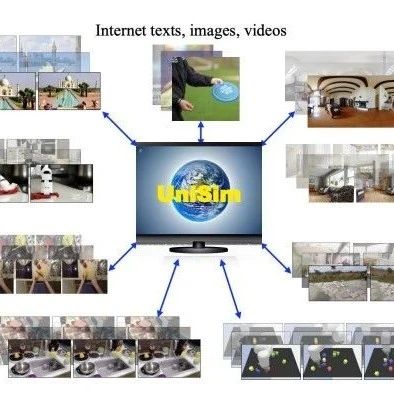
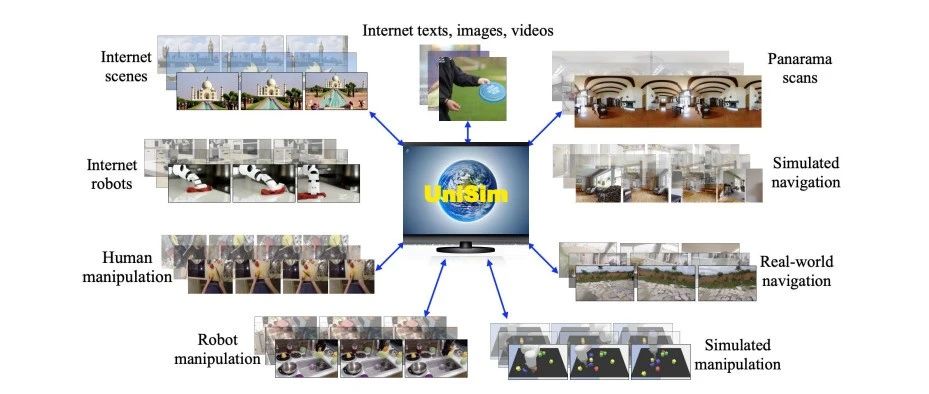
Core Insights - The article discusses recent advancements in embodied intelligence, particularly focusing on the integration of large language models (LLMs) with reinforcement learning and world models for various applications in artificial intelligence [2][3]. Group 1: UniSim and Real-World Simulators - UniSim aims to learn general real-world interactive simulators through generative modeling, revealing that diverse natural datasets can enhance the learning of realistic simulations [3]. - The research demonstrates that high-level visual language strategies and low-level reinforcement learning strategies can be trained in a simulated environment and applied directly to real-world scenarios without additional training [3]. Group 2: Causal World Models - The study from Google DeepMind asserts that robust agents must learn causal models to generalize across varying distributions, providing a clear answer to a long-standing question in the field [5]. Group 3: MAMBA Framework - MAMBA introduces an efficient world model approach for meta-reinforcement learning, achieving up to 15 times improvement in sample efficiency while performing well in high-dimensional tasks [8]. Group 4: EMMA and Multimodal Agents - EMMA leverages LLMs trained in text-based worlds to guide visual world training, resulting in a significant performance boost of 20%-70% in task success rates compared to existing visual language models [10]. Group 5: Text2Reward Framework - The Text2Reward framework allows for the automatic generation and optimization of dense reward functions using LLMs, achieving over 94% success rates in new motion behaviors and enhancing strategy performance through human feedback [13][14]. Group 6: Online Continual Learning - The proposed online continual learning frameworks (Behavior-IL and Environment-IL) enable agents to learn continuously in real-world settings without relying on task boundary information, significantly outperforming existing methods [17][18]. Group 7: AMAGO Framework - AMAGO addresses challenges in generalization and long-term memory in reinforcement learning, demonstrating superior scalability and performance in complex tasks [21]. Group 8: PDDL and Planning with LLMs - The research presents a novel paradigm for task planning using pre-trained LLMs, effectively integrating human feedback and reducing the need for extensive manual corrections in planning tasks [22][23].

干货 | 基于深度强化学习的轨迹规划(附代码解读)
自动驾驶之心· 2025-07-29 23:32
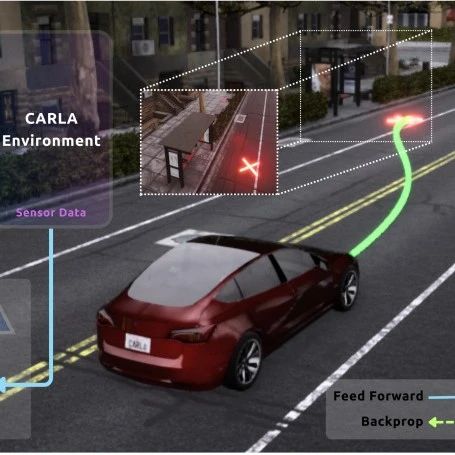
Core Viewpoint - The article discusses the advancements and applications of reinforcement learning (RL) in the field of autonomous driving, highlighting its potential to enhance decision-making processes in dynamic environments. Group 1: Background and Concepts - The concept of VLA (Variational Learning Algorithm) and its relation to embodied intelligence is introduced, emphasizing its similarity to end-to-end autonomous driving [3] - Reinforcement learning has gained traction in various industries following significant milestones like AlphaZero in 2018 and ChatGPT in 2023, showcasing its broader applicability [3] - The article aims to explain reinforcement learning from a computer vision perspective, drawing parallels with established concepts in the field [3] Group 2: Learning Methods - Supervised learning in autonomous driving involves tasks like object detection, where a model is trained to map inputs to outputs using labeled data [5] - Imitation learning is described as a method where models learn actions by mimicking human behavior, akin to how children learn from adults [6] - Reinforcement learning differs from imitation learning by focusing on optimizing actions based on feedback from interactions with the environment, making it suitable for sequential decision-making tasks [7] Group 3: Advanced Learning Techniques - Inverse reinforcement learning is introduced as a method to derive reward functions from expert data, particularly useful when defining rewards is challenging [8] - The Markov Decision Process (MDP) is explained as a framework for modeling decision-making tasks, where states, actions, and rewards are interrelated [9] - Dynamic programming and Monte Carlo methods are discussed as techniques for solving reinforcement learning problems, emphasizing their role in optimizing decision-making processes [11][12] Group 4: Reinforcement Learning Algorithms - Various reinforcement learning algorithms are categorized, including on-policy and off-policy methods, highlighting their differences in training stability and data utilization [25][26] - The article outlines key algorithms such as Q-learning, SARSA, and policy gradient methods, explaining their mechanisms and applications in reinforcement learning [27][29] - Advanced algorithms like TRPO and PPO are presented, focusing on their strategies for ensuring stable training and optimizing policy updates [57][58] Group 5: Applications in Autonomous Driving - The importance of reward design in autonomous driving is emphasized, with safety, comfort, and efficiency being key factors [62] - The article discusses the need for closed-loop training systems in autonomous driving, where vehicle actions influence the environment, necessitating dynamic modeling of other vehicles [62] - The integration of end-to-end learning with reinforcement learning is highlighted as a method to adapt to changing environments in real-time [63]
自动驾驶Agent来了!DriveAgent-R1:智能思维和主动感知Agent(上海期智&理想)
自动驾驶之心· 2025-07-29 23:32
Core Viewpoint - DriveAgent-R1 represents a significant advancement in autonomous driving technology, addressing long-term, high-level decision-making challenges through a hybrid thinking framework and active perception mechanism [2][31]. Group 1: Innovations and Challenges - DriveAgent-R1 introduces two core innovations: a novel three-stage progressive reinforcement learning strategy and the MP-GRPO (Mode Grouped Reinforcement Policy Optimization) to enhance the agent's dual-mode specificity capabilities [3][12]. - The current potential of Visual Language Models (VLM) in autonomous driving is limited by short-sighted decision-making and passive perception, particularly in complex environments [2][4]. Group 2: Hybrid Thinking and Active Perception - The hybrid thinking framework allows the agent to adaptively switch between efficient text-based reasoning and in-depth tool-assisted reasoning based on scene complexity [5][12]. - The active perception mechanism equips the agent with a powerful visual toolbox to actively explore the environment, improving decision-making transparency and reliability [5][12]. Group 3: Training Strategy and Performance - A complete three-stage progressive training strategy is designed, focusing on dual-mode supervised fine-tuning, forced comparative mode reinforcement learning, and adaptive mode selection reinforcement learning [24][29]. - DriveAgent-R1 achieves state-of-the-art (SOTA) performance on challenging datasets, surpassing leading multimodal models like Claude Sonnet 4 and Gemini 2.5 Flash [12][26]. Group 4: Experimental Results - Experimental results show that DriveAgent-R1 significantly outperforms baseline models, with first frame accuracy increasing by 14.2% and sequence average accuracy by 15.9% when using visual tools [26][27]. - The introduction of visual tools enhances the decision-making capabilities of state-of-the-art VLMs, demonstrating the potential of actively acquiring visual information in driving intelligence [27]. Group 5: Active Perception and Visual Dependency - Active perception is crucial for deep visual reliance, as evidenced by the drastic performance drop of DriveAgent-R1 when visual inputs are removed, confirming its decisions are genuinely driven by visual data [30][31]. - The training strategy effectively transforms potential distractions from tools into performance amplifiers, showcasing the importance of structured training in utilizing visual tools [27][29].

2025人工智能十大趋势
Sou Hu Cai Jing· 2025-07-29 16:39
Group 1 - The report titled "Coexistence Partners: Top 10 Trends in Artificial Intelligence for 2025" outlines significant trends in AI development, emphasizing the transition from "intelligent tools" to "coexistence partners" [1][7][26] - The three main themes identified are the evolution of foundational models, the rise of intelligent agents, and AI's integration into the physical world [1][7][21] Group 2 - The first trend highlights the breakthrough in reinforcement learning (RL), which is becoming a key force in enhancing the reasoning and action capabilities of large models, enabling them to solve complex scientific and engineering problems [2][36][39] - The second trend focuses on native multimodal generation, which allows AI to deeply integrate various data types such as images, speech, and text, facilitating seamless interaction across modalities [2][49][50] - The third trend discusses the evolution of voice models towards emotional intelligence, enabling AI to express context-aware emotional responses and enhancing human-machine interaction [2][3][48] Group 3 - The rise of intelligent agents is characterized by two main development paths: orchestration agents for complex task automation and end-to-end agents that internalize reasoning and planning capabilities [3][4][18] - The concept of LifeOS is emerging, where AI integrates user data to become a personalized digital self, enhancing user experience through long-term memory and personalized reasoning [3][4][19] - The trend of "intelligence as a service" is reshaping industry workflows, embedding AI deeply into sectors like healthcare, finance, and manufacturing [3][4][26] Group 4 - The report anticipates a "GPT-2 moment" for embodied intelligence in 2025, marking a significant leap from virtual computation to physical execution, with advancements in multimodal models and data engineering [4][6][21] - Spatial intelligence is evolving, allowing AI to process and understand three-dimensional environments, which opens new opportunities in fields like autonomous driving and robotics [4][20][21] - The commercialization of embodied intelligent robots is expected to accelerate, with companies like Tesla and Agility planning to produce around 1,000 units each for various applications [6][21][29] Group 5 - The overall trends indicate a shift towards AI becoming a true coexistence partner, with enhanced capabilities in reasoning, emotional understanding, and physical interaction, fundamentally changing human-AI relationships [7][21][26] - The report emphasizes the importance of building trust and collaboration with the next generation of AI, as it becomes more autonomous and capable [7][21][26]


开启RL Scaling新纪元,siiRL开源:完全分布式强化学习框架,支持超千卡规模高效训练
机器之心· 2025-07-29 07:44
Core Insights - The article emphasizes the importance of overcoming scalability bottlenecks in Reinforcement Learning (RL) frameworks as a key to unlocking advanced AI reasoning capabilities and achieving stronger general intelligence [2][31] - The introduction of the siiRL framework by the Shanghai Institute of Intelligent Technology is highlighted as a significant advancement in supporting large-scale and efficient RL training [3][31] Group 1: Scalability Challenges - Traditional RL frameworks often rely on a centralized controller architecture, which leads to performance bottlenecks and memory overflow when scaled to hundreds or thousands of GPUs [8][9] - The centralized design is manageable at smaller scales but becomes a critical limitation as the system expands, resulting in high I/O and communication overhead [9][10] Group 2: siiRL Framework Features - siiRL employs an innovative multi-controller paradigm and fully distributed architecture, effectively removing the central node and distributing tasks across all worker nodes [11][31] - The framework demonstrates near-linear scalability, achieving a 7-fold increase in end-to-end training throughput and maintaining performance even at 1024 GPU scales [21][31] - The architecture includes three core components: DAG Planner for workflow definition, DAG Workers for task execution, and Data Coordinators for managing data flow [13][14][15] Group 3: Performance Validation - Experimental results show that siiRL outperforms baseline frameworks, achieving up to 2.62 times higher throughput in data-intensive scenarios [19][26] - In long-context tasks, the performance advantage of siiRL increases significantly as context length grows, demonstrating its efficiency in handling larger data communication volumes [26][27] - Convergence tests indicate that performance improvements do not compromise model accuracy, with reward and entropy curves closely aligning with baseline frameworks [28][31] Group 4: Future Plans - The framework is designed to support complex multi-agent systems, with plans to enhance compatibility with multi-agent reinforcement learning (MARL) algorithms and improve agent-environment interaction mechanisms [29][31]

具身领域LLM结合强化学习与世界模型工作汇总
具身智能之心· 2025-07-29 06:15
Core Viewpoint - The article discusses recent advancements in the field of embodied intelligence, particularly focusing on the integration of large language models (LLMs) with reinforcement learning and world models, highlighting several notable research papers from 2024 [2][3]. Group 1: UniSim - UniSim aims to learn general real-world interactive simulators through generative modeling, revealing that natural datasets can provide diverse advantages for learning simulators [3]. - The research demonstrates that integrating various datasets allows for the simulation of high-level commands and low-level controls, enabling zero-shot application in real-world scenarios [3]. Group 2: Robust Agents - The study from Google DeepMind asserts that causal reasoning is essential for robust and general AI, concluding that agents capable of satisfying regret bounds must learn approximate causal models [5]. - This finding has significant implications for transfer learning and causal inference [5]. Group 3: MAMBA - MAMBA introduces an efficient world model approach for meta-reinforcement learning, addressing sample efficiency issues prevalent in current methods [8]. - The framework shows a remarkable improvement in sample efficiency, achieving up to 15 times better performance in high-dimensional tasks [8]. Group 4: EMMA - EMMA leverages LLMs trained in text-based worlds to guide the training of visual world agents, enhancing their ability to interact with dynamic environments [10]. - The approach results in a significant success rate improvement of 20%-70% in diverse tasks compared to existing VLM agents [10]. Group 5: Text2Reward - The Text2Reward framework automates the generation of dense reward functions using LLMs, addressing the challenges of reward function design in reinforcement learning [13][14]. - The method demonstrates superior performance in 13 out of 17 tasks, achieving over 94% success in new motion behaviors [14]. Group 6: Online Continual Learning - The research proposes two frameworks for continuous learning in interactive instruction-following agents, emphasizing the need for agents to learn incrementally as they explore their environments [17][18]. - A confidence-aware moving average mechanism is introduced to update parameters without relying on task boundary information [18]. Group 7: AMAGO - AMAGO is a scalable contextual reinforcement learning framework that addresses challenges in generalization, long-term memory, and meta-learning [21]. - The framework allows for parallel training of long-sequence transformers, enhancing scalability and performance in complex tasks [21]. Group 8: PDDL-based Planning - The study presents a novel paradigm for task planning using pre-trained LLMs, focusing on building explicit world models through PDDL [22][23]. - The framework significantly reduces the need for human intervention by allowing LLMs to convert between PDDL and natural language, facilitating efficient model correction [23].
硬核「吵」了30分钟:这场大模型圆桌,把AI行业的分歧说透了
机器之心· 2025-07-28 04:24
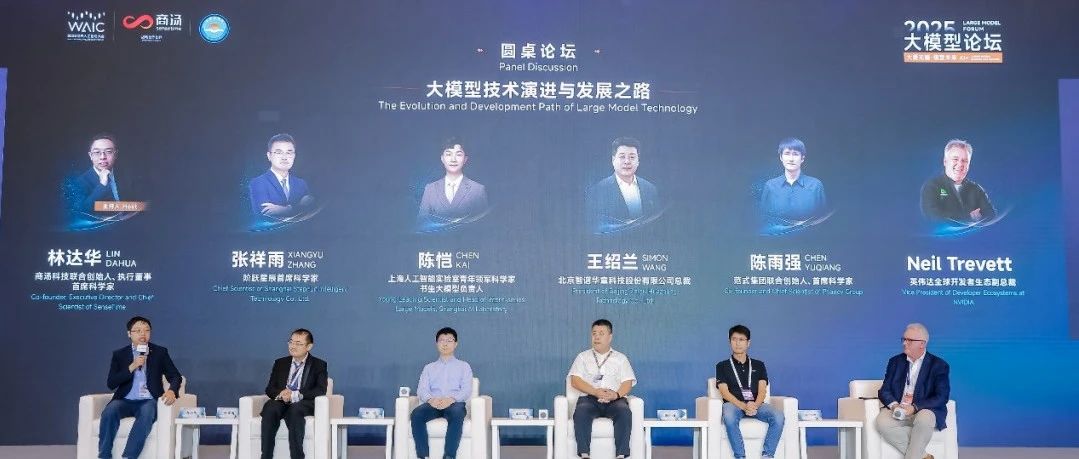
Core Viewpoint - The article discusses a heated debate among industry leaders at the WAIC 2025 forum regarding the evolution of large model technologies, focusing on training paradigms, model architectures, and data sources, highlighting a significant shift from pre-training to reinforcement learning as a dominant approach in AI development [2][10][68]. Group 1: Training Paradigms - The forum highlighted a paradigm shift in AI from a pre-training dominant model to one that emphasizes reinforcement learning, marking a significant evolution in AI technology [10][19]. - OpenAI's transition from pre-training to reinforcement learning is seen as a critical development, with experts suggesting that the pre-training era is nearing its end [19][20]. - The balance between pre-training and reinforcement learning is a key topic, with experts discussing the importance of pre-training in establishing a strong foundation for reinforcement learning [25][26]. Group 2: Model Architectures - The dominance of the Transformer architecture in AI has been evident since 2017, but its limitations are becoming apparent as model parameters increase and context windows expand [31][32]. - There are two main exploration paths in model architecture: optimizing existing Transformer architectures and developing entirely new paradigms, such as Mamba and RetNet, which aim to improve efficiency and performance [33][34]. - The future of model architecture may involve a return to RNN structures as the industry shifts towards agent-based applications that require models to interact autonomously with their environments [38]. Group 3: Data Sources - The article discusses the looming challenge of high-quality data scarcity, predicting that by 2028, existing data reserves may be fully utilized, potentially stalling the development of large models [41][42]. - Synthetic data is being explored as a solution to data scarcity, with companies like Anthropic and OpenAI utilizing model-generated data to supplement training [43][44]. - Concerns about the reliability of synthetic data are raised, emphasizing the need for validation mechanisms to ensure the quality of training data [45][50]. Group 4: Open Source vs. Closed Source - The ongoing debate between open-source and closed-source models is highlighted, with open-source models like DeepSeek gaining traction and challenging the dominance of closed-source models [60][61]. - Open-source initiatives are seen as a way to promote resource allocation efficiency and drive industry evolution, even if they do not always produce the highest-performing models [63][64]. - The future may see a hybrid model combining open-source and closed-source approaches, addressing challenges such as model fragmentation and misuse [66][67].

大模型发展情况综述
2025-07-28 01:42
Summary of Key Points from Conference Call Records Industry Overview - The conference call discusses the development of large model technology, indicating a shift from research to application, with 2025 being a critical turning point for the industry [1][2] - The global landscape shows the U.S. leading in computing power while China excels in efficiency [1][5] Core Insights and Arguments - The capital market's attitude towards AI investments has shifted from research funding to a focus on certainty and stability, with a noted pessimism regarding domestic large models that may be corrected, leading to potential gains [1][6] - The accuracy of large models has improved due to real-time data integration and enhanced retrieval-augmented generation techniques, with synthetic data expected to surpass human-accumulated data by 2028-2030 [3][16][17] - The context window length has significantly increased, allowing models to process longer text, thus improving overall performance and accuracy [9] - The development of agent and collective intelligence is advancing rapidly, with agents capable of completing complex tasks more efficiently than typical interns, indicating strong commercial potential [12][14] Important but Overlooked Content - The scaling law's effectiveness was validated by GPT-4.5, emphasizing the importance of deep reasoning and the significant impact of reasoning time on model performance [1][5][8] - The introduction of low-precision training techniques has reduced computing costs while facing challenges like gradient loss, with advancements in models like Deepseek R1 achieving large-scale training at FP8 precision [19] - The AI application revenue growth is notable, with sectors like AI search and programming showing rapid expansion, and a strong willingness to pay for AI applications compared to traditional ones [25][26] - Collective intelligence in finance has shown advantages through collaboration among agents, leading to higher return rates in stock trading compared to single models [15] Conclusion - The large model technology is at a pivotal moment, with significant advancements in efficiency, accuracy, and commercial viability, particularly in the AI sector, which is poised for explosive growth and investment opportunities [1][27]
商汤科技20250727
2025-07-28 01:42
Summary of Key Points from the Conference Call Company and Industry Involved - **Company**: SenseTime Technology (商汤科技) - **Industry**: Artificial Intelligence (AI) and its applications across various sectors Core Insights and Arguments 1. **Advancements in AI Technology**: Chinese large model technology has shown outstanding performance in reasoning capabilities, open-source ecosystems, cost efficiency, and vertical applications, necessitating continuous technological breakthroughs and algorithm originality [2][3][41] 2. **Shanghai's AI Ecosystem**: Shanghai has established a parallel system of open-source and commercial large models, with 82 models registered nationally, positioning AI as a new growth engine for the city's economy [2][5] 3. **Sustainability Challenges**: The AI industry faces sustainability challenges, particularly regarding the energy consumption of data centers, which is projected to account for 8% of global electricity usage by 2030 [2][8] 4. **Economic Impact of AI Investment**: Investment in computing power and AI yields significant economic benefits, with a 1% increase in computing power index correlating to a 1.8‰ GDP growth [3][13] 5. **Policy Support for AI Development**: There is a call for enhanced policy support to create a favorable environment for AI development, including the use of intellectual property and fiscal policies [3][4] Other Important but Possibly Overlooked Content 1. **AI's Role in Reducing Carbon Emissions**: AI can significantly reduce carbon emissions in heavy industries and enhance energy efficiency in factories, with successful implementations already seen in Singapore and ASEAN [3][11] 2. **Challenges in AI Training**: The training of large models is energy-intensive, with the energy consumption during the reasoning phase increasing significantly with usage, potentially becoming a major source of energy consumption [8][9] 3. **Future Directions for AI Models**: The future of large model technology may involve expanding current paradigms to accept natural language feedback and developing autonomous online agents capable of self-learning [25][26] 4. **Open Source vs. Closed Source Dynamics**: The ongoing competition between open-source and closed-source models will shape the AI ecosystem, with open-source models driving efficiency and collaboration [37][39] 5. **SenseTime's Innovations**: SenseTime has made significant strides in AI, particularly with its SenseNova large model, which aims to unlock general AI task capabilities at low costs, facilitating widespread AI adoption across industries [41][59] This summary encapsulates the key points discussed during the conference call, highlighting the advancements, challenges, and future directions of AI technology, particularly in the context of SenseTime and the broader industry landscape.