
AI芯片

Search documents
火爆行情“芯”动:走出业绩低谷,食品、房地产企业“跨界追芯”
Bei Ke Cai Jing· 2025-10-23 12:01
Core Viewpoint - The A-share market is experiencing a surge in the semiconductor sector, driven by cross-industry investments and strong market demand, but there are significant risks associated with entering this high-tech field [4][5][10]. Group 1: Market Performance - From early September to October 22, the total market capitalization of domestic chip, memory chip, and AI chip sectors in A-shares increased by approximately 223.42 billion, 324.79 billion, and 23.42 billion respectively [7]. - Notable companies like Haiguang Information and SMIC saw their market capitalizations grow by about 109.87 billion and 97.98 billion respectively during the same period [8]. - The overall performance of chip stocks is influenced by domestic substitution policies, increasing market demand, and heightened investor interest in technology sectors [10]. Group 2: Cross-Industry Investments - Companies from various sectors, including food, pharmaceuticals, and real estate, are increasingly investing in the semiconductor industry through mergers, acquisitions, and establishing subsidiaries [11][15]. - Jinzi Ham's subsidiary plans to invest up to 300 million in a semiconductor company, reflecting a strategic shift to enhance its business amid declining performance in its core market [12][20]. - Wan Tong Development is transitioning from traditional real estate to digital technology, investing approximately 85.44 million to acquire a majority stake in a tech firm, which has led to significant stock price increases [16][17]. Group 3: Risks and Challenges - Industry experts warn that entering the semiconductor sector poses challenges such as high technical barriers, a shortage of skilled professionals, and substantial capital requirements [5][22]. - Companies like Jinzi Ham and Wan Tong Development are facing performance declines, with Jinzi Ham reporting a 14.73% drop in revenue and a 25.11% decrease in net profit in the first half of 2025 [20][21]. - The semiconductor industry, while offering long-term growth potential, also presents risks related to high investment costs, long return cycles, and significant differences in business models and management practices compared to traditional industries [22][23].



寒武纪、“易中天”等多股又遭袭扰!传言扰动明星股套路大揭秘
Di Yi Cai Jing· 2025-10-23 12:00
Core Viewpoint - The stock price of Cambrian (688256.SH) surged over 7% due to rumors that major telecom operators would order 10,000 chips monthly from the company next year, although the company later clarified that such claims should be verified through official announcements [2][4][5] Group 1: Impact of Rumors on Stock Prices - Cambrian's stock has previously experienced significant price increases due to similar unfounded rumors, occurring in March and August of this year [2][11] - Other companies, including Sanhua Intelligent Control (002050.SZ) and Wanrun Technology (002654.SZ), have also seen their stock prices rise sharply due to rumors, indicating a broader trend in the market [2][6] - The stock price of Cambrian reached a high of 1,468 CNY before closing at 1,429.5 CNY, marking a daily increase of 4.42% [4][5] Group 2: Mechanisms Behind Rumor Propagation - The spread of rumors is often facilitated by a network of social media platforms and stock communities, where unverified information can quickly gain traction [5][8] - Professional writers adept at information dissemination create these rumors, combining real and fictitious elements to manipulate market sentiment [13][16] - The rumors typically fall into three categories: performance speculation, asset restructuring, and absurd gossip, each designed to trigger investor interest [13][14] Group 3: Role of Quantitative and Speculative Trading - The activation of quantitative trading models by market sentiment plays a crucial role in the stock price movements following rumors [3][19] - Significant capital from speculative traders often amplifies the effects of these rumors, leading to rapid price increases [18][20] - The phenomenon creates a cycle where quantitative funds initiate buying, followed by speculative traders, ultimately attracting retail investors [19][20] Group 4: Regulatory and Market Implications - The prevalence of these rumors disrupts normal market operations, posing challenges for regulatory bodies to maintain order [20] - There is a call for improved information disclosure and timely clarifications from companies to combat the spread of misinformation [20]



寒武纪、“易中天”等多股又遭袭扰!传言扰动明星股套路大揭秘
第一财经· 2025-10-23 11:39
Core Viewpoint - The article discusses the impact of rumors on stock prices, particularly focusing on companies in hot sectors like AI chips and robotics, highlighting how these rumors can lead to significant price fluctuations and market manipulation [3][12][14]. Group 1: Rumors and Stock Price Movements - A rumor about Cambricon (寒武纪) receiving monthly orders for 10,000 chips from three major telecom operators led to a stock price surge of over 7% [3][6]. - Cambricon's stock has previously experienced similar spikes due to unfounded rumors, indicating a pattern of market manipulation through misinformation [3][12]. - Other companies, such as Sanhua Intelligent Control (三花智控) and Wanrun Technology (万润科技), have also seen their stock prices dramatically affected by similar rumors [8][12]. Group 2: Mechanisms Behind Rumor Spread - The spread of rumors is often facilitated by quantitative trading models and speculative funds that react to market sentiment, amplifying the effects of these rumors [4][26]. - The article notes that the recent surge in rumors is characterized by targeting popular companies in trending industries, which makes them more susceptible to market manipulation [13][14]. - A systematic approach to rumor creation involves blending real and fabricated information to create a compelling narrative that attracts investor attention [16][17]. Group 3: Types of Rumors - Rumors can be categorized into three main types: performance speculation, asset restructuring, and absurd gossip, each designed to exploit investor psychology [17][18]. - Performance speculation often involves exaggerated claims about large orders or revenue growth, while asset restructuring rumors may mix factual elements with falsehoods to create confusion [17][18]. - Absurd gossip can generate significant market interest despite having little to no basis in reality, as seen in the case of a rumor involving a personal relationship affecting a company's stock [19]. Group 4: Regulatory Challenges - The article highlights the difficulty of regulating the spread of rumors, as they often utilize viral marketing techniques that obscure their origins [23][24]. - The lack of a robust regulatory framework allows these "small essays" to proliferate unchecked, leading to significant market disruptions [23][24]. - The need for improved information disclosure and timely clarifications from companies is emphasized as a way to combat the negative effects of these rumors [27].


寒武纪、“易中天”等多股频遭袭扰 传言扰动明星股套路揭密
Di Yi Cai Jing· 2025-10-23 11:34
Core Viewpoint - The stock price of Cambrian (688256.SH) surged over 7% due to rumors that major telecom operators would order 10,000 chips monthly from the company next year, but the company later clarified that such claims should be verified through official announcements [1][3][5]. Group 1: Cambrian's Stock Movement - Cambrian's stock initially opened lower but later surged to a high of 1,468 CNY, closing at 1,429.5 CNY, marking a daily increase of 4.42% [2]. - The company has previously experienced similar stock price spikes due to unfounded rumors, occurring in March and August of this year [1][10]. - Following the rumor's spread, Cambrian's stock opened lower the next day, dropping nearly 4% in early trading [3]. Group 2: Market Impact of Rumors - Other companies, including Sanhua Intelligent Control (002050.SZ) and Wanrun Technology (002654.SZ), also saw significant stock price fluctuations due to similar rumors [5][9]. - A notable example involved Sanhua Intelligent Control, which experienced a stock price surge after a rumor about securing a $685 million order from Tesla, only to see a sharp decline after the company denied the claims [5][11]. - The recent surge in rumors has predominantly targeted popular sectors and companies, indicating a trend where misinformation is strategically aimed at high-interest stocks [9][10]. Group 3: Mechanisms Behind Rumor Spread - The spread of rumors is often facilitated by a network of social media and stock community platforms, where unverified information can quickly gain traction [7][15]. - The rumors typically exploit investor psychology, leveraging themes of significant orders or partnerships to create a sense of urgency and excitement [12][18]. - A systematic approach to rumor creation involves blending factual elements with fabricated details to enhance credibility and market impact [12][15]. Group 4: Role of Quantitative and Speculative Trading - The involvement of quantitative trading models and speculative funds plays a crucial role in amplifying the effects of these rumors, as they react to market sentiment rather than the veracity of the information [17][18]. - The rapid price movements triggered by rumors often attract retail investors, creating a cycle of buying and selling that benefits those who initiated the rumors [18][19]. - The current market environment, characterized by investor fragility, allows for the manipulation of stock prices through misinformation, highlighting the need for regulatory oversight [11][19].

寒武纪、“易中天”等多股又频遭袭扰!传言扰动明星股套路大揭密
Di Yi Cai Jing· 2025-10-23 11:27
Core Viewpoint - The stock price of Cambrian (688256.SH) surged over 7% due to rumors that major telecom operators would order 10,000 chips monthly from the company next year, but the company later clarified that such claims should be verified through official announcements [2][4][6]. Group 1: Impact of Rumors on Stock Prices - Cambrian's stock has previously experienced significant price increases due to similar unfounded rumors in March and August of this year [2][4]. - Other companies, such as Sanhua Intelligent Control (002050.SZ) and Wanrun Technology (002654.SZ), also saw their stock prices rise sharply due to rumors in the same period [4][6]. - The stock price of Cambrian rose from a low of 1339 CNY to a high of 1468 CNY during the trading day, closing at 1429.5 CNY, marking a daily increase of 4.42% [4]. Group 2: Characteristics of Market Rumors - Recent rumors have targeted popular companies in trending industries, often involving significant orders or partnerships that resonate with market sentiment [7][8]. - The rumors are often crafted using a "creation routine" that combines real and speculative elements to manipulate market emotions [9][10]. - The most common types of rumors include performance speculation, asset restructuring, and absurd gossip, each designed to trigger investor interest [10]. Group 3: Mechanisms Behind Rumor Propagation - The spread of rumors is facilitated by quantitative trading models and speculative funds that react to market sentiment, leading to rapid stock price movements [3][16]. - The involvement of large speculative funds, such as those led by prominent traders, can amplify the effects of these rumors, even when the underlying claims are dubious [16][17]. - The rapid dissemination of rumors often occurs through social media and stock community platforms, where they can gain traction before being officially debunked [13][15]. Group 4: Regulatory and Market Implications - The prevalence of these rumors highlights a significant challenge for market regulation, as they often spread quickly and leave little trace for investigation [15]. - The current market environment, characterized by low investor sentiment and volatility, creates fertile ground for the propagation of false information [8][18]. - To combat this issue, there is a need for improved regulatory measures, timely clarifications from companies, and a more discerning approach from investors [18].
独家|寒武纪、“易中天”等多股又频遭袭扰!AI量产、专挑热门、诱多量化游资,传言扰动明星股套路大揭密
Sou Hu Cai Jing· 2025-10-23 11:23
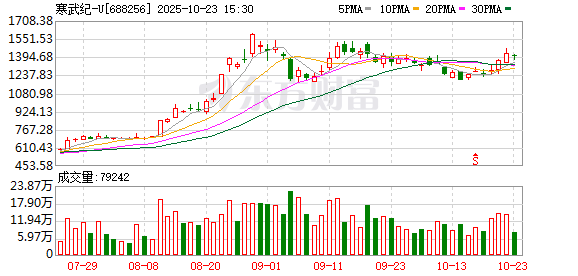
Core Viewpoint - The stock price of Cambrian (688256.SH) surged over 7% due to rumors that major telecom operators would order 10,000 chips monthly from the company next year, but the company later clarified that the information was unverified [1][3][5] Group 1: Cambrian's Stock Movement - Cambrian's stock experienced significant volatility, previously rising sharply in March and August due to similar unfounded rumors [1][3] - On October 22, Cambrian's stock opened low but surged to a high of 1468 yuan before closing at 1429.5 yuan, marking a daily increase of 4.42% [3][5] - Following the company's clarification regarding the rumors, the stock opened lower on October 23, dropping nearly 4% in early trading [3][5] Group 2: Market Reaction to Rumors - The recent surge in stock prices of several companies, including Cambrian, was attributed to rumors circulating in stock communities and social media [1][5][9] - Other companies like Sanhua Intelligent Control and Wanrun Technology also experienced similar stock price fluctuations due to unverified information [5][6] - The phenomenon of stock price manipulation through rumors is not isolated to Cambrian, as many companies in hot sectors have been affected [9][10] Group 3: Mechanism Behind Rumor Spread - The spread of rumors is often facilitated by quantitative trading models that react to market sentiment, attracting speculative funds [2][17] - The rumors typically target popular sectors and companies, leveraging hot topics to create market excitement [9][10] - A structured approach is used in crafting these rumors, often blending real and fictitious elements to manipulate investor sentiment [12][15] Group 4: Types of Rumors - Rumors can be categorized into three main types: performance speculation, asset restructuring, and absurd gossip, each designed to trigger investor interest [12] - The performance speculation type often includes exaggerated claims about large orders or significant revenue growth [12][13] - Asset restructuring rumors tend to mix factual elements with false information, creating confusion in the market [12][13] Group 5: Impact of Quantitative and Speculative Trading - Quantitative funds often react to the initial spread of rumors, leading to a rapid increase in stock prices, which is then followed by speculative trading from retail investors [17][18] - The combination of quantitative trading and speculative buying creates a cycle where stock prices are artificially inflated, leading to potential losses for uninformed investors [18][19] - The current market environment, characterized by low investor sentiment, makes it easier for such rumors to create significant price movements [11][19]

寒武纪、“易中天”等多股又频遭袭扰!AI量产、专挑热门、诱多量化游资,传言扰动明星股套路大揭密
Di Yi Cai Jing· 2025-10-23 10:56
Core Viewpoint - The article discusses how false information and rumors have been able to significantly influence stock prices, particularly focusing on the case of Cambrian (688256.SH) and other companies in the AI chip and technology sectors. Group 1: Cambrian's Stock Price Movement - Cambrian's stock price surged over 7% in response to rumors that major telecom operators would order 10,000 chips monthly from the company starting next year [1][4] - This is not the first instance of Cambrian's stock being affected by rumors; similar occurrences happened in March and August of this year, leading to significant price increases [2][12] - On October 22, Cambrian's stock opened at a low and fluctuated between 1339 and 1402 CNY before closing at 1429.5 CNY, marking a daily increase of 4.42% [3] Group 2: Nature of the Rumors - The rumors targeting Cambrian and other companies often focus on popular sectors and are crafted using a combination of real and fabricated information to stir market emotions [2][12] - The article identifies three main types of rumors: performance-related, asset restructuring, and absurd gossip, each designed to exploit investor psychology [14] - For instance, a rumor about a 50 billion CNY order for Sanhua Intelligent Control led to a significant stock price increase before being debunked [15][19] Group 3: Market Dynamics and Investor Behavior - The spread of rumors is often facilitated by quantitative trading models and speculative funds, which react to market sentiment rather than the veracity of the information [20][21] - The article highlights that the rapid dissemination of rumors can trigger quantitative trading strategies, leading to a cycle of price increases driven by speculative buying [20][21] - Investors are cautioned to remain rational and vigilant, as the proliferation of such rumors can distort market order and lead to significant losses for uninformed traders [21]

十篇论文,揭秘寒武纪AI芯片崛起之路
半导体行业观察· 2025-10-23 01:01
Core Insights - The article discusses the rise of Cambricon, a leading AI chip company in China, highlighting its technological evolution and competitive edge against global giants like NVIDIA [5][26]. Group 1: Foundational Era - The inception of Cambricon is attributed to the academic journey of two brothers, Chen Yunji and Chen Tianshi, who laid the groundwork for deep learning processor architecture through their research at the Chinese Academy of Sciences [7]. - The "DianNao" series, introduced by the brothers, was one of the earliest systematic studies on deep learning processor architectures, addressing the efficiency bottlenecks of general-purpose CPUs/GPUs in executing neural networks [7][12]. Group 2: Technological Evolution - The article highlights ten significant papers published between 2014 and 2025, tracing the technological advancements from the "DianNao" architecture to the Cambricon series of AI chips [5]. - The first paper, "DianNao," demonstrated a high-throughput accelerator capable of executing 452 GOP/s with a power consumption of 485 milliwatts, achieving a speedup of 117.87 times compared to a 128-bit 2GHz SIMD processor [11]. - Subsequent innovations, such as "DaDianNao" and "PuDianNao," showcased significant performance improvements, with "DaDianNao" achieving a 450.65 times speedup over GPUs and "PuDianNao" supporting seven mainstream machine learning algorithms [14][20]. Group 3: Commercialization and Ecosystem Development - Cambricon's transition from academic research to commercial products was marked by the introduction of the "Cambricon ISA," a specialized instruction set for deep learning, which decoupled upper applications from lower hardware [26][30]. - The integration of Cambricon-1A into Huawei's Kirin 970 chip marked a significant commercial breakthrough, establishing Cambricon as a key player in the mobile AI chip market [37]. - Following the loss of Huawei as a major client, Cambricon pivoted to focus on its "Siyuan" (MLU) cloud chips and the NeuWare software platform, aiming to compete with NVIDIA's ecosystem [37]. Group 4: Future Challenges and Opportunities - The article concludes by emphasizing the challenges Cambricon faces against NVIDIA's established technology and the need to carve out a unique path in the AI chip market [59]. - Despite the challenges, the growing demand for autonomous AI computing in China presents a significant opportunity for Cambricon to leverage its academic roots and build a robust developer ecosystem [59].

众多股东突击入股,沐曦股份IPO或成一场资本盛宴
Sou Hu Cai Jing· 2025-10-22 22:57
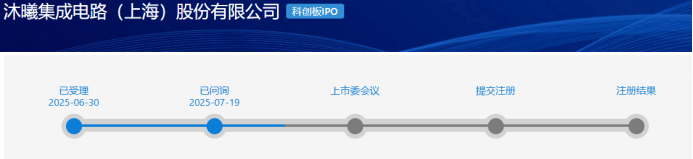
Core Viewpoint - The upcoming IPO of Muxi Co., Ltd. is set for review by the Shanghai Stock Exchange on October 24, 2025, indicating strong support for the company's listing process [1][2]. Company Overview - Muxi Co., Ltd. is a leading domestic player in high-performance general-purpose GPUs, having achieved significant technological breakthroughs in the AI chip sector, traditionally dominated by international firms [2]. - The company's revenue has seen explosive growth, with figures rising from 42.64 thousand RMB in 2022 to 743 million RMB in 2024, reflecting a compound annual growth rate of 4074.52% [2]. Shareholder Structure - The largest shareholder, Shanghai Jiaomai, holds only 13.30% of the shares directly, while the founder, Chen Weiliang, and Shanghai Xiji control a combined 22.94% of the company [3]. - Muxi Co., Ltd. has a total of 124 shareholders, with 113 holding less than 5% each, collectively owning 64.45% of the company, indicating a highly fragmented ownership structure [3]. Financial Investors - Most shareholders, including major stakeholders like Chaos Investment and Sequoia Capital, have issued commitments not to seek control, categorizing them as financial investors [4]. - The majority of these financial investors entered the company shortly after its establishment in September 2020, suggesting a strategy focused on capitalizing on the upcoming IPO [6][9]. IPO Dynamics - The influx of financial investors is seen as a strategy to benefit from the IPO, with many expected to cash out once the shares are listed [11]. - The company’s rapid acceptance of numerous investors prior to the IPO raises questions about the motivations behind these investments and the implications for future public investors [11].
寒武纪跌2.03%,成交额26.56亿元,主力资金净流入887.64万元
Xin Lang Cai Jing· 2025-10-22 02:06
Core Viewpoint - The stock of Cambricon Technologies Co., Ltd. has shown significant volatility, with a year-to-date increase of 103.83% and a recent decline over the past 20 days, indicating fluctuating investor sentiment and market dynamics [1][2]. Group 1: Stock Performance - As of October 22, Cambricon's stock price was 1341.23 CNY per share, with a market capitalization of 565.77 billion CNY [1]. - The stock has experienced a 7.99% increase over the last five trading days, but a 6.87% decrease over the last 20 days, and a substantial 125.82% increase over the last 60 days [1]. - The company has appeared on the "龙虎榜" (a list of stocks with significant trading activity) four times this year, with the most recent appearance on August 22, where it recorded a net buy of -678 million CNY [1]. Group 2: Financial Performance - For the period from January to September 2025, Cambricon reported a revenue of 4.607 billion CNY, reflecting a year-on-year growth of 2386.38% [2]. - The net profit attributable to the parent company for the same period was 1.605 billion CNY, marking a year-on-year increase of 321.49% [2]. Group 3: Shareholder Information - As of September 30, 2025, the number of shareholders for Cambricon increased by 52.13% to 62,000, while the average number of circulating shares per person decreased by 34.13% to 6,748 shares [2]. - The top ten circulating shareholders include significant institutional investors, with Hong Kong Central Clearing Limited holding 12.0035 million shares, a decrease of 3.7005 million shares from the previous period [3].