强化学习

Search documents
为什么行业如此痴迷于强化学习?
自动驾驶之心· 2025-07-13 13:18
Core Viewpoint - The article discusses a significant research paper that explores the effectiveness of reinforcement learning (RL) compared to supervised fine-tuning (SFT) in training AI models, particularly focusing on the concept of generalization and transferability of knowledge across different tasks [1][5][14]. Group 1: Training Methods - There are two primary methods for training AI models: imitation (SFT) and exploration (RL) [2][3]. - Imitation learning involves training models to replicate data, while exploration allows models to discover solutions independently, assuming they have a non-random chance of solving problems [3][6]. Group 2: Generalization and Transferability - The core of the research is the concept of generalization, where SFT may hinder the ability to adapt known knowledge to unknown domains, while RL promotes better transferability [5][7]. - A Transferability Index (TI) was introduced to measure the ability to transfer skills across tasks, revealing that RL-trained models showed positive transfer in various reasoning tasks, while SFT models often exhibited negative transfer in non-reasoning tasks [7][8]. Group 3: Experimental Findings - The study conducted rigorous experiments comparing RL and SFT models, finding that RL models improved performance in unrelated fields, while SFT models declined in non-mathematical areas despite performing well in mathematical tasks [10][14]. - The results indicated that RL models maintained a more stable internal knowledge structure, allowing them to adapt better to new domains without losing foundational knowledge [10][14]. Group 4: Implications for AI Development - The findings suggest that while imitation learning has been a preferred method, reinforcement learning offers a promising approach for developing intelligent systems capable of generalizing knowledge across various fields [14][15]. - The research emphasizes that true intelligence in AI involves the ability to apply learned concepts to new situations, akin to human learning processes [14][15].


MuJoCo明天即将开课啦!从0基础到强化学习,再到sim2real
具身智能之心· 2025-07-13 09:48
Core Viewpoint - The article discusses the unprecedented advancements in AI, particularly in embodied intelligence, which is transforming the relationship between humans and machines. Major tech companies are competing in this revolutionary field, which has the potential to significantly impact various industries such as manufacturing, healthcare, and space exploration [1][2]. Group 1: Embodied Intelligence - Embodied intelligence is characterized by machines that can understand language commands, navigate complex environments, and make intelligent decisions in real-time [1]. - Leading companies like Tesla, Boston Dynamics, OpenAI, and Google are actively developing technologies in this area, emphasizing the need for AI systems to have both a "brain" and a "body" [1][2]. Group 2: Technical Challenges - Achieving true embodied intelligence presents significant technical challenges, including the need for advanced algorithms and a deep understanding of physical simulation, robot control, and perception fusion [2][4]. - MuJoCo (Multi-Joint dynamics with Contact) is highlighted as a key technology in overcoming these challenges, serving as a high-fidelity training environment for robot learning [4][6]. Group 3: MuJoCo's Role - MuJoCo is not just a physics simulation engine; it acts as a crucial bridge between the virtual and real worlds, enabling robots to learn complex motor skills without risking expensive hardware [4][6]. - The advantages of MuJoCo include simulation speeds hundreds of times faster than real-time, the ability to conduct millions of trials in a virtual environment, and successful transfer of learned strategies to the real world through domain randomization [6][8]. Group 4: Research and Development - Numerous cutting-edge research studies and projects in robotics are based on MuJoCo, with major tech firms like Google, OpenAI, and DeepMind utilizing it for their research [8]. - Mastery of MuJoCo positions researchers and engineers at the forefront of embodied intelligence technology, providing them with opportunities to participate in this technological revolution [8]. Group 5: Practical Training - A comprehensive MuJoCo development course has been created, focusing on both theoretical knowledge and practical applications within the embodied intelligence technology stack [9][11]. - The course is structured into six weeks, each with specific learning objectives and practical projects, ensuring a solid grasp of key technical points [15][17]. Group 6: Course Projects - The course includes six progressively challenging projects, such as building a smart robotic arm, implementing vision-guided grasping systems, and developing multi-robot collaboration systems [19][27]. - Each project is designed to reinforce theoretical concepts through hands-on experience, ensuring participants understand both the "how" and the "why" behind the technologies [30][32]. Group 7: Career Development - Completing the course equips participants with a complete embodied intelligence technology stack, enhancing their technical, engineering, and innovative capabilities [31][33]. - Potential career paths include roles as robotics algorithm engineers, AI research engineers, or product managers, with competitive salaries ranging from 300,000 to 1,500,000 CNY depending on the position and company [34].
头部互联网具身实验室招募:多模态大模型、机器人多模态交互、强化学习等算法岗位
具身智能之心· 2025-07-13 05:03
Core Viewpoint - The company is recruiting for various positions related to embodied intelligence, focusing on multimodal large models, robotic multimodal interaction, and reinforcement learning, indicating a strong emphasis on innovation and application in the robotics field [1][3][5]. Group 1: Job Descriptions - **Embodied Multimodal Large Model Researcher**: Responsible for developing core algorithms for embodied intelligence, including multimodal perception, reinforcement learning optimization, and world model construction [1]. - **Robotic Multimodal Interaction Algorithm Researcher**: Focuses on researching multimodal agents, reasoning planning, and audio-visual dialogue models to innovate and apply robotic interaction technologies [3]. - **Reinforcement Learning Researcher**: Engages in exploring multimodal large models and their applications in embodied intelligence, contributing to the development of next-generation intelligent robots [5]. Group 2: Job Requirements - **Embodied Multimodal Large Model Researcher**: Requires a PhD or equivalent experience in relevant fields, with strong familiarity in robotics, reinforcement learning, and multimodal fusion [2]. - **Robotic Multimodal Interaction Algorithm Researcher**: Candidates should have a master's degree or higher, excellent coding skills, and a solid foundation in algorithms and data structures [4]. - **Reinforcement Learning Researcher**: Candidates should have a background in computer science or related fields, with a strong foundation in machine learning and reinforcement learning [6]. Group 3: Additional Qualifications - Candidates with strong hands-on coding abilities and awards in competitive programming (e.g., ACM, ICPC) are preferred [9]. - A keen interest in robotics and participation in robotics competitions are considered advantageous [9].
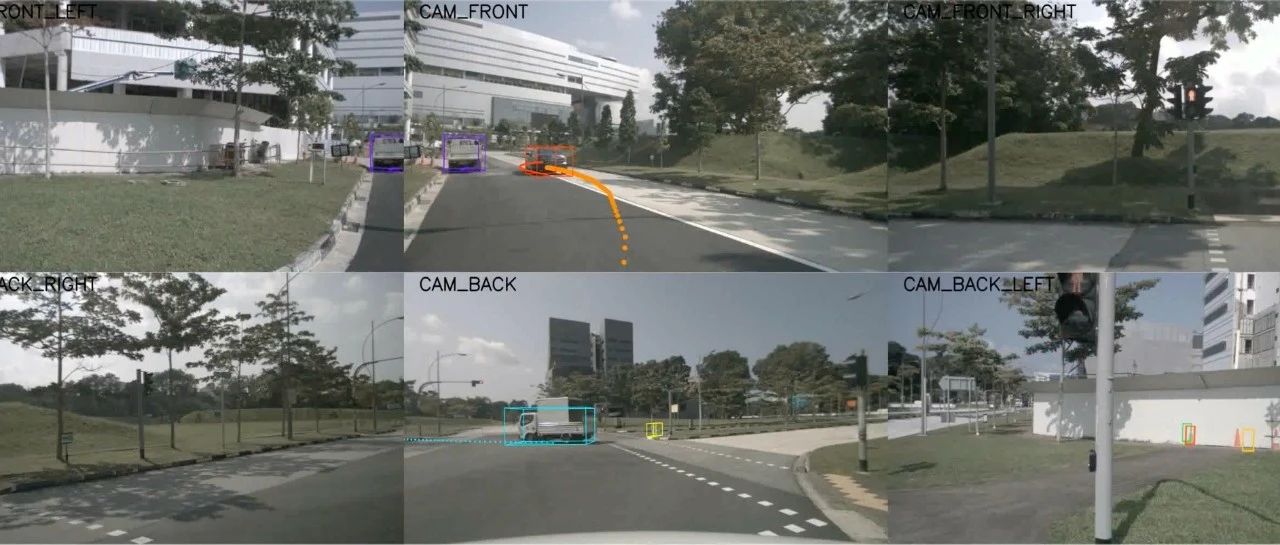
从近30篇具身综述中!看领域发展兴衰(VLA/VLN/强化学习/Diffusion Policy等方向)
自动驾驶之心· 2025-07-11 06:46
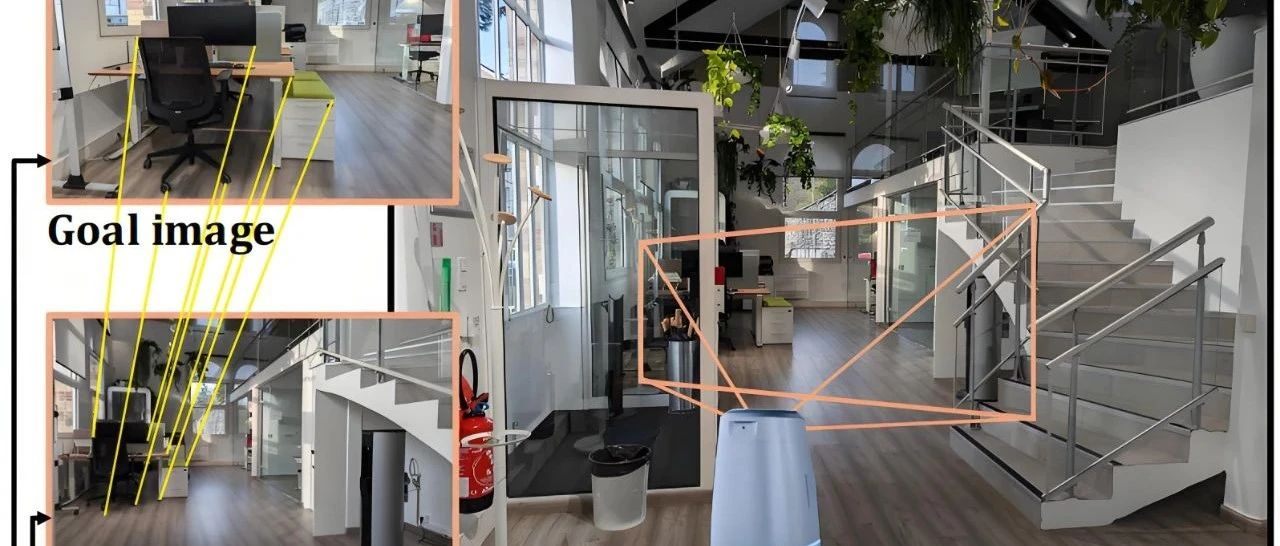
Core Insights - The article provides a comprehensive overview of various surveys and research papers related to embodied intelligence, focusing on areas such as vision-language-action models, reinforcement learning, and robotics applications [1][2][3][4][5][6][7][8][9] Group 1: Vision-Language-Action Models - A survey on Vision-Language-Action (VLA) models highlights their significance in autonomous driving and human motor learning, discussing progress, challenges, and future trends [2][3][8] - The exploration of VLA models emphasizes their applications in embodied AI, showcasing various datasets and methodologies [8][9] Group 2: Robotics and Reinforcement Learning - Research on foundation models in robotics addresses applications, challenges, and future directions, indicating a growing interest in integrating AI with robotic systems [3][4] - Deep reinforcement learning is identified as a key area with real-world successes, suggesting its potential for enhancing robotic capabilities [3] Group 3: Multimodal and Generative Approaches - The article discusses multimodal fusion and vision-language models, which are crucial for improving robot vision and interaction with the environment [6] - Generative artificial intelligence in robotic manipulation is highlighted as an emerging field, indicating a shift towards more sophisticated AI-driven robotic systems [6] Group 4: Datasets and Community Engagement - The article encourages engagement with a community focused on embodied intelligence, offering access to a wealth of resources, including datasets and collaborative projects [9]
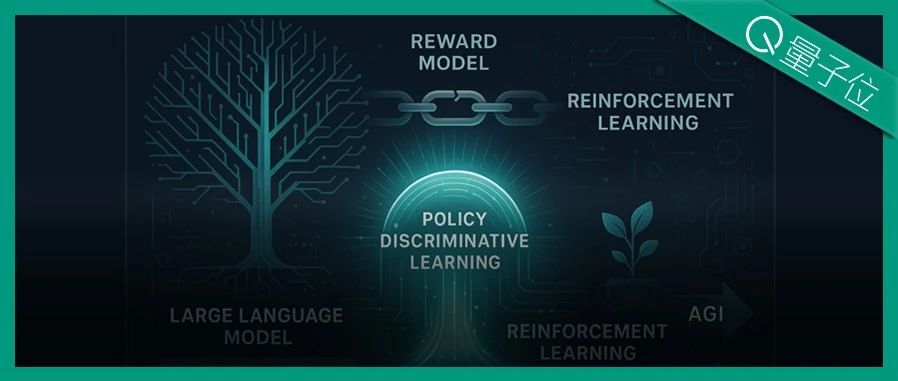
奖励模型也能Scaling!上海AI Lab突破强化学习短板,提出策略判别学习新范式
量子位· 2025-07-11 04:00
Core Viewpoint - The article discusses the introduction of a new reward modeling paradigm called Policy Discriminative Learning (POLAR), which enhances the post-training phase of large language models (LLMs) and addresses the limitations of traditional reward models in reinforcement learning [1][3][4]. Group 1: Challenges in Reward Modeling - The design and training of reward models have been a bottleneck in improving the effectiveness of post-training and model capabilities [2]. - Traditional reward models lack systematic pre-training and scaling methods, hindering their ability to improve alongside computational resources [2]. Group 2: Introduction of POLAR - POLAR decouples from absolute preferences and allows for efficient scaling of reward modeling, enabling adaptability to various customized needs based on reference answers [3][5]. - POLAR can assign different scores to model outputs based on varying reference styles without needing to retrain the reward model [7]. Group 3: Training Methodology of POLAR - POLAR employs a two-stage training process: pre-training and preference fine-tuning, utilizing a contrastive learning approach to measure the distance between training and target strategies [21][22]. - The pre-training phase uses a large amount of automated synthetic data, allowing for significant scalability [22][23]. Group 4: Performance and Scaling Effects - POLAR demonstrates scaling effects, with validation loss decreasing in a power-law relationship as model parameters and computational resources increase [28][29]. - In preference evaluation experiments, POLAR outperforms state-of-the-art reward models, showing significant improvements in various tasks, particularly in STEM-related tasks [32][34]. - POLAR's ability to learn subtle distinctions between strategy models enhances the generalization of reward signals in real-world applications [35].
从Grok-4看AI产业发展
2025-07-11 01:05
Summary of Conference Call on AI Industry Development Industry Overview - The conference call primarily discusses the advancements in the AI industry, focusing on the performance and features of the GROX4 model and the anticipated release of GPT-5. [1][2][4] Key Points and Arguments GROX4 Model Advancements 1. **Significant Improvement in Reasoning Ability**: GROX4 achieved a score of 50 in the Humans Last Examination (HLE), surpassing OpenAI's score of 23, and excelled in the US Olympic Math Competition with scores of 97 and 90 in HNMT and USAMO respectively, indicating a doubling of previous performance levels. [3][4] 2. **Parameter Optimization and Efficiency**: The model reduced its parameter count by 40% through sparse activation strategies, using only 1.7 trillion tokens compared to GROX3's 2.7 trillion tokens while significantly enhancing performance. [3][4] 3. **Multimodal Fusion and Real-time Search**: GROX4 integrates audio, images, real-time search, and tool invocation, allowing it to handle complex tasks more intelligently and support real-time internet functionality. [3][4] 4. **High API Pricing**: The API pricing for GROX4 is set at $3 per million tokens for input and $15 per million tokens for output, reflecting a significant increase in costs due to performance enhancements. [1][6] GPT-5 Expectations 1. **Release Timeline**: GPT-5 is expected to be released between late July and September 2025, with a focus on deep multimodal integration, including text-to-image, text-to-video, and audio interaction capabilities. [5][26] 2. **Technical Improvements**: The model aims to enhance agent functionalities and address shortcomings in product experience, although it may face challenges in achieving satisfactory benchmark results. [5][26] Market Trends and Implications 1. **Growing Demand for High-Performance Computing**: The rapid development of AI large models and reinforcement learning technologies is driving an increasing demand for computational resources, as evidenced by Nvidia's market valuation surpassing significant thresholds. [2][8][19] 2. **Impact on AI Industry Structure**: The introduction of Grok's innovative training methods may alter the division of labor within the AI industry, potentially squeezing out smaller startups while creating new opportunities for those with unique data or capabilities. [11][12] 3. **Future GPU Demand**: The AI industry's growth is expected to lead to exponential increases in GPU demand, with projections indicating a need for up to 1 million high-performance GPUs in the coming years. [19][20] Additional Insights 1. **Challenges in Programming Capabilities**: Despite high benchmark scores, GROX4's programming capabilities may not meet expectations due to potential contamination in training data and limitations in user interaction history. [14][15] 2. **Pricing Strategy Justification**: The high subscription fee of $300 per month for GROX4 reflects both confidence in its capabilities and cost considerations, although it may not significantly outperform other leading models for average users. [15][16] 3. **Potential for New Opportunities**: The evolving technical paradigms in AI may create new opportunities, particularly in fields like scientific research, where AI could lead to breakthroughs in areas such as drug development and DNA research. [13][12] Conclusion The conference call highlights significant advancements in AI technology, particularly with the GROX4 model, while also addressing the anticipated developments with GPT-5. The ongoing demand for computational resources and the potential restructuring of the AI industry present both challenges and opportunities for various stakeholders.
从近30篇具身综述中!看领域发展兴衰(VLA/VLN/强化学习/Diffusion Policy等方向)
具身智能之心· 2025-07-11 00:57
Core Insights - The article provides a comprehensive overview of various surveys and research papers related to embodied intelligence, focusing on areas such as vision-language-action models, reinforcement learning, and robotics applications [1][2][3][4][5][6][8][9] Group 1: Vision-Language-Action Models - A survey on Vision-Language-Action (VLA) models highlights their significance in autonomous driving and human motor learning, discussing progress, challenges, and future trends [2][3][8] - The exploration of VLA models emphasizes their applications in embodied AI, showcasing a variety of datasets and methodologies [5][8][9] Group 2: Robotics and Reinforcement Learning - Research on foundation models in robotics addresses applications, challenges, and future directions, indicating a growing interest in integrating AI with robotic systems [3][4] - Deep reinforcement learning is identified as a key area with real-world successes, suggesting its potential for enhancing robotic capabilities [3][4] Group 3: Multimodal and Generative Approaches - The article discusses multimodal fusion and vision-language models, which are crucial for improving robot vision and interaction with the environment [6][8] - Generative artificial intelligence in robotic manipulation is highlighted as an emerging field, indicating a shift towards more sophisticated AI-driven solutions [6][8] Group 4: Datasets and Community Engagement - The article encourages engagement with a community focused on embodied intelligence, offering access to a wealth of resources, including datasets and collaborative projects [9]
2025上半年,AI Agent领域有什么变化和机会?
Hu Xiu· 2025-07-11 00:11
Core Insights - The rapid development of AI Agents has ignited a trend of "everything can be an Agent," particularly evident in the competitive landscape of model development and application [1][2][10] - Major companies like OpenAI, Google, and Alibaba are heavily investing in the Agent space, with new products emerging that enhance user interaction and decision-making capabilities [2][7][8] - The evolution of AI applications is categorized into three phases: prompt-based interactions, workflow-based systems, and the current phase of AI Agents, which emphasize autonomous decision-making and tool usage [17][19] Group 1: Model Development - The AI sector has entered a "arms race" for model development, with significant advancements marked by the release of models like DeepSeek, o3 Pro, and Gemini 2.5 Pro [5][6][14] - The introduction of DeepSeek has demonstrated that there is no significant gap between domestic and international model technologies, prompting major players to accelerate their model strategies [6][10] - The focus has shifted from "pre-training" to "post-training" methods, utilizing reinforcement learning to enhance model performance even with limited labeled data [11][13] Group 2: Application Development - The launch of OpenAI's Operator and Deep Research has marked 2025 as the "Year of AI Agents," with a surge in applications that leverage these capabilities [7][8] - Companies are exploring various applications of AI Agents, with notable examples including Cursor and Windsurf, which have validated product-market fit in the programming domain [9][21] - The ability of Agents to use tools effectively has been a significant breakthrough, allowing for enhanced information retrieval and interaction with external systems [20][21] Group 3: Challenges and Opportunities - Despite advancements, AI Agents face challenges such as context management, memory mechanisms, and interaction with complex software systems [39][40] - The future of Agent applications may involve evolving business models, potentially shifting from subscription-based to usage-based or outcome-based payment structures [40][41] - The industry is witnessing a competitive landscape where vertical-specific Agents may offer more value due to their specialized knowledge and closer user relationships [42][46]



双非同学竟然是这样发第一篇CVPR的!
具身智能之心· 2025-07-10 13:16
Core Insights - The article highlights the success story of a student who, despite lacking guidance, managed to publish a paper in CVPR25 through proactive efforts and support from a service provider [1] - The emphasis is placed on the importance of taking initiative and being diligent in research endeavors [1] Group 1: Student Success Case - A student with no guidance successfully published a paper in CVPR25 after 10 months of communication, experimentation, and writing [1] - The student's proactive approach and willingness to work hard were crucial to overcoming the lack of mentorship [1] Group 2: Service Offerings - The company offers comprehensive support for research and publication, covering various stages from idea generation to submission [1] - Specific research areas for guidance include large models, visual language navigation, reinforcement learning, and more [1] - The service provides tiered pricing based on the level of the paper, including top conferences and journals, as well as various academic categories [2]
端到端VLA这薪资,让我心动了。。。
自动驾驶之心· 2025-07-10 12:40
Core Viewpoint - End-to-End Autonomous Driving (E2E) is the core algorithm for intelligent driving mass production, marking a new phase in the industry with significant advancements and competition following the recognition of UniAD at CVPR [2] Group 1: E2E Autonomous Driving Overview - E2E can be categorized into single-stage and two-stage approaches, directly modeling from sensor data to vehicle control information, thus avoiding error accumulation seen in modular methods [2] - The emergence of BEV perception has bridged gaps between modular methods, leading to a significant technological leap [2] - The rapid development of E2E has led to a surge in demand for VLM/VLA expertise, with potential salaries reaching millions annually [2] Group 2: Learning Challenges - The fast-paced evolution of E2E technology has made previous learning materials outdated, necessitating a comprehensive understanding of multi-modal large models, BEV perception, reinforcement learning, and more [3] - Beginners face challenges in synthesizing knowledge from numerous fragmented papers and transitioning from theory to practice due to a lack of high-quality documentation [3] Group 3: Course Development - A new course titled "End-to-End and VLA Autonomous Driving" has been developed to address learning challenges, focusing on Just-in-Time Learning to help students quickly grasp core technologies [4] - The course aims to build a framework for research capabilities, enabling students to categorize papers and extract innovative points [5] - Practical applications are integrated into the course to ensure a complete learning loop from theory to practice [6] Group 4: Course Structure - The course consists of multiple chapters covering the history and evolution of E2E algorithms, background knowledge, two-stage and one-stage E2E methods, and the latest advancements in VLA [8][9][10] - Key topics include the introduction of E2E algorithms, background knowledge on VLA, and practical applications of diffusion models and reinforcement learning [11][12] Group 5: Target Audience and Outcomes - The course is designed for individuals with a foundational understanding of autonomous driving and aims to elevate participants to a level comparable to one year of experience as an E2E algorithm engineer [19] - Participants will gain a deep understanding of key technologies such as BEV perception, multi-modal large models, and reinforcement learning, enabling them to apply learned concepts to real-world projects [19]