制度型开放

Search documents
上交所理事长邱勇谈四大“聚焦”
2 1 Shi Ji Jing Ji Bao Dao· 2025-11-12 04:44
Core Points - The Shanghai Stock Exchange (SSE) is focusing on fostering new productive forces by optimizing key systems such as issuance, refinancing, and mergers and acquisitions to guide capital towards cutting-edge technologies and future industries, promoting deep integration of technological and industrial innovation [3] - The SSE aims to cultivate a rational, value-oriented, and long-term investment ecosystem, encouraging more medium to long-term capital to enter the market and promoting dynamic balance in investment and financing [3] - The SSE is committed to enhancing corporate governance and information disclosure quality among listed companies, strengthening dividend and buyback policies to enhance investment value through stable performance and continuous returns [3] - The SSE plans to steadily expand institutional openness, broaden cross-border investment and financing channels, enrich the international product system, and enhance global competitiveness and attractiveness [3] - The SSE emphasizes better coordination of development and security, continuously strengthening technology-enabled regulation and services, and improving comprehensive risk monitoring, early warning, and disposal mechanisms to ensure market stability and protect investor rights [3]

上交所最新发声
券商中国· 2025-11-12 03:39
Core Viewpoint - The Shanghai Stock Exchange (SSE) aims to enhance its role as a world-class exchange by focusing on risk prevention, strong regulation, and high-quality development, while promoting technological and industrial innovation [1] Group 1: Development Goals - SSE will optimize key systems such as issuance, refinancing, and mergers to direct capital towards advanced technologies and future industries [1] - The exchange will foster a rational, value-oriented, and long-term investment ecosystem to attract more medium to long-term capital [1] - SSE plans to improve corporate governance and information disclosure quality, emphasizing dividends and buybacks to enhance investment value [1] - The exchange will expand institutional openness and cross-border investment channels, enriching its international product system [1] Group 2: Achievements During the 14th Five-Year Plan - During the 14th Five-Year Plan, the total market value of the stock market exceeded 60 trillion yuan, with trading volume reaching 546 trillion yuan, marking increases of 40% and 96% respectively compared to the previous five-year period [2] - The Science and Technology Innovation Board (STAR Market) saw 379 new listings, with 22 previously unprofitable companies achieving profitability post-listing [2] - The STAR Market has become a preferred listing destination for hard-tech companies, with a total market value of approximately 10 trillion yuan [2] Group 3: Cross-Border Investment and Connectivity - SSE has deepened its cross-border investment mechanisms, enhancing international service levels and optimizing the Stock Connect program [3] - The Stock Connect program recorded a cumulative trading volume of 103 trillion yuan, a 288% increase from the previous five-year period [3] - The exchange has expanded its cross-border product offerings, with the scale of cross-border index products exceeding 320 billion yuan, increasing international influence [3]

上交所最新发声:强化分红回购!
Zheng Quan Ri Bao Wang· 2025-11-12 03:09
Group 1 - The Shanghai Stock Exchange (SSE) aims to build a world-class exchange by focusing on risk prevention, strong regulation, and promoting high-quality development in line with the directives from the 20th Central Committee and the Central Financial Work Conference [1] - SSE will optimize key systems such as issuance, refinancing, and mergers and acquisitions to guide capital towards cutting-edge technologies, advanced manufacturing, and future industries, promoting deep integration of technological and industrial innovation [1] - SSE is committed to fostering a rational, value-oriented, and long-term investment ecosystem, encouraging more long-term capital to enter the market to promote dynamic balance in investment and financing [1] Group 2 - SSE will enhance the governance level and information disclosure quality of listed companies, strengthen dividend and buyback policies, and enhance investment value through stable performance and continuous returns [1] - SSE plans to gradually expand institutional openness, broaden cross-border investment and financing channels, enrich the international product system, and improve global competitiveness and attractiveness [1] - SSE emphasizes the importance of balancing development and security, continuously strengthening technology-enabled regulation and services, and improving risk monitoring, early warning, and disposal mechanisms to ensure market stability and protect investor rights [1][2]
上交所最新发声
证券时报· 2025-11-12 02:15
Core Viewpoint - The Shanghai Stock Exchange (SSE) aims to optimize key systems such as issuance, refinancing, and mergers and acquisitions to promote high-quality development and enhance global competitiveness [1] Group 1: Key Initiatives and Goals - SSE will focus on fostering new productive forces by optimizing key systems to guide capital towards cutting-edge technologies and advanced manufacturing [1] - The exchange aims to cultivate a rational, value-oriented, and long-term investment ecosystem to attract more long-term capital into the market [1] - SSE plans to enhance corporate governance and information disclosure quality, emphasizing dividends and buybacks to increase investment value [1] - The exchange will work on expanding institutional openness and cross-border investment channels, enriching its international product system [1] - SSE will strengthen technology-enabled regulation and service, improving risk monitoring and early warning mechanisms for market stability and investor protection [1] Group 2: Achievements During the 14th Five-Year Plan - During the 14th Five-Year Plan, the total market value of the stock market exceeded 60 trillion yuan, with trading volume reaching 546 trillion yuan, representing growth of 40% and 96% respectively compared to the previous five-year period [2] - The Science and Technology Innovation Board (STAR Market) saw the addition of 379 new listed companies, with 22 unprofitable companies achieving profitability post-listing [2] - The STAR Market has become the preferred listing destination for hard technology companies, with a total market value of approximately 10 trillion yuan [2] Group 3: Cross-Border Investment and Internationalization - SSE has deepened its cross-border investment mechanisms, enhancing international service levels and promoting institutional openness [3] - The cumulative trading volume of the Shanghai-Hong Kong Stock Connect reached 103 trillion yuan, a 288% increase from the previous five-year period [3] - The exchange has introduced 10 new companies for Global Depositary Receipt (GDR) issuance, raising a total of 33.5 billion USD [3] - The cross-border index product scale has exceeded 320 billion yuan, with increasing international influence [3]

全文|上交所理事长邱勇:优化发行上市、再融资、并购重组等关键制度
Xin Lang Zheng Quan· 2025-11-12 01:58
Core Viewpoint - The Shanghai Stock Exchange (SSE) is committed to enhancing its global competitiveness and attractiveness by focusing on risk prevention, strong regulation, and promoting high-quality development in line with national policies and guidelines [1]. Group 1: Strategic Focus Areas - SSE aims to foster new productive forces by optimizing key systems such as issuance, refinancing, and mergers and acquisitions, directing capital towards advanced technologies and future industries [1]. - The exchange is focused on cultivating a rational, value-oriented, and long-term investment ecosystem, encouraging more medium to long-term capital to enter the market [1]. - SSE plans to enhance corporate governance and information disclosure quality among listed companies, emphasizing dividends and buybacks to strengthen investment value through stable performance and continuous returns [1]. - The exchange is also set to expand institutional openness steadily, broaden cross-border investment channels, and enrich its international product system [1]. - SSE will prioritize the integration of development and security, continuously enhancing technology-enabled regulation and services, and improving risk monitoring and early warning mechanisms to ensure market stability and investor protection [1]. Group 2: Performance Metrics - During the "14th Five-Year Plan" period, the cumulative trading volume of the Shanghai-Hong Kong Stock Connect reached 103 trillion yuan, representing a 288% increase compared to the "13th Five-Year Plan" [2]. - A total of 10 new companies completed Global Depositary Receipt (GDR) issuances, raising a cumulative total of 3.35 billion USD [2].
上交所理事长邱勇:推动上市公司提升治理水平和信披质量,强化分红回购,以稳健业绩和持续回报增强投资价值
Xin Lang Zheng Quan· 2025-11-12 01:20
Core Viewpoint - The Shanghai Stock Exchange (SSE) is committed to enhancing its global competitiveness and attractiveness by focusing on risk prevention, strong regulation, and promoting high-quality development in line with national policies [1] Group 1: Strategic Focus Areas - SSE aims to foster new productive forces by optimizing key systems such as issuance, refinancing, and mergers and acquisitions, directing capital towards cutting-edge technologies, advanced manufacturing, and future industries [1] - The exchange emphasizes cultivating a rational, value-oriented, and long-term investment ecosystem to attract more medium to long-term capital into the market, promoting a dynamic balance between investment and financing [1] - SSE is focused on improving corporate governance and information disclosure quality among listed companies, enhancing investment value through stable performance and continuous returns [1] Group 2: Internationalization and Risk Management - The SSE plans to steadily expand institutional openness, broaden cross-border investment and financing channels, and enrich its international product system [1] - The exchange will enhance its regulatory capabilities through technology, improving risk monitoring, early warning, and disposal mechanisms to ensure market stability and protect investor rights [1]
上交所理事长邱勇:稳步扩大制度型开放,拓展跨境投融资渠道,丰富国际化产品体系,提升全球竞争力与吸引力
Xin Lang Zheng Quan· 2025-11-12 01:20
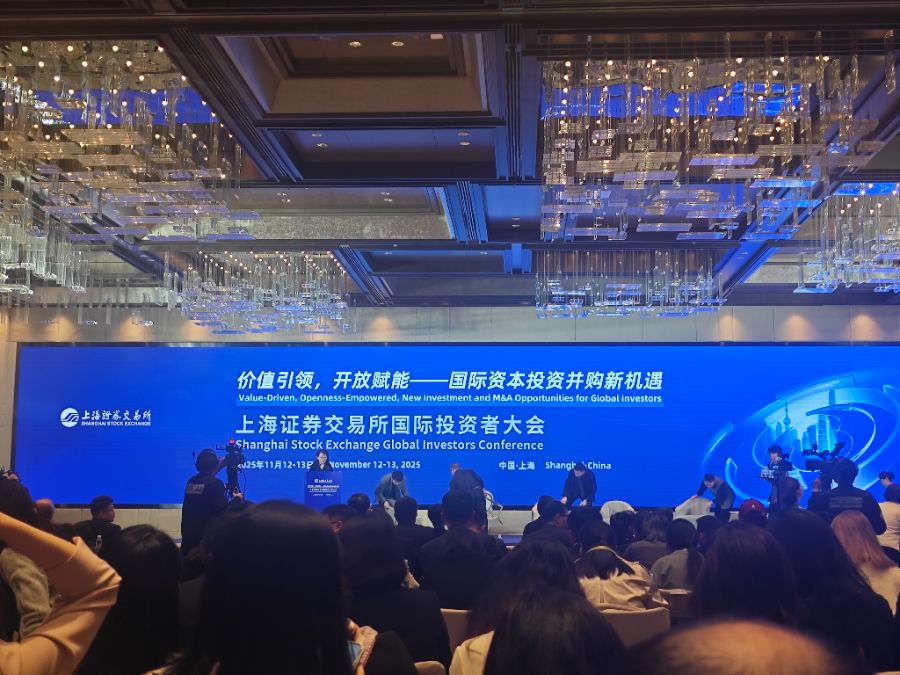
11月12日-13日,上交所国际投资者大会举行。上海证券交易所理事长邱勇表示,展望"十五五",上交 所将深入贯彻党的二十届四中全会、中央金融工作会议精神,在中国证监会的坚强领导下,紧扣防风 险、强监管、促高质量发展主线,坚持守正创新、稳中求进,加快建设世界一流交易所。上交所将聚焦 催生新质生产力,通过优化发行上市、再融资、并购重组等关键制度,引导资本投向前沿技术、先进制 造和未来产业,推动科技创新和产业创新深度融合。聚焦培育理性投资、价值投资、长期投资的指数化 投资生态,引导更多中长期资金入市,促进投融资动态平衡。聚焦推动上市公司提升治理水平和信息披 露质量,强化分红回购,以稳健业绩和持续回报增强投资价值。聚焦稳步扩大制度型开放,拓展跨境投 融资渠道,丰富国际化产品体系,提升全球竞争力与吸引力。同时,我们也将聚焦更好统筹发展和安 全,持续强化科技赋能监管和服务,完善全链条风险监测预警与处置机制,为市场平稳运行和投资者权 益保护提供坚实保障。 责任编辑:常福强 炒股就看金麒麟分析师研报,权威,专业,及时,全面,助您挖掘潜力主题机会! 登录新浪财经APP 搜索【信披】查看更多考评等级 专题:2025上海证券交易所 ...
扩大高水平对外开放的生动实践(国际观澜)
Ren Min Ri Bao· 2025-11-11 22:40
Group 1 - The core message emphasizes China's commitment to providing 100% zero-tariff treatment on products for all least developed countries that have diplomatic relations with China, showcasing China's role in promoting global development and shared prosperity [1][2] - China has maintained its position as Africa's largest trading partner for 16 consecutive years, with a 10.8% increase in imports from African countries in the third quarter of this year [1] - The zero-tariff policy is a specific measure under China's broader strategy to expand high-level opening-up and is expected to enhance trade liberalization and economic globalization, contributing to global prosperity [2] Group 2 - The "14th Five-Year Plan" emphasizes expanding high-level opening-up and creating win-win cooperation, with zero-tariff policies being a concrete initiative to achieve these goals [2] - The introduction of zero-tariff measures is expected to enrich the Chinese market with diverse products, such as Ugandan coffee and Nepalese spices, while also promoting the development of related domestic industries [2]
商务部:在大力提振消费等方面出台更多细化措施
Zheng Quan Shi Bao Wang· 2025-11-11 12:08
Core Viewpoint - The Ministry of Commerce emphasizes the need for detailed measures to boost consumption, expand institutional openness, and promote high-quality development in trade and investment cooperation [1] Group 1: Key Measures - The meeting highlighted the importance of boosting consumption as a critical aspect of commerce work [1] - It called for steady expansion of institutional openness and proactive self-initiated openness [1] - The report stressed the need for innovative development in trade and the expansion of bilateral investment cooperation [1] Group 2: Strategic Initiatives - The Ministry aims to enhance the quality of the "Belt and Road" initiative through high-quality collaboration [1] - There is a focus on developing a series of specialized plans within the commerce sector [1]
长三角与长江经济带自贸试验区联动创新,共推制度型开放迈向纵深
2 1 Shi Ji Jing Ji Bao Dao· 2025-11-11 10:36
Core Viewpoint - The strategic significance of promoting the coordinated development of the Yangtze River Economic Belt's free trade zones is emphasized, aiming to enhance overall reform efficiency and support the construction of a new development pattern [1][3]. Group 1: Free Trade Zone Development - The "Blue Book on the Development of China's (Jiangsu) Free Trade Zone" was released, focusing on the theme of empowering the free trade zone's strategic enhancement through new productive forces [1][3]. - Jiangsu's free trade zone has contributed to one-tenth of the province's total foreign trade import and export volume over the past six years, with over 450 institutional innovation cases summarized, 34 of which have been promoted nationwide [3][4]. - Sichuan's free trade zone has seen the establishment of over 330,000 new enterprises since its inception, with an average annual foreign trade import and export growth of 14.8% [3][4]. Group 2: Institutional Innovation and Collaboration - Continuous exploration in sharing institutional innovation results and establishing collaborative development mechanisms has been a focus for various free trade zones [4][5]. - Jiangsu has become the first province in the country to pilot a full industrial chain in the biopharmaceutical sector, following the approval of its development plan by the State Council [4]. - As of September 2025, a total of 485 institutional innovation results from free trade zones have been promoted nationwide, with the Yangtze River Economic Belt serving as a significant testing ground for cross-provincial collaborative development [4][5]. Group 3: Future Directions and Strategic Goals - The need for further breaking down administrative barriers and achieving more institutional results in industrial chain collaboration, rule recognition, and risk prevention is highlighted [5]. - The Shanghai Free Trade Zone is expected to play a core role in sharing national strategic platforms and creating a trade single window for the Yangtze River Economic Belt [5].