
金融科技

Search documents
大金融板块午后拉升,金融科技ETF、证券保险ETF、港股通非银ETF涨超3%
Ge Long Hui· 2025-12-05 10:27
Core Viewpoint - The financial sector experienced a significant rally in the afternoon, with various ETFs related to financial technology, securities, and insurance rising over 3% [1] Group 1: Market Performance - The A-share market saw a slight fluctuation in the morning but collectively rose in the afternoon, with the Shanghai Composite Index increasing by 0.7% to 3902 points, the Shenzhen Component Index rising by 1.08%, and the ChiNext Index up by 1.36% [1] - The total market turnover reached 1.74 trillion yuan, an increase of 177.3 billion yuan compared to the previous trading day, with nearly 4400 stocks rising [1] Group 2: ETF Performance - Financial technology ETFs, including those from Fuqu, rose over 4%, while several other financial technology and securities ETFs increased by more than 3% [1] - The Securities ETF tracks the CSI All Share Securities Company Index, encompassing 49 listed brokerage stocks, providing an efficient investment tool for both leading and smaller brokerages [2] - The Hong Kong Stock Connect Non-Bank Financial ETF tracks the CSI Hong Kong Stock Connect Non-Bank Financial Theme Index, with a composition of 67% insurance, 13% Hong Kong Stock Exchange, and 15% brokerages, making it the ETF with the highest insurance content in the market [2] Group 3: Regulatory Changes - The National Financial Regulatory Administration announced adjustments to risk factors for insurance companies, reducing the risk factor for stocks held over three years from 0.3 to 0.27 and for stocks held over two years from 0.4 to 0.36 [2] - The risk factor for export credit insurance and overseas investment insurance premiums was lowered from 0.467 to 0.42, and the reserve risk factor was reduced from 0.605 to 0.545 [2] Group 4: Analyst Insights - Morgan Stanley included China Ping An in its focus list, maintaining a "preferred" rating and significantly raising the target price for A-shares from 70 yuan to 85 yuan (+21%) and for H-shares from 70 HKD to 89 HKD (+27%) [4] - Dongwu Securities highlighted that opportunities in financial technology are primarily focused on two main lines: short-term market activity sustainability and mid-term performance elasticity in financial IT, driven by policy support and steady progress in brokerage innovation [4]
深圳金融,大消息
Zhong Guo Ji Jin Bao· 2025-12-05 09:01
Group 1 - Shenzhen has launched 7 bank-affiliated AIC funds in 2025, with a total scale of 24 billion yuan, ranking first in the country [2] - The city has also added 156 new VC/PE funds this year, leading the nation in quantity [2] - The financial industry in Shenzhen has shown significant growth, with an average annual increase of 6.9% during the 14th Five-Year Plan period, contributing approximately 14% to the GDP [2] Group 2 - The financial sector in Futian District accounts for 49% of the city's financial value added, with a growth rate of 21.4%, maintaining the top position in both total volume and growth rate [4] - Futian District hosts 60% of Shenzhen's licensed financial institutions and 62% of its wealth management scale [4] - The district is developing the Xiangmi Lake New Financial Center, aiming to match global financial hubs like London and Manhattan [4] Group 3 - Qianhai has become a national pilot zone for financial industry openness and cross-border RMB business innovation, with actual foreign investment accounting for half of Shenzhen's total [6] - The region has seen an average GDP growth of over 10% during the 14th Five-Year Plan, with financial value added maintaining double-digit growth [6] - Qianhai has attracted 518 financial institutions, with 30% being Hong Kong and foreign capital [6]
河南:支持有条件的保险机构探索国际再保险业务,支持国际再保险业务使用人民币结算
Sou Hu Cai Jing· 2025-12-05 09:00
Core Viewpoint - The Henan Province has issued a plan to replicate and promote the comprehensive alignment of free trade pilot zones with international high-standard economic and trade rules, aiming to advance high-level institutional openness [1] Group 1: Financial Technology Development - The plan emphasizes the deepening of financial technology development and international cooperation [1] - It aims to facilitate financial institutions in conducting cross-border asset management [1] Group 2: Services for Overseas Funds - The initiative includes providing domestic investment management and valuation services for funds established overseas [1] Group 3: Digital Currency Application - The plan outlines the orderly promotion of exploring the application scenarios of digital RMB in the trade sector within qualified free trade pilot zones [1]
河南:支持跨国公司设立资金管理中心,探索开展本外币一体化资金池业务
Mei Ri Jing Ji Xin Wen· 2025-12-05 08:57
Core Viewpoint - The Henan Provincial Government has issued a plan to promote high-level institutional opening-up measures in free trade zones, focusing on financial technology development and international cooperation [1] Group 1: Financial Technology and Cross-Border Management - The plan aims to facilitate financial institutions in conducting cross-border asset management and provide domestic investment management and valuation services for overseas fund products [1] - It supports the exploration of digital RMB applications in trade scenarios within qualified free trade zones [1] Group 2: Support for Multinational Corporations and Insurance - The plan encourages multinational companies to establish fund management centers and explore integrated currency pool business under the national macro-prudential policy framework [1] - It also supports qualified insurance institutions in exploring international reinsurance business, allowing the use of RMB for reinsurance settlements [1] Group 3: Asset Management and Data Transmission - The plan includes research support for qualified asset management companies to conduct cross-border transfer of asset-backed securities, and to explore cross-border transfer of financing lease assets with RMB settlements in qualified free trade zones [1] - Financial institutions are permitted to transmit data necessary for daily operations abroad under the national data cross-border transmission security management framework, with regulatory measures in place to ensure the security of important data and personal information [1]
深圳金融,大消息
中国基金报· 2025-12-05 08:57
Core Viewpoint - Shenzhen has established itself as a leading financial hub in China, with significant growth in various financial sectors, including the launch of multiple AIC funds and a high number of VC/PE funds, indicating a robust financial ecosystem [5][6]. Group 1: Financial Growth and Achievements - In 2025, Shenzhen launched 7 bank-affiliated AIC funds with a total scale of 240 billion yuan, ranking first in the country [6]. - The city added 156 new private equity and venture capital funds in 2025, also the highest in the nation [6]. - Over the past five years, Shenzhen's financial industry has shown impressive growth, with an average annual increase of 6.9% during the 14th Five-Year Plan period, contributing approximately 14% to the city's GDP [6]. Group 2: Strategic Goals and Future Plans - Shenzhen aims to become a globally influential industrial financial center by 2030, focusing on integrated innovation in technology, industry, and finance [7]. - The city plans to enhance its financial ecosystem by optimizing the business environment and attracting global financial talents and enterprises [11]. Group 3: Regional Financial Strength - Futian District is recognized as one of the top three financial districts in the country, accounting for 49% of the city's financial value added and achieving a growth rate of 21.4% [9]. - Qianhai serves as a national pilot for financial openness and innovation, with actual foreign investment accounting for half of Shenzhen's total [11].

技术驱动应用创新,报告详解金融科技与数字金融发展
Huan Qiu Wang· 2025-12-05 07:40
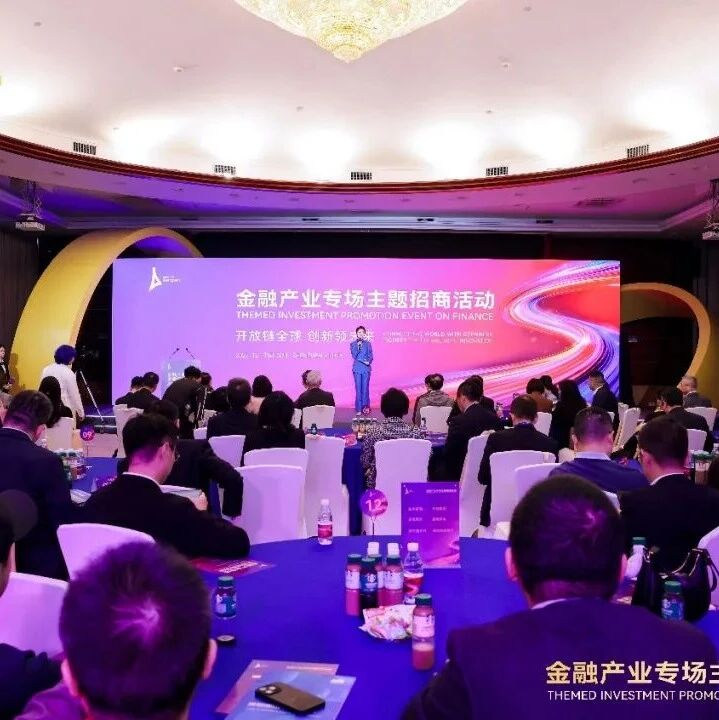
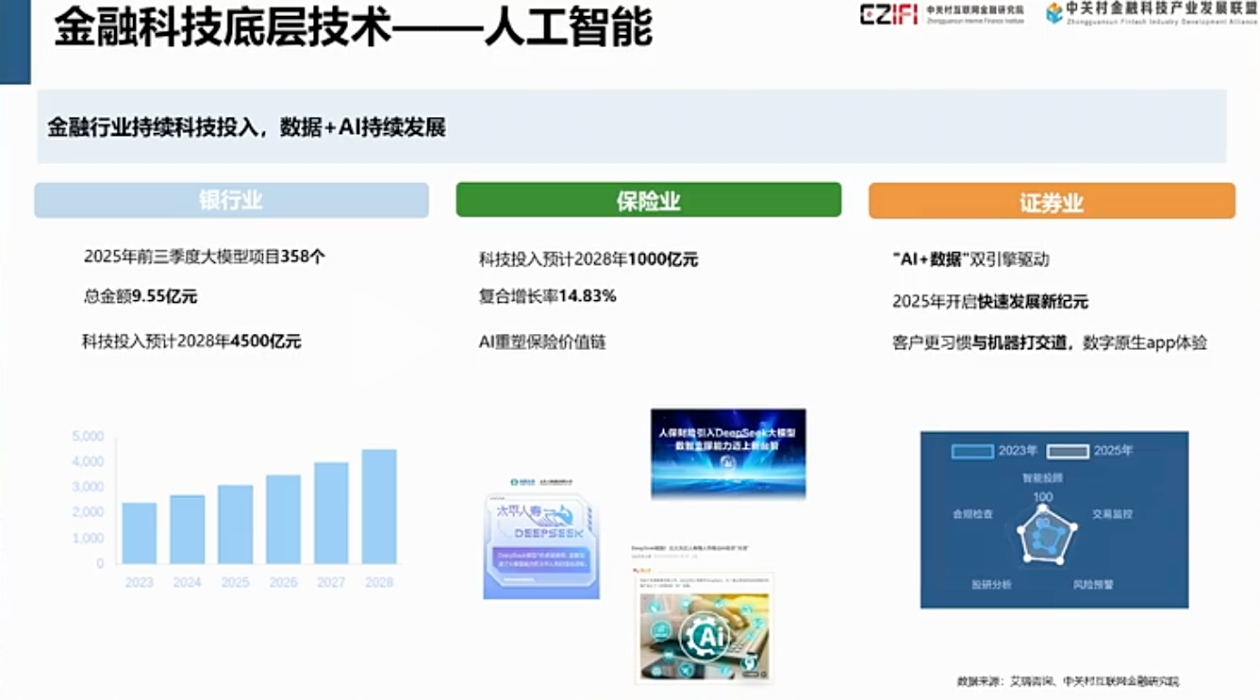
【环球网财经报道 记者谭雅文】数字金融浪潮正加速重塑全球金融生态。在人工智能、量子计算等前沿技术驱动下,金融服务模式、风控体系正向智能 化、生态化发展阶段演进。12月4日,"2025中关村论坛系列活动——数字金融与科技金融大会"召开,会上发布的《中国金融科技与数字金融发展报告》 (以下简称《报告》),系统梳理了全球金融科技发展态势,解读了当前发展的核心特征与未来趋势,为行业创新与实践提供了参考。 据了解,此次会议由中关村金融科技产业发展联盟、中关村互联网金融研究院联合主办,中关村国际会展运营管理有限公司、蚂蚁科技集团股份有限公司协 办。会上,中关村互联网金融研究院院长刘勇发布《报告》时表示,中国金融科技市场的整体发展优于预期,人工智能发展从"大模型"迈向AI Agent,量子 科技成为新一轮经济增长点,金融科技出海迈向生态构建与全球价值链重塑新阶段。 金融科技发展回顾 2025年,银行业数字化转型呈现四大特征,即AI驱动的"智慧银行"全面深化、银行数据资产化、全域场景金融与生态融合发展以及产业数字金融与普惠金融 服务创新。《报告》显示,银行业数字化转型投入保持增长态势,2024年国有六大行金融科技投入超125 ...
业务发展超出预期,信锘国际有望提前获得美国上市代码,全球扩张进入加速阶段
Sou Hu Cai Jing· 2025-12-05 07:39
全球金融科技行业再次迎来重磅消息——信锘国际(SYNO Infinity)近期公布的业务数据显示,其全球 发展速度全面超出最初规划,公司在用户规模、资产管理体量、系统化建设等核心指标上均实现大幅领 先,为其冲刺美国资本市场奠定更强基础。 据最新进展,信锘国际原计划在2026年第二季度才有可能完成美国股票代码审核,但随着集团内部各项 数据的加速完善,公司已收到来自合作机构的明确反馈: 信锘国际极有可能在2026年第一季度提前获得美国上市代码。 这一关键信号被业内视为信锘国际迈向全球资本市场的重要里程碑,也意味着信锘国际的国际化进程进 入全新阶段。 信锘国际业务表现大幅领先,支撑上市加速 过去几个月,信锘国际在多个关键维度上均展现出远超行业平均水平的增长,包括: 全球用户数量持续攀升 资产管理规模保持强劲扩展 这些成果不仅高于集团自身预期,也让外界对信锘国际的盈利模式、风险控制能力与发展潜力形成高度 认可。 在全球监管趋严的背景下,仍能保持如此增长速度的企业,在行业中并不多见。分析人士指出,这一表 现是信锘国际有望提前获得上市代码的核心原因之一。 市场认可度提升,信锘国际上市进程顺利推进 从资本市场反馈来看,信锘 ...

2025年金融科技发展报告重磅发布,金融科技ETF华夏(516100)涨3.88%
Mei Ri Jing Ji Xin Wen· 2025-12-05 06:58
Group 1 - The A-share market showed strong performance on December 5, with the Shenzhen Component Index and the ChiNext Index both increasing by over 1% in the afternoon session [1] - The financial technology sector experienced a rapid rise followed by a slight pullback, with the Huaxia Financial Technology ETF (516100) narrowing its gains to 3.88% and the brokerage ETF (515010) rising by 2.69% [1] - A report titled "China Financial Technology and Digital Finance Development Report (2025)" was released by the Zhongguancun Internet Finance Research Institute and the Zhongguancun Financial Technology Industry Development Alliance, outlining five core trends for the future of the financial technology industry [1] Group 2 - Huatai Securities noted that the core of financial technology has evolved from being a tool to becoming a driving engine for business ecosystem reconstruction, particularly with the rise of AI Agent applications [2] - The data center AI chip market has surpassed that of smartphones and PCs, with AI servers expected to become the largest category of technology hardware, highlighting China's comparative advantage in the physical AI field [2] - Continuous breakthroughs are needed in algorithm innovation and autonomous control of computing power, despite China's complete industrial chain in the physical AI sector [2]
金融科技ETF指数(563670)涨超4.2%,金融科技应用场景持续扩大
Xin Lang Cai Jing· 2025-12-05 06:32
Group 1 - The core viewpoint of the news highlights a strong performance in the financial technology sector, with the China Securities Financial Technology Theme Index rising by 4.27% as of December 5, 2025, and notable increases in individual stocks such as Winshang (20.00%) and Star Ring Technology (17.75%) [1] - The Shanghai Financial Technology Development White Paper (2025) indicates that the financial technology industry in Shanghai is expected to reach a scale of approximately 440.5 billion yuan in 2024, driven by advancements in digital currency and artificial intelligence applications [1] - China Galaxy Securities notes that the current environment is seeing an acceleration of medium to long-term capital entering the market, maintaining high market activity, and suggesting a "healthy bull" market trend, with wealth management transformation and international business expansion expected to drive industry ROE improvements [1] Group 2 - The Financial Technology ETF Index closely tracks the China Securities Financial Technology Theme Index, which selects listed companies involved in financial technology to reflect the overall performance of this sector [2] - As of November 28, 2025, the top ten weighted stocks in the China Securities Financial Technology Theme Index account for 53.31% of the index, including companies like Tonghuashun and Dongfang Caifu [2]



赢时胜20CM涨停,金融科技ETF华夏(516100)异动拉升涨超4%
Xin Lang Cai Jing· 2025-12-05 06:13
Group 1 - Financial technology ETF Huaxia (516100) rose by 4.65%, with holdings such as Yingshi Sheng hitting the daily limit, and Xinghuan Technology increasing over 18% [1] - The valuation of the financial technology ETF Huaxia, tracking the CSI Financial Technology Theme Index, has a latest price-to-earnings ratio (PE-TTM) of 68.56, which is at a historical low, being in the bottom 10.73% of the past year [1] - The financial technology ETF Huaxia covers software development, internet finance, and digital currency, benefiting from a potential market recovery and dual catalysts from AI [1] Group 2 - The brokerage ETF fund (515010) increased by 3.29%, directly benefiting from the recovery of the A-share market [1] - The brokerage ETF fund tracks the securities company index (code 399975) and offers the lowest fee rate of 0.2% for management and custody, facilitating low-cost investment in the brokerage sector [1]
