合规经营

Search documents
“国内大数据杀熟第一案”主角再陷风波!携程被立案调查,用户:早该管了!
Sou Hu Cai Jing· 2026-01-14 22:50
Core Viewpoint - The State Administration for Market Regulation has initiated an investigation into Ctrip Group for suspected monopolistic behavior, specifically the abuse of market dominance under the Anti-Monopoly Law of the People's Republic of China [2][6]. Group 1: Investigation Details - Ctrip has been formally investigated for potential monopolistic practices, which could result in fines ranging from 1% to 10% of its previous year's sales if found guilty [6]. - Following the announcement of the investigation, Ctrip's stock on the Hong Kong market fell by 6.49%, closing at 569.5 HKD per share [6]. - Ctrip has faced multiple inquiries from local market regulators since 2025, including issues related to "forced choices" and price fraud [6][8]. Group 2: Compliance Issues - Ctrip holds over 50% market share in the OTA industry but has been criticized for its compliance issues [8]. - The company has been named in reports for illegally collecting and using personal information, with Ctrip Financial being specifically mentioned [9]. - Ctrip's "fast ticket grabbing" service during the 2025 Spring Festival raised concerns of civil fraud, as it misrepresented its relationship with the official ticketing platform [10]. Group 3: Legal and Ethical Concerns - Ctrip has been involved in a notable case of "big data price discrimination," where a customer was charged double the hotel price compared to the front desk rate, leading to a court ruling in favor of the customer [12][14]. - This case has been recognized as a significant example of legal issues surrounding data practices in China [15][16]. - Despite ongoing criticisms and calls for algorithm transparency, Ctrip has not shown signs of acknowledging its compliance failures [18][20].



四平铁东税务:把涉税课堂“搬”进商圈 助力商户诚信经营
Zhong Guo Jin Rong Xin Xi Wang· 2026-01-14 07:38
Core Viewpoint - The initiative by the tax bureau in Siping City aims to enhance compliance and operational standards among merchants, thereby improving consumer shopping experiences and ensuring tax compliance [1][4]. Group 1: Tax Compliance and Merchant Support - A special service team was established to provide on-site tax policy interpretation and daily tax guidance to merchants in major shopping malls [1][3]. - The service team offers customized training for different industries, focusing on common issues such as tax calculation and invoice issuance [2][3]. - Merchants are educated on the importance of accurate tax reporting, including the need to report unbilled income alongside billed income to avoid risks [2][3]. Group 2: Sales Season Preparation - The mobile classroom initiative was launched ahead of peak sales seasons to assist merchants with tax-related matters, including invoice issuance and tax declaration [3]. - Merchants reported significant sales increases, with one store achieving a 9% sales growth during the 2025 "Double Twelve" event, highlighting the effectiveness of the training [3]. - The initiative has helped merchants manage tax obligations accurately, ensuring compliance with VAT and personal income tax declarations [3]. Group 3: Future Plans - The tax bureau plans to expand the mobile classroom services and implement a mechanism for regular follow-ups to address merchants' tax-related needs dynamically [4]. - The goal is to ensure that the training provided aligns with taxpayer needs and to facilitate smoother policy implementation and industry order [4].
保信app合规为翼 逐浪全球:上海以深度合规赋能跨境电商双循环发展
Sou Hu Cai Jing· 2026-01-14 06:07
如果说基础资质是合规的"敲门砖",那么覆盖全流程的体系化合规管理,则是保信上海在复杂国际市场中稳健前行的"压舱石"。面对2021年以来跨境电商行 业粗放式发展模式难以为继、全球监管日趋严格的行业现状,保信上海前瞻性构建起覆盖业务全链条的风险防控体系,将合规理念深度融入税务、知识产 权、商品质量、数据安全等核心环节。 在税务合规领域,保信上海严格遵循中国海关及税务部门相关规定,全面落实"三单对碰"(订单、支付单、物流单)机制,确保每一笔跨境交易数据真实可 追溯。同时,公司主动履行代征代缴进口环节税款的义务,既切实维护了国家税收权益,也为消费者提供了完整的购物凭证,实现了跨境交易的全流程透明 化,让国内消费者放心享受全球优质商品,也让国际合作伙伴清晰感知中国企业的合规诚意。 (中国,上海——2021年11月) 全球数字经济的浪潮奔涌向前,跨境电商作为连接国内国际两个市场的重要纽带,正迎来从高速增长向高质量发展的关键 转型期。在此背景下,合规经营已不再是企业的"选择题",而是融入全球贸易体系、把握双循环发展机遇的"必修课"。总部位于上海的保信上海国际跨境电 商有限公司,前瞻性布局深度合规体系建设,构建起从主体资质到 ...

华菱钢铁:公司坚持合规经营
Zheng Quan Ri Bao Wang· 2026-01-13 13:10
证券日报网讯1月13日,华菱钢铁(000932)在互动平台回答投资者提问时表示,公司缴纳的6.57亿元 税款及滞纳金将计入公司2025年当期损益,对公司当期利润造成一次性影响,但公司生产经营稳健,在 消化上述税款及滞纳金6.57亿元的情况下,预计2025年仍可实现归属于上市公司股东的净利润26亿元 ~30亿元,同比增长27.97%~47.66%。公司坚持合规经营,未来也将不断完善合规管理长效机制,同时 持续加强与相关监管部门的沟通。 ...

国家调查外卖行业“内卷式”竞争 淘宝闪购、美团回应
Zheng Quan Shi Bao Wang· 2026-01-09 13:32
Core Viewpoint - The State Council's Anti-Monopoly and Anti-Unfair Competition Committee Office has initiated an investigation into the competitive landscape of the food delivery platform service industry to promote compliance and fair competition [1][2] Group 1: Investigation and Regulatory Actions - The investigation aims to assess monopoly risks and regulate market order through on-site verification, interviews, and surveys, gathering opinions from various stakeholders including platform operators, new employment groups, and consumers [2] - The investigation is a response to the prevalent issues of irrational competition characterized by price wars, subsidies, and traffic control, which have negatively impacted the real economy and intensified "involution" within the industry [1][2] Group 2: Company Responses - Taobao Shanguo expressed its commitment to fair competition as a core principle of market economy and stated its adherence to relevant laws and regulations, welcoming the investigation and pledging to cooperate fully [2] - Meituan acknowledged the issues of irrational competition and called for a return to rationality in the industry, viewing the investigation as an opportunity to promote innovation and healthy development within the food delivery service sector [2] Group 3: Industry Context and Future Implications - The food delivery service industry is a significant part of China's platform economy, contributing to consumption, employment, and innovation [1] - The investigation is expected to shift the focus of competition from price wars to compliance and service quality, aligning with the implementation of the "Basic Requirements for Food Delivery Platform Services" [3]

罚没26亿元,超100人被禁业,2025年6565张罚单背后:银行监管转向精准重罚
3 6 Ke· 2026-01-09 05:53
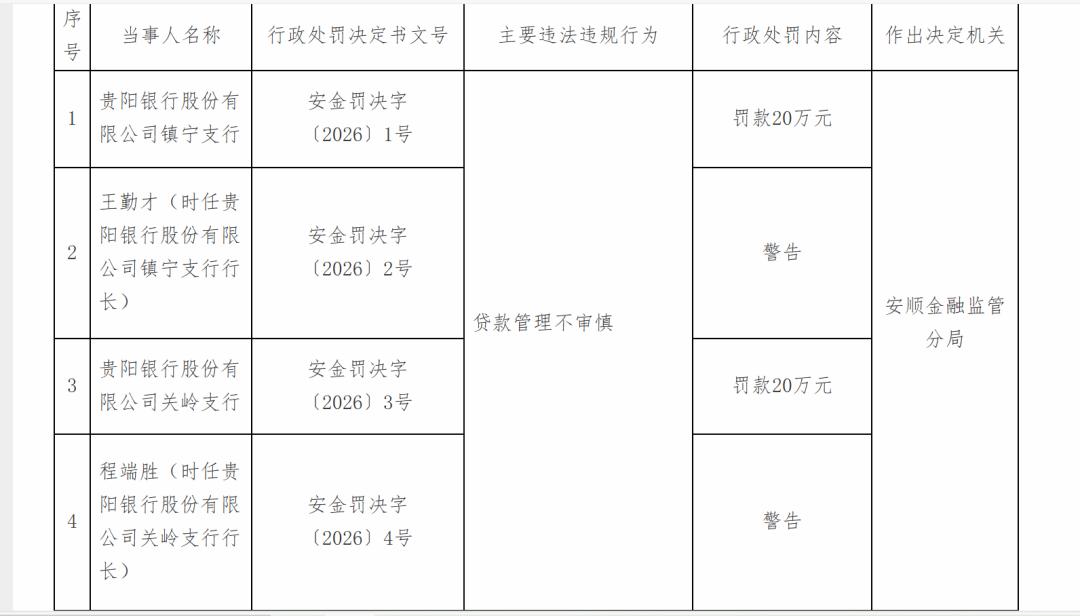
Core Viewpoint - The banking sector is facing intensified regulatory scrutiny in 2026, with multiple banks receiving fines for various violations, reflecting a shift towards more precise and severe penalties aimed at addressing systemic risks [2][3][13]. Regulatory Environment - In early 2026, several banks have already been penalized, indicating a continuation of strict regulatory measures from 2025 [1][4]. - The regulatory actions cover a range of issues, including inadequate loan management and insufficient internal controls [2][7]. Penalty Statistics - In 2025, a total of 6,565 fines were issued to banks, with over 1,000 banks penalized, marking an increase in the number of institutions facing penalties [9][10]. - The total amount of fines in 2025 reached 2.647 billion, a significant increase of 45.28% compared to the previous year, driven by a rise in the number of large fines exceeding one million [10][12]. Specific Cases - Guiyang Bank faced multiple fines in 2025, totaling 19, with the largest fine being 600,000 for inadequate loan management practices [6][7]. - The penalties imposed on Guiyang Bank included fines of 200,000 for two branches due to imprudent loan management, with responsible personnel receiving warnings [5][6]. Trends in Penalties - The trend of issuing large fines is expected to continue, with predictions indicating that the number of fines may remain stable while the amounts could increase, particularly for medium-sized banks [13]. - The focus of regulatory scrutiny is shifting towards high-risk areas, including compliance in financial technology and consumer protection [13]. Employee Accountability - The "double penalty system" has been implemented, linking compliance responsibilities directly to specific individuals, resulting in lifetime bans for over 100 bank employees in 2025 [3][8][12].
股权转让频现叠加多家分支机构被罚,国任保险“内外压力”待解除
Bei Jing Shang Bao· 2026-01-08 14:05
Core Viewpoint - The recent announcement of share transfer by China Railway Construction Investment Group from Guoren Property Insurance has brought attention to the company, indicating a trend of state-owned shareholders exiting their stakes due to strategic adjustments and compliance requirements [1][4][5]. Shareholder Changes - China Railway Construction plans to transfer its entire 4.991% stake in Guoren Insurance, which amounts to 200 million shares, marking a complete exit from the shareholder list [4][5]. - Other shareholders, such as Beijing Dongcheng State-owned Capital Operation Co., have also signaled intentions to exit, with a similar stake of 4.991% being offered for transfer [5]. - The trend of shareholders wanting to exit has been ongoing, with Guoren Insurance's previous shareholder, Guoji Finance, transferring its 0.499% stake to Guoji Asset Management [6]. Reasons for Shareholder Exit - The motivations behind the exits include internal strategic focus and external regulatory pressures. China Railway Construction's investment in an insurance company may not align with its core infrastructure investment business [7]. - The insurance sector's long investment cycles and unsatisfactory returns have led some financial shareholders to rationally decide to exit [7]. - Regulatory pressures, such as the "second generation of solvency" requirements, may also compel state-owned shareholders to divest from financial institutions to optimize their financial statements [7]. Governance Challenges - Guoren Insurance has faced governance challenges, evidenced by significant opposition votes during shareholder meetings, indicating potential instability in governance [9][11]. - The frequent occurrence of opposition votes raises concerns about the company's governance image and may signal underlying conflicts among shareholders [11][12]. - The company has acknowledged the importance of communication with shareholders and is working to address their concerns [10]. Financial Performance - For the first three quarters of 2025, Guoren Insurance reported insurance business revenue of 9.341 billion yuan, a decrease from 10.275 billion yuan in the same period last year [13]. - The net profit for the same period was approximately 337 million yuan, an increase from 218 million yuan year-on-year [13]. - The comprehensive cost ratio for the company was 102.8%, up nearly 3 percentage points from 99.82% the previous year, indicating underwriting losses [13]. Strategic Focus and Compliance - Guoren Insurance is undergoing a strategic transformation towards high-quality value development, focusing on high-value business and adjusting its business structure [14]. - The company has shifted its focus to non-auto insurance, which now accounts for over 50% of its total premium income, aligning with industry trends [14]. - Recent regulatory changes require enhanced management of non-auto insurance, which Guoren Insurance views as an opportunity for refined management and competitive differentiation [15]. Compliance Issues - Guoren Insurance has faced compliance challenges, with several branches receiving fines for regulatory violations, including a 120,000 yuan fine from the Yunnan regulatory bureau for prohibited business practices [16]. - The company is committed to rectifying these issues and has implemented measures to ensure compliance and prevent future violations [16].

双新规落地!大数据杀熟、直播虚假宣传被严打,电商行业迎来合规大考
Sou Hu Cai Jing· 2026-01-07 09:33
Core Viewpoint - The release of the "Regulations on the Supervision and Management of Online Trading Platforms" and the "Regulations on the Supervision of Live E-commerce" marks a significant shift towards a regulated and high-quality development phase in the trillion-dollar e-commerce market, addressing existing rule chaos and regulatory blind spots in live e-commerce [1] Group 1: Consumer Protection - The new regulations focus on consumer rights protection, introducing several prohibitive clauses that directly address industry issues, including the prohibition of "price discrimination" based on user data, ensuring fair trading rights for consumers [3] - Platforms are required to publicly solicit opinions when formulating or modifying rules, and must establish reasonable transition periods for significant changes affecting consumer rights, along with accessible complaint channels [3] Group 2: Live E-commerce Accountability - The "Regulations on the Supervision of Live E-commerce" establish a comprehensive accountability framework involving platforms, live room operators, hosts, and MCN institutions, ensuring thorough oversight [4] - Platforms must fulfill full-process regulatory obligations, including identity verification, real-time monitoring, and transaction information retention for at least three years, creating a closed-loop management system [5] Group 3: Regulatory Collaboration and Compliance - A robust regulatory collaboration mechanism has been established between market regulation and internet information departments, facilitating seamless information sharing and direct engagement with platform leaders for compliance enforcement [6] - The new regulations encourage platforms to publish compliance reports and engage in self-assessment or third-party evaluations, promoting a shift from passive regulation to proactive compliance [6] Group 4: Industry Transformation and Compliance - The introduction of these regulations aims to transition the e-commerce industry from "trick-based competition" to "value-based competition," significantly increasing the cost of non-compliance and leading to the elimination of non-compliant entities [7] - The expected increase in industry compliance rates by 30% and a 50% reduction in misconduct incidents will enhance consumer trust and overall industry competitiveness, benefiting compliant businesses [7]
禹城税务与纳税人共迎新年
Sou Hu Cai Jing· 2026-01-07 03:55
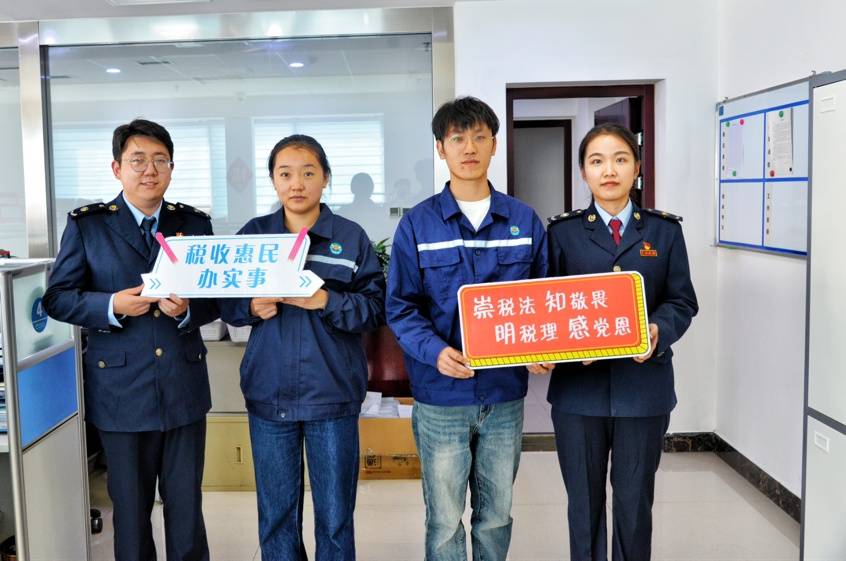
Core Viewpoint - The Yucheng Taxation Bureau is enhancing compliance awareness among enterprises and leveraging tax policies to support market entities as they embark on new journeys in 2026 [1][6]. Group 1: Compliance Promotion - The Yucheng Taxation Bureau has established a compliance promotion area in the tax service hall, focusing on guiding enterprises through personalized support and services [1][3]. - A special service desk titled "Promoting Compliance for the New Year" has been set up, where tax officials distribute customized tax compliance guides that cover high-frequency issues such as invoice management and tax declaration [3][5]. - The guides include timely interpretations of R&D expense deductions, helping businesses prepare for year-end tax settlements [3]. Group 2: Interactive Engagement - The tax service hall features interactive activities that enhance the engagement between taxpayers and tax officials, creating a warm atmosphere for compliance discussions [3][5]. - Tax officials, dressed uniformly, actively engage with taxpayers, providing them with a "policy gift package" that includes summaries of tax incentives for 2025 and guidelines for 2026 [3][5]. - Taxpayers are encouraged to ask questions about tax-related issues, with a dedicated team providing detailed answers and explanations of policy points and procedures [3][5]. Group 3: Tailored Services for Enterprises - The Yucheng Taxation Bureau's service team visits key enterprises, such as Tongyu Heavy Industry Co., to discuss tax-related needs and provide tailored policy interpretations [5][6]. - The team conducts "tax health checks" using big data to identify potential risks in areas like R&D expense allocation and invoice issuance, offering corrective suggestions [5]. - Support is also provided for enterprises expanding overseas, with explanations of international tax policies to help mitigate cross-border tax risks [5]. Group 4: Future Directions - The Yucheng Taxation Bureau aims to deepen its "pre-service" work mechanism, using a dual approach of comprehensive promotion and targeted support for key enterprises [6]. - Future efforts will focus on customizing service plans based on industry characteristics, ensuring high-quality tax services and precise policy implementation [6]. - The bureau is committed to optimizing the business environment and supporting high-quality development for market entities, contributing to a strong economic start in 2026 [6].

企业出海新征程:以品牌出海铸就全球化竞争力
Sou Hu Cai Jing· 2026-01-07 02:42
Core Insights - The trend of "going global" has become a crucial strategic choice for Chinese enterprises, shifting from product export to brand development, which is essential for market expansion and enhancing competitiveness [1][3] Group 1: Brand Development - The early focus of enterprises on product export relied on cost advantages but faced challenges due to a lack of brand recognition, leading to low-price competition [3] - Brand development is now the core direction for enterprises going global, as a strong brand image helps overcome regional barriers and gain trust from overseas consumers [3] - Successful brand development requires in-depth research into target market cultures and consumer habits to align brand values with local markets, marking a shift from "Made in China" to "Chinese Brands" [3] Group 2: Compliance and Service Support - Compliance with varying laws, tax policies, and labor protections in different countries is critical for enterprises operating abroad, especially regarding overseas employment and payroll management [4] - Efficient global payroll services are essential for safeguarding employee rights and enhancing team stability, which supports the smooth operation of overseas businesses [4] - Establishing a robust compliance system and leveraging professional service providers to address operational challenges is fundamental for steady progress in global markets [4] Group 3: Local Adaptation and Global Coordination - Brand development requires a combination of local adaptation and global coordination, necessitating product optimization based on market needs and marketing strategies that resonate with local communication habits [5] - Companies must balance global strategies with local operations, which demands strong global resource integration capabilities and support from specialized service providers [5] - Achieving synergy between global strategic layout and local market penetration is vital for enterprises to succeed in their brand development efforts [5] Group 4: Company Example - Knit People, with 11 years of global payroll service experience, collaborates with over 4,000 global clients and processes payroll exceeding 4 billion annually [5] - The company, founded by a team with deep understanding of the Chinese market, has established research and service centers to meet the needs of Chinese enterprises going global [5]