
数字丝绸之路

Search documents
2025上合组织数字经济论坛将共拓合作新空间
Xin Hua She· 2025-06-30 08:53
Core Viewpoint - The 2025 Shanghai Cooperation Organization (SCO) Digital Economy Forum will be held in Tianjin from July 10 to 11, focusing on leveraging the digital economy to enhance cooperation and development among SCO member states [1][2]. Group 1: Forum Objectives and Themes - The forum aims to utilize the digital economy as a connector and enabler, expanding development opportunities for the SCO region and sharing the benefits of digital economic growth with its people [1]. - Key discussion areas will include data circulation and trading, industrial digital transformation, digital infrastructure development, artificial intelligence applications, smart cities, and digital talent training [1][2]. - The forum will feature four thematic sub-forums focusing on industry empowerment, digital economy education, data governance, and digital infrastructure innovation [2]. Group 2: Economic Impact and Cooperation - The network retail market size of SCO member countries is projected to exceed $3.2 trillion by 2024, indicating significant growth potential in digital economic cooperation [2]. - Recent years have seen notable achievements in digital economic collaboration between China and other SCO nations, resulting in numerous effective and innovative projects [2]. - The initiative aims to lower trade barriers and establish a "Digital Silk Road" as a core hub for open and inclusive digital economic ecosystems, contributing to global governance [2].
岩山科技:接待乌兹别克斯坦数字技术部部长一行,聚焦AI前沿技术突破
Quan Jing Wang· 2025-06-26 08:19
Core Insights - The visit of the Uzbek delegation to Rock Mountain Technology highlights the importance of collaboration in the digital economy and artificial intelligence sectors, aligning with China's "Digital Silk Road" initiative and Uzbekistan's digital transformation strategy [1][3] Group 1: Technological Innovations - The delegation observed significant advancements in non-invasive brain-computer interface technology developed by the Rock Thinking Brain AI Research Institute, which has been successfully applied in controlling the game "Black Myth: Wukong" with high precision [2] - The RockAI's Yan1.3 multimodal general model showcased in the exhibition can efficiently process multimodal information, adaptable across various devices including robots, PCs, and smartphones [2] - The MaxDrive driver assistance solution from Nullmax, a subsidiary of Rock Mountain Technology, has been developed to meet diverse market needs, featuring SAE L2 active safety functions and end-to-end technology architecture [2] Group 2: Strategic Collaboration - Rock Mountain Technology is actively exploring opportunities for establishing localized operations overseas, particularly in Uzbekistan, which is seen as a key market with long-term development potential [3] - The Uzbek representatives expressed strong interest in the non-invasive brain-computer interface technology for its potential applications in assisting disabled individuals and addressing the shortage of professional healthcare personnel in certain regions [3] - There is a mutual interest in deepening cooperation in key areas of artificial intelligence, including smart driving solutions and large model applications, to enhance technological innovation and digital economic collaboration between China and Uzbekistan [3] Group 3: Global Positioning - Rock Mountain Technology is progressively showcasing China's innovative capabilities in artificial intelligence and contributing to global technology governance, aiming to become a leading enterprise in general artificial intelligence [4] - The company is committed to empowering various industries with its self-developed technologies and accelerating the reconstruction of industrial ecosystems through breakthroughs in cutting-edge fields [4]

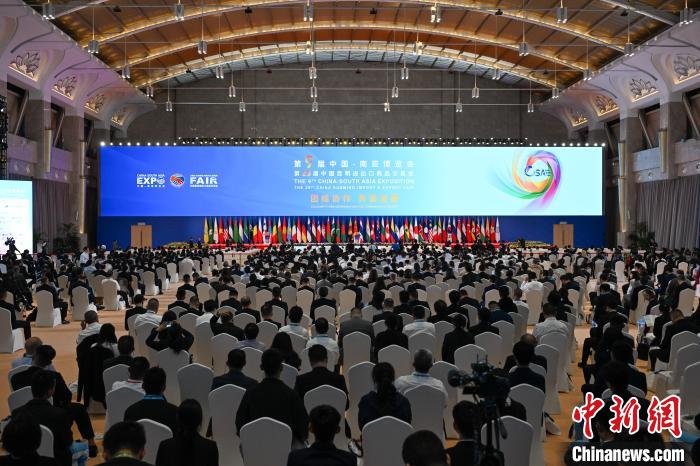
第9届南博会闭幕:驼铃声响引客赴约 共享发展新机遇
Zhong Guo Xin Wen Wang· 2025-06-25 13:38
Core Insights - The 9th China-South Asia Expo concluded, showcasing the importance of trade and cooperation along the Silk Road and the Belt and Road Initiative [1][3] Group 1: Event Overview - The expo attracted participants from 73 countries and regions, with 2,510 companies exhibiting, including 942 foreign enterprises, marking a 20.9% increase from the previous year [3] - Over 500,000 visitors attended the event, with preliminary transaction amounts reaching 47 million yuan, setting a new record [3] - A total of 153 trade contracts were signed, with a foreign trade contract value of 8.479 billion yuan by the end of the expo [3] Group 2: Economic Impact - The expo has facilitated over 110 billion USD in foreign trade transactions over its 12-year history, serving more than 20,000 companies [3] - The event has become a significant platform for enhancing exchanges and deepening cooperation between China and South Asia [5] Group 3: Product Highlights - Products from South Asian countries, such as handmade carpets, wooden furniture, and tea, were particularly popular among consumers [5] - The event featured a cross-border e-commerce section, attracting influencers from various countries to promote products through live streaming [6] Group 4: Infrastructure and Connectivity - Improved transportation networks, including road, rail, and air, have facilitated easier access for goods entering and exiting the expo [5] - The China-Laos Railway has played a crucial role in enhancing trade opportunities for participating countries [5] Group 5: Future Prospects - The expo is expected to continue growing, with participants expressing optimism about future opportunities and collaborations [7]

中国—上海合作组织数字技术合作发展论坛探讨产业新趋势
Zhong Guo Jing Ji Wang· 2025-06-24 12:02
Group 1 - The forum on digital technology and aerospace information highlights the significant opportunities for high-precision, real-time, and intelligent development in the global aerospace information industry [1] - Xinjiang, as a core area of the "Belt and Road" initiative, possesses unique conditions for meeting the aerospace monitoring needs of neighboring countries and enhancing infrastructure connectivity [1] - The integration of digital technology and aerospace information is seen as a key area for countries to seize future development advantages, with technologies like cloud computing, big data, artificial intelligence, and blockchain revolutionizing traditional production models [1] Group 2 - Xinjiang is transforming from a traditional resource base to a "Digital Tianjiang" and an integrated innovation hub for aerospace and digital technology, leveraging its position as a core area of the "Belt and Road" initiative and its green energy resources [2] - The region has established a comprehensive 5G network, Beidou application system, and low-carbon computing hub, facilitating the deep integration of aerospace information and digital technology [2] - This transformation supports national strategies such as "East Data West Computing" and the "Digital Silk Road," providing strategic support for regional development [2]
共建共享数字丝绸之路
Huan Qiu Wang Zi Xun· 2025-06-24 03:01
Core Viewpoint - The "Silk Road E-commerce" initiative is enhancing global trade efficiency and promoting digital transformation in commerce, with China establishing partnerships with 35 countries to facilitate this growth [1][2]. Group 1: Current Achievements - The "Silk Road E-commerce" has rapidly expanded, creating a consensus that "to do e-commerce, look to China," and has significantly contributed to the digitalization and convenience of global trade [1]. - E-commerce cooperation has yielded fruitful results across various fields, enhancing product circulation, logistics, and information sharing, thereby improving overall cross-border trade efficiency [2]. Group 2: Economic and Social Impact - The initiative has allowed African countries to leverage Chinese e-commerce platforms to promote local products, such as coffee and handicrafts, leading to increased international visibility and improved economic returns for local businesses [2]. - Successful practices in countries like Rwanda and Kenya demonstrate the economic and social benefits of "Silk Road E-commerce," providing valuable insights for sustainable development in underdeveloped regions [2]. Group 3: Challenges and Areas for Improvement - Despite the number of cooperative countries, the depth of collaboration remains limited, with many countries only engaging in product sales and platform access without deeper integration into supply chains and digital technology sharing [3]. - Uneven development of digital infrastructure restricts full participation in e-commerce, particularly in developing countries where logistics and payment systems are underdeveloped [3]. Group 4: Future Development Focus - Future efforts should prioritize deepening industry and supply chain cooperation, optimizing resource allocation, and enhancing competitiveness in global markets through cross-border logistics centers [4]. - Strengthening cross-border payment systems and promoting the use of the Renminbi in "Silk Road E-commerce" can mitigate exchange rate risks and improve transaction efficiency [4]. - Accelerating digital infrastructure development, especially in underdeveloped regions along the Belt and Road, is crucial for enhancing the overall e-commerce ecosystem [4]. Group 5: Role of Shanghai - Shanghai's experience in trade digitalization and international rule-making can serve as a model for national and international practices, promoting a more open and innovative approach to global digital trade [5].
中国—中亚经济合作迈入黄金时代
Jing Ji Ri Bao· 2025-06-20 21:59
Group 1: Core Insights - The second China-Central Asia Summit injects strong new momentum into the development of China-Central Asia relations, leading to a "golden era" of comprehensive deepening and diversified economic cooperation [1] - The summit resulted in the signing of the "Astana Declaration" and a permanent friendly cooperation treaty among China and five Central Asian countries, emphasizing institutional achievements [1] Group 2: Emerging Areas of Cooperation - Economic cooperation between China and Central Asia is transitioning from quantitative expansion to qualitative enhancement, expanding from traditional energy and infrastructure projects to green development, technology cooperation, and digital economy [2] - Green technology is a key focus, with Chinese companies accelerating the entry of green products like electric buses and renewable energy projects into the Central Asian market [2] - The establishment of skill training platforms like the Luban Workshop promotes educational research and technology transfer, enhancing sustainable development in Central Asian countries [2] Group 3: Digital Silk Road - Central Asian countries are actively adopting Chinese practices in smart agriculture, digital governance, and digital payments, contributing to their digital transformation [3] Group 4: Regional Prosperity - The summit serves as a strategic opportunity for China and Central Asian countries to promote regional integration and economic modernization amid profound changes in the global economic landscape [4] - Cooperation is shifting from primary resource trade to deep integration of resource and industrial chains, enhancing industrialization and value creation in Central Asia [4] - China aims to build a "green economic corridor" with Central Asian countries, focusing on clean energy, energy-efficient buildings, and water resource management [4] Group 5: Innovative Cooperation Paradigms - China-Central Asia economic cooperation is entering a phase of high-intensity investment and high-quality connectivity, driven by large project clusters in infrastructure, energy, and digital engineering [5] Group 6: Global Governance Practices - The cooperation framework established through multilateral mechanisms like the Shanghai Cooperation Organization and the Belt and Road Initiative has created a unique "five-in-one" development model for China-Central Asia relations [7] - This model transcends traditional international relations, transforming Chinese modernization concepts into practical governance values and providing systematic solutions for regional cooperation among developing countries [7]
国际嘉宾热议“一带一路”科技合作新图景
Ke Ji Ri Bao· 2025-06-12 09:18
Group 1 - The core viewpoint of the articles emphasizes that technological cooperation is becoming a strong driving force for the high-quality development of the "Belt and Road" initiative [1][2][3] - The second "Belt and Road" Technology Exchange Conference highlighted the importance of building solid partnerships and effective dialogues to ensure that scientific and technological advancements have a profound and practical impact [1] - The construction of the "Digital Silk Road" is facilitating the implementation of cutting-edge technologies such as 5G, big data, and artificial intelligence in participating countries, providing more opportunities for global South countries to engage in technological development [1][2] Group 2 - The "Open Science International Cooperation Initiative," jointly launched by China, Brazil, South Africa, and the African Union, aims to create an open, fair, and non-discriminatory global technological development environment [2] - Effective cooperation mechanisms, including technology transfer centers and youth scientist exchange programs, have been established between China and participating countries, transforming technological cooperation into benefits for people's livelihoods [2] - The future of "Belt and Road" technological cooperation is promising, with expectations to strengthen collaboration in areas such as food and energy security, artificial intelligence, and green development [2][3]
没有轴心的世界(4)人民币不走日元老路
日经中文网· 2025-06-03 07:03
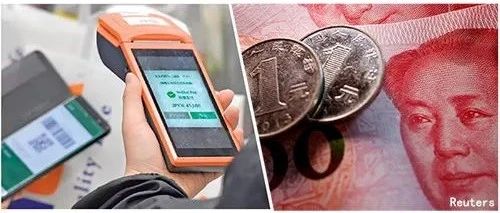
Core Points - The article discusses China's efforts to internationalize the Renminbi (RMB) and reduce reliance on the US dollar, particularly through the expansion of the Cross-Border Interbank Payment System (CIPS) and the promotion of the "Digital Silk Road" [1][2][4] - It highlights the historical context of Japan's failed yen internationalization in the 20th century and contrasts it with China's current strategies to avoid similar pitfalls [3][4] Group 1 - The meeting between Chinese President Xi Jinping and Cambodian Prime Minister Hun Manet confirmed the expansion of RMB payment options in Cambodia and the integration of Cambodian banks into the CIPS [1] - CIPS, initiated by China in 2015, has seen a 30% increase in participating banks over the past three years, totaling 1,667 banks [2] - The global share of RMB as a payment currency has reached 4%, ranking second after the US dollar, with a 7% share in trade payments [2] Group 2 - The article emphasizes that Japan's reliance on the US dollar during its yen internationalization was a key reason for its failure, a lesson that China aims to learn from [4] - The Chinese government is actively promoting its payment systems abroad, with WeChat Pay now available in over 40 countries, including Kazakhstan [2] - The article suggests that China is taking a more assertive stance in its economic policies, potentially reducing its holdings of US Treasury bonds and dollar assets [4]
吉隆坡三场峰会上的“多边合作之声”
Zhong Guo Xin Wen Wang· 2025-05-28 14:36
Group 1 - The ASEAN, ASEAN-GCC, and ASEAN-China-GCC summits held in Kuala Lumpur emphasized the importance of regional cooperation and multilateralism to address international challenges [1] - The combined GDP of the participating countries at the ASEAN-China-GCC summit reached $24.87 trillion, with a population of approximately 2.15 billion, presenting significant opportunities for market synergy, innovation, and cross-regional investment [1] - China is recognized for its role in promoting economic and technological transformation, contributing to a resilient economic framework that emphasizes shared development rather than monopolistic practices [2] Group 2 - Chinese companies are actively exploring cooperation opportunities with businesses from ASEAN and GCC countries, particularly in sectors such as new energy vehicles, artificial intelligence, and green energy [2] - Lenovo has tailored smart solutions based on the differentiated needs of ASEAN and GCC countries, while TCL has engaged with local enterprises to explore future collaborations in green energy [3] - The summit served as an innovative platform to open new cooperation opportunities among Global South countries, with the Belt and Road Initiative continuing to receive support [3]
让世界看见开放自信的新疆
Ren Min Ri Bao· 2025-05-27 22:40
Group 1: Economic Development and Trade - The development of the China-Europe Railway Express has transformed Urumqi from a transit point to a logistics hub, significantly enhancing its role in international trade [2] - Recent reforms at the Urumqi International Land Port have reduced import clearance times from 2-3 days to under 16 hours and export clearance times from 6 hours to 1 hour [2] - In the past three years, the cargo volume at Xinjiang's railway ports has maintained double-digit growth, with a projected cargo volume of 28.65 million tons in 2024, accounting for nearly 70% of Xinjiang's land port cargo volume and one-third of the national railway port cargo volume [2] Group 2: Cross-Border Cooperation and Cultural Exchange - The Horgos International Border Cooperation Center has become a significant platform for economic and cultural exchanges between China and Kazakhstan, hosting nearly 30 key projects in various sectors [3] - The rapid development of Horgos port has facilitated the growth of export-oriented enterprises, such as Jinyi International Trade Co., which has become a leading exporter of fruits and vegetables to Central Asia [3] - Xinjiang has seen a 46% year-on-year increase in inbound tourists, reaching 5.148 million in 2024, highlighting the region's growing appeal as a cultural and tourist destination [7]