
税务合规

Search documents
【锋行链盟】纳斯达克IPO后公司合规重点
Sou Hu Cai Jing· 2025-10-01 16:11
Core Points - The article discusses the compliance requirements for companies transitioning from private to public after completing an IPO on Nasdaq, emphasizing the need to adhere to various legal and regulatory frameworks [2][3][4]. Legal and Exchange Compliance - Nasdaq-listed companies must comply with U.S. federal securities laws, state securities laws, and Nasdaq's listing rules [2]. - The framework includes the Securities Exchange Act of 1934, which mandates ongoing reporting obligations for "reporting companies" [4]. - The Sarbanes-Oxley Act (SOX) requires companies to establish effective internal control systems, with management responsible for annual assessments of these controls [4][8]. Ongoing Information Disclosure Obligations - Public companies must follow SEC and Nasdaq rules for information disclosure, including regular reports such as 10-K (annual), 10-Q (quarterly), and 8-K (major events) [4][5]. - The 10-K report must be submitted within 60-90 days after the fiscal year-end and includes financial statements, management discussions, risk factors, and internal control assessments [4]. - The 10-Q report is due 40-45 days after each quarter and contains quarterly financial data and significant updates [4]. Corporate Governance Requirements - Nasdaq has strict governance rules, including the structure of the board of directors, which must consist of a majority of independent directors [3][5]. - Companies are required to establish audit, compensation, and nomination committees, all composed entirely of independent directors [4][5]. Internal Control and Financial Compliance - SOX 404 is a critical internal control compliance requirement, involving management assessments and external auditor verification of internal controls over financial reporting [6][8]. - Companies must identify key business processes, assess control risks, and test the effectiveness of internal controls [8]. Other Compliance Areas - Companies must adhere to anti-corruption laws, such as the Foreign Corrupt Practices Act (FCPA), and establish anti-bribery compliance systems [6][8]. - Tax compliance includes timely filing of federal and state taxes, with specific attention to corporate income tax rates and employee stock option regulations [6][8]. Maintaining Nasdaq Listing Standards - Nasdaq sets minimum ongoing listing standards related to financial metrics, liquidity, and market capitalization, which companies must regularly monitor to avoid delisting risks [6][8]. Compliance Management and Cultural Development - Companies should establish a compliance team led by a Chief Compliance Officer (CCO) to monitor regulatory changes and implement compliance policies [6][9]. - Regular compliance training and integration of compliance into corporate culture are essential for reducing risks associated with non-compliance [9].


跨境电商平台涉税信息10月首次报送,行业合规进入新阶段
Nan Fang Du Shi Bao· 2025-09-30 05:36
Core Viewpoint - The cross-border e-commerce industry is entering a critical phase of tax compliance and data transparency, as platforms like AliExpress and Shein begin reporting tax-related information in accordance with new regulations issued by the State Council and the National Taxation Administration [1][2]. Group 1: Reporting Requirements - The initial reporting window for tax information is set for October 2025, requiring platforms to submit identity information of all operators and employees, as well as income data from July 1 to September 30, 2025 [2]. - From 2026 onwards, regular quarterly updates will be mandated, with platforms required to report identity and income information for the previous quarter by the next month [2]. - In cases of tax inspections or identified tax risks, platforms must provide detailed information such as contracts, transaction records, and logistics data to support tax oversight [2]. Group 2: Compliance Guidelines for Sellers - Sellers must complete market entity registration if their annual transaction volume exceeds 100,000 yuan, with specific regulations governing registration locations [3]. - After registration, tax information will be shared with tax authorities, and sellers must confirm their tax status promptly upon incurring tax obligations [3]. - Sellers are required to accurately report all taxable income from both online and offline channels, and failure to do so may result in legal consequences [3]. Group 3: Additional Compliance Requirements - Sellers with annual taxable sales exceeding 5 million yuan must register as general taxpayers and comply with applicable tax rates [4]. - It is prohibited to split income to evade taxes through methods such as changing business entities or accounts, with strict penalties for violations [4]. - The National Taxation Administration has provided clear answers to common questions regarding compliance scenarios, emphasizing the importance of accurate reporting and adherence to regulations [6]. Group 4: Industry Implications - The implementation of these tax reporting regulations signifies a shift towards greater transparency and regulatory precision in the cross-border e-commerce sector, moving away from previous unregulated growth models [6]. - Industry experts recommend that sellers promptly assess their compliance status and prepare for the new reporting requirements to ensure sustainable business operations [6].
绝味财务造假不只是ST风险?7亿资金是否被掏空 实控人旗下公司疑拖欠税款
Xin Lang Zheng Quan· 2025-09-26 07:52
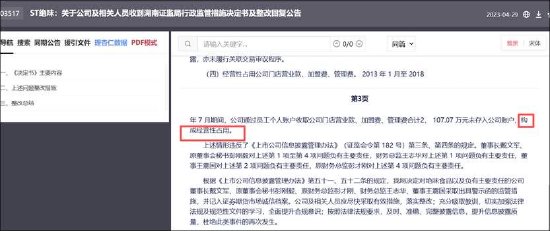
Core Viewpoint - Juewei Food's financial fraud may involve more than just ST risk, with over 700 million yuan in hidden funds potentially being misappropriated and unresolved tax compliance issues [1][2][3] Financial Fraud and ST Risk - Juewei Food has been flagged for financial fraud, leading to its stock being designated as ST (Special Treatment) due to hidden performance rather than inflated earnings [1][2] - From 2017 to 2021, the company failed to recognize revenue from franchise store renovation, resulting in a cumulative understatement of over 700 million yuan, which accounted for 5.48%, 3.79%, 2.20%, 2.39%, and 1.64% of the reported annual revenues for those years [1][2] Tax Compliance Issues - The hidden revenue raises concerns about the company's tax compliance, as failure to report such income could lead to tax evasion penalties [3][4] - According to tax regulations, any concealment or misrepresentation of income can result in severe penalties, including fines and potential criminal charges [3] Potential Fund Misappropriation - There are questions regarding whether the over 700 million yuan in hidden revenue constitutes fund misappropriation, especially since the company managed franchise renovation through personal bank accounts [4][5] - Previous incidents of operational funds being misappropriated were identified, with 21.07 million yuan collected through employee personal accounts not deposited into the company's accounts [5] Governance and Related Party Transactions - The company has been criticized for poor disclosure practices, particularly regarding related party transactions involving executives and board members [10][11] - A significant transaction involving the acquisition of a supplier's shares was not disclosed in a timely manner, raising concerns about governance quality [10][11] Recent Performance Decline - In the first half of the year, Juewei Food reported a significant decline in performance, with revenue of 2.82 billion yuan, down 15.57% year-on-year, and a net profit of 175 million yuan, down 40.71% [12] - The company has closed over 5,000 stores, representing a reduction of more than 30% from the end of 2023, contributing to the operational pressures [12]

宋祖儿再被实名举报税务问题,名下仅1家公司存续
Yang Zi Wan Bao Wang· 2025-09-22 13:32
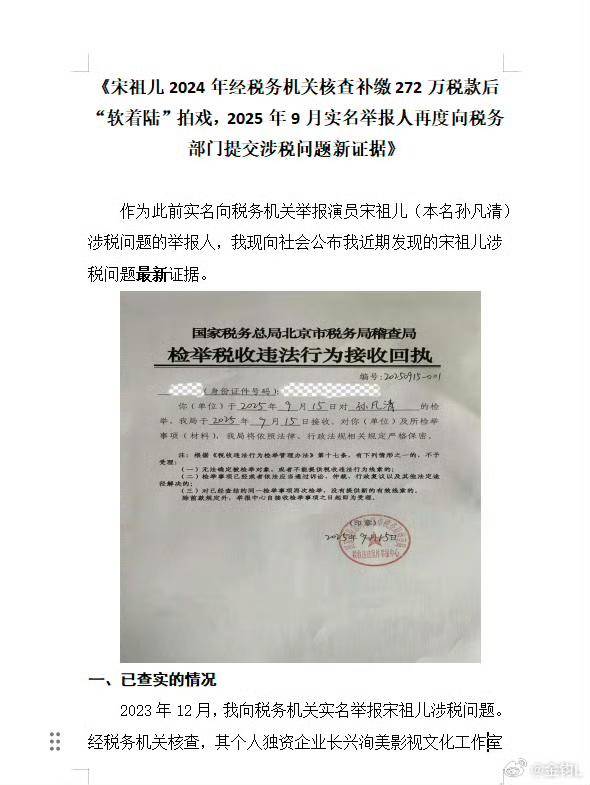
近日,微博ID为"金钧L"的网友发文,表示自己再次实名举报宋祖儿存在税务问题,称已于9月15日向税务部门提交补充证据。举报人称自己于2023年12 月实名举报宋祖儿偷税漏税,宋祖儿被相关部门约谈,补缴了272万税款。但2024年1月又有一笔562万元异常缴款,疑似立案后补缴,并要求依法处罚; 此外,还指控她将27万元个人医美消费报销为公司成本,涉嫌虚增支出。 ※这笔缴税行为发生在 2023年度汇算清缴之后,时间和 金额均不寻常。 ※值得关注的是:这笔税款是否对应 2023年8月31日前 的收入?是否属于对历史欠税的补缴? | | | | | | 城区号 | 11 2 8 8 2 8 1 IMTERS | 562 1 | | --- | --- | --- | --- | --- | --- | --- | --- | | CHOND - 15 | | 00 216 1821012 00 | | | | 11000 1000 1 | | | 16:32:54 | | | | | 北它 | SALE 2021 | | | 41-10-12 | 53512 47 | 105 15751 01 | 227 | | | ...
瓮安税务:精准服务“小个体” 激活发展“大能量”
Sou Hu Cai Jing· 2025-09-17 17:02
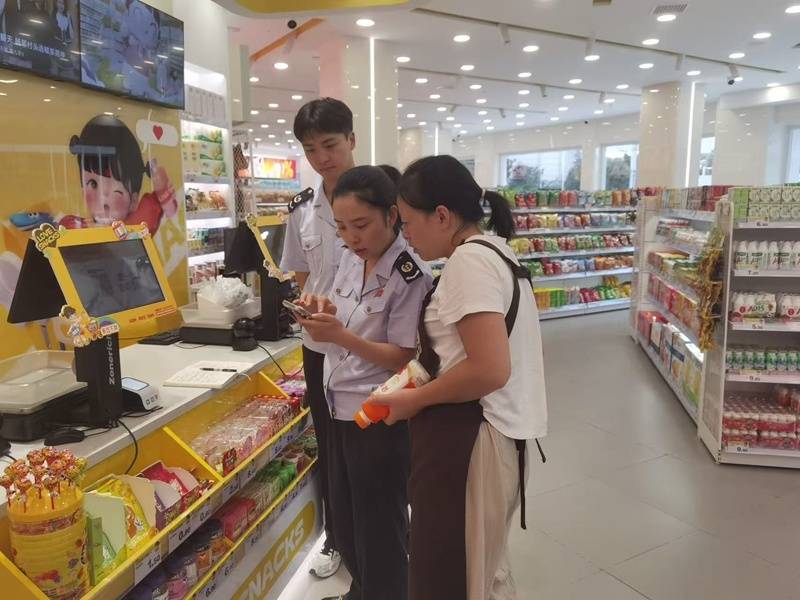
Core Viewpoint - Individual businesses play a crucial role in stabilizing growth, promoting employment, and improving livelihoods in the market economy [1] Group 1: Tax Compliance and Support - The National Taxation Bureau of Weng'an County has focused on enhancing tax compliance among individual businesses by conducting outreach and research with over 30 local businesses [1][3] - Tax officials are collecting detailed information on individual businesses, including names, addresses, and main projects, to better understand their operational status and policy benefits [3] - A targeted tax policy communication effort is being made, emphasizing small-scale taxpayer VAT preferential policies and invoicing guidelines to improve tax compliance awareness [3][5] Group 2: Financial Guidance and Risk Mitigation - Tax officials are providing on-site guidance to business owners on proper bookkeeping practices to address the common issue of weak financial accounting among individual businesses [3] - Business owners have expressed appreciation for the clarity of tax explanations, recognizing the importance of legal bookkeeping to mitigate tax risks and ensure long-term business stability [5] - The Weng'an County Taxation Bureau plans to continuously optimize services for individual businesses, updating operational records and conducting regular policy follow-ups to provide tailored support [5]
罗永浩终止争执 质疑西贝预制菜税务合规引热议
Sou Hu Cai Jing· 2025-09-17 06:40
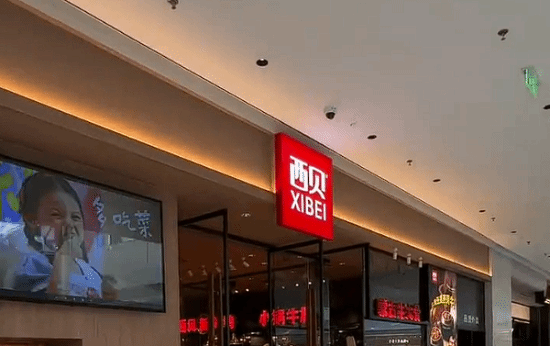
2025-09-17 14:00:21 作者:狼叫兽 有专家进一步说明,若餐厅自行生产或加工食品,无论是现场烹饪还是提前预制,只要最终在店内完成 制备并提供给顾客,就不改变其餐饮服务性质。因此,在堂食场景下使用预制食材并不影响按6%税率 计税的合法性。 上海财经大学一位研究员表示,从目前所披露的信息来看,尚无证据表明相关企业存在利用预制菜进行 税务规避的行为。只有在企业大量采购成品预制菜,未经加工直接出售,并将其混同为自制品进行申报 的情况下,才可能涉及税负差异问题。若未发生此类情形,则其税务处理方式符合现行政策规定。 他在文中指出,此次事件中对方在事实和立场上均存在明显问题,诸多情况已充分暴露,舆论也呈现压 倒性倾向。即便如此,仍坚持声称"生意宁可不做",这种缺乏现实考量的态度令人担忧。他强调,这种 固执可能对企业和员工造成严重后果,正是出于对此的顾虑,才决定不再继续争论。 同时,他也提出疑问:西贝在经营过程中使用预制类食材,如腌制冷冻羊肉串、预加工牛肉饼等,却以 传统餐饮服务名义开具税率为6%的增值税发票,这一做法是否符合税收规定?该问题随即引发广泛讨 论,相关动态转发量迅速突破15万次,进一步推动公众对 ...
武汉硚口税务:“321”税务合规举措护航高新制造企业“八连A”
Sou Hu Cai Jing· 2025-09-17 00:57
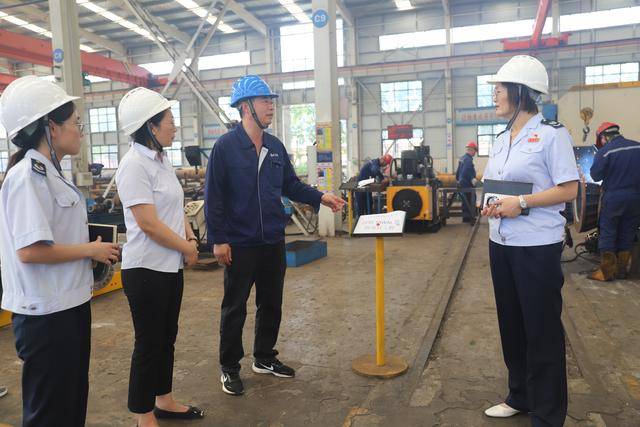
Core Viewpoint - Wuhan Maixin Automotive Mould Company is a national high-tech enterprise focusing on the development and manufacturing of large precision body molds and automotive parts, facing challenges in tax management and compliance risks due to changing tax policies [1] Group 1: Tax Compliance Measures - The company adheres to the "321" compliance management measures and has maintained an A-level tax credit rating for eight consecutive years [1] - Maixin focuses on enhancing tax declaration quality by following three principles: timely declaration and payment, ensuring the authenticity of declaration data, and maintaining compliance in operations [2] - The company has established a comprehensive tax declaration system covering all tax types, with internal supervision to ensure timely submissions [2] Group 2: Daily Tax Management - Maixin emphasizes invoice management and financial account management as key aspects of daily tax management [3] - The company has implemented a full-process invoice management system, ensuring that invoices are issued and received based on real business activities [3] - Maixin pays close attention to compliance with tax policies related to R&D innovation, ensuring accurate documentation for tax incentives [3] Group 3: Compliance Culture - The company promotes a compliance culture by involving all employees in tax credit protection and conducting regular training sessions [4] - Maixin integrates tax compliance concepts into daily operations and performance evaluations, fostering a culture of compliance [4] - The sustained A-level tax credit rating has resulted in tangible benefits, including tax reductions and access to credit loans [4] Group 4: Future Outlook - The company believes that long-term adherence to financial and tax compliance is crucial for gaining trust, seizing opportunities, and achieving sustainable development [5]
甘肃庆阳石化:从老区窑洞到城市型精品炼厂
Sou Hu Cai Jing· 2025-09-10 15:26
Core Viewpoint - The article highlights the exemplary tax compliance practices of Qingyang Petrochemical, a subsidiary of China National Petroleum Corporation, showcasing its transformation from a traditional enterprise to a modern, compliant, and environmentally responsible refinery [1][2][4]. Group 1: Tax Compliance and Value Creation - Qingyang Petrochemical has established "integrity in tax payment" as a fundamental principle, ensuring accurate tax calculations, timely declarations, and full payments, achieving an A-level credit rating for tax payments for several consecutive years [2] - From 2022 to 2024, the company has paid over 22 billion yuan in various taxes and fees, benefiting from tax incentives totaling over 160 million yuan [2] - The company has implemented a robust tax internal control system since 2006, including a dedicated tax management team to conduct regular tax risk assessments [2] Group 2: Chain Compliance and Ecological Co-construction - Qingyang Petrochemical has introduced the concept of "chain compliance," establishing a tax credit evaluation system for suppliers, making tax compliance a key criterion for supplier admission [3] - The company actively engages with tax authorities to provide tax compliance guidance to local SMEs, aiming to foster a healthy industry environment [3] - Regular tax training sessions are conducted for suppliers to help them manage invoices and prevent tax evasion risks [3] Group 3: Green Transformation and Environmental Responsibility - The company has paid environmental taxes of 41.98 million yuan in 2022, 49.20 million yuan in 2023, and 49.09 million yuan in 2024, receiving local financial rewards for its excellent environmental performance [4] - Qingyang Petrochemical is investing billions in upgrading environmental facilities to ensure compliance with pollution discharge standards [4] - The company is advancing clean energy projects, including a hydrogen purification project expected to produce 1,600 tons of gray hydrogen annually, meeting local market demands [5]

“钢铁脊梁”背后的合规密码——鼎力杆塔的税务赋能之路
Sou Hu Cai Jing· 2025-08-28 11:12
Core Viewpoint - The company, Dingli Tower, emphasizes the importance of tax compliance as a key factor for sustainable growth and market expansion, showcasing its successful integration of tax management into its operational framework [3][5][6]. Group 1: Tax Compliance and Management - Dingli Tower has maintained A-level taxpayer status for nine consecutive years, with a total tax payment of 62 million yuan from 2020 to 2024, demonstrating that tax compliance is the best business card for enterprises [3]. - The company has established a comprehensive tax management manual, which is 80 pages long, detailing clear guidelines for each process from contract approval to invoice management [3]. - In 2023, Dingli Tower benefited from a tax reduction of 15.76 million yuan through the precise application of R&D expense deductions, which were fully reinvested into key technology development for ultra-high voltage towers, resulting in three new invention patents [3][5]. Group 2: Government Support and Services - The local tax authority provides customized services to assist Dingli Tower in navigating complex tax issues related to cross-border projects, such as the Saudi Arabia transmission project with ZTE Communications [5]. - A specialized service team from the tax department was formed to guide the company through the intricacies of cross-border tax agreements and export tax refunds, ensuring timely project delivery [5]. - The West Ping County Tax Bureau has established a "one enterprise, one policy" service file for Dingli Tower, offering comprehensive support throughout the tax compliance process, including policy updates and risk alerts [5]. Group 3: Business Growth and Market Expansion - Dingli Tower's adherence to tax compliance has become a valuable asset, enhancing its credibility and facilitating market access, particularly in bidding for major projects within the State Grid [5]. - The company has won 14 State Grid projects in the past three years, with sales revenue increasing from 580 million yuan in 2020 to 1 billion yuan in 2024, reflecting an average annual growth rate of 11.5% [5]. - The integration of tax compliance into corporate culture has led to a performance evaluation system that includes legal tax payment as a criterion, reinforcing the message that compliance is essential for high-quality development [6].
九洲集团补缴税款1282.97万元 预计影响2025年净利润
Xin Lang Cai Jing· 2025-08-26 15:35
Group 1 - The core point of the announcement is that Jiuzhou Group needs to pay back taxes totaling 12.83 million yuan, which includes corporate income tax of 9.503 million yuan and late payment penalties of 3.327 million yuan [1] - The company has completed the payment of the aforementioned amounts as of the announcement date, and there are no administrative penalties involved [1] - The tax payment will be recorded in the 2025 financial results, expected to impact the net profit attributable to shareholders by approximately 12.83 million yuan [1] Group 2 - The management of Jiuzhou Group is taking this matter seriously and will enhance tax management practices, including training and awareness initiatives [1] - The company emphasizes that this tax payment issue does not constitute a significant prior accounting error and will not require restatement of previous financial data [1]
