
碳达峰

Search documents
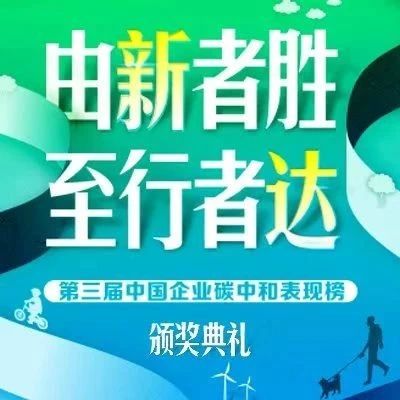
第三届中国企业碳中和表现榜颁奖典礼即将精彩呈现
第一财经· 2025-05-30 09:13
Core Viewpoint - The article emphasizes that green innovation is reshaping the industrial landscape, highlighting the importance of innovation-driven transformation for companies to take the initiative in the new global climate governance framework [1] Group 1: Green Innovation and Industry Transformation - Over the past three years, Chinese companies have made breakthroughs in technology research and model innovation, accelerating the clean energy revolution and achieving industrialization of negative carbon technologies [1] - The restructuring of zero-carbon supply chains is reshaping the business ecosystem, laying the foundation for a sustainable future for the planet [1] Group 2: Upcoming Events and Initiatives - The third China Enterprise Carbon Neutrality Performance List will be announced on June 6, 2025, organized by Yicai Media, in collaboration with Shanghai Jiao Tong University Carbon Neutral Development Research Institute and Shanghai Environment and Energy Exchange [1] - The event will be held in conjunction with the "Carbon Road 3060" forum, aiming to discover and promote companies that have made outstanding contributions to carbon neutrality and high-quality development [1] - The theme "Winning by Newcomers, Achieving by Practitioners" aims to encourage more companies to actively participate in carbon reduction and sustainable development practices, promoting the carbon peak and carbon neutrality process [1]

复洁环保: 关于上海证券交易所对公司2024年年度报告的信息披露监管问询函的回复公告
Zheng Quan Zhi Xing· 2025-05-29 11:14
Core Viewpoint - The company has received an inquiry letter from the Shanghai Stock Exchange regarding its 2024 annual report, highlighting significant declines in revenue and the need for detailed explanations on various operational aspects [1]. Group 1: Business Performance - The company's revenue from high-end solid-liquid separation equipment was 117 million yuan, accounting for 62.70% of total revenue, which represents a year-on-year decline of 67.08% [1]. - Revenue from operational services and waste gas purification technology equipment was 12.72 million yuan, showing a year-on-year growth of 44.49% [1]. - The revenue contribution in the fourth quarter of 2024 was 28.18%, down from 39.14% in the same period last year [1]. Group 2: Client and Revenue Details - The company provided detailed information on its top five clients, including project names, sales amounts, and historical cooperation status, indicating significant changes in client relationships [2]. - The total revenue from the top five clients amounted to 115.17 million yuan, with varying contributions from each client [3]. - The company highlighted that its spare parts and maintenance services are primarily driven by past high-end solid-liquid separation equipment projects, leading to a mismatch in revenue trends compared to other business segments [5][6]. Group 3: Revenue Recognition and Accounting Policies - The company confirmed that its revenue recognition policies comply with relevant accounting standards, with income recognized upon completion of service obligations or delivery of goods [9][19]. - The average revenue recognition cycle for spare parts and maintenance services is predominantly within one year, accounting for 99.65% of projects [18]. - The company has not identified any significant discrepancies in the timing of revenue recognition over the past two years, indicating accurate income reporting [19]. Group 4: Market and Competitive Analysis - The company’s business model includes selling technical equipment, providing operational services, and offering customized energy-saving solutions, which are affected by market demand and competition [19]. - The significant decline in 2024 performance is attributed to macroeconomic fluctuations, industry downturns, and financial pressures on clients [19].

复洁环保: 天健会计师事务所(特殊普通合伙)关于上海复洁科技股份有限公司2024年年度报告的信息披露监管问询函的专项说明
Zheng Quan Zhi Xing· 2025-05-29 11:07
Operating Performance - The company reported a significant decline in revenue, down 67.56%, with a net profit attributable to shareholders of -0.50 billion yuan, compared to 1.00 billion yuan in the same period last year [2] - The drop in revenue is attributed to the financial difficulties faced by major clients and delays in project bidding and construction in key regions [2] - Revenue from high-end solid-liquid separation equipment was 1.17 billion yuan, accounting for 62.70% of total revenue, a year-on-year decrease of 67.08% [2] - Revenue from operational services and waste gas purification technology equipment fell by 93.99% and 90.61%, respectively, with spare parts maintenance and other business generating 39.14 million yuan [2] Gross Margin - The gross margin for the company has been impacted by the decline in revenue across its primary business segments, particularly in high-end solid-liquid separation equipment [2] Accounts Receivable and Contract Assets - The company is required to provide detailed information regarding its top five clients, including project details, sales amounts, and historical cooperation status, especially for clients with significant changes [3] Goodwill Impairment - The company has not reported any specific goodwill impairment in the current financial disclosures, but the significant drop in revenue may raise concerns regarding asset valuations [2] Period Expenses - The company is expected to clarify its period expenses in relation to the decline in revenue and how these expenses are managed in light of the current financial performance [2] Procurement and Suppliers - The company’s procurement strategy and supplier relationships are crucial, especially given the decline in revenue and the need for efficient supply chain management to support ongoing projects [2] Inquiry Letter Special Explanation - The company received an inquiry letter from the Shanghai Stock Exchange regarding its financial matters, prompting a thorough review of its financial disclosures and performance metrics [1]
蜀道装备(300540) - 投资者活动记录表(2025年05月29日)
2025-05-29 10:28
Group 1: Company Overview - The company introduced its development history, competitive advantages, and the layout of its four major business segments [1] - The strategic transformation focuses on "focusing on transformation, innovation-driven, internal growth and external mergers, and collaborative development" [1] Group 2: Business Strategy - The company aims to leverage the advantages of the Shudao Group's resources and technological innovation to implement national strategies such as "carbon peak and carbon neutrality," "transportation power," and "Belt and Road Initiative" [1] - The four main business segments include deep cold technology equipment manufacturing, gas investment operations, clean energy investment operations, and transportation service equipment manufacturing [1] Group 3: International Operations - The company's overseas business is primarily concentrated in key regions along the "Belt and Road," including Southeast Asia, Central Asia, and Central Africa [2] - The company is actively expanding its market in these regions to provide high-quality products and services [2] Group 4: Technology Development - Current R&D focuses on improving existing technology solutions and promoting the transformation of LNG equipment and air separation devices towards "large-scale, intelligent, service-oriented, and international" [2] - The company is also enhancing its capabilities in developing specialized high-purity gases for high-end manufacturing [2] Group 5: Hydrogen Power Development - The company has initiated collaborations with leading enterprises in the hydrogen energy locomotive sector and is developing a research plan for liquid hydrogen storage and related devices [2] Group 6: Financial Performance - As of the end of 2024, the company signed new contracts worth approximately 1.071 billion yuan in the deep cold technology equipment manufacturing sector, primarily for natural gas liquefaction systems and large air separation devices [2] Group 7: Market Value Management - The company emphasizes market value management and will take proactive measures to enhance it, ensuring timely information disclosure regarding significant matters [2]

中国前财政部副部长朱光耀预计中国将在2030年之前实现碳达峰
news flash· 2025-05-29 05:07
Core Viewpoint - China may achieve its carbon peak target years ahead of the 2030 deadline set by itself, as indicated by former Vice Minister of Finance Zhu Guangyao [1] Group 1: Carbon Emissions - China's carbon emissions have been continuously decreasing, with a reported decline of 1% over the past 12 months [1] - In the first quarter of this year, carbon emissions dropped by 1.6% [1] Group 2: Clean Energy Investment - China has been a global leader in clean energy investment for many years [1]
复旦碳价指数:2025年6月GEC价格指数全线上涨
Zhong Guo Chan Ye Jing Ji Xin Xi Wang· 2025-05-29 01:56
Group 1: Carbon Emission Allowance (CEA) and Certified Emission Reduction (CCER) Price Indices - The expected buy price for CEA in June 2025 is 68.36 CNY/ton, with a sell price of 74.78 CNY/ton, resulting in a midpoint price of 71.57 CNY/ton. The buy price index decreased by 12.77%, and the sell price index decreased by 9.54% [2] - The expected buy price for CCER in June 2025 is 82.84 CNY/ton, with a sell price of 92.74 CNY/ton, resulting in a midpoint price of 87.79 CNY/ton. The buy price index decreased by 3.37%, and the sell price index decreased by 6.18% [2] Group 2: Green Electricity Certificate (GEC) Price Indices - The price indices for GECs for 2024 and 2025 show an overall increase. The expected price for centralized projects in 2025 is 6.85 CNY/unit, with a price index of 124.55, while for distributed projects, it is 6.40 CNY/unit with a price index of 129.86 [3] - The price for biomass power generation GEC in 2025 is expected to be 6.16 CNY/unit, with a price index of 119.43. The price increases for 2025 production GECs are significantly higher than those for 2024 production [3] Group 3: Market Activity and Regulatory Developments - In May, the average closing price for CEA was 70.30 CNY/ton, down approximately 13% from April's average of 80.87 CNY/ton. The trading volume increased significantly, with an average daily transaction volume of 57.97 million tons, doubling from April [5] - The draft of the Ecological Environment Law, which includes provisions for establishing a carbon market trading system, is currently under review. This law aims to strengthen the control of greenhouse gas emissions and support the operation of carbon markets [6][7] Group 4: Global Carbon Market Trends - The global carbon market showed mixed trends in May, with varying transaction volumes across different markets. The EU carbon market saw a 24.11% decrease in average daily transaction volume, while the UK market increased by 5.03% [8] - Carbon prices in major global markets generally increased, with the EU market rising by 9.44%, the UK market by 14.43%, and the Korean market by 4.71% [8]
上饶银行发布2025年第一季度碳减排贷款信息披露
Jin Tou Wang· 2025-05-28 03:11
Core Viewpoint - Shangrao Bank is actively participating in carbon reduction initiatives by providing loans to eligible carbon reduction projects, supporting China's goals for carbon peak and carbon neutrality [1][2] Group 1: Carbon Reduction Loans - In the first quarter of 2025, Shangrao Bank issued carbon reduction loans totaling 100 million yuan to three projects, with a weighted average interest rate of 3.70% [2] - The annual carbon reduction achieved through these loans is approximately 36,688.76 tons of CO2 equivalent [2] - Since the inception of the carbon reduction support tool, Shangrao Bank has issued loans amounting to approximately 2.09 billion yuan to 26 projects, resulting in an annual carbon reduction of about 450,182.89 tons of CO2 equivalent [2] Group 2: Project Highlights - The most significant projects contributing to carbon reduction include the rooftop photovoltaic project in the Shangrao High-speed Rail Economic Experimental Zone, a 34MW distributed photovoltaic power station in Jinxian County, and a 4.5MW distributed rooftop photovoltaic project by Jiangxi Xinboli Technology Co., Ltd [2] - The carbon reduction loans are specifically allocated for clean energy, energy conservation, environmental protection, and carbon reduction technologies [2] Group 3: Future Commitment - Shangrao Bank will continue to play an active role in supporting green and low-carbon development, adhering to the regulations set by the People's Bank of China, and will regularly disclose information related to carbon reduction loans [2]
临走前,马斯克给特朗普留下几句忠告:中国的实力深不可测!
Sou Hu Cai Jing· 2025-05-27 11:31
Group 1 - Musk emphasizes China's impressive talent pool and capabilities, particularly in the AI sector, predicting that by the end of the year, China's power generation will reach 2.5 times that of the US, potentially increasing to 3 to 4 times [1] - The Chinese power industry has diversified from coal to include hydropower, wind, solar, natural gas, and other renewable sources, aiming to become a world-class green low-carbon energy supplier [3] - By 2035, it is projected that clean energy will account for 95% of installed capacity and over 70% of power generation in China, driven by carbon peak and carbon neutrality goals [3] Group 2 - Musk's comments are seen as a challenge to the prevailing narrative in the US, particularly against Trump's administration, which has been engaged in a trade war with China [4] - The US government has issued warnings against the use of Huawei's AI chips, indicating a strategy to hinder China's AI development and maintain technological dominance [6] - Trump's administration has shown a pattern of aggressive trade policies, which have ultimately resulted in negative consequences for American citizens, highlighting the challenges of decoupling from China [8]

2025煤炭行情分析
Sou Hu Cai Jing· 2025-05-27 08:50
Industry Overview - In 2024, China's coal production remains stable, with a significant increase in coal imports, leading to overall market supply growth. However, downstream demand from the steel and construction sectors is insufficient, causing coal prices to fluctuate and overall industry profitability to decline [2][3][4] - The coal industry is characterized by a high reliance on coal, which accounts for approximately 55.3% of China's primary energy consumption, significantly higher than the global average of 26.5% [3] - The distribution of coal resources in China shows a concentration in the northern regions, with the Shanxi, Shaanxi, and Inner Mongolia areas accounting for 81.67% of total coal production in 2024, an increase of 0.40 percentage points year-on-year [3] Supply and Demand Dynamics - In 2024, the total coal consumption in China is approximately 4.775 billion tons, a year-on-year increase of 3.07%. The main demand comes from the thermal power, steel, and construction industries [6] - The coal price performance in 2024 shows a downward trend due to oversupply and weak demand from the steel and construction sectors. By the end of 2024, the prices for various coal types have decreased significantly compared to the end of 2023 [7][8] Financial Performance - The overall profitability of coal enterprises in 2024 has declined, with major coal companies reporting a total profit of 604.64 billion yuan, a decrease of 22.20% year-on-year [11] Policy and Regulatory Environment - The National Energy Administration has issued guidelines to ensure the orderly release of new coal production capacity and to enhance coal supply stability. By 2027, a coal capacity reserve system is expected to be established [12] - The coal industry is encouraged to transition towards digitalization and intelligent development, with new coal mines required to meet intelligent standards [13] Challenges and Future Outlook - Non-operational burdens, such as personnel costs and inefficient assets, pose challenges to the sustainable development of coal enterprises, particularly during price downturns [14] - Environmental protection and safety production pressures are increasing, with stricter regulations being enforced to ensure safety in coal mining operations [15][16] - Despite the long-term pressure on coal consumption due to carbon neutrality goals, the coal industry still has significant development potential in China, especially in the context of the ongoing demand for coking coal in steel production [17][19] - The coal industry's competitive landscape is expected to stabilize, with leading companies likely to receive more policy support, enhancing their market share and resilience against economic fluctuations [18][19]
管理创效谱新篇 搬迁升级启新程
Si Chuan Ri Bao· 2025-05-25 22:11
Core Viewpoint - Dazhou Steel has transformed from a loss-making entity to a profitable enterprise under the leadership of Fangda Group, emphasizing employee welfare and innovative management practices [1][2][3][4]. Group 1: Company Background and Transformation - Dazhou Steel, established in 1958, is a major steel manufacturing enterprise in Northeast Sichuan, integrating various processes from coking to steel processing [1]. - After joining Fangda Group in May 2020, Dazhou Steel underwent judicial restructuring and quickly returned to profitability, maintaining industry-leading profit margins per ton of steel [1][2]. - The company has received numerous accolades, including being recognized as one of the "Top 500 Private Enterprises in China's Manufacturing Industry" and "Top 100 Enterprises in Sichuan" [1]. Group 2: Employee Welfare and Recruitment - Dazhou Steel has adhered to the principle of "no reduction in employees, wages, or benefits," resulting in continuous salary increases for employees [2]. - The company implemented various welfare programs, including work meals, medical expense subsidies, and scholarships, enhancing employee morale and confidence in the company's future [2]. - In 2025, Dazhou Steel announced plans to recruit 87 new employees, attracting over 4,000 applicants, indicating its significant role in the local economy [2]. Group 3: Management and Operational Efficiency - Fangda Group established a support team to help Dazhou Steel refine nearly 300 operational regulations, improving efficiency and employee accountability [3]. - The company has adopted a "racehorse" mechanism to enhance productivity across all operations, leading to a substantial reduction in production costs and improved profitability [3]. Group 4: Innovation and Cost Management - Dazhou Steel has encouraged employees to engage in "small improvements" initiatives, resulting in nearly 4,000 projects over five years, which have fostered a culture of innovation [4]. - From 2020 to 2024, the company achieved over 4.5 billion yuan in profits and taxes, bolstered by advancements in research and technology [4][5]. Group 5: Strategic Positioning and Future Plans - The new plant features upgraded production processes and environmental facilities, positioning Dazhou Steel as a green and low-carbon enterprise [6]. - The company is committed to achieving carbon peak and neutrality goals while leveraging regional resources and new technologies to strengthen its market position [6].
