
建筑用钢

Search documents
信达证券:钢铁行业淡季累库有限 板块配置安全边际高
智通财经网· 2026-02-19 09:12
Core Viewpoint - The steel sector is expected to have strong "anti-involution" characteristics and significant profit recovery potential, making it a strategic investment opportunity in the medium to long term, with a "positive" industry rating maintained [1] Market Performance - Last week, the steel sector rose by 1.01%, outperforming the broader market; the special steel sector increased by 1.80%, while long products fell by 3.15% and flat products rose by 1.24% [2] - Iron ore sector increased by 4.12%, while steel consumption materials and trade circulation sectors fell by 1.61% and 1.78% respectively [2] Supply Situation - As of February 13, the capacity utilization rate of blast furnaces among sample steel companies was 86.4%, up by 0.72 percentage points week-on-week [2] - Electric furnace capacity utilization was 21.0%, down by 27.11 percentage points week-on-week [2] - The production of five major steel products was 6.96 million tons, a decrease of 248,600 tons or 3.45% week-on-week [2] Demand Situation - As of February 13, the consumption of five major steel products was 6.891 million tons, down by 715,800 tons or 9.41% week-on-week [2] - The transaction volume of construction steel among mainstream traders was 35,000 tons, down by 48.24% week-on-week [2] Inventory Situation - As of February 13, social inventory of five major steel products was 10.267 million tons, up by 9.17% week-on-week [3] - Factory inventory was 4.161 million tons, also up by 4.71% week-on-week [3] Price and Profit Situation - As of February 13, the comprehensive index for ordinary steel was 3,409.5 yuan/ton, down by 0.14% week-on-week [3] - The comprehensive index for special steel was 6,579.7 yuan/ton, down by 0.03% week-on-week [3] - The profit for rebar was 80 yuan/ton, up by 23.08% week-on-week [3] Raw Material Situation - As of February 14, the spot price index for Australian powder ore (62% Fe) was 754 yuan/ton, down by 1.44% week-on-week [4] - The price for primary metallurgical coke was 1,770 yuan/ton, unchanged week-on-week [4] Overall Assessment - The current inventory pressure for the five major steel products is relatively limited, with overall inventory at a historically low level and accumulation speed slower than previous years [5] - The profit margins for ordinary steel are favorable, indicating significant improvement potential for ordinary steel companies, which may lead to value recovery in the steel sector [5]

钢铁ETF(515210)涨超1.2%,行业盈利水平或得到提升
Mei Ri Jing Ji Xin Wen· 2026-01-19 06:34
Group 1 - The steel ETF (515210) rose over 1.2%, indicating potential improvement in industry profitability [1] - Bohai Securities suggests that with the gradual implementation of growth policies in the steel industry, the competitive landscape is expected to improve, leading to enhanced profitability [1] - Demand in sectors such as shipbuilding steel and construction steel is anticipated to increase, with "equipment upgrades" and "low-carbon transformation" becoming key development trends for the industry [1] Group 2 - On the supply side, due to acceptable profit levels, short-term production is not expected to shrink significantly [1] - Recent increases in raw material prices, combined with a recovering macroeconomic environment, are expected to support steel prices in the short term, although fundamental pressures on prices should be monitored [1] - The steel ETF (515210) tracks the CSI Steel Index (930606), which selects listed companies from the Shanghai and Shenzhen markets across various sub-sectors of the steel industry to reflect the overall performance of steel industry securities [1]
钢铁ETF(515210)近10日净流入超6亿元,行业政策预期支撑行情
Sou Hu Cai Jing· 2026-01-08 02:09
Group 1 - The steel ETF (515210) has seen a net inflow of over 600 million yuan in the past 10 days, supported by industry policy expectations [1] - Bohai Securities indicates that as the stable growth policies for the steel industry are gradually implemented, the competitive landscape is expected to improve, potentially enhancing future industry profitability [1] - Demand in sectors such as shipbuilding steel and construction steel is anticipated to increase, with "equipment upgrades" and "low-carbon transformation" expected to become development hotspots for the industry [1] Group 2 - The China Federation of Logistics and Purchasing's survey indicates that the PMI index for the steel industry is projected to be 46.3% by December 2025, reflecting a month-on-month decrease of 1.7 percentage points, suggesting continued tightening in industry operations [1] - The steel ETF (515210) tracks the CSI Steel Index (930606), which selects listed companies in the steel industry from the Shanghai and Shenzhen markets to reflect the overall performance of these securities [1] - The index constituents cover various sub-sectors, including ordinary steel and special steel, exhibiting significant cyclical characteristics [1]
山西晋城:蹚出发展新路 谱写创新篇章
Ren Min Ri Bao· 2025-12-23 22:26
Core Viewpoint - The city of Jincheng in Shanxi Province is undergoing a significant transformation from a resource-based economy to a high-quality, innovative, and sustainable development model, focusing on technology, tourism, and ecological preservation [1][2][7]. Group 1: Economic Transformation - Jincheng's transformation is driven by technological innovation, aiming for high-end, intelligent, and green industrial upgrades, with a focus on creating a 100 billion yuan optical-mechanical-electrical industry cluster, which has seen an average annual growth of 42% over the past four years [2]. - The city is also developing a comprehensive coalbed methane industry chain, maintaining the highest production and growth in Shanxi Province for five consecutive years, with a gas storage capacity of 250 million cubic meters [2][3]. Group 2: Tourism and Cultural Development - Jincheng is positioning its cultural and tourism industry as a pillar of the economy, achieving significant growth in tourist numbers and revenue, with 15.97 million visitors and a ticket revenue of 261 million yuan in the first three quarters of 2025, marking increases of 34.17% and 60.90% respectively [4][5]. - The city is developing a comprehensive tourism and wellness space, aiming to become a nationally recognized destination, with plans for a 396 square kilometer ecological circle and various tourism integration projects [4]. Group 3: Innovation and Reform - The city has been recognized for its excellent business environment, implementing reforms that enhance project execution speed and improve service quality, with a focus on innovation-driven strategies that integrate research, industry, and finance [7][8]. - Jincheng has increased its investment in scientific research and development, with 211 high-tech enterprises established, supporting the transition to a more innovative economy [7]. Group 4: Rural Revitalization - Jincheng is advancing rural revitalization through over 880 key projects with investments exceeding 100 billion yuan, aiming to create over 200 model villages by 2027 [9][10]. - The city has improved rural living conditions significantly, with 79% of villages rated three stars or above, and high coverage rates for sanitation and infrastructure [10]. Group 5: Ecological Development - Jincheng is committed to ecological protection, achieving a record 259 days of good air quality in 2024 and implementing various pollution control and ecological restoration projects [11][12]. - The city has achieved a forest coverage rate of 40.3% and is actively pursuing low-carbon development goals, with a 3.8% reduction in energy consumption per unit of GDP in 2024 [12].
钢铁价格或筑底抬升,继续看多钢铁板块 | 投研报告
Zhong Guo Neng Yuan Wang· 2025-11-10 02:24
Core Viewpoint - The steel sector has shown a positive performance with a 4.57% increase this week, outperforming the broader market, driven by various sub-sectors including special steel and iron ore [1][2]. Market Performance - The steel sector increased by 4.57%, with special steel up 3.89%, long products up 1.39%, and flat products up 4.20%. The iron ore sector rose by 11.38%, while steel consumables and trade circulation sectors increased by 4.99% and 4.38%, respectively [1][2]. Supply Situation - As of November 7, the blast furnace capacity utilization rate for sample steel companies was 87.8%, down 0.80 percentage points week-on-week. Electric furnace capacity utilization was at 50.9%, down 2.12 percentage points week-on-week. The production of five major steel products was 7.491 million tons, a decrease of 18.53 thousand tons or 2.41% week-on-week [2][3]. Demand Situation - The consumption of five major steel products was 8.669 million tons, down 49.47 thousand tons or 5.40% week-on-week. The transaction volume of construction steel by mainstream traders was 96 thousand tons, a decrease of 0.79 thousand tons or 7.60% week-on-week [2][3]. Inventory Situation - As of November 7, the social inventory of five major steel products was 10.75 million tons, down 2.10 thousand tons or 0.19% week-on-week, but up 31.11% year-on-year. Factory inventory was 4.286 million tons, down 8.09 thousand tons or 1.85% week-on-week, and up 7.45% year-on-year [3][6]. Steel Prices & Profits - The comprehensive index for ordinary steel was 3,419.8 yuan/ton, down 37.72 yuan/ton or 1.09% week-on-week, and down 8.28% year-on-year. The comprehensive index for special steel was 6,592.5 yuan/ton, down 7.02 yuan/ton or 0.11% week-on-week, and down 3.62% year-on-year. The profit for rebar from blast furnaces was -39 yuan/ton, an increase of 18.0 yuan/ton or 31.58% week-on-week [3][4]. Raw Material Situation - As of November 7, the spot price index for Australian powder ore (62% Fe) was 776 yuan/ton, down 30.0 yuan/ton or 3.72% week-on-week. The price for main coking coal was 1,800 yuan/ton, up 60.0 yuan/ton week-on-week. The price for first-grade metallurgical coke was 1,880 yuan/ton, up 55.0 yuan/ton week-on-week [4][5]. Investment Recommendations - Despite challenges in the steel industry, including supply-demand imbalances, the implementation of "stabilization growth" policies is expected to support steel demand. The industry is anticipated to maintain a stable supply-demand situation, with opportunities for structural investments in high-margin special steel companies and leading steel enterprises with strong cost control [7].
钢铁反内卷:十年供给侧,行业新征程:\内卷\下的钢铁,总量与结构的失衡
Huachuang Securities· 2025-11-06 09:06
Investment Rating - The report maintains a "Recommendation" rating for the steel industry [4]. Core Viewpoints - The steel industry is currently facing an imbalance in both total supply and structural demand, leading to oversupply and price declines. The demand for construction steel has rapidly decreased since the second half of 2021, while supply has not adjusted accordingly, resulting in a negative cycle of oversupply and price drops [2][14]. - A "de-involution" in the steel industry is deemed necessary to address the structural imbalance and enhance competition. The report suggests that past supply-side reforms have positively impacted the industry, and similar measures could benefit the current situation [2][51]. Summary by Sections 1. Imbalance in Total and Structural Supply - Since the second half of 2021, the demand for construction steel has declined sharply due to negative growth in new housing starts, while supply has not decreased proportionately, leading to a clear oversupply situation [14][22]. - The structural issue arises as the demand for construction steel weakens, while the manufacturing sector shows resilience, causing a shift in supply from construction to manufacturing steel, exacerbating the competition in the manufacturing sector [2][25]. - The result has been a long-term decline in steel prices, with the CISA steel price index dropping by 47.82% from its peak in 2021 [33]. 2. Necessity of "De-involution" in the Steel Industry - The macroeconomic environment is under pressure, with the PPI in a downward trend for 36 consecutive months, leading to a significant drop in industrial profits [42][51]. - The report highlights that the previous supply-side reforms during the "13th Five-Year Plan" and "14th Five-Year Plan" brought about positive changes, suggesting that a new round of "de-involution" could similarly benefit the industry [51][52]. 3. Investment Recommendations - The report indicates that leading steel companies are likely to benefit in the long term from the "de-involution" policies, which are expected to optimize the supply structure and support advanced enterprises [8][28]. - The report recommends focusing on high-quality leading companies such as Hualing Steel, Nanjing Steel, Baosteel, Shougang, Hebei Steel, and Xinxing Ductile Iron Pipes, as they are expected to experience profit growth and improved operational conditions [8][28].
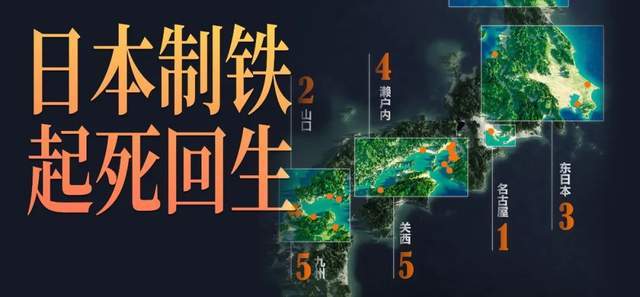
中国四大巨头,加起来比不过日本制铁,凭什么?|地球知识局
Sou Hu Cai Jing· 2025-08-26 13:49
Group 1 - In 2024, China's crude steel production reached 1.005 billion tons, accounting for 53.38% of global output, marking five consecutive years as a billion-ton steel powerhouse [2] - Among the top 10 steel producers, six are Chinese companies, highlighting China's dominance in steel production despite efforts to curb excess capacity [2] - The most profitable four listed steel companies in China (Baowu, CITIC Special Steel, Nanjing Steel, and Huazhong Steel) combined net profits in 2024 were still lower than Japan's Nippon Steel, which indicates a disparity in profitability despite higher production [2][5] Group 2 - Japan's Nippon Steel faced overcapacity issues in the late 1990s and significant losses in 2018, but successfully turned around its fortunes by 2020, demonstrating effective management strategies [5][20] - Key strategies employed by Japanese steel companies included securing low-cost iron ore supplies, focusing on high-value steel products, and government support for industry upgrades [14][18] - In 2020, Japan's crude steel production was 83.19 million tons, with special steel accounting for approximately 20.96% of total production, compared to China's 12.31% for special steel in the same year [30] Group 3 - China's steel industry is heavily reliant on imported iron ore, with 1.237 billion tons imported in 2024 at an average price of $106.9 per ton, making it vulnerable to international price fluctuations [37] - The Chinese steel sector is undergoing supply-side reforms aimed at transitioning to higher-value production, with notable advancements in technology and product quality [38] - The establishment of projects like the Simandou iron ore project in Guinea aims to enhance China's self-sufficiency in high-grade iron ore, potentially increasing domestic supply by 3-5% [37][38]

三钢闽光股价下跌2.21% 股东人数达40700户
Jin Rong Jie· 2025-08-22 19:09
Group 1 - The stock price of Sangang Minguang closed at 4.42 yuan on August 22, 2025, down by 0.10 yuan, representing a decline of 2.21% from the previous trading day [1] - The trading volume on that day was 370,643 hands, with a total transaction amount of 164 million yuan [1] - Sangang Minguang is a significant steel production enterprise in Fujian Province, primarily engaged in the production and sales of steel products, including construction steel and industrial steel [1] Group 2 - As of August 20, 2025, the number of shareholders for Sangang Minguang was reported to be 40,700 [1] - On August 22, there was a net outflow of 34.91 million yuan in main funds, with a total net outflow of 35.64 million yuan over the past five days [1]

八一钢铁股价上涨3.14% 盘中振幅近7%
Jin Rong Jie· 2025-08-20 10:19
Core Viewpoint - Ba Yi Steel has shown a significant increase in stock price and trading volume, indicating positive market sentiment and potential investment interest in the company [1] Group 1: Stock Performance - As of August 20, 2025, Ba Yi Steel's stock closed at 4.60 yuan, up 0.14 yuan, representing a 3.14% increase from the previous trading day [1] - The stock reached a high of 4.73 yuan and a low of 4.42 yuan during the trading session, with a total fluctuation of 6.95% [1] - The trading volume for the day was 1.4082 million hands, with a total transaction value of 646 million yuan [1] Group 2: Company Overview - Ba Yi Steel operates in the steel industry, primarily engaged in steel smelting, rolling, processing, and sales [1] - The company is a significant steel producer in the Xinjiang region, offering a variety of products including construction steel and plates [1] - Ba Yi Steel has a total market capitalization of 7.078 billion yuan and a circulating market value of 7.051 billion yuan [1] Group 3: Market Activity - On the morning of August 20, Ba Yi Steel experienced a rapid price surge, with a more than 2% increase within 5 minutes at 9:36 AM, leading to a transaction amount of 66.8547 million yuan [1] - The net inflow of main funds for the day was 22.7722 million yuan, although there was a cumulative net outflow of 92.5362 million yuan over the past five days [1]

三钢闽光股价微跌0.42% 盘中振幅达3.56%
Jin Rong Jie· 2025-08-04 18:17
Group 1 - The core point of the article highlights the stock performance of Sangang Minguang on August 4, with a closing price of 4.75 yuan, a decrease of 0.02 yuan or 0.42% from the previous trading day [1] - The stock opened at 4.71 yuan, reached a high of 4.82 yuan, and a low of 4.65 yuan, indicating a trading range of 3.56% throughout the day [1] - The trading volume was 290,413 hands, with a total transaction amount of 137 million yuan and a turnover rate of 1.20% [1] Group 2 - Sangang Minguang operates in the steel industry, primarily engaged in steel smelting, rolling, and processing, with products including construction steel and industrial steel [1] - The company's production bases are mainly located in Fujian Province [1] - On the morning of August 4, the stock experienced a rapid rebound, with a rise of over 2% within five minutes, peaking at 4.78 yuan and a transaction amount of 21.03 million yuan [1] Group 3 - In terms of capital flow, on August 4, the net outflow of main funds was 26.93 million yuan, accounting for 0.23% of the circulating market value [1] - Over the past five trading days, the cumulative net outflow reached 32.82 million yuan, representing 0.28% of the circulating market value [1]