
数字化智能化转型

Search documents
CM BANK(03968) - 2025 Q4 - Earnings Call Transcript
2026-03-30 02:32
Financial Data and Key Metrics Changes - Net operating income for 2025 was RMB 337.2 billion, an increase of 0.05% year-on-year [6] - Net profit attributable to shareholders was RMB 150.2 billion, up by 1.21% [6] - Return on Average Assets (ROAA) was 1.19%, and Return on Average Equity (ROAE) was 13.44%, down by 0.09 and 1.05 percentage points year-on-year respectively [6] - Net interest income reached RMB 215.6 billion, up by 2.04%, while Net Interest Margin (NIM) was 1.87%, down by 11 basis points year-on-year [6] - Non-interest income was RMB 21.7 billion, a decrease of 3.31% year-on-year [6] Business Line Data and Key Metrics Changes - Retail Finance contributed significantly, with net operating income and pre-tax profit accounting for 56% and 50% of the total respectively [8] - Total loans and advances were RMB 7.26 trillion, up by 5.37%, with general loans at RMB 6.94 trillion, up by 6.57% [7] - Retail loan balance was RMB 3.72 trillion, up by 2.07%, while corporate loan balance was RMB 3.22 trillion, up by 12.29% [18][19] - Wealth Management product balance grew by 12%, and the number of asset allocation clients reached 11.76 million, up by 13.31% [20] Market Data and Key Metrics Changes - Total customer deposits were RMB 9.84 trillion, up by 8.13%, with demand deposits daily average balance accounting for 49.4% [7] - The overseas contributions to total assets grew by 12.88%, with net operating income increasing by 33.78% [22][23] - The number of corporate customers in international business exceeded 100,000, with a volume growth of 12% [23] Company Strategy and Development Direction - The company aims to build a world-class value creation bank and accelerate transformation towards high-quality development [5] - Focus on digital and intelligent banking, with significant investments in AI and technology [10][12] - Emphasis on green finance and sustainable development, with green loans and leasing balances growing by 21% and 23.89% respectively [12] - Plans to enhance international development and support Chinese enterprises going global [30][33] Management's Comments on Operating Environment and Future Outlook - The management acknowledges challenges in the banking sector, including low interest rates and weak demand [30] - Despite external pressures, the company expects to maintain a good operational trend and aims for stable growth in 2026 [31][32] - The focus will be on high-quality development, innovation, and maintaining competitive advantages in various business segments [32][34] Other Important Information - The company has a strong capital position, with Core Tier 1 CAR at 14.16% [9] - Asset quality remains stable, with NPL balance at RMB 68.2 billion, up by RMB 2.6 billion [9][10] - The company has implemented over 800 applications of AI technology, significantly improving operational efficiency [11][48] Q&A Session Questions and Answers Question: What is the strategic vision for China Merchants Bank during the 15th Five-Year Plan? - The Chairman emphasized the need for high-quality development, innovation, and differentiation from peers to respond to market challenges [39][40] Question: How can the bank expect growth in operating income and profit in 2026? - The President noted that while facing challenges, the bank aims for stable growth and will focus on customer base and asset growth to achieve this [58][59] Question: What is the outlook for NIM in 2026? - The CFO indicated that while NIM is expected to decline, the magnitude of the decline will be smaller than in previous years, with improvements in asset pricing contributing to this [68][70]

赤峰黄金(06693) - 赤峰黄金2025年年度报告摘要
2026-03-20 11:27
Chifeng Jilong Gold Mining Co., Ltd. 赤峰吉隆黃金礦業股份有限公司 (於中華人民共和國註冊成立的股份有限公司) (H股股份代號:6693) 海外監管公告 本公告乃根據香港聯合交易所有限公司證券上市規則第13.10B條刊發。 此乃赤峰吉隆黃金礦業股份有限公司(「本公司」)登載於中華人民共和國上海證券交 易所網頁的公告。 香港交易及結算所有限公司及香港聯合交易所有限公司對本公告之內容概不負責,對其準確性 或完整性亦不發表任何聲明,並明確表示,概不對因本公告全部或任何部分內容而產生或因依 賴該等內容而引致之任何損失承擔任何責任。 承董事會命 赤峰吉隆黃金礦業股份有限公司 董事長兼執行董事 王建華 中國北京,2026年3月20日 截至本公告日期,本公司執行董事為王建華先生、高波先生、楊宜方女士、呂曉兆先生及趙強先 生;非執行董事為張旭東先生;以及獨立非執行董事為黃一平博士、胡乃連先生、李厚民博士及 蔣琪博士。 公司代码:600988 公司简称:赤峰黄金 赤峰吉隆黄金矿业股份有限公司 2025 年年度报告摘要 赤峰吉隆黄金矿业股份有限公司 2025 年年度报告摘要 第一节 重要提示 ...
光大银行聘两副行长,均在该行工作多年,将形成一正五副格局
Nan Fang Du Shi Bao· 2026-02-12 03:43
Group 1 - The core announcement is the appointment of Yang Wenhua as Vice President and Chief Compliance Officer, and Wang Yongqi as Vice President of Everbright Bank, effective upon approval from the National Financial Regulatory Administration [2][3] - Yang Wenhua has extensive experience within Everbright Bank, having held various senior positions since joining in 2006, including roles in credit approval, asset protection, and legal compliance [3] - Wang Yongqi also has a long tenure at Everbright Bank, currently serving as the Party Secretary and President of the Beijing Branch, with previous experience at China Construction Bank [3] Group 2 - Following the appointments, Everbright Bank will have a senior management structure of "one president and five vice presidents," enhancing its leadership team [4] - The bank's 2026 work meeting outlined key priorities, including increasing financial support for key sectors, enhancing services for small and medium-sized enterprises, and improving wealth management contributions [5] - Everbright Bank has made significant progress in reducing its number of village banks, with all three of its village banks having exited, indicating a focus on quality over quantity in its financial institutions [6]


多家银行召开经营管理工作会议为2026年工作“划重点”
Zheng Quan Ri Bao· 2026-01-30 22:49
Core Viewpoint - Multiple banks in China are holding meetings to summarize their 2025 operations and plan for 2026, focusing on high-quality development and aligning with national strategies [1][2]. Group 1: Policy Banks - Policy banks are crucial for implementing national development strategies, with the China Export-Import Bank emphasizing political responsibility and enhancing core competitiveness in overseas operations [1]. - State-owned banks are committed to high-quality development, integrating this focus into all operational processes to support national policies and contribute to the "14th Five-Year Plan" [1]. Group 2: Major Commercial Banks - Major banks are prioritizing their core responsibilities, with the Agricultural Bank of China focusing on supporting rural revitalization and urban-rural integration [2]. - The Bank of China aims to enhance global capabilities in product services, marketing, and compliance, while the China Construction Bank is shifting its focus to support modern industrial systems and high-level opening-up [2]. - Banks like ICBC and Agricultural Bank emphasize the integration of investments in both physical and human capital, while the China Construction Bank is committed to sustainable development and regional coordination [2]. Group 3: Joint-Stock Banks - Joint-stock banks are focusing on leveraging their unique advantages to improve operational efficiency, with Everbright Bank aiming for steady revenue growth and enhanced customer value [3]. - Ping An Bank is focusing on seizing strategic opportunities and integrating technology as a core driver for development [3]. - Risk management remains a priority, with banks emphasizing the importance of a robust asset safety framework and the role of technology in risk prevention and management [3].



光大银行高管层迎新!光大科技董事长任该行党委委员
Nan Fang Du Shi Bao· 2026-01-27 04:04
Group 1 - Yang Wenhua has been appointed as a member of the Party Committee of Everbright Bank as of January 2026, and he currently serves as the Chairman and General Manager of Everbright Technology [3][5] - The senior management team of Everbright Bank now includes key figures such as Party Secretary and President Hao Cheng, along with other members like Vice Presidents Qi Ye, Song Bingfang, and Yang Bingbing [4][5] - Yang Wenhua has extensive experience within Everbright Bank, having joined in 2006 and held various senior positions, showcasing his comprehensive management capabilities across different departments [3][5] Group 2 - In the 2026 work meeting, Everbright Bank outlined key priorities, including strengthening the Party's leadership in financial work, enhancing financial support for key sectors, and promoting digital transformation [5] - The bank aims to improve its wealth management, investment banking, and custody business contributions, while also focusing on risk management and compliance to ensure high-quality development [5][6] - Financial results for the first three quarters of the previous year showed a revenue decline of 7.94% to 94.27 billion yuan and a net profit decrease of 3.40% to 37.28 billion yuan, although there was a positive shift in intermediary business income [6]
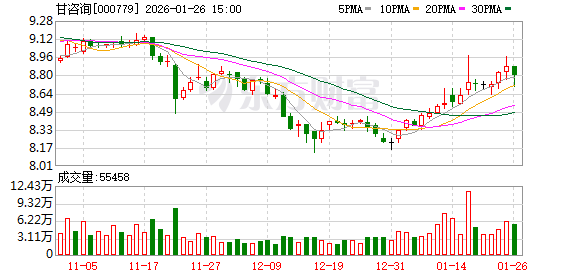
甘咨询:公司将结合自身实际稳妥推进数字化智能化转型相关工作
Zheng Quan Ri Bao· 2026-01-26 14:18
Group 1 - The core viewpoint of the article is that digital and intelligent transformation has become a consensus in the industry, and the company plans to advance this transformation while maintaining stable production and operations [2] Group 2 - The company is responding to investor inquiries regarding its approach to digitalization and intelligent transformation [2] - The company emphasizes the importance of balancing transformation efforts with operational stability [2]

向“新”而行 逐“绿”奋进——广西能源股份“十四五”转型发展观察
Xin Hua Cai Jing· 2026-01-04 08:21
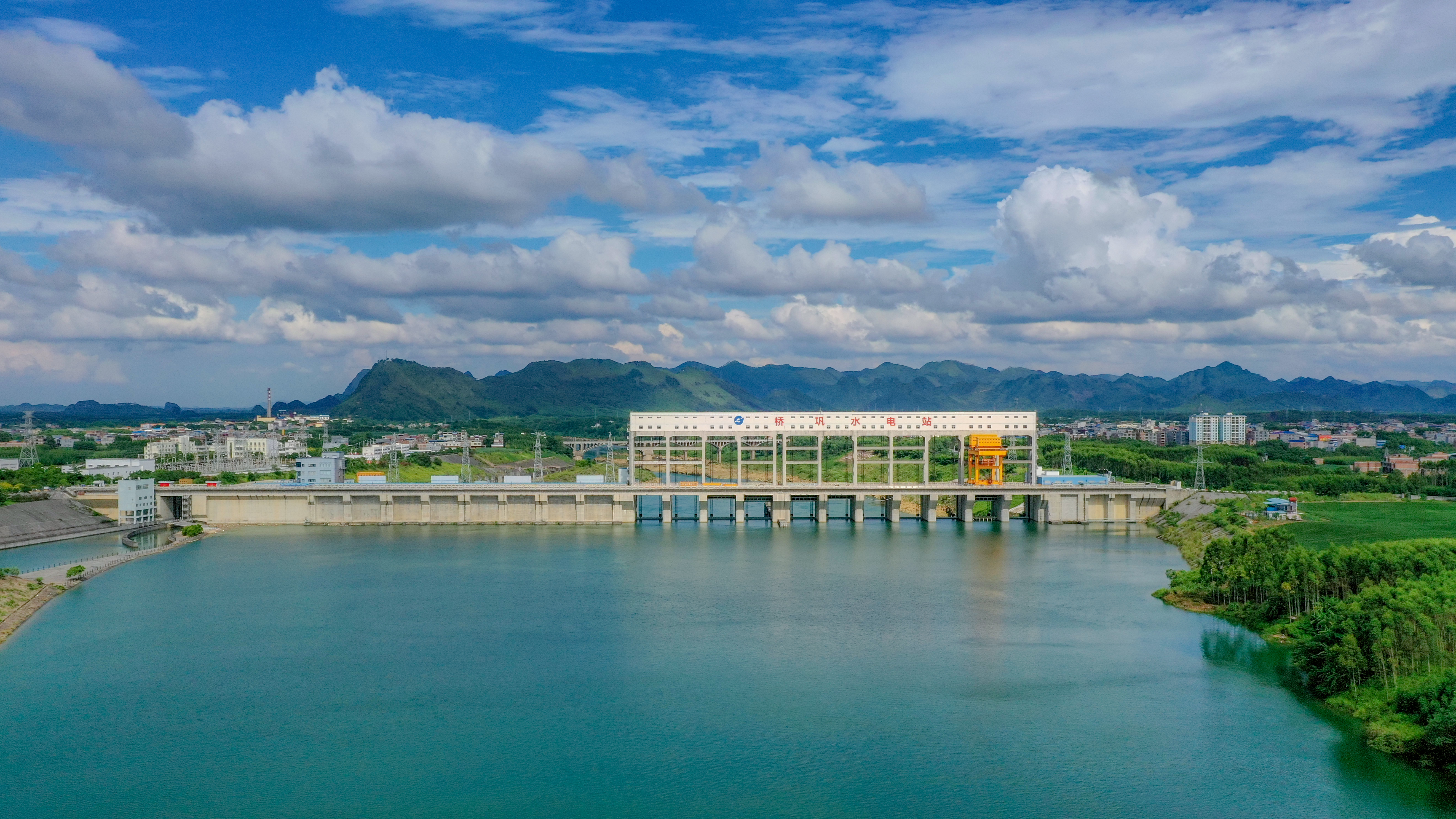
Core Viewpoint - During the "14th Five-Year Plan" period, Guangxi Energy Co., Ltd. has transformed from a traditional hydropower company to a multi-energy complementary energy company, focusing on green and low-carbon development, thereby supporting the construction of a national comprehensive energy security guarantee area in Guangxi [1][5]. Group 1: Business Transformation and Growth - Guangxi Energy has significantly developed clean energy, expanded effective investments, and optimized asset structure, achieving remarkable growth in core operating indicators since the beginning of the "14th Five-Year Plan" [2]. - By September 2025, the total installed capacity of Guangxi Energy's power generation reached 2.3571 million kilowatts, a 169% increase from the end of the "13th Five-Year Plan"; cumulative power generation exceeded 350 billion kilowatt-hours, a 206.9% increase [5]. - The proportion of clean energy installed capacity reached approximately 70%, an increase of 89% from the end of the "13th Five-Year Plan" [5]. Group 2: Strategic Investments and Financial Health - Guangxi Energy has invested over 11 billion yuan in 24 major projects during the "14th Five-Year Plan," with a significant increase in the proportion of investments in clean energy and grid upgrades [8]. - The company's credit rating improved to AA+, and it successfully issued short-term financing bonds and medium-term notes for the first time in 23 years, broadening financing channels and reducing financing costs to historical lows [8]. - The debt ratio was optimized from 86.30% to 77%, indicating a more robust financial structure and enhanced profitability [8]. Group 3: Technological Innovation and Digital Transformation - Guangxi Energy has implemented an innovation-driven development strategy, integrating digitalization and intelligence into the entire energy service chain, leading to advancements in smart and green energy [9]. - The annual growth rate of R&D investment reached 116.5%, with approximately 100 intellectual property rights obtained during the "14th Five-Year Plan" [9]. - The company has established an integrated control system for power grid dispatching and remote control of hydropower stations, achieving significant automation and efficiency improvements [12]. Group 4: Infrastructure Development and Service Enhancement - Guangxi Energy has completed key power grid projects, enhancing the structure and reliability of the power supply, with the total length of the grid reaching 7,720 kilometers, an 18.5% increase from the end of the "13th Five-Year Plan" [15]. - The company has served nearly 400,000 users, a 19.65% increase from the end of the "13th Five-Year Plan," directly benefiting a population of 1.32 million [16]. - Guangxi Energy has developed a "digital + electricity" service system, improving online service levels and enabling users to complete transactions without physical visits [19]. Group 5: ESG and Corporate Responsibility - Guangxi Energy has focused on green energy and corporate governance, continuously disclosing social responsibility/ESG reports for 15 years, with ratings improving from BBB+ to A [23]. - The company has received multiple honors, including recognition in the "ESG Pioneer 100 Index" and "Annual Outstanding Brand" awards [23]. - Guangxi Energy aims to continue its transformation from traditional hydropower to a comprehensive energy provider, contributing to the modernization of Guangxi [23].

新洋丰:以科技创新之笔,绘就绿色发展新画卷
Zhong Guo Jing Ji Wang· 2025-12-12 00:33
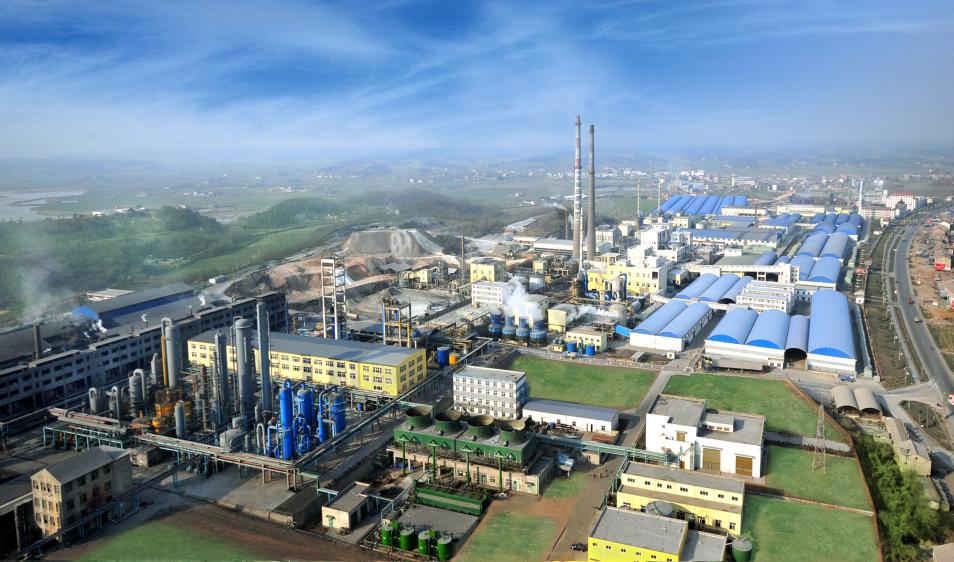
Core Viewpoint - The company XinYangFeng is leveraging technological innovation to transform the fertilizer industry, focusing on green and high-value development while enhancing economic and ecological benefits [1][2]. Group 1: Company History and Development - XinYangFeng's history is marked by technological innovation, starting from its establishment in 1982 and overcoming early financial difficulties through strategic reforms [2]. - The company transitioned from traditional fertilizers to new types of fertilizers, establishing a research center in collaboration with China Agricultural University in 2010, which led to the development of controlled-release and water-soluble fertilizers [2]. - Currently, XinYangFeng has built 14 production bases across the country, with a production capacity exceeding 10 million tons of phosphate fertilizers and annual sales surpassing 5 million tons, positioning itself as a leader in the domestic phosphate fertilizer industry [2]. Group 2: Innovation and Research - XinYangFeng has established several provincial innovation platforms and invested over 200 million yuan annually in research and development since 2022, collaborating with various research institutions on significant projects [4]. - The company has achieved notable recognition for its innovations, including multiple provincial science and technology awards and over 260 authorized patents [4]. Group 3: Agricultural Impact and Community Engagement - Since 2010, XinYangFeng has participated in the national soil testing and fertilization initiative, completing over 2,000 soil testing reports and developing more than 1,600 crop nutrition solutions [6]. - In 2024 alone, the company conducted over 10,000 technical training sessions, benefiting more than 600,000 farmers and establishing 10,000 demonstration fields [6]. Group 4: Strategic Direction and Future Outlook - In response to industry challenges, XinYangFeng is focusing on dual development in phosphate fertilizers and fine chemicals, maximizing the value of phosphate resources and establishing a comprehensive innovation chain [7]. - The company is also transitioning towards digital and intelligent production models, aiming for breakthroughs in various key areas, including the industrialization of lithium iron phosphate for new energy batteries [7]. - Looking ahead, XinYangFeng plans to continue its focus on innovation-driven and green development, targeting advanced fields such as new fertilizers, fine chemicals, and high-value utilization of phosphogypsum [9].

老牌制造业之都破解“中年危机”
Jing Ji Ri Bao· 2025-12-09 22:12
Core Insights - The article emphasizes the transformation of traditional manufacturing in Foshan, Guangdong, into a modern industrial system supported by advanced manufacturing and technological innovation [1][2][3]. Group 1: Industrial Transformation - Foshan is undergoing a systematic restructuring of its industrial landscape, focusing on upgrading traditional industries and developing emerging sectors to create a competitive modern industrial system [1][2]. - The city has established 11 trillion-yuan industrial clusters, with leading production in ceramics, refrigerators, aluminum profiles, and soy sauce, exporting to over 100 countries [2][3]. - The "three arrows" strategy aims to transform traditional industries, develop emerging sectors, and cultivate future industries, supported by policy guidance and digital empowerment [3][4]. Group 2: Policy and Infrastructure Development - Foshan's government is enhancing the business environment through reforms and initiatives to support enterprise development, including the "Foshan 'Yishai Ni' Enterprise Service System" [4]. - The city has over 100,000 industrial enterprises, with more than 10,000 above-designated size, and ranks first in Guangdong with 102 companies listed in the "Top 500 Manufacturing Enterprises" [5]. Group 3: Digital and Intelligent Transformation - Foshan is leading in digital transformation with initiatives like "Smart Transformation and Digital Upgrade," focusing on enhancing production efficiency in traditional industries [6][7]. - The city has implemented AI technologies in various sectors, such as furniture and soy sauce production, improving quality control and operational efficiency [7][8]. - Over 78% of industrial enterprises have adopted digital and intelligent transformation, supported by financial incentives and policies [7][8]. Group 4: Emerging Industries and Innovation - Foshan is actively developing emerging industries, particularly in smart equipment and advanced manufacturing clusters, aiming for global competitiveness [9][10]. - The city supports innovation through the establishment of major platforms and technology research centers, focusing on semiconductor and AI technologies [12][15]. - The semiconductor industry park is nearing completion, expected to enhance the local ecosystem and attract related businesses [16]. Group 5: Future Industry Development - Foshan is planning to explore future industries such as green hydrogen, generative AI, and gene therapy, aiming to cultivate high-end talent and innovative enterprises [13][14]. - The city is enhancing its technology innovation system to facilitate the commercialization of research outcomes, bridging the gap between laboratories and market applications [14][15]. - Foshan aims to maintain a high growth rate in patent applications and standard-setting, positioning itself as a leader in future industrial development [16].
重庆发布66个市属国企“四链”融合项目清单
Zhong Guo Xin Wen Wang· 2025-12-04 06:41
Core Insights - Chongqing's State-owned Assets Supervision and Administration Commission has released a list of 66 state-owned enterprise "four-chain" integration projects with a total planned investment exceeding 2.7 billion yuan, indicating significant demand for bank credit and industrial funds, which is expected to generate considerable investment returns and comprehensive effects [1][2] Group 1: Project Overview - This is the third batch of "four-chain" integration projects released by Chongqing's State-owned Assets Supervision and Administration Commission, following two previous batches that included a total of 205 projects since October 2024 [1] - A total of 188 projects have been formally established with a total investment of 4.79 billion yuan, of which 35 projects have been completed and put into operation, with an investment exceeding 2.7 billion yuan [1][2] - 143 projects are currently being implemented as planned [1] Group 2: Economic Impact - Among the third batch of projects, 15 projects related to the construction of "highway electric corridors" are expected to reduce regional logistics costs by approximately 10% [2] - Seven projects aimed at supporting the construction of the Western Land-Sea New Corridor are projected to generate economic benefits exceeding 1 billion yuan [2] Group 3: Technological Innovation - The third batch of projects focuses on technological innovation, providing support for breakthroughs in key areas [2] - Eight projects in the high-end equipment sector, such as "high-speed precision angular contact ball bearings," are planned with a total investment of 530 million yuan [2] - Nine projects in the new generation information technology sector, including "integrated intelligent asset management platforms," are planned with an investment of approximately 600 million yuan, aiming to develop core solutions for various technological applications [2] Group 4: Artificial Intelligence Development - The conference also released 11 typical applications of artificial intelligence from Chongqing's state-owned enterprises and digital intelligent application scenarios [2] - State-owned enterprises in Chongqing are exploring the application of artificial intelligence in production, operations, and management, achieving initial results in urban governance, public services, intelligent manufacturing, financial services, and cultural dissemination [2]