固态电池技术

Search documents
上海洗霸,用四年利润加码固态电池
DT新材料· 2025-07-13 13:34
Core Viewpoint - Shanghai Xiba plans to participate in the auction of lithium sulfide business assets from Yuyuan Rare Earth New Materials Co., aiming to expand its presence in the solid-state battery sector [1][3]. Group 1: Auction Details - The auction is for lithium sulfide-related assets, with a starting price of approximately 110 million yuan, which includes patents, proprietary technology, and equipment [4]. - The assets have an assessed appreciation rate of 5476.85%, primarily due to core technology [4]. Group 2: Financial Position - As of the first quarter of 2025, Shanghai Xiba's cash reserves amount to 170 million yuan, equivalent to the net profits from 2021 to 2024 [2]. - The company expects a net profit of 99 million to 118 million yuan for the first half of 2025, representing a year-on-year growth of 136.47% to 181.85% [7]. Group 3: Business Context - The divestiture of lithium sulfide assets is noteworthy as solid-state batteries are a hot market, with major companies like Toyota, Nissan, and CATL actively investing in this area [5]. - Currently, lithium sulfide solid-state electrolytes have not achieved industrial-scale production, and their high cost remains a significant challenge [5]. Group 4: Company Operations - Shanghai Xiba has been gradually entering the solid-state battery materials market since 2022, leveraging research from teams at Fudan University and the Chinese Academy of Sciences [6]. - The company has established a 100-ton solid-state battery powder production line in Zhejiang and is in the trial production phase at its Songjiang base [7].


电动车2025年中期策略:稳健增长低估值,聚焦锂电龙头和固态新技术
Soochow Securities· 2025-07-13 05:06
Group 1 - The report highlights a steady increase in domestic electrification rates and a strong recovery in European sales, with global sales expected to grow by 21% in 2025 and maintain over 15% growth in 2026 [2][3] - In 2025, domestic electric vehicle sales are projected to reach 5.61 million units, a year-on-year increase of 44%, with an annual growth forecast of 25% [2][5] - The report anticipates a robust demand for lithium batteries, with a revised growth estimate of over 30% in 2025 and nearly 20% in 2026, driven by strong energy storage policies and market dynamics [2][3] Group 2 - The report indicates that the profitability of the industry has begun to recover slightly, with leading companies starting to expand production in an orderly manner, while smaller firms continue to exit the market [2][3] - The report notes a significant disparity in profitability across different segments of the supply chain, with leading battery manufacturers maintaining high profit levels compared to second-tier manufacturers [2][3] - The solid-state battery technology is highlighted as a key area of focus, with advancements expected in sulfide-based materials and core equipment, indicating a rapid acceleration in industrialization [2][3] Group 3 - Investment recommendations emphasize focusing on leading lithium battery companies and those accelerating the industrialization of solid-state technologies, with specific companies identified for potential investment [2][3] - The report suggests that the lithium carbonate price has reached a bottom, making it favorable to invest in companies with quality resources [2][3] - The report identifies several companies in the solid-state battery sector that are expected to benefit from technological advancements and market demand [2][3]




蜂巢能源,五大新品发布,固态电池实现突破
DT新材料· 2025-07-12 13:58
Core Viewpoint - Hive Energy has launched a new "4+1" product brand, which includes various battery types aimed at different markets, enhancing energy density and safety features in both semi-solid and solid-state batteries [1][2]. Product Overview - The "Fortress Off-Road Battery" features an 80kWh capacity, the largest hybrid battery on the market, with a range of over 400KM and a 6C super-fast charging capability that allows for 30% to 80% SOC charging in just 8 minutes [3]. - The "Bee Walking Short Blade" battery utilizes advanced technologies to ensure safety and longevity while supporting 6C fast charging, reducing charging time for 80% SOC by 25% [4]. - The "Dragon Scale Armor" battery, with a capacity of 65kWh and an 800V architecture, ensures safety at high temperatures and features a high-integration design that improves volume utilization by 5% [5][6]. Company Projections - Hive Energy's CEO, Yang Hong, projected that the company will exceed 47GWh in shipments by 2025, achieving a domestic market share of 3.6% in power battery installations and generating over 24 billion yuan in revenue [2].
大会回顾 | 5位行业大咖热议10TWh新变
高工锂电· 2025-07-12 10:18
Core Viewpoint - The lithium battery industry is transitioning from a "single power" model to "full scene electrification," with the market space expected to develop towards a scale of 10 TWh, driven by demand from various emerging fields such as eVTOL, low-altitude economy, and data center energy storage [6][8]. Group 1: Industry Trends - The demand for lithium batteries is shifting from "single-point high growth" to "multiple-point explosion," necessitating advancements in material systems and manufacturing technologies to meet higher requirements for energy density, safety, and customization [6][8]. - Solid-state batteries are identified as a key variable in reshaping the industry landscape, with major manufacturers expected to push for their validation and integration into vehicles by around 2030 [8]. - The energy storage market is entering a high-growth phase, with significant technological gaps emerging among storage companies, potentially leading to the exit of less competitive players within 1-2 years [8]. Group 2: Company Innovations - ENPACK has developed high-conductivity composite copper foils suitable for high-rate charging and discharging scenarios, significantly reducing resistance from 36 mΩ/□ to 24 mΩ/□, which is ideal for applications like drone batteries [9]. - The company is also focusing on bipolar copper-aluminum foils for new solid-state battery structures, aiming to enhance voltage and fast-charging capabilities [9]. - PULITECH is integrating materials, processes, and equipment to provide comprehensive solutions that help clients reduce costs and improve efficiency, showcasing successful collaborative cases in ultra-thin aluminum composite materials and ceramic-coated separators [12][14]. Group 3: Research and Development - Ningbo Fuli Battery Material Technology has established a complete innovation system from laboratory to production line, achieving stable supply of high-performance lithium-rich manganese-based cathode materials with a capacity of 300 mAh/g [15]. - The company plans to expand its production capacity to a scale of 10,000 tons by 2026, indicating a strong capability for mass production [15]. - WeiLan New Energy is advancing solid-state battery technology with a focus on cost reduction and system integration, achieving significant performance metrics in both electric vehicles and energy storage applications [18].
2027固态电池装车倒计时:设备订单放量在即,产业链布局窗口期开启
智通财经网· 2025-07-12 00:27
Core Viewpoint - The solid-state battery technology is rapidly advancing, with major global automakers and battery manufacturers announcing timelines for vehicle integration, indicating a shift towards high-performance lithium batteries that offer both high energy density and safety [1][3][15]. Group 1: Industry Developments - Major automakers like BYD, Toyota, and Volkswagen are planning to implement solid-state batteries in their vehicles between 2025 and 2030, with various companies setting specific timelines for small-scale production and testing [3][4]. - CATL is transitioning from semi-solid to solid-state batteries, aiming for small-scale production by 2027, while other companies like Guoxuan High-Tech and EVE Energy have similar timelines for their solid-state battery projects [3][4]. Group 2: Technical Advantages - Solid-state batteries can achieve energy densities exceeding 500 Wh/kg, significantly higher than traditional lithium batteries, which are nearing their theoretical limits [2][3]. - The solid-state battery technology addresses safety concerns associated with liquid batteries, such as thermal runaway, making it suitable for applications in electric vehicles, robotics, and energy storage [1][2]. Group 3: Market Potential - The global demand for solid-state batteries is expected to grow, driven by the increasing penetration of electric vehicles and advancements in low-altitude economy and renewable energy sectors [5][15]. - The market for solid-state battery equipment is projected to increase from 5-6 billion CNY per GWh to 2.5 billion CNY per GWh by 2029, indicating a significant reduction in production costs as technology matures [8][9]. Group 4: Material Innovations - The development of solid-state batteries is leading to advancements in materials, with a shift from graphite to silicon-based anodes, which have a theoretical capacity ten times higher than graphite [13][14]. - New electrolyte materials, including polymer, oxide, and sulfide, are being explored, each with distinct advantages and challenges, contributing to the ongoing evolution of solid-state battery technology [10][11][12].
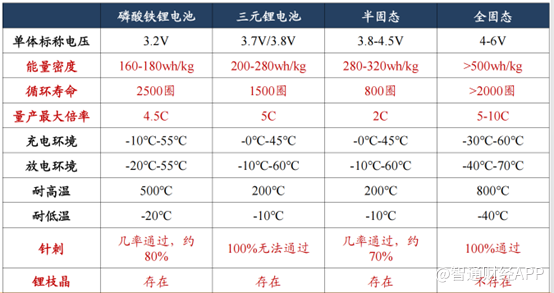
又一企业宣布固态电池即将量产!
鑫椤锂电· 2025-07-11 06:54
Core Insights - Jiangsu Tianpeng Power Co., Ltd. announced the global launch of its mass-produced solid-state cylindrical battery with an energy density of 350Wh/kg, primarily aimed at applications in embodied robots, low-altitude aircraft, and e-bikes [1][2] - The newly released 60HES cell features revolutionary materials and structural design, utilizing self-developed ultra-high nickel ternary materials (NCMA Ni93) for the cathode and low-expansion silicon-carbon anode (SiC), enabling higher capacity and energy density [1] - The 21700-60HES cell has a nominal capacity of 6100mAh, supports 1C/3C charge and discharge capabilities, and has a cycle life of ≥800 at room temperature, with stable operation in a temperature range of -10℃ to 65℃ [1] Market Applications - The battery has completed safety verification with leading international clients, receiving high recognition for its performance, and mass production validation is currently underway, expected to be fully completed by the end of this year [1] - Upon completion, the product will transition from pilot production to the global market [1] Future Developments - Tianpeng Power is developing the next generation of solid-state batteries, aiming for mass production of batteries with an energy density exceeding 500Wh/kg by 2027, utilizing a composite solid electrolyte (sulfide + polymer) suitable for cylindrical cells [2] - The company is a wholly-owned subsidiary of Blue Lithium Core, focusing on the research, production, and sales of cylindrical batteries, with a product system that includes NCM, NCA, and LFP technologies [2] Production Capacity - Tianpeng Power operates four major production bases, with three located in Jiangsu Province and one in Selangor, Malaysia, which plans to invest $280 million to achieve an annual production capacity of 10GWh of cylindrical lithium batteries [2] - The Malaysian facility officially opened on April 29, with an initial total capacity of approximately 400 million units per year, and stable supply of 18650 and 21700 cell types is already in place, with plans to produce high-end models such as 5.8Ah and 6.5Ah in the future [2]

固态电池0-1快速发展,产业化初期设备商优先受益
2025-07-11 01:13
固态电池 0-1 快速发展,产业化初期设备商优先受益 20250709 摘要 全固态电池能量密度显著提升,通常可达 400-500Wh/kg,远高于传统 液态锂电池的 200-300Wh/kg,同时在安全性、低温性能方面表现更优, 预示着其作为未来产业发展趋势的确定性。 半固态电池已初步应用于高端消费电子领域,而动力和储能领域主要采 用半固态技术进行规模化应用。预计全固态电池将在 2027 年左右小批 量应用于汽车,储能领域商业化应用或需等到 2030 年左右。 固态电池技术路线多样,包括氧化物、硫化物、聚合物和卤化物。其中, 硫化物因其优异的界面接触和电导率被认为是未来主流技术路线,而氧 化物适用于半固态方案,聚合物因工作温度限制不适用于车辆,卤化物 则多用于研发阶段。 全固态电池负极材料正从硅碳负极配合预锂化技术向高容量硅碳或金属 锂负极演进,最终目标是直接使用金属锂负极;正极材料则从高镍三元 逐步发展到超高镍或镍锰酸锂,最终目标是超高镍正极材料。 中国工信部已拨款 60 亿支持固态电池重大研发专项,宁德时代、比亚 迪等企业参与,计划 2027 年实现小规模量产。海外方面,丰田、本田、 三星 SDI、LG ...
赣锋锂业公布大容量固态储能电池进展
Xin Lang Cai Jing· 2025-07-10 10:02
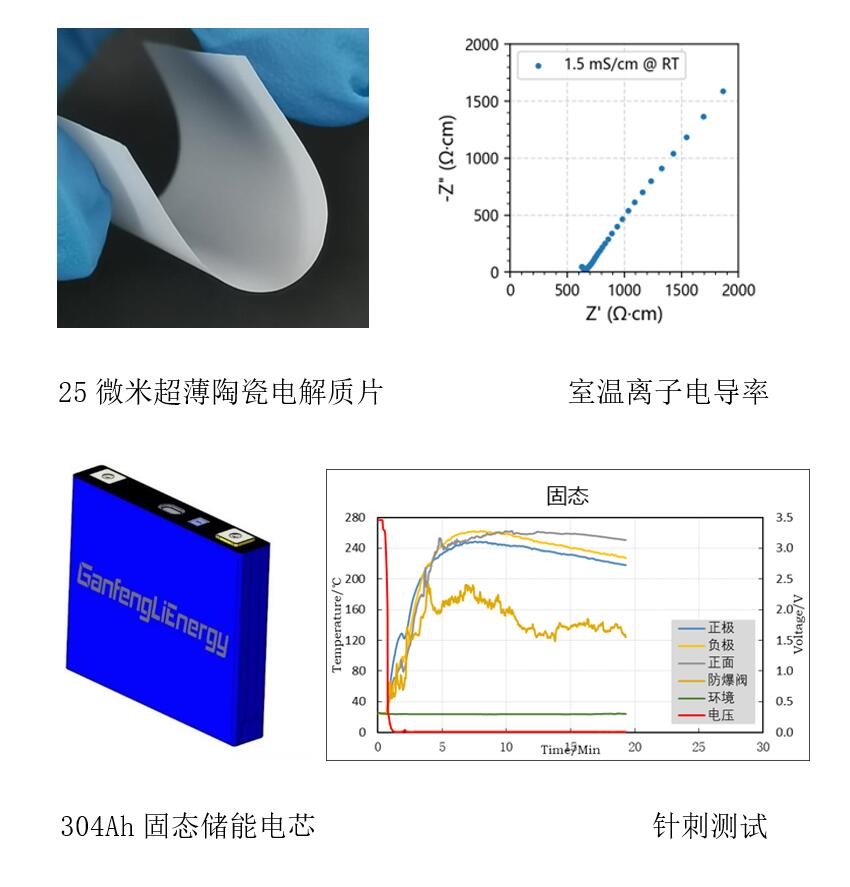
Core Insights - The second China International Solid-State Battery Technology Industrialization Development Forum will be held from June 26-28, 2025, in Wuxi, Jiangsu, where Ganfeng Lithium will present advancements in solid-state battery materials and energy storage applications [1] - Ganfeng Lithium has established a comprehensive product layout covering battery materials, cells, battery cabinets, energy storage containers, and energy storage power solutions, making it the only company in the industry to operate the entire supply chain from raw materials to battery recycling [5] - The company has delivered over 21 GWh of energy storage battery products and has invested in and constructed energy storage stations exceeding 20 GWh [5] - The room temperature ionic conductivity of the developed oxide solid electrolyte material reaches 1.5 mS/cm, and the company has achieved stable preparation of 25-micron ultra-thin electrolyte ceramic sheets [5] - The developed sulfide solid electrolyte material has a room temperature ionic conductivity exceeding 12 mS/cm, with low-cost batch production of lithium sulfide and sulfide electrolyte materials [5] - The 304Ah solid-state energy storage cell has surpassed 4000 cycles in lifespan testing, demonstrating advantages in safety, low-temperature performance, and storage compared to liquid batteries [6] - The 304Ah cell maintains a higher overall capacity retention, especially showing improved stability during the first 1000 cycles, and exhibits zero voltage drop during an 8mm puncture test, indicating robust safety performance [6] - Ganfeng Lithium has innovatively constructed a "6-BTR" high-safety energy storage system strategy, providing multi-level protection and achieving certification for its lithium storage battery products [6] - The company's storage technology and products, integrating high-performance solid electrolytes and innovative cell designs, contribute to the development of high-safety, long-life, and wide-temperature range products for a cleaner and more sustainable energy system [8]

固态电池渐行渐近、新技术及工艺持续涌现
Soochow Securities· 2025-07-10 05:41
1. Report Industry Investment Rating - Expected to outperform the benchmark by more than 5% in the next 6 months (Industry investment rating: Overweight) [49] 2. Core Views of the Report - Solid-state batteries offer stronger safety and higher energy density but face issues such as low ionic conductivity, poor cycle life, and relatively high costs [2][8][10] - There are diverse technological routes for solid-state batteries, with sulfides being the current mainstream direction [2][17][19] - With increased policy and industrial chain support, the commercialization of solid-state batteries is accelerating, and it is expected that the demand will reach 100 GWh by 2030 [2][22][28] - Considering the accelerated technological iteration of solid-state batteries, the successive establishment of pilot lines, and the continuous emergence of new technologies in equipment and materials, specific companies are recommended for investment [2][44] 3. Summary by Relevant Catalogs 3.1 Solid-state Batteries: Stronger Safety and Higher Energy Density - Solid-state batteries use non-flammable solid electrolytes instead of liquid electrolytes, achieving higher energy density and stronger safety [6][8][10] - The energy density of solid-state batteries can exceed 500 Wh/kg, breaking through the energy density bottleneck of liquid batteries and enabling longer electric vehicle range [8] - Solid-state batteries are safer because solid electrolytes have a higher melting point and can suppress lithium dendrite growth, reducing the risk of thermal runaway and short circuits [10] - Solid-state batteries have disadvantages such as low ionic conductivity, poor cycle life, and high production costs [12][15] 3.2 Diverse Technological Directions with Sulfides as the Mainstream - Solid-state batteries can be divided into four technological routes: polymers, oxides, sulfides, and halides, each with its own advantages and disadvantages [17][18] - Sulfide solid electrolytes have the greatest potential in the future, with high ionic conductivity, good interface contact performance, and flexibility, making them the key layout direction for mainstream manufacturers [19] 3.3 Increased Policy and Industrial Chain Support, Accelerating Solid-state Commercialization - The national level has successively issued policies to support the development of solid-state batteries, accelerating the industrialization process [22][23] - Battery manufacturers have updated their solid-state progress, with small-scale mass production expected in 2027 and large-scale mass production in 2030 [24][25] - Automobile manufacturers have released solid-state-related plans, with small-scale mass production expected in 2027 and large-scale implementation in vehicles by 2030 [26][27] - With the support of leading enterprises and the industrial chain, the mass production speed of solid-state batteries is expected to exceed expectations, and the cost is expected to approach that of liquid batteries by 2030 [28][30] 3.4 North Exchange Industrial Chain Targets - The solid-state battery industrial chain includes upstream (mineral resources, positive electrodes, negative electrodes, solid electrolytes, production equipment), midstream (cells, batteries, PACK, BMS), and downstream (consumer, power, energy storage, aerospace fields) [33] - Lingge Technology provides an automated overall solution for front-end materials in solid-state batteries and is expected to benefit from the development of the solid-state battery industry [34] - Nakonor is a pioneer in dry electrode equipment, continuously expanding into the solid-state field, and its products are expected to increase in value and contribute to the company's performance [37] - Yuanhang Precision focuses on the R & D of nickel-copper/nickel-aluminum layered composites, aiming to meet the technical requirements of iron-based current collectors for solid-state batteries [39] - The report recommends Nakonor, Yuanhang Precision, and Lingge Technology, and suggests paying attention to other companies such as BTR, Tianma New Materials, Wuhan Landian, Liwang Co., Ltd., Lijia Technology, Yintu Network, and Haixi Communication [2][44]


英联股份:复合铝箔、复合铜箔产品已在国内知名客户的固态电池进行测试
news flash· 2025-07-09 08:37
Core Viewpoint - The company has developed composite aluminum and copper foil products that are currently being tested in solid-state batteries by well-known domestic clients [1] Group 1 - The composite aluminum and copper foil products are applicable in solid-state batteries [1] - The company has also developed lithium metal/composite current collector integrated materials for use in solid-state batteries [1]