
龙鳞甲电池

Search documents
出口退税“承压”,杨红新详解蜂巢出海打法
高工锂电· 2026-01-22 12:31
Core Viewpoint - The article discusses how the adjustment of export tax rebates for battery products in China is a pivotal moment for the domestic power battery industry, pushing companies like Honeycomb Energy to adopt new strategies for overseas expansion while maintaining a strong domestic market presence [1]. Group 1: Strategic Response to Tax Policy Changes - Honeycomb Energy's chairman, Yang Hongxin, emphasizes a dual approach to tackle the challenges posed by the reduction of export tax rebates from 9% to 6%, and the complete removal by 2027, which directly impacts profit margins [2][3]. - The "dual response" strategy involves negotiating cost-sharing mechanisms with overseas clients to stabilize the supply chain while also pursuing localized production strategies to mitigate costs [2][3]. - The company has already established localized production of electric vehicle battery packs in Thailand, with plans to upgrade to local production of energy storage and battery cells [3]. Group 2: Focus on Quality and Efficiency - The strategy is not about price wars but focuses on quality, efficiency, and cost as key factors, aiming for technological innovation and value reconstruction [4]. - Honeycomb Energy has built a technological moat with its stacking technology, achieving the highest global shipment of short-blade thermal load batteries in 2024 and breaking through a monthly shipment of over 5 GWh in 2025 [4]. - The company has also launched innovative products in the energy storage sector, including a 588Ah energy storage cell with over 10,000 cycles and an efficiency exceeding 96.5% [4]. Group 3: Performance and Market Expansion - Honeycomb Energy's overseas performance has been impressive, with total shipments of energy storage batteries reaching 41 GWh in 2025, a 53% year-on-year increase, and overseas shipments accounting for over 30% of total sales [5]. - The company has made significant inroads with international clients, with three of its top five customers being international firms, contributing to a 6% increase in overseas revenue share [5]. - The company has tailored its overseas strategy based on regional market characteristics, focusing on partnerships with key clients in the Asia-Pacific region and adapting products for local conditions [6]. Group 4: Future Goals and Industry Implications - Honeycomb Energy has set clear goals for 2026, aiming for a steady increase in overseas shipments and projecting overseas orders to reach 20 GWh [7]. - The adjustment of export tax policies is seen as both a challenge and an opportunity for the industry to transition towards high-quality development, with Honeycomb Energy serving as a model for this transformation [7]. - The company's approach highlights the importance of maintaining a strong domestic market while leveraging technological innovation and localized strategies to compete globally [7].

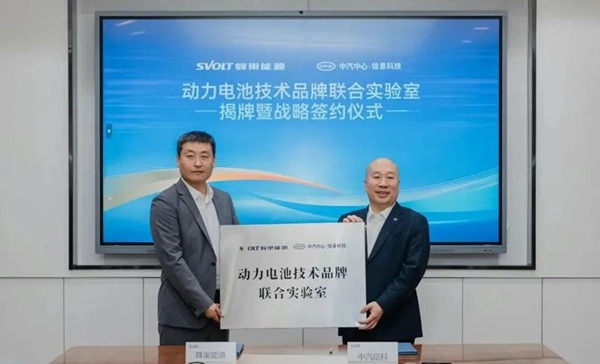
蜂巢能源:与中汽信科签署战略合作协议 共建技术品牌联合实验室
Zhong Guo Qi Che Bao Wang· 2026-01-07 03:46
Core Viewpoint - The strategic cooperation between Honeycomb Energy Technology Co., Ltd. and China Automotive Information Technology (Tianjin) Co., Ltd. aims to enhance brand value and industry influence through a joint laboratory focused on technology integration and marketing [1][3]. Group 1: Strategic Cooperation - Honeycomb Energy and China Automotive Information will establish a "Technology Brand Joint Laboratory" to facilitate deep collaboration in four key areas: integrated marketing of technology brands, comprehensive safety verification systems, collaborative innovation in intellectual property, and overseas risk response [3]. - The partnership leverages China Automotive Information's authoritative industry platform and expertise in big data analysis, combined with Honeycomb Energy's strengths in core technologies like fast-charging and dragon scale batteries [3]. Group 2: Brand Development - Honeycomb Energy's senior vice president emphasized that transforming technological strength into brand value is crucial for long-term development [3]. - The chief engineer of China Automotive Information expressed commitment to supporting Honeycomb Energy's brand enhancement strategy by providing comprehensive professional service guarantees [3]. Group 3: Industry Impact - This collaboration represents an important move for Honeycomb Energy to integrate high-end industry resources and promote brand strategy upgrades [3]. - Both companies plan to deepen their cooperation to strengthen technology brand construction and jointly lead the high-quality development of the power battery industry [3].
理想MEGA惊魂爆燃后,三元锂电池天塌了?
36氪· 2025-11-04 09:48
Core Viewpoint - The incident involving the Li Auto MEGA has reignited concerns about battery safety in the electric vehicle industry, particularly regarding the use of ternary lithium batteries versus lithium iron phosphate batteries [4][7][9]. Group 1: Incident Overview - The Li Auto MEGA, priced over 500,000 yuan and marketed for family safety, caught fire within 10 seconds without a severe collision, raising alarms in the new energy sector [4][5]. - Following the incident, Li Auto acknowledged a defect in the coolant of the MEGA 2024 model, which could lead to thermal runaway in extreme conditions [7][9]. Group 2: Battery Safety Debate - The MEGA incident has shifted focus from vehicle design issues to battery safety, with ternary lithium batteries, known for their high performance, now under scrutiny for their thermal stability [9][12]. - Research indicates that ternary lithium batteries can begin to decompose at around 200°C, leading to rapid thermal runaway, while lithium iron phosphate batteries require much higher temperatures (500-800°C) to decompose, making them inherently safer [12][13]. Group 3: Market Dynamics and Battery Choices - The shift in market dynamics since 2016 has favored ternary lithium batteries due to their higher energy density, which has made them the preferred choice for high-end electric vehicles [19][21]. - However, the rising costs of ternary lithium batteries and the increasing market share of lithium iron phosphate batteries, which have surpassed 70% in recent months, indicate a significant change in consumer preferences [21][28]. Group 4: Future of Battery Technologies - The future of battery technology may see a coexistence of both battery types, as high-end vehicles continue to demand the performance benefits of ternary lithium batteries, while cost-effective models may increasingly adopt lithium iron phosphate batteries [34][41]. - Innovations in battery technology, such as solid-state batteries, are expected to leverage the advantages of ternary lithium materials while addressing safety concerns, indicating a potential evolution in the industry [39][41].

蜂巢能源,五大新品发布,固态电池实现突破
DT新材料· 2025-07-12 13:58
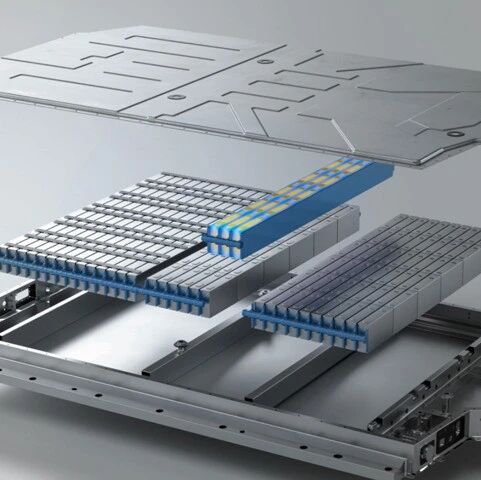
Core Viewpoint - Hive Energy has launched a new "4+1" product brand, which includes various battery types aimed at different markets, enhancing energy density and safety features in both semi-solid and solid-state batteries [1][2]. Product Overview - The "Fortress Off-Road Battery" features an 80kWh capacity, the largest hybrid battery on the market, with a range of over 400KM and a 6C super-fast charging capability that allows for 30% to 80% SOC charging in just 8 minutes [3]. - The "Bee Walking Short Blade" battery utilizes advanced technologies to ensure safety and longevity while supporting 6C fast charging, reducing charging time for 80% SOC by 25% [4]. - The "Dragon Scale Armor" battery, with a capacity of 65kWh and an 800V architecture, ensures safety at high temperatures and features a high-integration design that improves volume utilization by 5% [5][6]. Company Projections - Hive Energy's CEO, Yang Hong, projected that the company will exceed 47GWh in shipments by 2025, achieving a domestic market share of 3.6% in power battery installations and generating over 24 billion yuan in revenue [2].
2025交付47GWh,蜂巢能源如何穿越周期?
高工锂电· 2025-07-12 10:18
Core Viewpoint - The article discusses the strategic transformation of the company, focusing on high-quality development and a shift from capacity competition to a more sustainable and technology-driven approach in the lithium battery industry [2][4][31]. Group 1: Strategic Focus - The company has launched the "Leading Bee 2030" strategy, emphasizing high-quality development and a focus on power batteries, energy storage, and exploring new markets [2][4]. - The company aims to achieve a target of 47GWh by 2025, with significant orders from major global automakers like Great Wall, Geely, and Stellantis [2][3][26]. Group 2: Market and Product Structure - The company is accelerating its globalization efforts, targeting a compound annual growth rate of 38% in overseas penetration, focusing on both passenger and commercial vehicles [5][9]. - The company has adopted a dual strategy of "NCM and LFP" batteries, positioning itself in high-end markets where NCM batteries are essential [8][9]. Group 3: Technological Advancements - The company has developed a complete and evolving product brand system, including the "Fortress Battery" and "Short Blade Battery," with significant improvements in energy density and charging capabilities [10][12]. - The company has established a 2.3GWh semi-solid battery production line, set to supply BMW Mini's next-generation models, marking a significant technological milestone [12][13]. Group 4: Orders and Deliveries - In the first half of 2025, the company achieved a battery shipment of 16.6GWh, with a 110% year-on-year growth in the global market, increasing its market share to 2.6% [21][22]. - The company has secured new platform orders from major clients, expected to contribute nearly 100GWh of installed capacity over the next two years [25][26]. Group 5: Operational Efficiency - The company has undergone significant internal changes to improve manufacturing efficiency, achieving a 28% reduction in scrap rates and a 48% decrease in manufacturing costs [28][30]. - The company plans to initiate a new round of capacity expansion in 2027, aiming to reduce manufacturing costs by an additional 50% [30][31].
60亿锂电池项目落地四川遂宁
起点锂电· 2025-04-23 10:11
相源新能源在网络上的相关介绍并不多,起点锂电经过查询得知该公司成立于 2016 年,总部位于安徽省淮北经济开发区, 2019 年通过高 新技术企业认证,相源新能源主营产品为 18650 电池。 去年该公司在浙江地区有动作, 2024 年 7 月该公司动力电池项目在浙江省丽水市庆元县举行,总投资约 10 亿元,全面投产后预计产能将 达每日 30 万只,年产值可达到 5-8 亿元。 也就是说,该公司经过低调布局,一共投资 70 亿元准备在圆柱电池领域大干一场,尤其是 18650 电池,准备做到行业头部。 为全面引进新能源产业链,遂宁进行了不少努力。 起点锂电获悉, 4 月 22 日遂宁市安居区政府与安徽相源新 能源举行 签约仪式, 相源新能源 计划在遂宁 投资 60 亿元锂电池项目 , 重点 生产 三款圆柱电池 18650 / 3214 / 46160 , 产品将用于 电动车辆、移动电源、笔记本电脑、无人机、电动工具、智能手机等 领域 。 建成投产后预计年产值 将达 5 0 亿元,纳税 1.5 亿元以上, 新增 就业岗位 超 800 个, 值得注意的是该项目 主打产品 18650 电池 预计 年产 会达到 10 ...