凝聚态电池

Search documents
固态电池,等等再说
汽车商业评论· 2026-03-30 23:04
Core Viewpoint - The solid-state battery technology is still in its early stages, with significant challenges remaining before it can be commercially viable. The industry is experiencing a disconnect between ambitious announcements and actual technological progress [3][21][38]. Group 1: Industry Perspectives - In 2023, solid-state batteries have not gained widespread attention in China, while liquid lithium batteries continue to thrive [3]. - The rapid announcements of solid-state battery production plans by various companies have created a "rush" mentality, where firms feel pressured to declare timelines to avoid being perceived as lagging behind [18][19]. - The solid-state battery has been touted as a disruptive technology, but many companies have been criticized for making exaggerated claims without substantial evidence [7][9][19]. Group 2: Technical Challenges - The primary technical hurdle for solid-state batteries is the "solid-solid interface contact problem," which complicates the movement of ions between solid materials [26][27]. - Current solid-state battery technologies are still largely experimental, with many companies struggling to transition from lab-scale prototypes to mass production [21][22][29]. - The industry is facing significant engineering challenges, including maintaining stable interfaces under dynamic conditions, which are not easily replicated in real-world applications [28][30][32]. Group 3: Market Dynamics - The solid-state battery market is characterized by a mix of optimism and skepticism, with many companies hedging their announcements by using terms like "verification" or "small batch" rather than committing to full-scale production [34]. - The timeline for achieving commercial viability for solid-state batteries is projected to extend beyond 2030, with ongoing research and development required to address fundamental technical issues [37][38]. - Companies like CATL are cautious in their approach, focusing on alternative solutions like semi-solid batteries while delaying aggressive commitments to solid-state technology [42].

宁德时代:以量补价
YOUNG财经 漾财经· 2026-03-19 14:11
Core Viewpoint - CATL's 2025 financial report has exceeded market expectations, showcasing its dominance in the battery industry despite a declining market share in domestic power battery installations [4][5][19]. Financial Performance - In 2025, CATL achieved a revenue of 423.7 billion yuan, a year-on-year increase of 17%, and a net profit of 72.2 billion yuan, up 42% [5]. - The company reported a daily profit of nearly 200 million yuan and held over 300 billion yuan in cash [5]. - The fourth quarter saw a significant revenue surge, exceeding 140 billion yuan, marking a 36.6% year-on-year increase [7]. Market Share and Sales Growth - CATL's domestic power battery installation market share has declined from 52.1% in 2021 to 43.42% in 2025 [6][19]. - The company sold 661 GWh of lithium batteries in 2025, a 39.16% increase year-on-year, benefiting from a growing industry demand [8]. - The global sales of new energy vehicles reached 21.47 million units in 2025, a 21.5% increase, with China's sales surpassing 13.875 million units [8]. Business Segments - The power battery segment generated 316.5 billion yuan in revenue, accounting for 74.7% of total revenue, with a year-on-year growth of 25.08% [8]. - The energy storage business has become a significant growth driver, with revenue increasing to 62.44 billion yuan, a growth of 8.99% [9]. - CATL's energy storage battery shipments reached 121 GWh, a 29% increase, maintaining its global market leadership [9]. Production Capacity and Utilization - CATL's battery system production capacity was 772 GWh in 2025, with a utilization rate of 96.9% [11]. - The company faced short-term capacity shortages, leading to some orders being unfulfilled [11]. International Expansion - CATL's overseas revenue reached 129.6 billion yuan, accounting for 30.6% of total revenue, indicating a significant growth in international markets [11]. - The company has accelerated its global expansion, with plans for new production facilities in Hungary, Spain, and Indonesia [21]. Profitability and Financial Health - The net profit margin for 2025 was 18.12%, an increase of 3.20 percentage points year-on-year [13]. - The company generated a net cash flow from operating activities of 133.2 billion yuan, with total cash and cash equivalents nearing 392.5 billion yuan [12]. Inventory and Contract Liabilities - CATL's inventory reached 94.52 billion yuan, a 58% increase, with a significant portion being unfinished products [14]. - Contract liabilities surged to 49.2 billion yuan, reflecting a strong order backlog but also indicating potential future demand concerns [17]. Competitive Landscape - CATL's market share has been eroded by competitors like BYD and other second-tier manufacturers, leading to a more fragmented market [20]. - The company is actively seeking to strengthen partnerships and optimize collaborations with key automotive clients to secure its market position [21]. Technological Development - CATL is focusing on sodium-ion and solid-state battery technologies, with significant investments in research and development [22]. - The company aims to commercialize sodium batteries in various applications by 2026, while solid-state batteries are expected to see limited production until 2027 [22]. Future Outlook - Management remains optimistic about maintaining profitability in 2026, despite potential challenges from raw material price fluctuations and market demand [18]. - The company anticipates a compound annual growth rate of 20%-30% over the next five years, driven by ongoing electrification trends [18].


宁德时代:2025年报点评25年业绩大超预期,26年迎扩产高增长-20260313
Huachuang Securities· 2026-03-13 10:35
Investment Rating - The report maintains a "Strong Buy" rating for the company with a target price of 515.63 CNY [2][8]. Core Insights - The company's performance in 2025 significantly exceeded expectations, with total revenue reaching 423.7 billion CNY, a year-on-year increase of 17.0%, and a net profit attributable to shareholders of 72.2 billion CNY, up 42.3% year-on-year [10][37]. - The company is expected to experience high growth in production capacity in 2026, driven by strong demand and an increase in orders, as evidenced by a 77% increase in contract liabilities in Q4 2025 [27][37]. - The company achieved a global market share of 39.2% in electric vehicle battery installations, marking a 1.2 percentage point increase year-on-year, and continues to lead in the high-end market segment [37][40]. Financial Performance Summary - **Revenue and Profitability**: In 2025, the company reported total revenue of 423.7 billion CNY, with a net profit of 72.2 billion CNY, reflecting a 42.3% increase year-on-year. The fourth quarter alone saw revenue of 1,406.3 billion CNY, a 36.6% increase from the previous quarter [10][19]. - **Sales Volume**: The total battery sales volume reached 661 GWh in 2025, a 39.2% increase year-on-year, with a significant contribution from both power and energy storage batteries [10][37]. - **Margins**: The gross margins for power batteries, energy storage, materials, and minerals were 23.8%, 26.7%, 27.3%, and 11.3% respectively, with notable improvements in materials and minerals due to price increases [17][19]. Capacity and Investment - **Capital Expenditure**: The company has resumed capital expenditure growth, with Q4 2025 capital spending reaching 12.3 billion CNY, indicating a return to an expansion phase [21][27]. - **Production Capacity**: As of the end of 2025, the company had 321 GWh of capacity under construction, with plans for further expansion in 2026 [21][27]. Cash Flow and Financial Health - **Cash Flow**: The company reported a strong operating cash flow of 1,332 billion CNY in 2025, a 37.4% increase year-on-year, with cash on hand increasing to 299.9 billion CNY [33][36]. - **Debt and Liabilities**: The company's contract liabilities rose significantly, indicating robust demand and a strong order backlog, with Q4 2025 contract liabilities at 49.2 billion CNY [27][29]. Market Position and Product Development - **Market Share**: The company achieved a record global market share of 39.2% in electric vehicle battery installations, outperforming the overall market growth [37][40]. - **Product Innovation**: The company continues to launch innovative products, including various battery solutions tailored for different applications, enhancing its competitive advantage [40][42].
宁德时代(300750):2025年报点评:25年业绩大超预期,26年迎扩产高增长
Huachuang Securities· 2026-03-13 07:46
Investment Rating - The report maintains a "Strong Buy" rating for the company with a target price of 515.63 CNY [2][8]. Core Insights - The company significantly exceeded expectations in 2025, achieving a revenue of 423.7 billion CNY, a year-on-year increase of 17.0%, and a net profit attributable to shareholders of 72.2 billion CNY, up 42.3% year-on-year [10][37]. - The company is expected to experience high growth in production capacity in 2026, driven by strong demand and an increase in orders [10][27]. - The company’s global market share in electric vehicle batteries reached a new high of 39.2%, with a total installed capacity of 464.7 GWh, reflecting a year-on-year growth of 36% [37][40]. Financial Performance Summary - **Revenue and Profitability**: In 2025, the company reported total revenue of 423.7 billion CNY, with a net profit of 72.2 billion CNY. The fourth quarter alone saw revenue of 140.6 billion CNY, a quarter-on-quarter increase of 36.6% [10][19]. - **Sales Volume**: The total battery sales volume reached 661 GWh, marking a 39.2% increase year-on-year, with a notable rise in both power and energy storage battery sales [10][37]. - **Margins**: The gross margins for power batteries, energy storage, materials, and minerals were 23.8%, 26.7%, 27.3%, and 11.3% respectively, with material margins improving due to price increases [17][19]. Capacity and Investment - **Capital Expenditure**: The company’s capital expenditure returned to an expansion phase in 2025, with Q4 capital spending reaching 12.3 billion CNY, indicating a commitment to increasing production capacity [21][27]. - **Construction Progress**: As of the end of 2025, the company had 321 GWh of capacity under construction, with ongoing projects expected to further enhance production capabilities in 2026 [21][27]. Cash Flow and Financial Health - **Cash Flow**: The company reported a strong operating cash flow of 133.2 billion CNY in 2025, a 37.4% increase year-on-year, with cash reserves at the end of the year reaching 299.9 billion CNY [36][37]. - **Contract Liabilities**: The company’s contract liabilities surged to 49.2 billion CNY in Q4, reflecting robust demand and a strong order backlog [27][29]. Market Position and Product Development - **Market Leadership**: The company maintained its leading position in the electric vehicle battery market, with over 60% of luxury electric vehicles in China using its batteries [37][40]. - **Innovative Products**: The company has launched several innovative products, including outdoor liquid-cooled battery cabinets and large-capacity energy storage systems, enhancing its competitive edge [40][42].
宁德时代(300750):业绩再超预期,盈利韧性与分红力度双优
Guolian Minsheng Securities· 2026-03-10 15:18
Investment Rating - The report maintains a "Buy" rating for the company [2] Core Insights - The company achieved a revenue of 423.70 billion yuan in 2025, representing a year-on-year growth of 17.04%. The net profit attributable to shareholders reached 72.20 billion yuan, up 42.28% year-on-year, indicating strong profitability and robust dividend distribution [7] - The company sold 661 GWh of lithium-ion batteries in 2025, a 39.16% increase year-on-year, with a capacity utilization rate of 96.9% [7] - The company continues to lead the global market with a 39.2% share in the power battery sector and a 30.0% share in overseas markets [7] - Research and development investment reached 22.15 billion yuan in 2025, a 19.02% increase, with new products launched including the second-generation supercharging battery and sodium-ion batteries [7] Financial Forecasts - Revenue projections for 2026, 2027, and 2028 are 550.33 billion yuan, 703.54 billion yuan, and 860.97 billion yuan, respectively, with growth rates of 29.9%, 27.8%, and 22.4% [2] - Net profit forecasts for the same years are 95.60 billion yuan, 122.41 billion yuan, and 153.74 billion yuan, with growth rates of 32.4%, 28.0%, and 25.6% [2] - Earnings per share are projected to be 20.95 yuan, 26.82 yuan, and 33.69 yuan for 2026, 2027, and 2028, respectively [2]
动储收官迎新高,碳酸锂趋势反转 | 投研报告
Zhong Guo Neng Yuan Wang· 2026-02-24 02:36
Core Insights - The lithium battery sector is experiencing significant price increases, with lithium carbonate rising to 170,000 yuan/ton (+42% MoM) and lithium hydroxide to 165,000 yuan/ton (+62% MoM) [1] - In December, China's wholesale sales of new energy passenger vehicles reached 1.42 million units, showing a year-on-year increase of 26% [1] Group 1: Lithium Battery Market - The lithium battery sector has shown strong performance since January 2026, outperforming major indices like the CSI 300 and SSE 50 [2] - The lithium-related sectors have seen monthly transaction values increase, with the low-altitude economy segment rising by 44% [2] - The market is currently focused on the lithium battery sector, with many segments at historically high valuation levels [2] Group 2: Carbonate Lithium Cycle and New Technologies - The lithium carbonate market is undergoing a cyclical reversal, driven by inflation in the supply chain and the emergence of new technologies like sodium batteries [3] - Historical analysis indicates that from 2015 to 2025, lithium carbonate has experienced two complete cycles, with the next upturn expected to be driven by domestic energy storage capacity subsidies and new energy vehicle replacement policies [3] Group 3: New Energy Vehicle Sales - December saw a mixed performance in the new energy vehicle market, with China and Europe showing strong growth while the U.S. market faced challenges [4] - In December, new energy vehicle sales in China, Europe, and the U.S. were 1.42 million, 300,000, and 80,000 units respectively, with year-on-year growth rates of +3%, +35%, and -35% [4] Group 4: Energy Storage Developments - In December, China's energy storage installations reached 63 GWh, a significant increase of 95% MoM and 441% YoY, driven by year-end project completions [5] - The U.S. energy storage market saw a total installation of 39 GWh for the year, with a year-on-year growth of 39%, although this was below expectations due to uncertainties from the Inflation Reduction Act [5] Group 5: Price Trends and New Technologies - Lithium salt and cathode materials have seen strong price increases due to policy changes, with lithium carbonate and lithium hydroxide prices rising by 74% and 95% respectively [6] - The solid-state battery industry is accelerating towards commercialization, with significant advancements in production and technology expected by 2025 [7] Group 6: Investment Recommendations - The lithium battery sector is poised for a price and volume surge in 2026, with a focus on companies involved in lithium, separators, and solid-state technology [8]


全球储能,聚势上海:第五届EESA储能展招商盛大启幕
Sou Hu Cai Jing· 2026-02-24 01:55
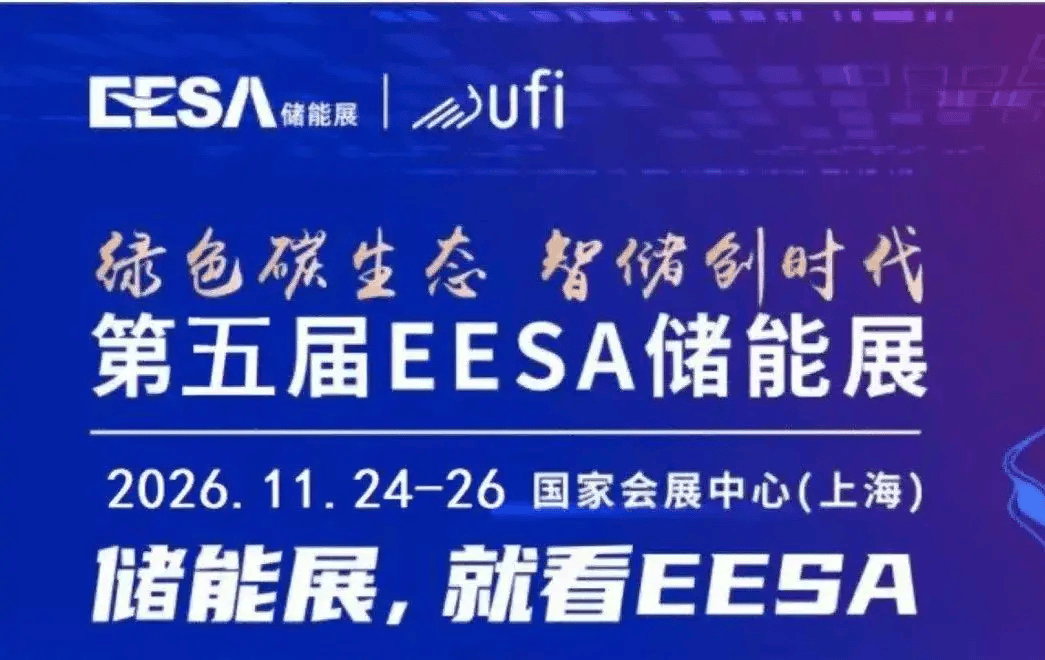
Core Insights - The fifth China International Energy Storage Industry Expo (EESA) will take place from November 24 to 26, 2026, at the National Exhibition and Convention Center (Shanghai), featuring over 800 companies showcasing the entire energy storage industry chain [2][4] - The theme of the expo is "Technology Implementation, Resource Aggregation, Global Collaboration," aligning with China's 14th Five-Year Plan for energy development [4] - The event aims to create a comprehensive industrial ecosystem covering technology research and development, product manufacturing, application scenarios, and capital connections [4][5] Scale and Influence - The expo is expected to attract over 800 global energy storage companies, including more than 50 international leading firms, with over 150,000 professional visitors anticipated [7] - The international audience is projected to comprise over 35%, highlighting the expo's global significance and leadership in the energy storage sector [7] - Compared to similar international exhibitions, EESA stands out in terms of exhibition area, number of exhibitors, and degree of internationalization, making it a key player in the global energy storage exhibition landscape [7] Cutting-edge Technologies - The expo will feature a "Black Technology Experience Zone," showcasing next-generation energy storage innovations such as ion batteries, liquid hydrogen storage, and AI smart operations [9] - Leading global companies will present their latest developments, including CATL's "condensed battery," BYD's "cube energy storage system," and Huawei's "light-storage direct current coupling solution" [9] - The technology exhibition will cover a complete chain from material innovation to system integration, addressing energy density and safety boundaries with solid-state and sodium-ion batteries [9] Global Platform - EESA serves as a platform for Chinese manufacturers to connect with global markets and for international companies to enter the Chinese market, leveraging Shanghai's position as a global trade and innovation hub [11] - The organizing committee will invite international buyer groups, including Fluence and Powin, and provide one-stop services for cross-border compliance, product certification, and market consulting [11] - The expo will host over 20 high-level forums focusing on global energy storage policies, including significant regulations like the EU's "New Battery Law" and the US IRA Act, aiding companies in understanding market entry rules and opportunities [11] Comprehensive Industry Coverage - The expo will feature nine specialized exhibition areas to provide a clear view of the energy storage ecosystem, covering all aspects from core components to end-use applications [13] - The range of exhibits will include energy storage systems and core equipment, advanced storage technologies, smart grids, hydrogen and fuel cells, and testing and certification services [13] - The layout of the three exhibition halls is designed to facilitate effective connections between exhibitors and visitors, with each hall focusing on different segments of the industry [16] Value of Participation - Participation in the EESA expo offers companies enhanced brand influence, business opportunities, and industry insights, providing a complete value chain service from technology display to market connection and capital introduction [19] - Exhibitors will engage directly with high-quality buyers, project developers, and investment institutions from around the world, demonstrating the expo's value as an international trade platform [19] - For professional visitors, the expo serves as an excellent opportunity to gain insights into industry trends, compare technology solutions, and establish collaborative networks, supported by over 20 high-end forums and industry matchmaking activities [19]
动储收官迎新高,碳酸锂趋势反转
Zhong Guo Neng Yuan Wang· 2026-02-24 01:26
Group 1: Lithium Battery Market Insights - The price of lithium carbonate reached 170,000 yuan/ton, an increase of 42% compared to the previous month, while lithium hydroxide was priced at 165,000 yuan/ton, up 62% month-on-month [1][2] - In December, the wholesale sales of domestic new energy passenger vehicles reached 1.42 million units, showing a month-on-month increase of 3% but a decrease of 10% compared to the previous month; the total for the year was 14.21 million units, reflecting a year-on-year growth of 26% [1][2] Group 2: Market Performance Review - Since January 2026, the lithium battery sector has shown active performance, with most segments outperforming the CSI 300 and SSE 50 indices; the lithium mining and negative electrode segments saw significant gains, with the lithium mining sector leading with a 26% increase [3] - The monthly transaction volume for most lithium battery-related sectors increased, with the low-altitude economy segment experiencing the highest growth of 44% [3] Group 3: Industry Trends and Innovations - The lithium carbonate market is experiencing a cyclical reversal, leading to inflation across the industry chain and the emergence of new technologies such as sodium batteries; historical analysis indicates that from 2015 to 2025, lithium carbonate has undergone two complete cycles driven by policy and demand [4] - The solid-state battery industry is accelerating towards commercialization, with expectations of 36 GWh of global solid-state battery shipments by 2025; advancements in materials and production processes are being made, with companies like CATL and NIO making significant progress [8] Group 4: Energy Storage Developments - In December, domestic energy storage installations reached 63 GWh, a year-on-year increase of 95% and a month-on-month increase of 441%, driven by year-end project completions; the total for the year was 146 GWh, reflecting a 33% year-on-year growth [6] - The U.S. energy storage market saw a total installation of 39 GWh for the year, with a year-on-year growth of 39%, although this was below expectations due to uncertainties from the Inflation Reduction Act [6] Group 5: Investment Recommendations - In 2026, the lithium battery sector is expected to experience a significant increase in both volume and price, alongside breakthroughs in solid-state technology; companies recommended for investment include CATL, EVE Energy, and Keda Technology, among others [9]
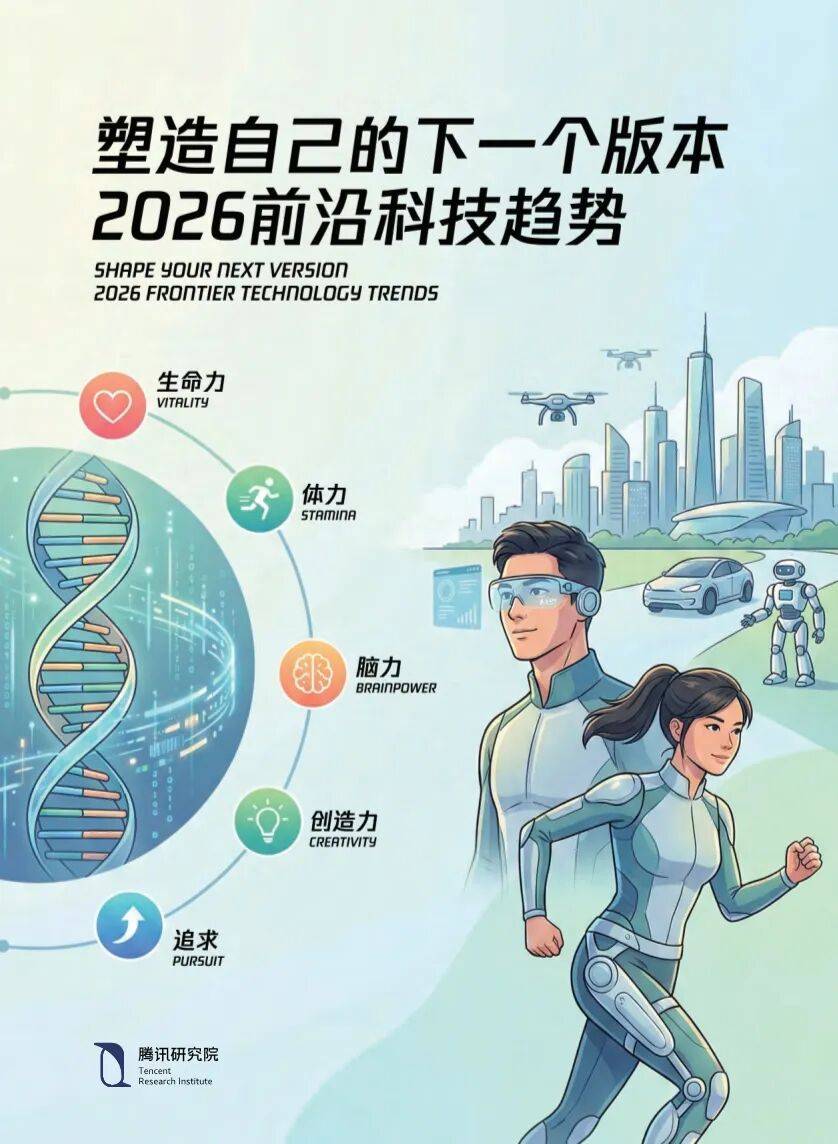
塑造自己的下一个版本2026前沿科技趋势报告解读(40页附下载)
Sou Hu Cai Jing· 2026-02-23 09:39
Group 1: Vitality 2030 - The report highlights a significant shift in human life expectancy, indicating that while life expectancy has doubled over the past century, the growth rate has drastically slowed down, with some regions experiencing stagnation or decline [2][29]. - A new paradigm is emerging, focusing on "healthspan" rather than just lifespan, emphasizing the quality of life without severe chronic diseases, which could generate a global economic value of up to $38 trillion if healthspan is extended by just one year [2][30]. - Key technological advancements include CRISPR technology entering its 2.0 phase, with potential breakthroughs in gene therapy for cardiovascular diseases and personalized treatments for metabolic disorders [2][34][35]. Group 2: Stamina 2030 - Exoskeleton technology is evolving from medical applications to industrial and personal use, significantly enhancing human physical capabilities [3][54]. - In the medical field, exoskeletons are transitioning from mobility aids to intelligent devices that promote neurological rehabilitation, with Medicare's reimbursement policy marking a significant milestone [3][54]. - Industrial applications are showing promising results, with companies like German Bionic reporting a 75% reduction in workplace injuries after implementing exoskeleton technology [3][54]. Group 3: Brainpower 2030 - The report discusses the evolution of artificial intelligence (AI) towards general intelligence (AGI), highlighting advancements in reasoning models that can self-correct and learn from experience [6][7]. - AI is expected to enhance medical practices by significantly reducing drug development timelines from 10-15 years to just a few months, with AI-driven drug candidates already entering clinical trials [6][44]. - Brain-computer interfaces (BCIs) are advancing, with both invasive and non-invasive technologies showing promise in restoring sensory functions and translating brain activity into coherent language [9][10]. Group 4: Creativity 2030 - The integration of AI with personal creativity tools is expected to redefine individual and team productivity, with AI assistants capable of generating complex outputs like presentations and creative content [11][12]. - The emergence of "super individuals" who can independently manage product development and marketing using AI tools is reshaping the concept of team dynamics and company structures [13][14]. - Large organizations are facing challenges in adapting to the AI era, necessitating a complete overhaul of human resource practices to focus on skills and collaborative partnerships rather than traditional employment models [14][15]. Group 5: Pursuit 2030 - The report raises critical questions about individual uniqueness and decision-making in an AI-driven world, emphasizing the importance of maintaining personal judgment and growth opportunities [16][17]. - It suggests that technology amplifies not only capabilities but also choices and values, urging individuals to reflect on their direction in a rapidly evolving landscape [16][17]. - The overarching theme is the need to balance technological advancements with the preservation of human dignity and quality of life, aiming for a future where health and vitality are prioritized over mere longevity [18][51].
固态电池,永远的五年?
Xin Lang Cai Jing· 2026-02-14 09:21
Core Insights - Dyson's acquisition of Sakti3 highlights the strategic importance of solid-state battery technology in the future of electric vehicles, despite initial skepticism about the relevance of a household appliance company in the battery sector [2][5][6] - The solid-state battery industry is characterized by dramatic developments and ongoing challenges, particularly in terms of cost, production, and technological breakthroughs [10][11][38] Investment and Development - Dyson invested at least £500 million in electric vehicle projects over four years, including the acquisition of Sakti3 for over $90 million and approximately £200 million for a research center [6][7] - Despite halting its car manufacturing project in 2019 due to significant losses, Dyson's solid-state battery research has continued, albeit with limited public progress [7][8] Industry Challenges - Solid-state batteries face significant hurdles, including high manufacturing costs (3-5 times that of traditional lithium batteries) and the need for specialized production environments [38][109] - The industry is currently lacking standardization, with various companies pursuing different technological routes without a unified framework [110] Technological Advantages - Solid-state batteries offer several advantages over traditional lithium batteries, including higher energy density (theoretical limits of 400-600 Wh/kg), improved safety, longer cycle life, and wider operational temperature ranges [14][25][33][105] - The transition from liquid to solid-state technology is expected to drive significant changes across the entire supply chain, creating new opportunities [90] Market Outlook - The consensus in the industry is that 2027 will be a critical year for the commercialization of solid-state batteries, with major players like BYD and CATL planning to initiate small-scale production around this time [22][69] - The solid-state battery market is projected to grow significantly, with expectations of reaching energy densities above 500 Wh/kg, alleviating concerns about range anxiety for electric vehicles [28][98] Competitive Landscape - Major companies like CATL, BYD, and Toyota are actively engaged in solid-state battery development, each with distinct strategies and timelines for production [63][64][72] - The competition among these firms is expected to shape the future of the solid-state battery market, with each company leveraging its strengths in technology and production capabilities [63][66]