
共同富裕

Search documents
工行浙江省分行:金融服务丽水山区海岛县高质量发展出实招
Zhong Guo Jin Rong Xin Xi Wang· 2025-08-18 12:10
Core Viewpoint - Zhejiang province is actively promoting high-quality development in mountainous and island counties, with a focus on addressing regional, urban-rural, and income disparities, supported by the Industrial and Commercial Bank of China (ICBC) Zhejiang branch's financial initiatives [1][2][8] Financial Support and Growth - As of the end of July, ICBC Zhejiang branch's loans in mountainous and island counties exceeded 160 billion yuan, doubling in four years with an annual growth rate of 26.5%, surpassing the provincial average by 7.6 percentage points [1] - The bank has established a long-term strategic partnership with Lishui city government, providing significant financial support for key areas such as rural revitalization and the construction of a common prosperity model [2][8] Targeted Financial Initiatives - ICBC Zhejiang branch has implemented a 15-point action plan to ensure systematic and precise financial support for Lishui's development, focusing on urban enhancement, rural prosperity, and integrated growth [3] - The bank has provided 1.6 billion yuan in project loans to revitalize the local bamboo industry, demonstrating a successful model of financial support leading to sustainable economic development [4] Green Finance and Ecological Projects - The bank has pioneered several green finance initiatives, including the first GEP ecological value conversion project in the province, and has seen its green loan balance triple over the past three years [5] - ICBC Zhejiang branch is actively exploring new pathways for realizing the value of ecological products, contributing to the transformation of green resources into economic benefits [5] Urban-Rural Integration and Infrastructure Development - The bank is facilitating urban-rural integration by supporting infrastructure projects such as highways and tourism developments, enhancing the overall economic landscape of the region [7] - Through digital platforms, the bank is promoting the flow of agricultural products from mountainous areas to broader markets, thereby enhancing rural economic vitality [7] Comprehensive Support System - ICBC Zhejiang branch's extensive financial policies and investments are creating a robust support system for mountainous and island counties, driving them towards common prosperity [8]

让人民过上更加美好的生活——看中国经济之“美”
Xin Hua Wang· 2025-08-18 00:07
Core Points - The article emphasizes the importance of improving people's livelihoods and ensuring that the benefits of modernization are shared equitably among all citizens, reflecting the commitment to "Chinese-style modernization" and common prosperity [1][7][9]. Group 1: Economic and Social Policies - The average PM2.5 concentration in key cities decreased by approximately 60% from 2013 to 2024, indicating significant environmental improvements [1]. - In the first half of this year, the per capita disposable income of residents increased by 5.4% year-on-year, outpacing GDP growth [1]. - A yearly childcare subsidy of 3,600 yuan per child will be provided until the child reaches three years old, starting from January 1, 2025 [4]. Group 2: Social Welfare and Support Systems - The central government has allocated 1,566.8 billion yuan for social assistance programs, supporting minimum living guarantees and emergency aid for vulnerable populations [5]. - The average monthly minimum standard for urban and rural residents' basic pensions has been increased by 20 yuan this year [4]. - The number of elderly care insurance participants is approximately 190 million, with over 6,000 public hospitals having geriatric medicine departments by the end of 2024 [4]. Group 3: Poverty Alleviation and Employment - The government aims to consolidate and expand poverty alleviation achievements, ensuring no large-scale return to poverty [7]. - By June, over 6.8 million individuals at risk of returning to poverty have received assistance [8]. - The total output value of the main industries in 832 poverty-stricken counties exceeds 1.7 trillion yuan, with nearly three-quarters of the formerly impoverished population linked to new agricultural business entities [8]. Group 4: Environmental Protection and Sustainability - The article highlights the ongoing efforts to improve environmental quality, including a 2.4% year-on-year decrease in PM2.5 concentration, with an average of 32.1 micrograms per cubic meter [13]. - The forest coverage rate has exceeded 25%, with significant investments in grassland protection and restoration [11]. - The proportion of water quality in major rivers and lakes rated as good (Ⅰ-Ⅲ class) is 90.4%, reflecting improvements in water resource management [12].
让人民过上更加美好的生活 ——看中国经济之“美”
Ren Min Ri Bao· 2025-08-17 22:24
Group 1: Economic and Social Development - The average PM2.5 concentration in key cities in China decreased by approximately 60% from 2013 to 2024, reflecting significant environmental improvements [1] - In the first half of this year, the per capita disposable income of residents increased by 5.4% year-on-year, outpacing GDP growth [1] - A child care subsidy of 3,600 yuan per child per year will be provided until the child reaches three years old, aimed at improving family support [3] Group 2: Social Welfare and Support - The central government has allocated 1,566.8 billion yuan for assistance to vulnerable groups, supporting minimum living guarantees and temporary aid [4] - The average monthly minimum living guarantee for urban and rural residents is 799.7 yuan and 594.9 yuan, respectively [4] - The government is expanding social security coverage and enhancing support for low-income groups through ten key measures [3] Group 3: Poverty Alleviation and Common Prosperity - The government aims to consolidate and expand poverty alleviation achievements, ensuring no large-scale return to poverty [6] - By the end of June, over 6.8 million monitored individuals have been helped to eliminate the risk of returning to poverty [6] - The total output value of leading industries in 832 poverty-stricken counties exceeds 1.7 trillion yuan, with nearly three-quarters of the impoverished population linked to new agricultural entities [7] Group 4: Environmental Protection and Sustainability - The forest coverage rate in China exceeds 25%, with significant investments in ecological restoration and afforestation [10][11] - The proportion of water quality in major rivers and lakes rated as good (Ⅰ—Ⅲ class) is 90.4%, showing improvement in water quality [12] - The average air quality in 339 cities improved, with PM2.5 concentration at 32.1 micrograms per cubic meter, a decrease of 2.4% year-on-year [13]
让人民过上更加美好的生活
Ren Min Ri Bao· 2025-08-17 22:01
Group 1: Economic and Social Development - The average PM2.5 concentration in key cities in China decreased by approximately 60% from 2013 to 2024, reflecting significant environmental improvements [1] - In the first half of this year, the per capita disposable income of residents increased by 5.4% year-on-year, outpacing GDP growth [1] - A yearly childcare subsidy of 3,600 yuan per child will be provided until the child reaches three years old, aimed at enhancing family support [1][3] Group 2: Social Welfare and Support - The central government emphasized the importance of solidifying and improving social welfare systems, including a focus on low-income groups and social assistance [2][3] - The minimum standard for urban and rural residents' basic pensions will be increased by 20 yuan, with long-term care insurance covering approximately 190 million people [3] - By 2024, 5.8 million old urban residential areas will undergo renovation, and 1.8 million units of affordable housing will be constructed [4] Group 3: Poverty Alleviation and Employment - The government aims to consolidate and expand the achievements of poverty alleviation, ensuring no large-scale return to poverty [6] - Over 680 million individuals have been assisted to eliminate the risk of returning to poverty as of June [6] - The total output value of industries in 832 poverty-stricken counties exceeds 1.7 trillion yuan, with nearly three-quarters of the impoverished population linked to new agricultural business entities [7] Group 4: Environmental Protection and Sustainability - The area of afforestation reached 4.446 million hectares in 2024, contributing to a forest coverage rate exceeding 25% [10] - The proportion of water quality in major rivers and lakes rated as good (Class I-III) is 90.4%, showing a slight increase from the previous year [12] - The average air quality in 339 cities improved, with the PM2.5 concentration at 32.1 micrograms per cubic meter, a decrease of 2.4% year-on-year [13]
引导民营企业和民营企业家坚定做中国式现代化的促进者
Sou Hu Cai Jing· 2025-08-16 05:05
Core Points - The article emphasizes the importance of private enterprises and entrepreneurs in promoting Chinese-style modernization and contributing to the healthy development of the non-public economy [2][3][4] Group 1: Contributions of Private Economy - The private economy has made significant contributions to China's economic development, accounting for over 92% of enterprises, more than 50% of tax revenue, and over 60% of GDP [3] - Private enterprises have actively participated in poverty alleviation and rural revitalization, with 127,000 companies investing over 110 billion yuan in poverty alleviation efforts, benefiting over 18 million impoverished individuals [3] - In the first half of the year, 151,000 private enterprises participated in employment promotion actions, providing 2.838 million job opportunities [3] Group 2: Expectations for Private Enterprises - The article outlines expectations for private enterprises to embody patriotism, focus on development, operate lawfully, and contribute to common prosperity [4][7][15] - Private entrepreneurs are encouraged to integrate their personal ambitions with national development goals, emphasizing the importance of patriotism in their business practices [6][7] - The need for private enterprises to adhere to legal and ethical business practices is highlighted, with a focus on modernizing corporate governance structures [12][13][14] Group 3: Innovation and High-Quality Development - The article stresses the necessity for private enterprises to pursue high-quality development through innovation and maintaining focus on their core businesses [8][10] - Private enterprises are identified as key players in technological innovation, with significant contributions in various sectors such as artificial intelligence and new materials [10] - The importance of addressing challenges in innovation and avoiding inefficient practices is emphasized, urging companies to enhance their research and development efforts [10][12] Group 4: Social Responsibility and Common Prosperity - Private enterprises are called upon to take an active role in promoting common prosperity, with expectations for them to contribute to social welfare and community development [15][16] - The article highlights the historical commitment of private entrepreneurs to social responsibility and their role in reducing disparities in wealth and opportunity [16] - Initiatives such as "Ten Thousand Enterprises Helping Ten Thousand Villages" and employment promotion actions are mentioned as examples of private enterprises' contributions to societal well-being [15][16]


上海GDP重返全国前十,温州、徐州冲刺万亿之城
21世纪经济报道· 2025-08-15 14:53
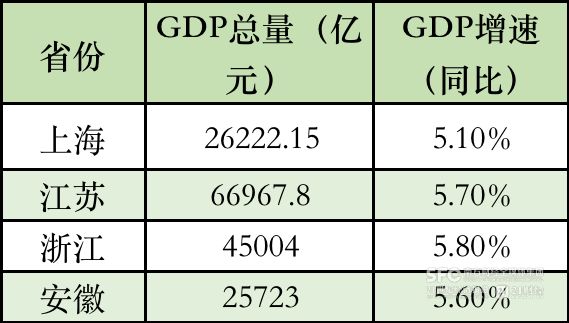
Core Viewpoint - The article highlights the economic performance of the Yangtze River Delta (YRD) region, which accounts for nearly 25% of China's total economic output, showcasing its resilience and growth potential through the analysis of the first half of 2025 GDP reports from 41 cities in the region [2][5]. Provincial Level Summary - In the first half of 2025, the total GDP of Shanghai, Jiangsu, Zhejiang, and Anhui reached 163,916.95 billion yuan, maintaining a stable position above the "15 trillion yuan threshold" [2]. - Jiangsu had the highest GDP at 66,967.8 billion yuan, ranking second nationally, while Zhejiang recorded the fastest growth rate at 5.8% [5][6]. - Shanghai's GDP was 26,222.15 billion yuan, rising from 11th to 9th place nationally, with a growth rate of 5.1% [5][6]. City Level Summary - All nine cities in the YRD with a GDP exceeding 1 trillion yuan reported GDPs above 5,000 billion yuan in the first half of 2025, with Wenzhou and Xuzhou nearing this threshold [3][11]. - Notably, Shaoxing's GDP surpassed 4,000 billion yuan for the first time, while Chuzhou and Huzhou crossed the 2,000 billion yuan mark [3][13]. Economic Structure and Growth - The tertiary sector remains the main driver of economic growth in the region, with Shanghai's tertiary industry growing by 5.4% and accounting for a record high of 79.09% of its GDP [6][7]. - The contribution of the service sector to Shanghai's GDP was significant, particularly in finance and logistics, while manufacturing's contribution was relatively smaller [7]. - Jiangsu, Zhejiang, and Anhui's tertiary industry value added accounted for 55.0%, 59.82%, and 56.33% of their GDP, respectively, all exceeding 50% [8]. Notable City Performances - In the first half of 2025, Suzhou, Hangzhou, and Nanjing each exceeded 1 trillion yuan in GDP, with respective figures of 13,002.35 billion yuan, 11,303 billion yuan, and 9,179.18 billion yuan [11]. - The growth rates of cities such as Suzhou, Hangzhou, and Hefei were above the national average, with Hefei leading at 6% [11][12]. Growth Trends - Seventeen cities in the YRD achieved GDP growth rates of 6% or higher, with notable performances from cities like Zhoushan and Shaoxing [12][15]. - The overall economic performance of the YRD in the first half of 2025 was characterized by stability, with only a few cities reporting growth rates below 4% [15].

长三角半年瞰①:上海GDP重返全国前十,浙皖多地增速破6%
2 1 Shi Ji Jing Ji Bao Dao· 2025-08-15 10:59
Core Viewpoint - The Yangtze River Delta (YRD) region, comprising 41 cities, has shown robust economic performance in the first half of 2025, with a total GDP exceeding 163 trillion yuan, maintaining a significant position in China's economy [1][2]. Provincial Summary - Jiangsu has the highest GDP at 66,967.8 billion yuan, ranking second nationally, while Zhejiang exhibits the fastest growth rate at 5.8%. Shanghai's GDP reached 26,222.15 billion yuan, moving from 11th to 9th nationally [1][2]. - The GDP growth rates for the provinces are as follows: Jiangsu at 5.7%, Zhejiang at 5.8%, Anhui at 5.6%, and Shanghai at 5.1%, all surpassing the national growth rate of 5.3% [2][3]. City-Level Summary - All nine cities in the YRD with GDPs over 10,000 billion yuan surpassed 5,000 billion yuan in the first half of 2025. Notably, Wenzhou and Xuzhou are approaching the 5,000 billion yuan mark [1][6]. - Shanghai, Suzhou, and Hangzhou each exceeded 10,000 billion yuan in GDP, with respective figures of 26,222.15 billion yuan, 13,002.35 billion yuan, and 11,303 billion yuan [5][6]. - Nanjing achieved a significant milestone by surpassing 9,000 billion yuan for the first time, while Changzhou crossed the 5,000 billion yuan threshold [6][7]. Economic Structure - The tertiary sector remains the main driver of economic growth in the YRD, with Shanghai's tertiary industry growing by 5.4%, accounting for a record high of 79.09% of its GDP. The information service sector in Shanghai saw a notable increase of 14.6% [2][3]. - The secondary industry growth rates are led by Anhui at 6.4%, followed by Jiangsu at 5.5%, Zhejiang at 5.6%, and Shanghai at 3.9% [4][6]. Growth Highlights - Seventeen cities in the YRD recorded GDP growth rates of 6% or higher, with notable performances from cities like Zhoushan and Shaoxing [8][9]. - The overall economic performance of the YRD in the first half of 2025 is characterized as stable, with only a few cities experiencing growth rates below 4% [9].
浙江安吉发布首个县域生态文明标准化白皮书
Zhong Guo Xin Wen Wang· 2025-08-13 16:42
Core Insights - The "Anji County Ecological Civilization Standardization White Paper (2005-2025)" is the first of its kind at the county level in China, aiming to standardize ecological civilization practices and promote sustainable development [1][2] Group 1: Standardization and Implementation - The white paper outlines a systematic approach to standardizing ecological practices, focusing on areas such as bamboo carbon trading, beautiful countryside construction, and the realization of ecological product value [1][2] - It proposes a standardization path of "standard formulation - pilot demonstration - nationwide promotion" to provide a quantifiable and replicable operational guide for rural ecological revitalization across the country [2] Group 2: Economic and Social Impact - Anji County has seen significant economic benefits from ecological standardization, with tourism expected to exceed 34.02 million visitors and generate over 47.56 billion yuan in revenue in 2024, while per capita disposable income for farmers has increased to over 48,000 yuan, approximately six times higher than in 2005 [2] - Innovative models such as bamboo carbon trading and soil and water conservation resource rights auctions have generated over 200 million yuan in ecological product transactions, benefiting more than 50,000 farmers and creating a virtuous cycle of "ecological restoration - industrial upgrading - common prosperity" [2] Group 3: Future Directions - The Anji County Market Supervision Bureau aims to integrate ecological civilization with rural revitalization, enhancing standards in urban-rural infrastructure, public services, and green consumption to promote shared ecological benefits [3]
淳安县高质量发展工作推进会暨区县协作第一协作组联席会议召开
Hang Zhou Ri Bao· 2025-08-13 03:27
Core Viewpoint - The meeting emphasized the importance of high-quality development in Chun'an County, focusing on the integration of urban and rural areas and the implementation of the "Ten Million Project" to reduce the "three major gaps" [1][2][3] Group 1: High-Quality Development Initiatives - The provincial and municipal leadership highlighted the need to implement Xi Jinping's important speeches on common prosperity and the "Ten Million Project" to drive urban-rural integration [1][2] - The meeting outlined the goal of making Chun'an a model area for the concept of "Lucid waters and lush mountains are invaluable assets," aiming to showcase it as a highlight in Hangzhou's high-quality development [1][2] Group 2: Economic and Social Strategies - Emphasis was placed on enhancing the tourism industry and promoting the "Thousand Island Lake" regional brand while exploring mechanisms for realizing the value of ecological products [2] - The strategy includes expanding the water industry, improving the comprehensive carrying capacity of the county and central towns, and promoting the development of local specialties to increase farmers' income [2][3] Group 3: Governance and Leadership - The meeting stressed the need for strong party leadership and the central role of the county committee in narrowing the "three major gaps," with the county secretary acting as the frontline commander [3] - A call was made for a robust evaluation system to ensure accountability for both primary and supportive responsibilities in promoting high-quality development [3]
周世锋:统筹做大“蛋糕”与分好“蛋糕”
Jing Ji Ri Bao· 2025-08-13 00:20
Core Insights - Huzhou is implementing the concept of "Green Water and Green Mountains are as Valuable as Mountains of Gold and Silver" through innovative reforms and mechanisms to achieve ecological civilization and common prosperity [1][2] Group 1: Reform Innovations - Huzhou has been exploring reforms to facilitate the transformation of ecological resources, such as initiating pilot reforms for "Two Mountains" cooperatives in 2019, achieving full coverage of cooperatives by June 2023, and generating a cumulative income of 147 million yuan for village collectives [1] - The city is also pioneering property rights reforms for mountain ponds and reservoirs, with the first national ecological product value transformation project set to launch in March 2024 [1] Group 2: Business Model Innovations - Huzhou is transforming ecological resources into vibrant business models, creating new formats like "village coffee + leisure," "village coffee + music," and "camping + cultural tourism," which have attracted youth to rural areas [1] - The "Deep Blue Plan" in Anji set a national record with a single store selling 8,818 cups of coffee in one day, showcasing the potential of the coffee economy and digital nomadism in rural areas [1] Group 3: Benefit Distribution Mechanisms - Huzhou has innovated benefit distribution mechanisms to ensure equitable sharing of ecological wealth, such as the bamboo forest carbon sink trading platform in Anji, which allows villagers to earn stable returns from investments while ensuring collective benefits for the community [2] - The model emphasizes the return of resources and benefits to farmers, promoting a sustainable cycle of investment and profit-sharing that supports both individual and community welfare [2]