
信息服务业

Search documents
3月PMI,三个罕见信号
HUAXI Securities· 2026-03-31 12:43
Group 1: PMI Overview - March manufacturing PMI rebounded to 50.4%, up 1.4 percentage points from 49.0%[1] - Non-manufacturing PMI increased to 50.1%, up from 49.5%[1] - New orders in manufacturing rose 3.0 percentage points to 51.6%, surpassing production which increased 1.8 percentage points to 51.4%[1] Group 2: Demand and Supply Dynamics - The proportion of manufacturing firms reporting insufficient demand fell to 48.5%, a decrease of 6.6 percentage points, marking the first drop below 50% since July 2022[1] - Manufacturing export orders increased by 4.1 percentage points to 49.1%, indicating stronger demand[2] - The purchasing price index for major raw materials reached 63.9%, while factory gate prices rose to 55.4%[2] Group 3: Employment and Construction - Employment index in manufacturing rose 0.6 percentage points to 48.6%, with only four months since March 2023 showing a rebound exceeding 0.5 percentage points[3] - The construction business activity index increased by 1.1 percentage points to 49.3%, driven by infrastructure investment recovery[3] - New orders in construction rose 1.3 percentage points to 43.5%[3] Group 4: Price Trends - Manufacturing output prices increased by 4.8 percentage points to 55.4%, suggesting a potential PPI increase of nearly 1 percentage point[4] - Service sector prices rebounded to 50%, marking a return to the growth threshold after 29 months[4] - Construction prices rose by 1.7 percentage points to 49.3%, indicating upward pressure from raw material costs[4] Group 5: Economic Outlook - The overall economic performance in March indicates a recovery, with production rebounding more significantly than orders, reaching 50.5%[5] - The average PMI output for Q1 2026 was 49.9%, a slight decrease of 0.2 percentage points from Q4 2025, indicating ongoing economic challenges despite March's rebound[6] - The report suggests that fiscal and monetary policies may not need immediate adjustments given the current economic indicators[6]
2026年3月PMI数据解读:3月PMI:出口改善,价格回升
ZHESHANG SECURITIES· 2026-03-31 11:48
Group 1: PMI Overview - The manufacturing PMI for March is 50.4%, an increase of 1.4 percentage points from the previous month, indicating a return to the expansion zone[1] - The production index for manufacturing rose to 51.4%, up 1.8 percentage points, reflecting accelerated manufacturing activity[3] - The new orders index for manufacturing increased to 51.6%, a rise of 3 percentage points, marking a return to the expansion zone after two months below 50%[3] Group 2: Economic Conditions - The composite PMI output index is 50.5%, up 1.0 percentage points from last month, indicating overall improvement in business activities[8] - The non-manufacturing business activity index is at 50.1%, an increase of 0.6 percentage points, ending two consecutive months below 50%[7] - The equipment manufacturing new orders index rose over 3 percentage points to above 53%[1] Group 3: Price Trends and Cost Pressures - The raw material purchase price index surged to 63.9%, a significant increase of 9.1 percentage points, indicating rising costs in manufacturing[5] - The ex-factory price index rose to 55.4%, up 4.8 percentage points, remaining in the expansion zone for three consecutive months[6] - The geopolitical situation in the Middle East has contributed to rising costs, particularly in the petrochemical sector, affecting the supply chain[6] Group 4: Employment and Business Sentiment - The employment index remains low at 48.6%, indicating ongoing employment pressures and insufficient hiring willingness[21] - The business expectations index for manufacturing rose to 53.4%, up 0.2 percentage points, reflecting optimism among manufacturers[2] - Large enterprises have a PMI of 51.6%, while small and medium enterprises have PMIs of 49% and 49.3%, respectively, showing marginal improvement in smaller firms[4]
2025年朝阳区实现地区生产总值9668.5亿元
Bei Jing Ri Bao Ke Hu Duan· 2026-02-09 05:13
Economic Overview - Chaoyang District achieved a GDP of 966.85 billion yuan in 2025, with a year-on-year growth of 5.2% in real terms [3] - The total retail sales of social consumer goods reached 260.03 billion yuan, with online retail sales in accommodation and catering amounting to 77.12 billion yuan, reflecting a year-on-year growth of 15.5% [4] Key Industries and Leading Enterprises - The financial sector contributed an added value of 181.33 billion yuan, growing by 14.3% year-on-year, accounting for nearly 20% of the district's GDP [4] - The top ten enterprises in sectors such as leasing, business services, information services, and transportation achieved revenue growth rates significantly higher than the city averages, with contributions to their respective sectors reaching 95.3%, 84.8%, 91.4%, and 123.6% [4] Innovation and R&D Dynamics - The number of high-tech and specialized enterprises increased, with revenues growing by 4.6% and 4.5% respectively, while AI enterprises saw an 11.5% revenue increase [7] - R&D expenses grew by 3.0%, and technology revenue increased by 12.9%, making up 36.2% of total revenue, which is 7.8 percentage points higher than the city average [8] Investment and Foreign Capital - Total construction and equipment investment accounted for over half of the district's investments, with an 8.7% year-on-year growth [10] - In 2025, 533 new foreign-funded enterprises were established, marking a 14.4% increase, with actual foreign capital utilization reaching 2.13 billion USD, a 33.9% increase [11]

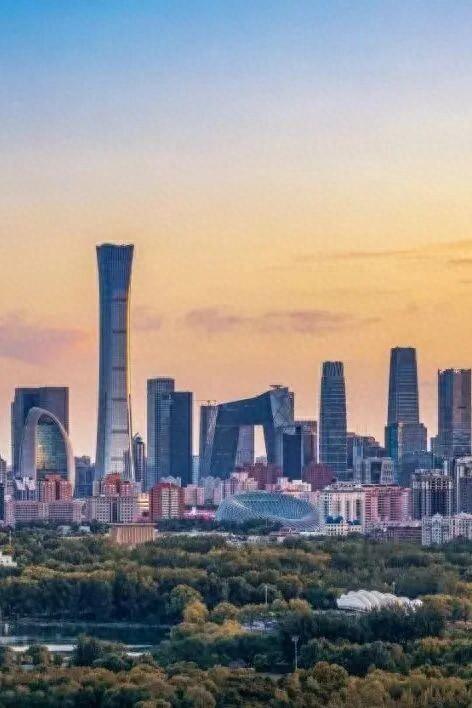
做大经济总量 增强发展动能
Xin Lang Cai Jing· 2026-02-05 07:53
Group 1 - The Shanghai Municipal Political Consultative Conference emphasizes the importance of accelerating the construction of "five centers" and modernizing urban governance to enhance the city's role as a leading example [1] - The focus is on boosting the economy through effective investment in advanced manufacturing, knowledge-intensive services, and computing power, while also supporting small and micro enterprises [1] - There is a call for enhancing new development momentum by revitalizing traditional industries and exploring future industrial tracks, alongside maintaining a positive trend in the information and financial services sectors [1] Group 2 - The proposal to implement the "AI+" initiative aims to create a high-density ecosystem for artificial intelligence, encouraging industry leaders to drive innovation and collaboration among upstream and downstream enterprises [2] - A talent evaluation and incentive system based on capability and contribution is suggested to attract top talent, alongside the establishment of a "research-type entrepreneur" training mechanism [2] - The goal is to make Shanghai a preferred destination for global science and technology youth by providing tailored policy services for students and entrepreneurial teams [2] Group 3 - The integration of culture, tourism, commerce, and sports is highlighted as a key driver for enhancing consumer capacity and city image, with a focus on building a more influential urban IP system [3] - The proposal includes leveraging state-owned enterprises' resources to support private enterprises in attracting world-class IP and participating in the development of major global consumer destinations [3] Group 4 - The creation of a globally attractive ecosystem for high-quality population development is proposed, focusing on reducing living and entrepreneurial costs for students and young professionals [4] - Recommendations include building youth-friendly communities and enhancing public services in healthcare, education, and governance to attract international talent [4] - There is an emphasis on stabilizing employment through job expansion and quality improvement, as well as personalized support for mid-career professionals transitioning to new roles [4]
粤开宏观:如何认识5%与140万亿
Yuekai Securities· 2026-02-02 06:49
Economic Performance - In 2025, China's GDP surpassed 140 trillion yuan, achieving a growth rate of 5%, maintaining a growth rate of 5% or above for three consecutive years[1] - The resilience of the economy is attributed to strong international competitiveness of Chinese products and a diversified export market, despite increased tariffs from the US[1] - Final consumption expenditure contributed 52% to economic growth, up from 44.5% in 2024[3] Structural Changes - The proportion of service industry value added to GDP increased from 56.8% in 2024 to 57.7% in 2025[3] - High-tech and emerging industries are rapidly developing, with the added value of equipment manufacturing and high-tech manufacturing growing by 9.2% and 9.4%, respectively, outpacing the overall industrial growth rate of 5.9%[3] - High-tech product exports increased by 13.2%, exceeding the overall export growth rate of 6.1%[3] Challenges and Recommendations - The real estate market requires further policy adjustments to stabilize and address liquidity risks among real estate companies[4] - A long-term mechanism to support consumption should be established, focusing on optimizing income distribution and social security systems[4] - Local fiscal balance issues need to be addressed by increasing central transfer payments or raising local debt limits to compensate for revenue shortfalls[5]
1月制造业PMI为49.3% 出厂价格指数近20个月来首次升至临界点以上
Xin Lang Cai Jing· 2026-02-01 13:07
Group 1 - In January, the manufacturing Purchasing Managers' Index (PMI) decreased to 49.3%, indicating a decline in economic sentiment [1] - The non-manufacturing business activity index fell to 49.4%, reflecting a decrease in overall economic activity [1] - The comprehensive PMI output index also dropped to 49.8%, showing a general downturn in economic conditions [1] Group 2 - The decline in manufacturing PMI is attributed to seasonal factors, as many industries enter a traditional off-peak period in January [2] - The PMI index is affected by a high base effect from December 2025, which saw a significant increase, thus impacting January's figures [2] - Weak internal investment and consumption demand, along with high external uncertainties, are major factors dragging down the manufacturing sector [2] Group 3 - The raw material purchase price index rose to 56.1%, while the factory price index increased to 50.6%, marking the first time in nearly 20 months that the factory price index exceeded the critical point [3] - The difference between the raw material purchase price index and the factory price index indicates a transfer of profits upstream [3] - Recent structural policies aimed at supporting small and medium enterprises and technology firms are expected to take time to positively impact the manufacturing sector [3] Group 4 - The non-manufacturing business activity index's decline is influenced by the downturn in industries such as construction, with the index falling to 49.4% [4] - The real estate sector's business activity index dropped below 40.0%, indicating a weak overall sentiment in that industry [4] - Financial services and capital market services showed higher activity levels, with indices above 65.0%, reflecting a more active market [4] Group 5 - The overall macroeconomic sentiment is declining due to seasonal fluctuations, high previous month bases, and insufficient effective demand from the real estate market [5] - The manufacturing production index is expected to decline significantly in February due to the extended Spring Festival holiday [5] - Future manufacturing sentiment will be influenced by export growth, real estate market trends, and the timing and intensity of growth-stimulating policies [5]
【新华解读】1月PMI有所波动 后续经济回升向好基础仍需巩固
Xin Hua Cai Jing· 2026-01-31 12:25
Group 1: Manufacturing Sector - In January, China's manufacturing Purchasing Managers' Index (PMI) was reported at 49.3%, a decrease of 0.8 percentage points from the previous month [1] - The new orders index for manufacturing was 49.2%, down 1.6 percentage points, indicating a slowdown in market demand [2] - Despite the slowdown, the production index remained above the critical point at 50.6%, indicating continued expansion in manufacturing [2] - High-tech manufacturing PMI was at 52.0%, showing strong performance driven by global AI investment and domestic equipment upgrades [2] Group 2: Service Sector - The service sector's business activity index slightly decreased by 0.2 percentage points to around 49.5%, while the new orders index also saw a minor decline [3] - The financial sector's business activity index rose significantly to over 65%, with new orders remaining above 60%, indicating robust growth in financial activities [4] - The optimism in the service sector is supported by the ongoing development of new economic drivers, particularly in digital economy and AI sectors [5] Group 3: Economic Outlook - Experts suggest that the manufacturing sector's performance will be influenced by export growth, real estate market trends, and the timing and intensity of growth-stimulating policies [3] - There is a call for increased government investment in public goods to stimulate demand and enhance business orders, which is crucial for sustaining economic recovery [3] - The financial sector's activity is expected to continue rising, with optimistic forecasts for service-related industries as the Spring Festival approaches [5]
2025年广州地区生产总值3.2万亿元 同比增长4.0%
Zhong Guo Xin Wen Wang· 2026-01-30 11:12
Economic Overview - In 2025, Guangzhou's GDP reached 3.2 trillion yuan, with a year-on-year growth of 4.0% [1] - The primary industry added value was 317.02 billion yuan, growing by 3.3%; the secondary industry added value was 7.71 trillion yuan, growing by 1.6%; and the tertiary industry added value was 24.01 trillion yuan, growing by 4.8% [1] Industrial Performance - The industrial added value of large-scale industries in Guangzhou grew by 1.2% year-on-year [1] - The automotive manufacturing sector, undergoing transformation, saw a narrowing decline, with new energy vehicle production increasing by 21.6% [1] - The manufacturing of display devices and integrated circuits grew by 16.1% and 43.0% respectively, with significant increases in production for various components [1] Investment Trends - Fixed asset investment in Guangzhou showed structural optimization, with significant growth in transportation projects, particularly in water and air transport, which grew by 15.9% and 16.1% respectively [2] - Investment in high-tech manufacturing, specifically in aerospace and equipment manufacturing, surged by 60.6% [2] - In high-tech services, investments in information services and R&D design services grew by 22.0% and 29.5% respectively [2] Consumer and Income Data - The total retail sales of consumer goods reached 1.1 trillion yuan, with a year-on-year increase of 5.5% [2] - The per capita disposable income of residents in Guangzhou was 80,591 yuan, growing by 3.6% year-on-year [2] - Over 70% of public budget expenditure was allocated to social welfare, education, and housing security, with respective growth rates of 15.4%, 2.8%, and 2.6% [2] Economic Challenges and Future Outlook - The economic environment in Guangzhou is characterized by ongoing challenges, with industrial production in a low recovery phase and a need for stronger internal demand [3] - Future strategies include market expansion driven by demand, project support, technological innovation, and revitalizing industrial momentum to sustain economic recovery [3]
线上线下:预计2025年净利润亏损700万元–1000万元
Xin Lang Cai Jing· 2026-01-30 08:02
Core Viewpoint - The company is expected to report a net loss of 7 million to 10 million yuan for the fiscal year 2025, a significant decline from a profit of 30.4594 million yuan in the same period last year [1] Financial Performance - The company's mobile information service business has experienced a substantial decline in both revenue and gross profit during the reporting period [1] - The digital marketing business has also seen a decrease in revenue and gross profit, contributing to the overall financial downturn [1] Accounting Adjustments - The company has decided to write off certain deferred tax assets based on cautious principles and predictions regarding the future operational status of some subsidiaries, negatively impacting net profit [1] - In accordance with relevant accounting standards, the company has prudently assessed and recognized impairment losses on assets showing signs of impairment, further reducing the net profit attributable to shareholders [1]

经开区经济总量迈上4千亿新台阶
Xin Lang Cai Jing· 2026-01-28 16:47
Core Insights - The Beijing Economic-Technological Development Area (BDA) achieved a GDP of 401.21 billion yuan in 2025, marking a year-on-year growth of 10.7%, leading among national economic development zones [1] Group 1: Economic Performance - The industrial output value in BDA grew by 12% year-on-year in 2025, with key industries showing double-digit growth [1] - The high-end automotive and new energy smart vehicle industries saw a production value increase of 17.4% year-on-year [1] - The new generation information technology industry experienced a production value growth of 19.3% year-on-year [1] - The robotics and intelligent manufacturing industry recorded a production value increase of 5.1% year-on-year [1] Group 2: Service Sector Growth - The information service industry generated revenue of 130.28 billion yuan from January to November 2025, reflecting a year-on-year growth of 16.7% [1] - The financial sector's net income increased by 23.1% year-on-year for the entire year [1] - Retail sales in the wholesale and retail sector grew by 15.1% year-on-year, driven by companies like JD.com [1] Group 3: Innovation and Investment - R&D expenses for large and medium-sized key enterprises in BDA rose by 31.8% year-on-year, leading the city [2] - Fixed asset investment in BDA has maintained a scale of over 100 billion yuan for three consecutive years, with significant projects like the Sanofi insulin raw material project and the large commercial complex Wanxianghui accelerating [2] - BDA aims to anchor its fourth 100 billion yuan investment target, with several key projects set to commence, including a new drug R&D and industrialization base and a headquarters for aerospace intelligence [2]