
世界多极化

Search documents
外交部:中国始终是全球发展的动力源和增长极
Bei Jing Ri Bao Ke Hu Duan· 2025-10-24 08:09
Core Viewpoint - The recent Fourth Plenary Session of the 20th Central Committee of the Communist Party of China highlighted China's resilience in the face of global challenges, emphasizing the country's commitment to high-quality development and the continuation of its modernization plans during the "14th Five-Year Plan" period [4]. Group 1 - China has achieved significant economic milestones, with its GDP surpassing 130 trillion RMB during the "14th Five-Year Plan" [4]. - Emerging industries such as artificial intelligence and renewable energy have made breakthrough advancements, transforming China from the "world's factory" to a "global innovation center" [4]. - The country has maintained a high level of openness to foreign investment, reducing the negative list for foreign investment and lowering the overall tariff level to 7.3% [4]. Group 2 - The Fourth Plenary Session approved recommendations for the "15th Five-Year Plan," signaling stability in China's policies, economic growth, and development expectations [4]. - This continuity from the "14th Five-Year Plan" to the "15th Five-Year Plan" reflects China's determination and reveals the successful governance model of the country [4]. - China aims to share opportunities and promote equal and orderly global multipolarity and inclusive economic globalization, contributing to the construction of a community with a shared future for mankind [4].


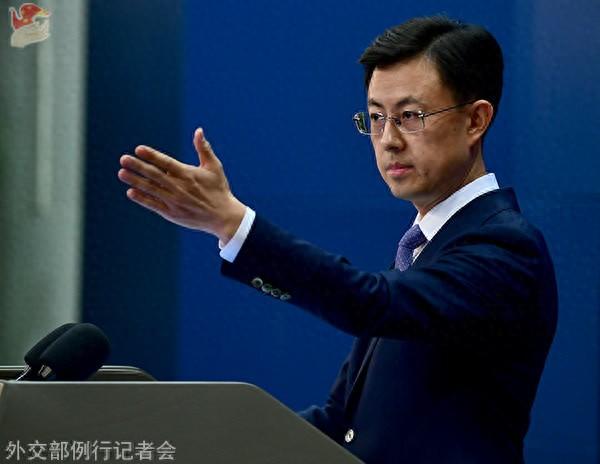
外交部:中国始终是全球发展的动力源增长极
Xin Lang Cai Jing· 2025-10-24 08:09
Core Points - The Chinese government emphasizes high-quality development and significant achievements during the 14th Five-Year Plan, with GDP surpassing 130 trillion RMB [1] - Emerging industries such as artificial intelligence and renewable energy have made breakthrough progress, transforming China from the "world's factory" to a "global innovation center" [1] - China maintains a high level of openness to foreign investment, reducing the negative list for foreign investment and lowering the overall tariff level to 7.3% [1] - The country contributes approximately 30% to global economic growth and continues to be a driving force for global development [1] - The recent 20th Central Committee's Fourth Plenary Session approved recommendations for the 15th Five-Year Plan, signaling stability in policies and economic growth expectations [1] - China aims to share opportunities and promote a multipolar world and inclusive economic globalization, contributing to the building of a community with a shared future for mankind [1]
上合组织是促进世界多极化的重要力量(国际论坛)
Ren Min Ri Bao· 2025-10-10 22:10
Group 1 - The Shanghai Cooperation Organization (SCO) is the largest regional organization globally, enhancing its influence and attractiveness, and is a significant force in promoting a multipolar world [2] - The SCO's development has evolved from focusing on combating the "three evil forces" to encompassing diverse cooperation in economic and cultural fields, achieving notable accomplishments since its establishment [2] - The SCO promotes sustainable development goals through macroeconomic policy coordination, enterprise participation, and social cooperation among member states [2] Group 2 - President Xi Jinping proposed the construction of a community with a shared future for the SCO, providing strategic direction for its future development [3] - During China's presidency from 2024 to 2025, a series of projects will be implemented across eight key areas of the global development initiative, enhancing political trust, regional security, and economic growth [3] - Uzbekistan, as a member state, has actively participated in various cooperation projects and has strengthened its relationship with China, which is now its largest trading and investment partner [3] Group 3 - The SCO has proven effective in addressing risks and challenges while establishing a foundation for deepening mutual trust and achieving sustainable development among countries [4] - The organization will continue to expand international cooperation and promote the principles of mutual respect and common prosperity to contribute to world peace, stability, and justice [4]

普京祝贺中国国庆,称俄中关系达历史最高水平并推动世界多极化
Zhong Guo Xin Wen Wang· 2025-10-01 07:21
Group 1 - Russian President Putin congratulated China on the 76th anniversary of its founding, stating that Russia-China relations are at an all-time high [1][3] - Putin emphasized that recent comprehensive and constructive talks in Tianjin and Beijing confirm the elevated status of bilateral relations [3] - The implementation of agreements reached during these talks is expected to broaden cooperation areas and create favorable conditions for emerging joint projects, aligning with the interests of both nations and promoting a multipolar world order [3] Group 2 - Putin highlighted China's steady progress in socio-economic and technological development, reinforcing its international standing and contributions to addressing global challenges [3] - He extended wishes for happiness and prosperity to the Chinese people [3]
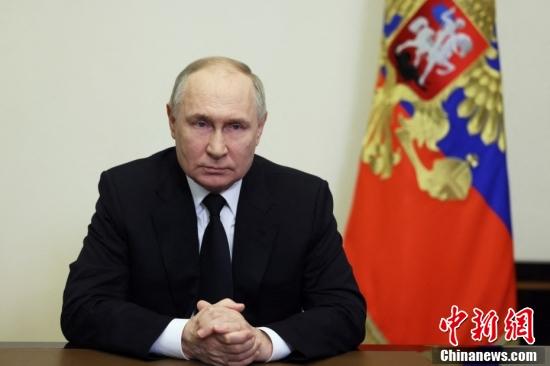
外交部:欢迎志同道合的伙伴参与到金砖合作中
Yang Shi Xin Wen Ke Hu Duan· 2025-09-26 09:30
Core Viewpoint - The BRICS nations serve as a significant platform for cooperation among developing and emerging market countries, promoting a multipolar world and democratization of international relations, which has gained widespread recognition among Southern countries [1]. Group 1 - The BRICS countries are recognized as an important platform for collaboration among developing and emerging market nations [1]. - The initiative is seen as injecting strong momentum into the development of a multipolar world and the democratization of international relations [1]. - There is an open invitation for like-minded partners to join BRICS cooperation to promote a more just and reasonable international order [1].
中方是否支持巴勒斯坦加入金砖国家?外交部回应
Huan Qiu Wang· 2025-09-26 07:40
Core Viewpoint - The Chinese government expresses support for the inclusion of Palestine in the BRICS group, emphasizing the importance of BRICS as a platform for cooperation among developing and emerging market countries [1] Group 1 - The BRICS group is recognized as a significant platform for cooperation among developing countries and emerging markets, contributing to the multipolarity of the world and the democratization of international relations [1] - The Chinese government welcomes like-minded partners to participate in BRICS cooperation, aiming to promote a more just and reasonable international order [1]
“为世界多极化发展提供了新思路” ——访埃及贝尼苏韦夫大学政治学教授纳迪娅
Ren Min Ri Bao· 2025-09-20 22:09
Group 1 - The Shanghai Cooperation Organization (SCO) is evolving into a closer community of shared destiny, driven by mutual respect and partnership, with significant contributions to building a community with a shared future for mankind [1] - The upcoming 2025 SCO Tianjin Summit is expected to be the largest since the organization's inception, highlighting its strong appeal and China's growing influence on the international stage [1] - Security cooperation remains a key agenda for the SCO, with member states deepening collaboration in this area to maintain regional stability and prosperity amid current global challenges [1] Group 2 - The increasing number of countries applying to join the SCO indicates a positive outlook for the organization's future, attributed to its advocacy of the "Shanghai Spirit" and a departure from Cold War mentalities [2] - The SCO promotes dialogue over confrontation and partnership over alliances, contributing to the construction of new international relations and providing new ideas for global multipolar development [2] - The SCO serves as an important platform for enhancing Egypt-China cooperation across various sectors, including digital economy, green energy, health, education, and vocational training, thereby advancing bilateral relations towards a community of shared destiny [2]
“为世界多极化发展提供了新思路”
Ren Min Ri Bao· 2025-09-20 21:48
Group 1 - The Shanghai Cooperation Organization (SCO) is evolving into a closer community of shared destiny, driven by mutual respect and partnership, with significant contributions to building a community with a shared future for mankind [1] - The upcoming 2025 SCO Tianjin Summit is expected to be the largest since the organization's inception, highlighting its strong appeal and China's growing influence on the international stage [1] - Security cooperation remains a key agenda for the SCO, with member states deepening collaboration in this area to maintain regional stability and prosperity amid current global challenges [1] Group 2 - The increasing number of countries applying to join the SCO indicates a positive outlook for its development, attributed to its advocacy of the "Shanghai Spirit" and a departure from Cold War mentalities [2] - The SCO promotes dialogue over confrontation and partnership over alliances, contributing to the construction of new international relations [2] - The SCO serves as an important platform for enhancing Egypt-China cooperation across various sectors, including digital economy, green energy, health, education, and vocational training [2]
新华时评丨坚持多边主义是基本路径——构建更加公正合理的全球治理体系④
Xin Hua She· 2025-09-15 15:40
Group 1 - The core viewpoint emphasizes the importance of multilateralism as a fundamental path for global governance, addressing current global challenges and creating a shared future for humanity [2][3] - The rise of emerging markets and developing countries has accelerated global multipolarity, necessitating a shift from a historically dominated international power structure to a more equitable global order [2][3] - Multilateralism is framed as a means to recognize and respect the equal rights of all countries, particularly developing nations, in participating in global governance [2][3] Group 2 - China's foreign policy is characterized by a strong commitment to multilateralism, advocating for collective discussion, construction, and sharing of governance outcomes [3] - The United Nations is highlighted as the core platform for practicing multilateralism and advancing global governance, with an emphasis on strengthening its role rather than diminishing it [4] - The interconnectedness of humanity today underscores the necessity of genuine multilateralism and the promotion of a balanced and orderly multipolar world [4]
习近平同瑞士联邦主席凯勒-祖特尔互致贺电
Xin Hua She· 2025-09-15 00:47
Core Points - The 75th anniversary of diplomatic relations between China and Switzerland was celebrated, highlighting the friendly cooperation between countries with different social systems and development stages [1] - Both nations have cultivated a spirit of "equality, innovation, and win-win" cooperation, leading to fruitful bilateral and multilateral cooperation results that enhance the welfare of their peoples [1] - China expresses a commitment to deepen economic, financial cooperation, and cultural exchanges with Switzerland, aiming to elevate the innovative strategic partnership to a new level [1] Summary by Sections - **Bilateral Relations**: The relationship between China and Switzerland is characterized by mutual respect, dialogue, and practical cooperation, establishing a diverse and solid partnership over 75 years [1] - **Milestones**: Key milestones include the implementation of the free trade agreement in 2014 and the establishment of the innovative strategic partnership in 2016, marking the continuous expansion and deepening of cooperation across various fields [1] - **Future Outlook**: Switzerland expresses a willingness to continue deepening exchanges and cooperation with China, reinforcing the long-term friendship between the two nations [1]