
大单品策略

Search documents
长安汽车(000625):深蓝S09开启预售 打造大六座“9”系SUV新标杆
Xin Lang Cai Jing· 2025-04-25 06:38
预售价23.99-30.99 万元,产品具备较高性价比。深蓝S09 开启预售,后驱Max/后驱Ultra/后驱Ultra+/四 驱ULTRA/四驱ULTRA+ 高定版预售价分别为23.99/25.99/27.99/27.99/30.99 万元。对标双"9"系列车型, 问界M9/M8 售价为46.98-56.98 万元/35.98-44.98 万元;理想L9/理想L8 售价40.98-43.98 万元/32.18-37.98 万。深蓝S09 定价大幅拉低华为智驾同类产品起步价格带,具备较高性价比。 事件:4 月23 日,深蓝S09 开启预售,共发布后驱Max、后驱Ultra、后驱Ultra+、四驱 ULTRA、四驱 Ultra+ 高定版合计5 个版本,预售价23.99-30.99 万元。 空间+舱驾对标双"9"车型,华为核心部件标配。长安深蓝S09 尺寸5205mm*1996mm*1800mm , 轴距 3105mm ; 尺寸对标理想L9(5218mm*1998mm*1800mm,轴距3105mm)与问界M9 (5230mm*1999mm*1800mm,轴距3110mm),尺寸与双"9"车型无明显差异,定位大六 ...

珀莱雅营收首破百亿元 锚定“双十”战略愿景
Zheng Quan Shi Bao Wang· 2025-04-24 13:43
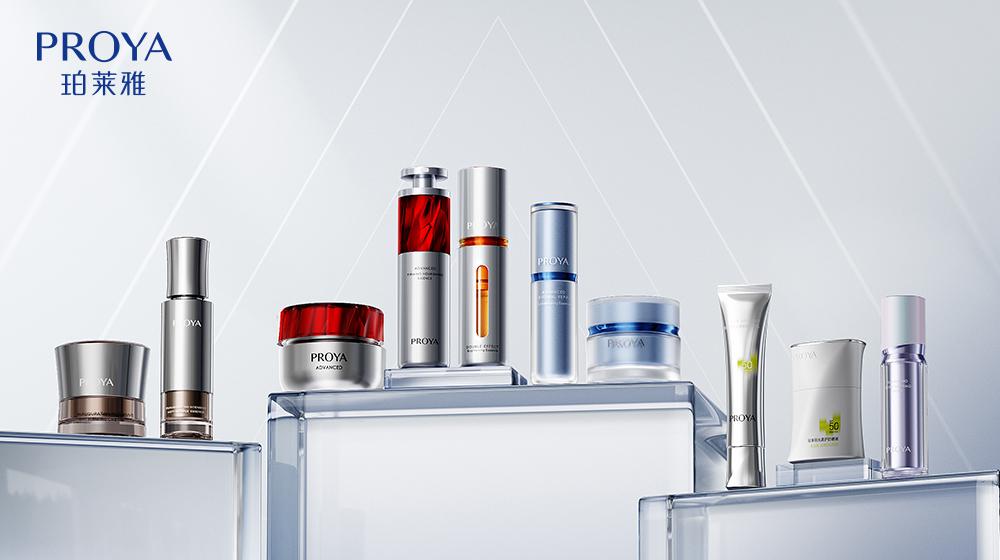
Core Insights - The company, Proya Cosmetics, has become the first domestic beauty brand in China to achieve over 10 billion yuan in revenue, reporting 10.778 billion yuan in 2024, a year-on-year increase of 21.04% [1] - The net profit attributable to shareholders reached 1.552 billion yuan, marking a significant year-on-year growth of 30% [1] - The company has announced a cash dividend plan, proposing a distribution of 11.9 yuan per 10 shares, totaling 469 million yuan, which represents 40.07% of the net profit [1] Financial Performance - In Q1 2025, the company continued its growth trajectory with revenue of 2.359 billion yuan, up 8.13% year-on-year, and a net profit of 390 million yuan, reflecting a 28.87% increase [1] - The gross margin and net margin improved to 71.39% and 14.71%, respectively, achieving record highs in core operational metrics [1] Strategic Initiatives - The company's growth is driven by three strategic pillars: technology-driven products, multi-brand synergy, and integrated channel development [2] - The main brand, Proya, contributed 8.581 billion yuan in revenue, accounting for nearly 80% of total sales, demonstrating strong growth resilience [2] Brand and Product Development - The company has implemented a "big product strategy," enhancing its Ruby and Source series while launching new products like whitening optical and oil-control solutions [2] - Proya's e-commerce performance is notable, with its Tmall flagship store ranking first in the beauty category, followed by Douyin and JD.com [2] Channel Expansion - Proya is enhancing its online and offline collaboration, leveraging live e-commerce and content marketing for growth, while also expanding into new department stores and shopping centers [4] - The multi-brand matrix strategy has led to a significant increase in sub-brand revenues, surpassing 2 billion yuan for the first time, accounting for 20.31% of total revenue [4] Research and Development - The company has increased its R&D investment by 21.21% in 2024, with a compound annual growth rate of over 20% in the past three years [7] - Proya has established a comprehensive R&D ecosystem, holding 123 national invention patents and participating in the formulation of various industry standards [7] Digital Transformation - Proya has completed a three-year digital transformation plan, enhancing its marketing, R&D, and supply chain capabilities [8] - The company aims to rank among the top ten global cosmetics companies in the next decade, focusing on technological innovation, brand development, and digital transformation [8]


霸王茶姬上市加速海外扩张 全球化征程能否破局
Zhong Guo Jing Ying Bao· 2025-04-23 07:12
Core Viewpoint - The successful listing of BaWang Tea Ji on NASDAQ marks the emergence of the fifth publicly traded company in China's new tea beverage industry, indicating a significant step towards the globalization of Chinese tea brands [2][3]. Company Overview - BaWang Tea Ji was founded in 2017 and has quickly become the first Chinese tea beverage company to go public in the U.S. market, achieving profitability in 2023 with a net profit of 803 million yuan, and projecting a 213.3% increase in net profit to over 2.5 billion yuan in 2024 [3][4]. - The company has expanded its store count to 6,440 globally by the end of 2024, representing an 83% increase year-on-year, with a focus on high-end locations in major cities [3][4]. Business Strategy - BaWang Tea Ji employs a "big single product" strategy, focusing on a simplified product line that enhances supply chain efficiency and reduces inventory pressure, with logistics costs accounting for less than 1% of total GMV [4][5]. - The company has a low product launch frequency compared to competitors, with 91% of its GMV in 2024 coming from its flagship product, Tea Latte [5][6]. Market Expansion - The Chinese tea beverage market is approaching saturation, prompting BaWang Tea Ji to pursue international expansion, having opened its first overseas store in Malaysia in 2019 and planning further growth in markets like Singapore and Thailand [6][7]. - The company is set to open its first U.S. store in Los Angeles, entering a competitive market where it will face established brands like Heytea [7][8]. Supply Chain and Cost Management - BaWang Tea Ji is focusing on localizing its supply chain for overseas operations, including partnerships for developing tea varieties suited to local climates and establishing processing centers [8][9]. - The company faces challenges related to higher rental and labor costs in the U.S. market, necessitating a balance between cost management and product quality to optimize its profitability model [9].
霸王茶姬:招股书梳理:高端新势力茶饮领军者-2025-04-03
Guohai Securities· 2025-04-03 11:21
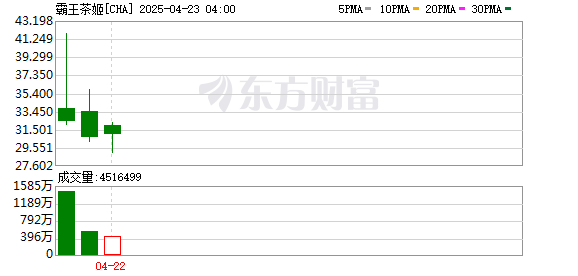
Investment Rating - The report assigns a positive investment rating to the company, highlighting its leadership in the high-end tea beverage market and strong growth potential [2]. Core Insights - The company, BaWang Tea Ji, is positioned as a leading high-end tea beverage brand in China, with a significant number of stores and impressive growth metrics. As of the end of 2024, it operates 6,440 stores, with 6,284 located in China, making it the largest in terms of store count in the high-end market [2][7]. - The company's gross merchandise volume (GMV) reached 10.8 billion RMB in 2023 and is projected to grow to 29.5 billion RMB in 2024, showcasing its rapid expansion and market leadership [2][7]. - The tea beverage market in China is experiencing a significant growth trend, with the market size expected to increase from 474.8 billion RMB in 2019 to 818.9 billion RMB by 2024, reflecting a compound annual growth rate (CAGR) of 11.5% [2][28]. - The high-end segment of the tea beverage market is expanding rapidly, with its market share increasing from 10.9% in 2019 to 25.9% in 2024, driven by consumer preferences for quality and brand value [2][32]. Summary by Sections Company Overview - BaWang Tea Ji was founded in 2017 and aims to transform tea drinking into a modern experience that connects cultures globally. It ranks first in social influence among fresh tea beverage brands in China since October 2023 [7]. Market Dynamics - The report indicates that the ready-to-drink tea market is growing rapidly, with a CAGR of 21.7% from 2019 to 2024. The high-end tea beverage segment is expected to continue outperforming lower-priced brands [28][32]. Competitive Advantages - BaWang Tea Ji employs a "big product + light milk tea" strategy, focusing on a limited number of high-performing products. In 2024, its signature tea latte contributed 91% of its domestic GMV, with the top three products accounting for 61% [2][49]. - The company has established a digital supply chain that allows for efficient inventory turnover, with an average turnover period of just 5.3 days in 2024, and logistics costs accounting for less than 1% of total GMV [2][55]. Financial Performance - The company reported a gross margin of 51.5% and a net margin of 20.3% in 2024, significantly higher than its competitors, indicating strong profitability and operational efficiency [2][57].
拆解霸王茶姬招股书:6亿杯伯牙绝弦、11亿激进营销和出海新故事
36氪未来消费· 2025-03-27 01:36
Core Viewpoint - The article highlights the rapid growth and ambitious expansion plans of the tea beverage brand "霸王茶姬" (Ba Wang Cha Ji), which is preparing for an IPO in the U.S. and has shown impressive financial metrics and marketing strategies, despite facing challenges in same-store sales growth [4][5][6]. Financial Performance - In 2024, Ba Wang Cha Ji's GMV (Gross Merchandise Volume) is projected to reach 29.5 billion yuan, a 173% increase year-over-year. The number of global stores is expected to grow to 6,440, an 83% increase from the previous year. Revenue is forecasted at 12.405 billion yuan, up 167.4%, with a net profit of 2.515 billion yuan, reflecting a 213.3% increase [5][6]. - The brand's average monthly GMV per store is 512,000 yuan, significantly higher than its competitors [5]. Product Strategy - Ba Wang Cha Ji has successfully created the "Tea Latte" category, with 91% of its domestic GMV coming from this product line. Approximately 61% of this GMV is generated from its top three best-selling items [8]. - The brand maintains a highly focused product strategy, with only 10 new products and 3 upgrades in 2024, compared to competitors like Luckin Coffee and Starbucks, which introduced significantly more SKUs [9]. Marketing Strategy - The marketing expenditure for Ba Wang Cha Ji has surged, reaching 1.1 billion yuan in 2024, which is a substantial increase from previous years. This represents 8.9% of its net revenue for that year [10][12]. - The brand has achieved high visibility through aggressive marketing campaigns, including extensive elevator advertising and a strong presence on social media platforms [11][12]. Market Challenges - Despite high growth rates, Ba Wang Cha Ji faces challenges with declining same-store GMV growth, which fell to 1.5% in Q3 2024 and -18.4% in Q4 2024 [15]. - The concentration of stores in southern and eastern China has led to a saturation effect, impacting sales growth in these regions [15][16]. Expansion Plans - Ba Wang Cha Ji is focusing on international expansion, with plans to enhance its presence in Southeast Asia and the U.S. The brand has opened 148 stores in Malaysia and is set to launch its first U.S. store in Los Angeles [17]. - The company aims to use part of the funds raised from its IPO for technology investments, new product development, and expanding its store network both domestically and internationally [16][17].


雷军的狂飙之路与成长的烦恼
Sou Hu Cai Jing· 2025-03-25 10:03
雷军的狂飙之路与成长的烦恼 3月18日这天,小米集团可太猛了,堪称 "高光炸裂"。 先是发布了一份被雷军称为 "史上最强" 的财报,直接在商业圈里投下一颗重磅炸弹。紧接着,小米汽车也不甘示弱,不仅交付量突破20万辆,还把2025年 的交付目标一口气提升到 35 万台。 史上最强财报,小米汽车C位出道 先来看看这份财报,它不仅仅是一堆数字的堆砌,简直就是小米集团实力的 "铁证"。 2024年,小米集团实现总收入3659亿元,同比增长35.0% ,经调整净利润达到272亿元,同比增长41.3%。增长速度,就像坐了火箭一样。更厉害的是,第四 季度单季营收首次突破千亿大关,达到1090亿元,同比增长48.8%,创下近四年最高增速。这数据一公布,资本市场瞬间沸腾,截至3月18日收盘,小米港 股报收 57.650 港元,股价一年内涨了近 3 倍,最新市值1.45万亿港元。 | | 截至12月31日止年度 | | | | --- | --- | --- | --- | | | 2024年 | 2023年 | 同比變動 | | | (人民幣百萬元,除非另有説明) | | | | 收入 | 365.906.4 | 270,97 ...

国君轻纺|卫生巾行业-深度解析大单品策略突围之道
Guotai Junan Securities· 2025-02-28 02:03
Investment Rating - The report suggests that the sanitary napkin industry is in a product-driven era, with leading brands generally adopting a big product strategy [1]. Core Insights - The key to successful big products lies in differentiated positioning and continuous iteration. Differentiated positioning focuses on advanced skin feel, safety, and enhanced efficacy as critical competitive factors for future sanitary napkin brands. Continuous iteration is essential for extending the lifecycle of big products [2]. - The penetration rate of sanitary napkin products is nearing its peak, with limited growth potential in volume. According to Euromonitor, the CAGR for the Chinese sanitary napkin industry from 2024 to 2028 is projected to be 3.5%, driven entirely by price increases [1][2]. - Leading brands are adopting a big product strategy primarily due to intense industry competition, consumer demand for functional products, and the high-frequency consumption characteristics of sanitary napkins [1]. Summary by Sections - **Differentiated Positioning**: The differentiation in sanitary napkins is currently reflected in four dimensions: skin feel, shape, safety, and efficacy. Advanced skin feel, safety, and enhanced efficacy are identified as key selling points for future competition among brands [2]. - **Continuous Iteration**: Product iteration is crucial for the longevity of big products. Iteration typically involves upgrading existing innovations and expanding into new innovation dimensions. For instance, the "Free Point Probiotics" series represents an upgrade in efficacy, while "Sofy Super Sleep" expands its innovation to include antibacterial properties [2]. - **Revenue Potential**: It is estimated that the largest single product series from leading sanitary napkin brands accounts for at least 30% of their revenue, potentially reaching up to 4 billion yuan [2].
霸王茶姬:从学所有人到被所有人学
晚点LatePost· 2024-08-14 15:50
新的消费明星,极致残酷的效率游戏。 文丨姚兰 制图丨黄帧昕 编辑丨高洪浩 黄俊杰 三年后,赶上消费周期转变,霸王茶姬没有像大多数茶饮品牌那样放缓开店速度,而是持续加速,在全国开出近 5000 家店,市场价值一路远扬。目前在很多 地方开一家霸王茶姬加盟店的总成本超过 100 万元,但依然被争抢。霸王茶姬的竞争对手也从几千家门店的喜茶、古茗等同行扩展为卖咖啡的瑞幸,市场上拔 尖的那个自然会成为被围剿的对象。 现制饮品行业诞生过许多明星,每个都有足够显著的差异点。蜜雪冰城提供了无人能及的低价;喜茶在奶茶流行的年代提供现剥皮的水果茶;古茗则大力投资 冷链,以更低的价格在低线城市推广水果茶。 唯独霸王茶姬,它从产品到营销的特点几乎都不是独创,但却做出了最极致的经营效率。整个 2023 年,霸王茶姬盈利 8 亿-10 亿元,以古茗 1/3 的门店数量 创造了接近其七成的利润。 这样一个消费明星的诞生,它被所有人当作对标者也大致说明,中国餐饮消费市场进入了一个新的周期。不再是求新求异,而是极致残酷的效率游戏。 瑞幸咖啡将新设计的茉莉奶茶用蓝白色花纹纸杯送进 20000 家门店;喜茶开出古风设计的黑金店,只卖纯茶和鲜奶茶;茉 ...