
产品迭代

Search documents
华润饮料(02460):业绩短期承压,经营改善可期
Haitong Securities International· 2026-03-31 12:34
Investment Rating - The report maintains an "Outperform" rating for China Resources Beverage [2] Core Insights - Despite short-term performance pressure, operational improvements are expected in the future [1] - The company experienced a significant decline in revenue and net profit in 2025, primarily due to a drop in packaged water sales and increased marketing investments [3][13] - Management has initiated a comprehensive organizational transformation to enhance operational efficiency and channel potential [16] Financial Performance Summary - Revenue for 2025 was RMB 11.00 billion, down 18.6% year-on-year, while net profit attributable to shareholders fell 39.8% to RMB 985 million [3][13] - The gross margin decreased to 45.7%, and the selling expense ratio increased to 34.3% due to intensified competition [3][13] - The company’s net operating cash flow increased by 8.5% year-on-year, and the asset-liability ratio improved by 10.1 percentage points [13] Business Segment Analysis - Packaged water revenue decreased by 21.6% to RMB 9.50 billion, with a narrowing decline in the second half of the year [4][14] - The beverage business achieved a revenue growth of 7.3% to RMB 1.50 billion, with 23 new SKUs launched throughout the year [4][14] Operational Strategy - The company is focusing on capacity optimization, with in-house production increasing to 61% and significant cost reductions achieved [15] - Management expects operational disruptions in 2026 to be lower than in 2025, with revenue stabilization anticipated [15][16] Future Earnings Forecast - Revenue is projected to grow to RMB 11.83 billion in 2026, with net profit expected to reach RMB 1.14 billion [6][17] - The target price is set at HKD 10.80, implying a 22% upside from the current price [6][17]
元气森林饮料“大比武”
经济观察报· 2026-03-31 12:09
Core Insights - The beverage industry is experiencing accelerated product iteration and increasingly segmented consumer demands, making it crucial for companies to capture real needs, transform ideas into products, and quickly adjust based on feedback [2][5]. Group 1: Product Development and Innovation - Genki Forest held a product competition showcasing 19 new beverages, including iterations of existing lines and innovative drinks like non-alcoholic cola beer and prebiotic sparkling water [2][6]. - The company emphasizes a philosophy of simplicity in product development, focusing on visible consumer needs rather than abstract demands [5][6]. - The event featured a voting system where attendees could provide immediate feedback on products, reflecting a commitment to consumer engagement and market testing [4][5]. Group 2: Market Trends and Consumer Preferences - The beverage lineup covered mainstream categories, with sparkling water remaining a core product, and new functional drinks targeting specific health benefits, such as enhanced athletic performance and immune support [6][9]. - The introduction of innovative products like the "Danzhen Brown Rice Milk," which is positioned as a meal replacement, indicates a shift towards health-conscious offerings [8][9]. - Genki Forest's internal testing mechanism allows employees to trial new products, ensuring that consumer feedback is integrated before market launch [8][9]. Group 3: Sales and Distribution Strategy - The company employs a phased approach to product launches, starting with online sales and gradually expanding to offline channels based on consumer acceptance [9]. - Genki Forest has established a research and development center in Xianning, aimed at enhancing innovation and market feedback efficiency, with a total investment of nearly 500 million yuan [9]. - The company reported significant growth in its product lines, with vitamin water experiencing a 128% year-on-year increase, indicating strong market performance [9].


大消费渠道脉搏:中国修复驱动增长,新秀丽聚焦产品迭代与渠道优化
Haitong Securities International· 2026-03-13 12:25
Investment Rating - The report does not explicitly state an investment rating for the industry or specific companies within it [1]. Core Insights - The recovery of the leading luggage player is primarily driven by the rebound in the Chinese market, with Europe showing relative resilience and the US remaining a significant pressure source. The domestic market has stabilized, and China is expected to achieve single-digit growth in 2026 [2][9]. - The internal brand differentiation within the group is notable, with Samsonite as the main revenue contributor, TUMI showing structural highlights, and American Tourister covering mid- to low-end price segments. The growth strategy for Samsonite focuses on product iteration rather than store expansion [3][10]. - The group relies mainly on wholesale channels, particularly in China, while TUMI operates primarily through direct retail. The wholesale model is more profitable due to lower manufacturing costs, allowing for better gross margins [4][11]. - There is a manageable correlation between raw material costs and oil prices, with the brand demonstrating strong pricing power. The geopolitical risks are not currently seen as core issues due to limited exposure in the Middle East [5][12]. Summary by Sections Regional Analysis - The recovery in the luggage industry is heavily reliant on the Chinese market, with expectations of continued mild recovery and single-digit growth in 2026. Europe is expected to develop steadily, while the US market requires product breakthroughs for growth [2][9]. Brand Analysis - Samsonite remains the dominant brand, contributing significantly to revenue, while TUMI is growing faster but on a smaller scale. American Tourister serves as a price segment supplement. The focus for growth is on product development rather than merely expanding distribution channels [3][10]. Channel Analysis - The group maintains a wholesale-oriented structure, especially in China, where wholesale channels are more significant. Direct retail is used primarily for brand positioning and inventory management. The profitability of the wholesale model is highlighted due to lower costs and better margins [4][11]. Cost and Geopolitical Factors - The report indicates that while raw material costs are linked to oil prices, the impact on operations is manageable. The brand's ability to pass on costs and limited exposure to geopolitical risks are noted as strengths [5][12].
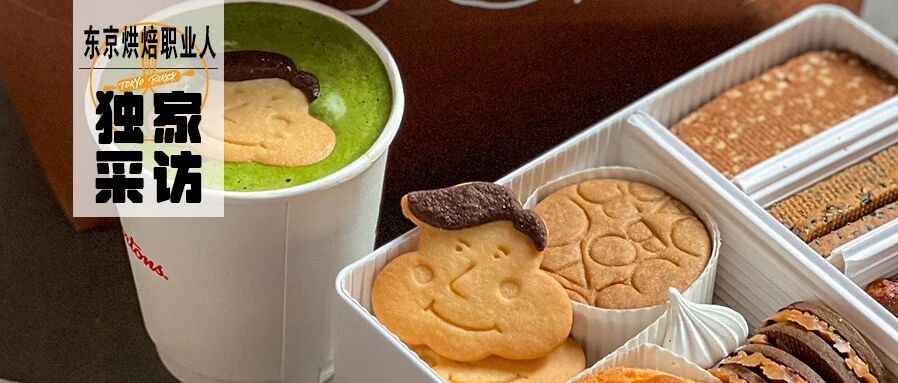
【独家专访】欧包热销13年,稳居区域第一!这家烘焙小店靠什么留住客人?
东京烘焙职业人· 2026-02-26 08:33
Core Viewpoint - The article highlights the entrepreneurial journey of "Chez BOA," a French bakery in Xi'an, emphasizing the unique partnership between the husband and wife team, their commitment to quality, and their innovative marketing strategies that focus on customer loyalty and product authenticity [2][5][12]. Group 1: Business Background - "Chez BOA" was founded by a couple, with the husband being a former baking school teacher and the wife his student, symbolizing their love and commitment through the bakery [5][6]. - The bakery started from humble beginnings without significant capital or prime location, relying on the wife's management skills to establish a foothold in the market [6][9]. Group 2: Product and Market Strategy - The bakery offers a diverse product line, including European-style bread, pastries, and even pasta, driven by a "technology + management" approach [12][20]. - The couple emphasizes a health-conscious philosophy, focusing on low oil and sugar content, which differentiates them from competitors who follow market trends [13][15]. - The bakery incorporates local flavors, such as using local jujube for yeast, enhancing its regional appeal while maintaining quality [21]. Group 3: Marketing and Customer Engagement - The transparent kitchen design serves as a marketing tool, fostering trust and allowing customers to witness the baking process, which encourages feedback and engagement [27][30]. - The bakery has built a strong private membership base of nearly 30,000, focusing on customer retention rather than mass advertising, which has sustained its revenue during challenging times [26][33]. - The couple's social media strategy shifted from product promotion to sharing authentic behind-the-scenes content, creating a genuine connection with customers [37]. Group 4: Future Plans - The couple aims to develop a "bread restaurant" concept that combines high-quality bread with healthy meal options, focusing on a holistic dining experience [39]. - They prioritize product development based on customer feedback, ensuring that offerings remain relevant and appealing over time [41].
日网民热议中国制造业“迭代快”
Xin Lang Cai Jing· 2026-02-06 06:35
Core Insights - The rapid iteration speed of Chinese products has sparked concern among Japanese engineers, with one stating that the presence of Chinese manufacturers at a recent mechanical product exhibition in Japan has significantly increased, occupying half of the exhibition space [1] - Chinese products are no longer seen merely as alternatives but are recognized for their quality, quick delivery, and effective after-sales service, leading to anxiety about the future competitive gap between Japan and China [1] - Many Japanese netizens acknowledge the improvements in "Made in China" products in quality management, delivery management, and after-sales systems, attributing this to faster decision-making and effective incentive mechanisms [1] Industry Trends - The perception of "Made in China" surpassing "Made in Japan" is evident not only in industrial equipment but also in consumer markets, with Chinese digital products and home appliances gaining popularity in Japan [2] - Chinese brands are increasingly featured in mainstream display areas of large appliance stores, moving away from being relegated to discount sections, with sales staff now emphasizing product functionality rather than just price [2] - A shift in consumer behavior is noted, where Japanese consumers are now choosing Chinese products based on functionality and software integration rather than solely on cost, indicating a change in market dynamics [2]
多家车企官宣2026销量目标:冷静预期中仍有激进派,密集发新车支撑增量
Xin Lang Cai Jing· 2026-02-05 23:57
Core Viewpoint - The automotive industry is entering a slow growth phase, leading companies to set more conservative sales targets for 2026 compared to previous years' aggressive goals [1] Group 1: Sales Targets and Growth Expectations - Multiple automakers have announced their sales targets for 2026, with a general trend of more cautious expectations [1] - Leap Motor and Xiaomi Auto have higher growth expectations, but they do not project the aggressive "doubling" of sales seen in previous years [1] - Dongfeng Motor, which did not meet its 2025 sales target, has set an ambitious growth target of over 30% for 2026 [1] - Geely Auto aims for a sales target of 3.45 million units in 2026, representing a 14% increase from 2025 [2] - Changan Auto has set a target of 3.3 million units for 2026, a 13.3% increase, with a significant focus on electric vehicles [2] - Chery Group targets 3.2 million units, a 14.03% increase from 2025 [2] - Dongfeng Motor's 2026 target is 3.25 million units, with a 31.45% increase from its 2025 performance [3] - Great Wall Motors has lowered its target to 1.8 million units but still expects a 36% increase from 2025 [4] Group 2: New Energy Vehicle (NEV) Focus - Geely expects NEV sales to rise to 2.22 million units in 2026, accounting for 64% of total sales, a 32% increase from 2025 [2] - Changan anticipates NEV sales of 1.4 million units in 2026, a 26.2% increase [2] - Dongfeng aims for 1.7 million NEV sales in 2026 [3] Group 3: New Product Launches - Automakers are focusing on new product launches to stimulate market demand, with several companies planning multiple new models [5][7] - NIO plans to release five new models, while Leap Motor will introduce four new models [5] - Xiaomi Auto is set to launch several new vehicles, including the next-generation SU7 [5] - Traditional automakers like Changan and BYD are also planning numerous new product releases [7] Group 4: Industry Challenges - Experts warn that rapid product iteration may erode profit margins due to high R&D and production costs [8] - The automotive industry's sales profit margin was reported at 4.1% in 2025, the lowest in history, indicating increasing survival pressures for manufacturers [8]


产品迭代快是汽车企业利润低的原因之一
董扬汽车视点· 2026-02-03 10:32
Core Viewpoint - The article highlights that 2025 will be a highly competitive year for China's automotive industry, with a projected sales profit margin of 4.1%, the lowest in history, primarily due to intense price competition and rapid product iteration [1] Group 1: Analysis of Product Iteration - Rapid product iteration increases costs and reduces profits, as new products go through four phases: introduction, growth, maturity, and decline. If iteration is too fast, the market life cycle shortens, leading to higher R&D costs, increased production equipment costs, and a significantly reduced profitability period [2] - The fast pace of product iteration in China's new energy vehicles (NEVs) is linked to both technological advancement and low profit margins, indicating a causal relationship between rapid iteration and profitability challenges [2] Group 2: Focus on Quality and Profitability - The Chinese NEV industry has achieved a phase of competitive advantage and should now focus on improving efficiency and profitability rather than accelerating product iteration. While maintaining high R&D investment levels is important, the focus should shift from merely increasing R&D ratios to consolidating and maintaining leading positions in the industry [4] - Companies should balance technological innovation with the pace of product updates, ensuring that the speed of iteration does not compromise overall profitability and operational quality across the industry [5] Group 3: Safety and Verification Concerns - Rapid product iteration inevitably shortens the verification cycle for new technologies, potentially leaving safety risks unaddressed. The complexity and long lifecycle of automotive products necessitate thorough safety validation, which is often compromised in the fast-paced environment of the internet age [6] - The industry must evolve from being perceived as "immature" to a more mature state, ensuring that safety remains a priority even as it embraces new technologies and consumer demands [6]

中科磁业:2025年净利同比预增75.11%-108.32% 磁组件产品进入小批量供货阶段
Mei Ri Jing Ji Xin Wen· 2026-01-29 08:01
Core Viewpoint - The company, Zhongke Magnetic Industry (301141.SZ), expects a significant increase in net profit for 2025, projecting a range of 29 million to 34.5 million yuan, which represents a growth of 75.11% to 108.32% compared to the previous year [1] Group 1 - The company attributes the expected profit growth to the release of production capacity and increased sales volume driven by the completion of fundraising projects [1] - The company is advancing product and technology iterations, with its magnetic component products successfully passing validation from some clients and entering the small-batch supply phase [1] - The company is deepening cooperation with key clients and expanding its customer base to enhance market share [1]
紫建电子(301121.SZ):预计2025年净利润同比下降88.78%~92.52%
Ge Long Hui A P P· 2026-01-27 12:49
Core Viewpoint - The company, Zijian Electronics (301121.SZ), expects a significant decline in net profit for 2025, projecting a range of 6 million to 9 million yuan, which represents a decrease of 88.78% to 92.52% compared to the previous year [1] Group 1: Financial Performance - The projected net profit for 2025 is between 6 million and 9 million yuan, indicating a substantial decline from the previous year [1] - The company anticipates a non-recurring loss of 12 million to 15 million yuan for the same period [1] Group 2: Reasons for Performance Decline - Increased R&D investment aimed at accelerating product iteration and technological innovation is a primary factor contributing to the decline [1] - The ongoing construction of the Vietnam factory and projects for emerging consumer batteries, such as smart rings and smart glasses, have not yet fully released their production capacity, leading to higher unit costs as fixed assets are transitioned [1] - A significant rise in the prices of key raw materials, such as lithium cobalt oxide, has resulted in increased operating costs, with a lag in the company's ability to pass these costs onto products [1]
紫建电子:2025年全年净利润同比预减88.78%—92.52%
2 1 Shi Ji Jing Ji Bao Dao· 2026-01-27 10:01
Core Viewpoint - The company, ZhiJian Electronics, is forecasting a significant decline in net profit for the year 2025, with an expected profit range of 6 million to 9 million yuan, representing a year-on-year decrease of 88.78% to 92.52% [1] Financial Performance - The projected net profit attributable to shareholders for 2025 is expected to be between 6 million and 9 million yuan, indicating a substantial decline compared to the previous year [1] - The company anticipates a net loss of 12 million to 15 million yuan when excluding non-recurring gains and losses [1] Reasons for Performance Decline - The decline in performance is attributed to increased research and development investments aimed at accelerating product iteration and technological innovation [1] - The company is focusing on the development of key technologies and the investment in specialized talent [1] - The ongoing construction of the Vietnam factory and projects at the Wanzhou base for emerging consumer batteries, such as smart rings and smart glasses, has not yet fully released production capacity, leading to higher unit costs as fixed assets are transitioned [1] - A significant rise in the prices of key raw materials, such as lithium cobalt oxide, has contributed to increased operating costs, with a lag in the company's ability to pass these costs onto products [1]