
数据要素市场

Search documents
南财数据周报(44期):数字中国建设峰会发布多项重要文件;医药工业数智化转型提速
2 1 Shi Ji Jing Ji Bao Dao· 2025-04-30 11:26
Group 1: Digital Economy Growth - In 2024, the total data production in China is expected to reach 41.06 zettabytes (ZB), representing a year-on-year growth of 25% [2] - The core industry value added of the digital economy is projected to account for approximately 10% of GDP, indicating strong growth momentum in China's digital economy [1] Group 2: Digital China Development Summit - The 8th Digital China Construction Summit opened on April 29, 2024, in Fuzhou, Fujian Province, co-hosted by several national and local government bodies [2] - The summit featured over 20 sub-forums and activities, focusing on cutting-edge fields such as artificial intelligence and data resource development [2] - The Digital China Development Index for 2024 is set at 150.51, reflecting a year-on-year increase of 10.65%, with all five primary indicators showing double-digit growth [3] Group 3: Public Data Resource Development - The National Data Bureau announced 70 key public data "running" demonstration scenarios to enhance the development and utilization of public data resources [4] - The number of open platforms for public data at the city level and above is expected to grow by 7.5%, with the volume of open data increasing by 7.1% in 2024 [2] Group 4: Pharmaceutical Industry Transformation - A joint implementation plan for the digital transformation of the pharmaceutical industry (2025-2030) was released by seven departments, aiming to integrate and release the value of pharmaceutical data elements [5] - The plan encourages collaboration among pharmaceutical companies, medical institutions, and research institutes to build big data platforms and improve data management [5][6]
“浙江之夜”闪耀数字中国建设峰会,重磅实践成果赋能数创未来
Huan Qiu Wang· 2025-04-30 09:02
Core Insights - The event "Zhejiang Night" showcased Zhejiang's advancements in data factor markets and AI innovation, aiming to enhance digital economic cooperation between Zhejiang and Fujian [1][2][4] - Key reports released included the "Dynamic Whole Process Data Infrastructure Security Assurance Report," a trusted data space solution, and a comprehensive security solution for large models, supporting the value release of data factors [1][16][25] Group 1: Digital Economy Development - Fujian and Zhejiang are collaborating to promote digital economic development, with Fujian as the ideological source and Zhejiang as the practical leader of the "Digital China" strategy [2][4] - The event highlighted the importance of cross-regional cooperation in data flow and security, with both provinces sharing a mission to enhance data factor circulation and value [4][6] Group 2: Innovations and Solutions - Anheng Information emphasized its commitment to high R&D investment and technological innovation, contributing to national strategies like "Digital China" and "Belt and Road" [6][14] - The "Trusted Data Space" solution aims to lower the barriers for enterprises to access advanced data infrastructure, integrating privacy computing, blockchain, and AI capabilities [21][23] Group 3: Security and Infrastructure - The "Dynamic Whole Process Data Infrastructure Security Assurance Report" outlines a multi-layered security framework for data value creation, emphasizing AI-driven security measures [23][25] - The report introduces the concept of using AI to counteract threats, highlighting the need for dynamic security in the era of data factors [12][23] Group 4: Local Practices and Case Studies - Hangzhou has pioneered data circulation legislation and established a "data circulation compliance center," promoting data trading and enhancing local data economy [8][10] - Wenzhou's "Data Security Port" has attracted 600 enterprises, achieving a transaction volume exceeding 5 billion, showcasing effective local data infrastructure initiatives [10][12]



阿里、华为均参会,数据局推动数据资源开发利用
Xuan Gu Bao· 2025-04-28 23:29
Group 1 - The National Bureau of Statistics emphasizes the importance of public data as a key resource in the data factor market, with potential value estimated between 10 trillion to 15 trillion yuan according to McKinsey [1] - The national data market transaction scale exceeds 160 billion yuan, showing a year-on-year growth of 30% [2] - Companies with data resource capabilities or data product development abilities are expected to benefit from the evolving public data operation authorization model [2] Group 2 - Companies providing data products/services include Shanghai Steel Union (bulk commodities), Tongxingbao (transportation), Jiuyuan Yinhai (medical insurance), and others [3] - Companies involved in data operation include Deep Sanda A, Shanda Diwei, Jiuyuan Yinhai, and others [3] - Companies engaged in data trading include Anheng Information, Guangdian Yuntong, and others [4]
清华大学五道口金融学院周道许:公共数据运营需从合规底线迈向价值高地
Xin Hua Cai Jing· 2025-04-24 22:29
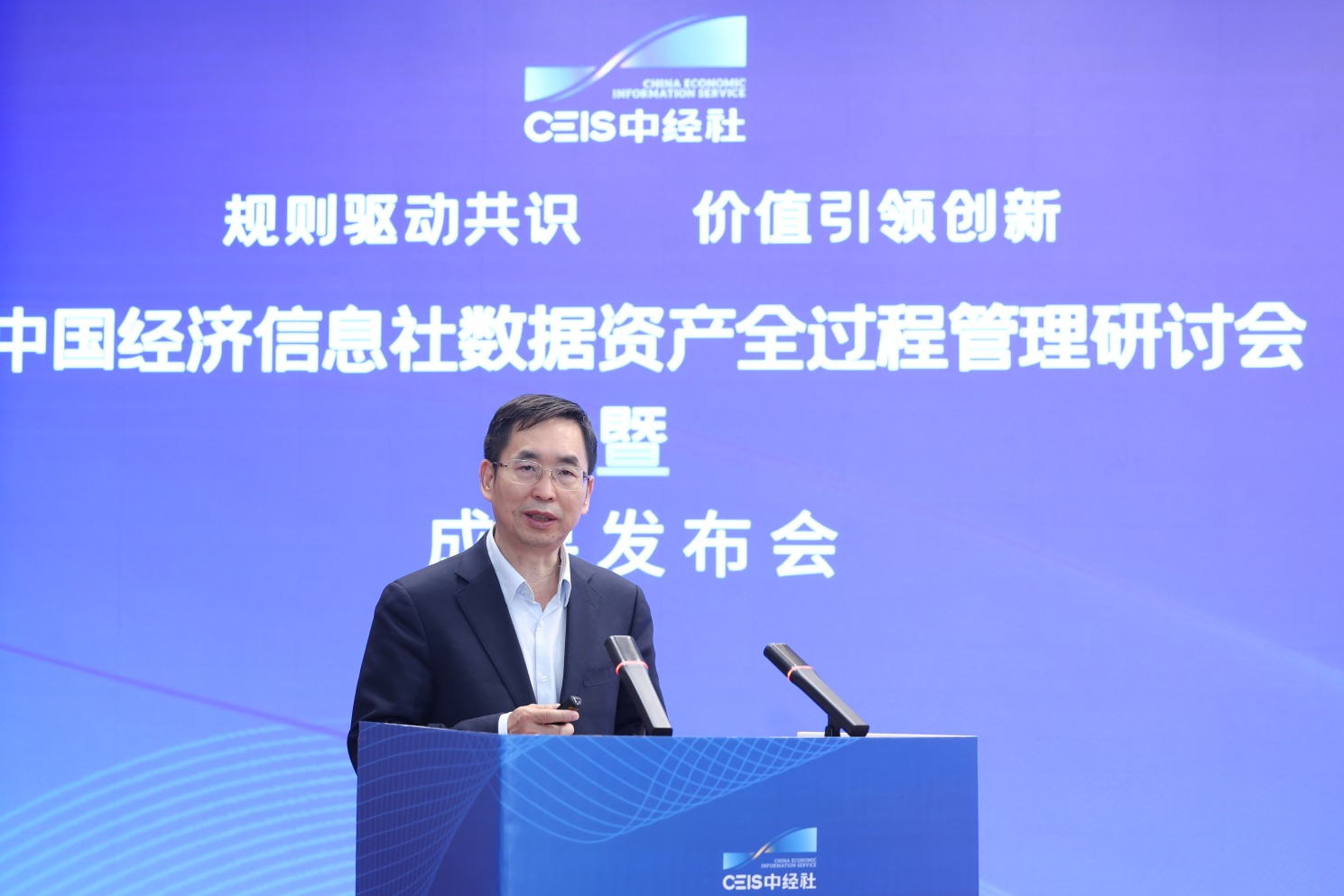
Core Insights - Public data is evolving from an auxiliary tool to a core resource in the digital age, playing a crucial role in reshaping economic structures and social forms [2] - Compliance with existing laws such as the Data Security Law and Personal Information Protection Law is just the starting point; the challenge lies in transforming compliance costs into value dividends [2] - The report outlines the compliance logic for data collection, circulation, and application scenarios, while also exploring the value characteristics, assessment methods, pricing mechanisms, and operational paths of public data [2] Policy and Regulatory Framework - The report emphasizes the importance of a robust legal framework to support the lifecycle of public data, highlighting the roles of various organizations in contributing to this framework [2] - It integrates practical experiences from the China Economic Information Service, policy reform perspectives from the China Enterprise Reform and Development Research Association, scientific value assessment support from Jinzheng Asset Evaluation, and legal compliance assurance from Taihe Tai Law Firm [2] Future Outlook - Public data is expected to become a "strategic asset" and serve as the "social operating system" of the digital economy [2] - The report calls for a dynamic balance between efficiency and fairness, innovation and order, as well as openness and security, with a focus on a "people-centered" value anchor [2] - It aims to provide theoretical guidance for the compliant application and value release of public data, promoting the healthy development of the data factor market and contributing Chinese wisdom to global digital governance [2]
刚刚!中共中央、国务院重磅发布!
21世纪经济报道· 2025-04-21 09:51
Core Viewpoint - The implementation of the Free Trade Zone (FTZ) enhancement strategy is a crucial measure for promoting high-level opening-up and high-quality development in China [1][2]. Group 1: Policy Framework - The strategy aims to establish a comprehensive policy system focusing on trade, investment, capital flow, transportation, personnel exchange, and data security [2]. - The goal is to enhance the comprehensive competitiveness of foreign trade, optimize goods trade, and support the development of service and digital trade [2][3]. Group 2: Investment and Market Environment - The strategy emphasizes the need to facilitate investment liberalization and create a market-oriented, law-based, and international first-class business environment [3]. - It includes measures to attract foreign investment, such as allowing foreign enterprises to engage in film post-production services and enabling qualified Hong Kong, Macau, and Taiwan doctors to practice in the FTZ [3]. Group 3: Technological and Industrial Development - The strategy promotes the integration of innovation chains and industrial chains, aiming to build a modern industrial system and advanced industrial clusters [3][4]. - It encourages the FTZs to engage in comprehensive innovation across the entire industrial chain and supports participation in national-level industrial cluster construction [3]. Group 4: Data and Financial Services - The strategy aims to enhance the efficient, convenient, and secure flow of data, establishing rules for the data factor market and improving cross-border data flow [4]. - It also seeks to deepen financial sector opening and innovation, expanding pilot programs for qualified foreign limited partners and promoting the opening of the futures market [4]. Group 5: Implementation and Coordination - Local governments and relevant departments are urged to strengthen their responsibilities and increase investments in projects, funds, and talent to ensure the effective implementation of the strategy [5]. - The Ministry of Commerce is tasked with coordinating efforts and promoting the replication of successful experiences from the FTZs [5].

李东荣:要加快构建与科技创新相适应的科技金融生态体系
news flash· 2025-04-13 11:33
Core Viewpoint - The development of fintech is currently facing a series of difficulties and challenges, necessitating the construction of a fintech ecosystem that aligns with technological innovation [1] Group 1: Challenges and Recommendations - The existing mechanisms are not suitable, leading to passive and ineffective service innovation systems, making it urgent to accelerate the construction of a fintech system that aligns with the national innovation system [1] - Recommendations include the continued development of bank credit to support technological innovation [1] - Emphasis on the application of insurance tools and the introduction of more long-term and patient capital [1] Group 2: Data and Digitalization - The need to improve the construction of data factor markets, promote data compliance, and ensure efficient circulation and usage of data [1] - A call to enhance the application levels of big data and the Internet of Things [1] - Financial institutions are urged to improve their own digitalization levels [1]