大语言模型

Search documents
原微软WizardLM项目团队加入腾讯混元
news flash· 2025-05-14 06:27
Core Insights - The creator of the WizardLM project, Xu Can, announced the team's departure from Microsoft to join Tencent's AI development organization, Hunyuan, with a focus on advancing LLM training technology and building better AI models [1] Company Developments - The WizardLM team consists of six key members, most of whom have left Microsoft to pursue their mission under Tencent [1]


微软这支神秘的华人AI团队加入腾讯混元,曝与裁员无关|独家
AI前线· 2025-05-14 05:47
Core Viewpoint - The WizardLM team, creators of advanced large language models, has transitioned from Microsoft to Tencent's AI development organization, Hunyuan, aiming to enhance LLM training technology and develop superior AI models [1][3][31]. Group 1: Team Transition and Background - The WizardLM team, consisting of six key members, has left Microsoft amid speculation regarding layoffs affecting 3% of the workforce, although their departure is reportedly unrelated to these layoffs [4][6]. - The team was established in early 2023, focusing on the development of advanced large language models, with notable members including Qingfeng Sun and Can Xu, both of whom have significant experience in AI research [7][9][10]. - The team has previously contributed to the development of models such as WizardLM, WizardCoder, and WizardMath, and has published over 40 papers in top international conferences [10][13]. Group 2: Model Development and Achievements - WizardLM has released models that outperform Google's Gemma 3 series and have ranked among the top four global large language models in competitions [3][16]. - The core algorithm, Evol-Instruct, allows for the efficient generation of complex instruction data, leading to superior performance in human evaluations compared to traditional methods [13][14][17]. - The WizardLM-30B model achieved a 97.8% score compared to ChatGPT in specific tests, showcasing its advanced capabilities [14]. Group 3: Tencent's AI Strategy - Tencent has restructured its AI development framework, focusing on "computing power, algorithms, and data," and plans to invest approximately 124.9 billion USD in AI development [28][30]. - The company has established new technical departments dedicated to large language models and multimodal models, aiming to enhance AI capabilities in natural language processing and data integration [28][29]. - Following the acquisition of the WizardLM team, Tencent's ambition in the AI sector is expected to grow, with the team continuing to develop and release AI models [31].


北京国电通申请基于生成对抗网络与大语言模型的人力资源管理专利,实现生成虚拟人力资源数据的多元化
Jin Rong Jie· 2025-05-14 03:56
Group 1 - Beijing Guodian Tong Network Technology Co., Ltd. applied for a patent titled "A Human Resource Management Method Based on Generative Adversarial Networks and Large Language Models" [1] - The patent aims to utilize generative adversarial networks to learn existing human resource management data and generate diverse virtual human resource management data [1] - The method involves training a human resource management model using both real and virtual data to optimize human resource decision-making [1] Group 2 - Beijing Guodian Tong Network Technology Co., Ltd. was established in 2000 with a registered capital of 73 million RMB and has invested in 4 companies [2] - State Grid Information Communication Industry Group Co., Ltd. was founded in 2015 with a registered capital of approximately 1.5 billion RMB and has invested in 40 companies [2] - The two companies have significant involvement in various projects, with Guodian Tong participating in 2019 bidding projects and State Grid participating in 5000 bidding projects [2]
时空壶W4Pro接入大语言模型,持续领航AI同传行业
Jiang Nan Shi Bao· 2025-05-13 11:51
在AI同传行业,时空壶一直是全球发展的引领者。近期,时空壶旗下颇受瞩目的W4Pro同声传译耳机完 成了一项重大升级——接入大语言模型,这一动作不仅优化了用户体验,还巩固了时空壶在行业内的领 先地位。 接入大语言模型后,W4Pro在翻译速度上实现了显著提升。此前,W4Pro 的翻译延迟能够做到业界顶尖 的3-5秒。而此次升级后,翻译速度进一步提升了 20%,这意味着用户在交流过程中,能够比以往提早 1-2 秒听到翻译结果。别小看这短短1-2秒,在快节奏的商务谈判、学术交流等场景中,能让沟通更加流 畅自然,极大提升了交流效率。 W4Pro 的音视频翻译功能,覆盖了腾讯会议、Zoom、Teams等主流远程会议软件,以及爱奇艺、优 酷、B站、YouTube 等各类音视频平台。对于商务人士而言,在参与跨国企业远程会议时,以往因语言 不通导致会议效率低下的问题迎刃而解。借助 W4Pro,参会人员仅需佩戴耳机,就能实时理解对方的 发言内容,屏幕上还会同步显示双语字幕,保证信息传递准确无误,让会议高效推进。 值得一提的是,W4Pro的双向电话翻译功能在行业内首屈一指。商务人士与海外客户进行电话沟通时, 双方在任意软件通话,对 ...
特斯拉/美团/蔚来背后的神秘“捕手”:我在大语言模型上看不到持续竞争力
3 6 Ke· 2025-05-13 08:31
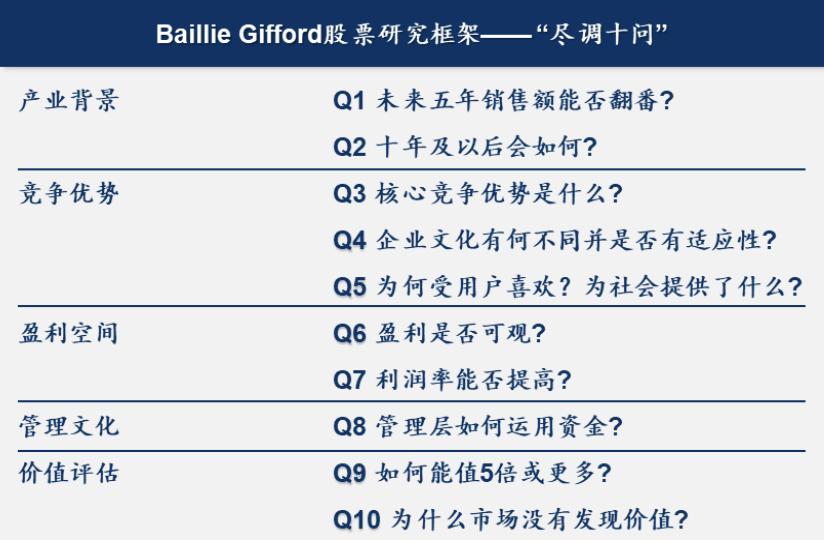
Group 1 - Baillie Gifford is a century-old investment firm based in Edinburgh, known for its value investment philosophy and long-term global growth strategy, focusing on identifying and investing in a select few high-quality companies with competitive advantages and innovation [1][2] - The firm has made early investments in major tech companies, including Amazon in 2004, Illumina in 2011, Tesla in 2013, and Alibaba in 2014, demonstrating a strong track record in identifying growth opportunities [1] - Baillie Gifford's significant investment in Tesla began with a $89 million stake in 2013, which grew to 14 million shares by 2017, resulting in a profit of approximately $17 billion after a seven-year holding period [1] Group 2 - In 2016, Baillie Gifford participated in Meituan's first round of financing and held a 12.08% stake during its IPO in 2018, maintaining its position through market fluctuations [2] - Peter Singlehurst, the firm's growth investment head, expressed confidence in ByteDance as a top investment opportunity, predicting a fivefold return despite current geopolitical tensions [2][5] - The firm has developed a framework of ten core due diligence questions to assess a company's growth potential, focusing on long-term growth opportunities, competitive advantages, organizational culture, and financial analysis [3][4] Group 3 - Baillie Gifford is cautious about investing in AI companies, particularly large language models, due to unclear competitive advantages at that level, despite recognizing the potential in foundational AI infrastructure [4][25] - The firm emphasizes the importance of maintaining strategic focus and avoiding "fill-duck" investments, which can lead to overvaluation and misallocation of resources [4][20] - The investment philosophy includes a focus on companies with strong return on equity (ROE) and sustainable business models, avoiding excessive capital influx that could distort long-term value [20][21] Group 4 - Baillie Gifford's investment in Amazon and Tesla exemplifies its strategy of identifying companies with scalable business models and long-term growth potential, even when they are initially unprofitable [24][50] - The firm believes that the current market conditions present unique opportunities for growth investments, particularly in companies that have demonstrated strong management and innovative business models [61][62] - The firm continues to actively seek investment opportunities in China, despite geopolitical risks, as it believes the risk-reward ratio remains favorable [46][44]

对话PingCAP黄东旭:AI大潮冲击下,软件公司如何顺流而上?
Tai Mei Ti A P P· 2025-05-13 06:04
Core Insights - The software industry reached its valuation peak in 2021, marking a significant year for capital investment, with companies that secured funding during this period facing different challenges compared to those that did not [2][5][6] - PingCAP, a successful enterprise-level open-source distributed database provider, capitalized on the favorable market conditions in 2021 to expand its global presence, serving clients in over 20 countries [2][8] - The advent of AI has dramatically increased the value of data, prompting discussions on how software companies can adapt and innovate in the AI era [2][10] Investment Landscape - The investment climate for software companies has shifted dramatically since 2021, with a clear divide between those that secured funding during the peak and those that did not, leading to varying degrees of operational challenges [5][6][7] - The capital market experienced a significant slowdown post-2021, making it increasingly difficult for software companies to secure financing, with a notable decline in the number of funded companies and total investment amounts [10][11][12] AI Impact on Software - The rise of AI has shifted market focus, with significant resources and attention now directed towards AI projects, often at the expense of traditional software companies [11][12] - The integration of AI into software is expected to transform product forms and user interactions, with a strong emphasis on making software more accessible and user-friendly [15][25][40] - The future of enterprise software is anticipated to be heavily influenced by AI, with a focus on enhancing user experience through conversational interfaces and reducing the learning curve for users [19][25][40] Data Utilization and Infrastructure - The value of data has increased, leading companies to prioritize data storage and utilization, as AI capabilities allow for better extraction and analysis of data [30][31][46] - The design of data infrastructure is evolving to accommodate AI agents as primary users, necessitating a shift in how databases and data access are structured [32][34][38] - SQL remains a critical tool for bridging the gap between AI and data, emphasizing the need for accessible and flexible data access methods [33][38] Future Outlook - The software industry is expected to see a continued emphasis on specialized knowledge and engineering complexity, which will remain essential even as AI simplifies user interactions [40][41][46] - Companies are likely to face increasing competition for unique data, reinforcing the importance of proprietary data as a competitive advantage in the AI landscape [43][46]

当AI遇上数学:大语言模型如何掀起一场形式化数学的革命? | Deep Talk
锦秋集· 2025-05-12 09:13
Core Viewpoint - The article discusses the transformative impact of large language models (LLMs) on the field of mathematics, particularly through the integration of formalized mathematics methods, which enhance the accuracy and reliability of theorem proofs [1][4]. Group 1: Challenges and Opportunities - The increasing complexity of modern mathematical theories has surpassed the capacity of traditional peer review and manual verification methods, necessitating a shift towards formalized mathematics [4][6]. - The "hallucination" problem in LLMs, where models generate plausible but incorrect content, poses significant challenges in the highly logical domain of mathematics, highlighting the need for rigorous verification methods [6][7]. Group 2: Formalized Theorem Proving - Formalized theorem proving utilizes a system of axioms and logical reasoning rules to express mathematical statements in a verifiable format, allowing for high certainty in validation results [8][9]. - Successful applications of formalized methods in mathematics and software engineering demonstrate their potential to ensure consistency between implementation and specifications, overcoming the limitations of traditional methods [9]. Group 3: Recent Advances Driven by LLMs - Advanced LLMs like AlphaProof and DeepSeek-Prover V2 have shown remarkable performance in solving competitive-level mathematical problems, indicating significant progress in the field of formalized theorem proving [10]. - Research is evolving from mere proof generation to the accumulation of knowledge and the construction of theoretical frameworks, as seen in projects like LEGO-Prover [10]. Group 4: Transition to Proof Engineering Agents - The transition from static "Theorem Provers" to dynamic "Proof Engineering Agents" is essential for addressing high labor costs and low collaboration efficiency in formalized mathematics [11]. - APE-Bench has been developed to evaluate and promote the performance of language models in long-term dynamic maintenance scenarios, filling a gap in current assessment tools [12][16]. Group 5: Impact and Future Outlook - The integration of LLMs with formalized methods is expected to enhance verification efficiency in mathematics and industrial applications, leading to rapid advancements in mathematical knowledge [17]. - The long-term vision includes the emergence of "Certified AI," which combines formal verification with dynamic learning mechanisms, promising a new paradigm in knowledge production and decision-making [17].

一个「always」站在大模型技术C位的传奇男子
量子位· 2025-05-10 02:39
Core Viewpoint - The article highlights the significant contributions of Noam Shazeer in the AI field, particularly in the development of large language models (LLMs) and the Transformer architecture, emphasizing his role as a key figure in the evolution of AI technologies [9][10][12]. Group 1: Contributions to AI Technology - Shazeer is recognized as one of the most influential authors of the Transformer model, credited with pivotal advancements such as the introduction of the Mixture of Experts (MoE) architecture [10][18][24]. - His work on the paper "Attention Is All You Need" in 2017 is considered a foundational moment for LLMs, leading to widespread adoption and further innovations in the field [18][23]. - Shazeer has consistently anticipated technological trends, contributing to various breakthroughs, including the GShard framework for scaling models and the Switch Transformers, which achieved a parameter count of 1.6 trillion [30][33][41]. Group 2: Career and Achievements - Shazeer has a remarkable academic and professional background, having achieved a perfect score at the International Mathematical Olympiad in 1994 and later studying at Duke University [50][52]. - He joined Google as employee number 200 and made significant contributions to various projects, including Google's search spelling correction and the development of machine learning systems for ad ranking and spam detection [55][56]. - After a brief period away from Google, he co-founded Character.AI, which gained a valuation of $1 billion before being acquired by Google for $2.7 billion, leading to his return to the company [67][69]. Group 3: Impact on the Industry - Shazeer's innovations have laid the groundwork for current AI models, with many contemporary systems, including GPT-4 and others, building upon his research [41][44]. - His development of the Adafactor optimizer and Multi Query Attention (MQA) has been crucial for enhancing the efficiency of large models [43][44]. - The article concludes that Shazeer's foresight and contributions have positioned him as a defining figure in the current era of AI, with his work continuing to influence the direction of the industry [11][12][40].


虞晶怡教授:大模型的潜力在空间智能,但我们对此还远没有共识
3 6 Ke· 2025-05-09 09:34
Group 1 - The emergence of generative AI is driving a significant transformation in technology, business, and society, transitioning humanity from an information society to an intelligent society [2] - A diverse panel of experts, including AI technologists, investors, and sociologists, is engaged in discussions to explore the opportunities and challenges presented by AI [2] - The development of spatial intelligence is being propelled by advancements in large language models, aiming for a deeper understanding of space akin to language comprehension [3][12] Group 2 - The biggest challenge in 3D intelligence development is the lack of sufficient data, particularly real-world 3D data [4] - A perception-first approach is being emphasized, suggesting that perception can address problems without relying on complex cognition [5] - The theoretical dilemma in spatial intelligence lies in the diverse expressions of 3D data, which have yet to reach a consensus [5] Group 3 - Revolutionary breakthroughs in sensor technology are anticipated, with future perception systems capable of observing both sides of objects simultaneously [6] - Redefining robot design focuses on robustness and safety rather than precision, necessitating new mathematical metrics [7] - The industry acknowledges the inevitability of bubbles in the AI sector, with OpenAI being cited as an example of this phenomenon [8] Group 4 - Short-term applications of spatial intelligence are expected in film production, while mid-term applications will focus on embodied intelligence and low-altitude economy scenarios [9] - The educational model is predicted to evolve, with shorter courses and a stronger alignment with industry needs, particularly in regions like the US West Coast [9] Group 5 - Current technology development is not at its limit, especially in cross-modal integration, with significant potential still to be explored [10][11] - The discussion around scaling laws in AI is considered premature, as the focus remains on deeply mining the capabilities of language models and their integration with other modalities [11] Group 6 - The evolution of spatial intelligence is viewed as a gradual process, starting from digital twins and simulation platforms to the current advancements in virtual reality and the metaverse [12] - Generative AI is transforming spatial intelligence from mere digital reconstruction to intelligent understanding and application, impacting various sectors like gaming and industrial production [13] Group 7 - The current challenges in spatial intelligence include the need for a unified expression of 3D data and the complexities involved in data collection [26][27] - The integration of perception, cognition, and behavior is essential for advancing spatial intelligence, with a holistic approach being advocated [35][37] Group 8 - The collaboration between industry and academia is becoming increasingly vital for advancing spatial intelligence research, with companies like Meta and OpenAI leading the way [31][32] - The potential for AI in the arts and entertainment sectors is highlighted, with spatial intelligence expected to enhance creative processes significantly [41] Group 9 - The future of spatial intelligence applications is anticipated to focus on specific scenarios, such as low-altitude economy and robotics, while the broader goal of achieving AGI remains a long-term aspiration [42][43] - The ethical implications of AI companionship and the need for open discussions on these challenges are emphasized [48][49] Group 10 - The educational landscape is set to change, with programming and AI courses becoming foundational elements of the curriculum, reflecting the growing importance of these skills in various fields [50]



拜拜,昂贵的谷歌搜索 API!阿里开源 RL 框架让大模型自给自足、成本直降88%,网友:游戏规则变了
AI前线· 2025-05-09 05:18
Core Viewpoint - Alibaba's new technology "ZeroSearch" significantly reduces the cost and complexity of training AI systems for information retrieval, eliminating the need for expensive commercial search engine APIs [1][2][14]. Summary by Sections Technology Overview - ZeroSearch is a reinforcement learning framework that allows large language models (LLMs) to develop advanced search capabilities through simulation, outperforming models based on real search engines while incurring zero API costs [2][3]. - The technology is compatible with various model series, including Qwen-2.5 and LLaMA-3.2, and does not require a separate supervised preheating phase [2][3]. Performance Metrics - In comprehensive experiments across seven question-answer datasets, ZeroSearch's performance matched or exceeded that of models trained with real search engines [3][5]. - A 3 billion parameter LLM can achieve search capabilities comparable to Google, while a 14 billion parameter module can surpass Google's performance [3][5]. Cost Efficiency - Training using Google search via SerpAPI for approximately 64,000 queries costs around $586.70, while using a 14 billion parameter simulated LLM on four A100 GPUs costs only $70.80, representing an 88% reduction in costs [7][8]. Methodology - ZeroSearch begins with a lightweight supervised fine-tuning process that transforms LLMs into retrieval modules capable of generating relevant and irrelevant documents in response to queries [9][11]. - The system employs a course-based learning deployment mechanism, gradually increasing the difficulty of generated documents to simulate challenging retrieval scenarios [11][12]. Implications for AI Development - ZeroSearch represents a significant shift in AI training methods, enabling AI systems to improve without relying on external tools like search engines [14][15]. - This technology creates a more equitable competitive environment for small AI companies and startups by drastically lowering the entry barrier associated with high API costs [14][15].