网络诈骗

Search documents
一种专骗老年人的电商骗局,被年轻人当羊毛薅秃了
Hu Xiu· 2025-08-20 03:43
Group 1 - A new type of scam targeting elderly individuals has been exposed, involving a "password box" as a bait [1][11][12] - The scam starts with a seemingly cheap book offer, but upon delivery, the book is found inside a locked password box, enticing victims to scan a QR code for unlocking [16][18][19] - Many elderly individuals fell for this scam, leading to a wave of online exposure and warnings from their children [25][26] Group 2 - As the scam became widely known, individuals began to share methods for unlocking the password boxes, leading to many successfully retrieving the books [31][32] - The narrative shifted from a warning about the scam to a discussion about how to obtain the boxes, with many users expressing interest in the boxes themselves [41][42][49] - This resulted in a rush of younger individuals actively seeking out the scam, turning the tables on the scammers [59][65] Group 3 - The scam's inventory was quickly depleted as users capitalized on the situation, leading to a significant reduction in the scammers' stock [76][80] - Some legitimate book sellers were inadvertently affected, as their products were mistaken for scam offerings, prompting them to clarify that they do not include password boxes [82]


21 岁大学生被判 7 年!他靠写“钓鱼代码”,3 年赚 288 万,却致全球损失超 9.5 亿元
程序员的那些事· 2025-08-01 00:12
Core Viewpoint - The article discusses the case of Ollie Holman, a 21-year-old university student in the UK, who developed and sold phishing toolkits that resulted in over £100 million (approximately 950 million RMB) in losses for victims globally [1][7]. Group 1: Background and Activities - Ollie Holman, a student of electronic and computer engineering at the University of Kent, used his technical skills to create and sell phishing toolkits instead of pursuing legitimate programming opportunities [2][3]. - From 2021 to 2023, Holman designed and sold 1,052 phishing toolkits to clients in 24 countries, targeting 69 banks, government agencies, and charities [2][3]. Group 2: Phishing Toolkits - The phishing toolkits included complete scam processes, such as webpage templates, information collection scripts, deployment guides, and after-sales technical support, making them sophisticated and effective [2][3]. - A typical case involved a toolkit that mimicked a charity's donation page, capturing sensitive information like credit card data from unsuspecting users [3]. Group 3: Distribution and Community - Holman distributed these toolkits via the encrypted messaging platform Telegram, where he also provided technical support to other fraudsters, creating a community of nearly 700 users [4][5]. Group 4: Legal Consequences - In October 2023, Holman was arrested, and evidence of his activities was found on his devices. Despite being under investigation, he continued to provide support for his clients until a second arrest in May 2024 [6][9]. - He was convicted on seven counts, including aiding and abetting crime, and was sentenced to seven years in prison, with plans for the prosecution to recover approximately £300,000 (about 2.88 million RMB) in illicit gains [7][9].

21岁大学生被判刑7年!他靠写“钓鱼代码”,3年赚288万,却致全球损失超9.5亿元
猿大侠· 2025-07-31 04:09
Core Viewpoint - The article discusses the case of Ollie Holman, a 21-year-old university student in the UK, who developed and sold phishing toolkits that facilitated global online fraud, resulting in over £100 million (approximately 950 million RMB) in losses for victims [1][6]. Group 1: Background and Activities - Ollie Holman, a student of electronic and computer engineering at the University of Kent, used his technical skills to create and sell phishing toolkits instead of pursuing legitimate programming opportunities [2]. - From 2021 to 2023, Holman designed and sold 1,052 phishing toolkits to clients in 24 countries, targeting 69 banks, government agencies, and charities [2][3]. - The phishing toolkits included comprehensive "scam toolchains" with web templates, information collection scripts, deployment guides, and technical support [2]. Group 2: Methodology and Impact - One notable case involved a toolkit that mimicked a charity's donation page, capturing users' banking information when they attempted to donate [3]. - Holman distributed these toolkits via the encrypted messaging platform Telegram and provided technical support to other fraudsters, creating a community of nearly 700 users [4]. Group 3: Legal Consequences - Despite being arrested in October 2023, Holman continued to offer support for his phishing toolkits until a second arrest in May 2024, where police found substantial electronic evidence linking him to the crimes [5]. - He was convicted on seven counts, including aiding and abetting crime and producing tools for fraud, and was sentenced to seven years in prison [6]. - The UK Crown Prosecution Service (CPS) plans to pursue further legal action to recover the £300,000 (approximately 2.88 million RMB) that Holman earned illegally [7].

21岁大学生被判刑7年,他靠写“钓鱼代码”,3年赚288万,却致全球损失超9.5亿元
3 6 Ke· 2025-07-30 12:24
一边在课堂上学算法,一边在宿舍里写诈骗工具;白天是工科大学生,晚上是 Telegram 黑产"售后客服"——这是英国一位年仅 21 岁的大学生的真实人 生。 ( Ollie Holman ) "天才少年"还是"诈骗合伙人"?一场从大学宿舍发起的全球诈骗 现年 21 岁的 Ollie Holman 来自英国伦敦西北部的 Eastcote,如开头所说,案件曝光时 Ollie Holman 就读于英国肯特大学,专业是电子与计算机工程—— 掌握前沿技术、年纪轻轻、动手能力强,这些本应是 Ollie Holman 成为"正道程序员"的敲门砖,结果却被他用来为网络诈骗者提供"钓鱼开发服务"。 根据警方调查,Ollie Holman 从 2021 年到 2023 年,一共设计并售卖了 1052 套钓鱼工具包,客户遍布全球 24 个国家,攻击目标包括 69 家银行、政府机 构和慈善组织。最重要的是,这些钓鱼工具包并不是传统意义上的简单仿冒网站,而是包含完整流程的"诈骗工具链":从网页模板、信息采集脚本,到部 署指南、售后技术支持,一应俱全。 例如,在一个典型案例中,Ollie Holman 的钓鱼工具包被用于假冒某慈善机构的 ...

美国人被骗数十亿!美参议员致信马斯克:阻止东南亚诈骗团伙使用“星链”
财联社· 2025-07-29 04:50
Core Viewpoint - The article highlights concerns raised by U.S. Senator Maggie Hassan regarding the use of SpaceX's Starlink satellite internet service by Southeast Asian transnational crime groups to perpetrate fraud against American citizens [1][2] Group 1: Criminal Activities - Transnational crime groups have been using Starlink to maintain communication for fraudulent activities, even after local authorities in Thailand cut off power and internet to combat these crimes [1] - Reports indicate that at least eight fraud centers in Myanmar's Myawaddy area are utilizing Starlink, despite the service not being authorized for use in Myanmar [1] - The crime networks have become a significant regional security threat, with Thai authorities taking measures to disrupt their operations by cutting off supplies [1] Group 2: Financial Impact - The U.S. Financial Crimes Enforcement Network reported that these criminal groups have defrauded Americans of over several billion dollars [2] - Senator Hassan emphasized that SpaceX has a responsibility to prevent these crime groups from using their service to target U.S. citizens [2] Group 3: Broader Implications - The increase in scam messages, calls, and emails has been noted, with many unaware that transnational criminals are exploiting Starlink services from halfway around the world [2] - The United Nations has reported that network crime has led to the trafficking of hundreds to thousands of individuals into Southeast Asian scam centers, many located along the Thailand-Myanmar border [2]

暑期未成年人上网安全教育需加强 警惕伸向未成年人的网络黑手
Yang Shi Wang· 2025-07-24 03:57
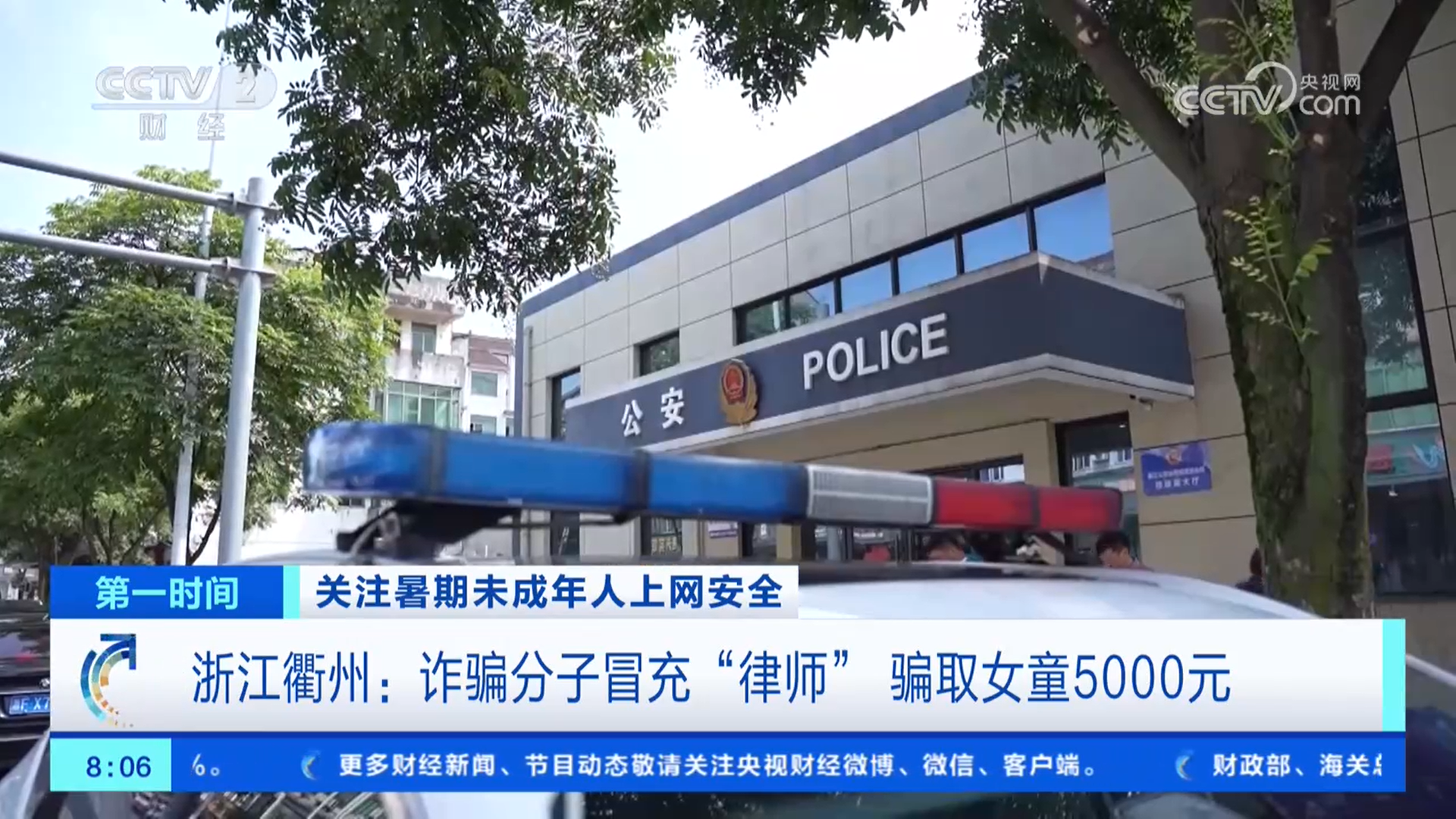
Group 1 - A 9-year-old girl in Quzhou, Zhejiang, was scammed out of 5000 yuan by a fraudster posing as a lawyer claiming she leaked a celebrity's privacy [1][3] - The girl was coerced into a video call and provided her mother's payment information after being threatened [3] - The case highlights the vulnerability of minors to online scams, especially during summer breaks when they have more internet exposure [1][4] Group 2 - Minors are increasingly becoming both victims and tools in online fraud schemes, as evidenced by a recent case in Changsha where a 16-year-old was recruited for a cross-border scam [4] - The scam involved using two phones to disguise international calls as local ones, leading to significant financial losses for victims [4] - The main suspect was lured by high-paying job offers for simple tasks like making phone calls, illustrating the recruitment tactics used by fraudsters [4]
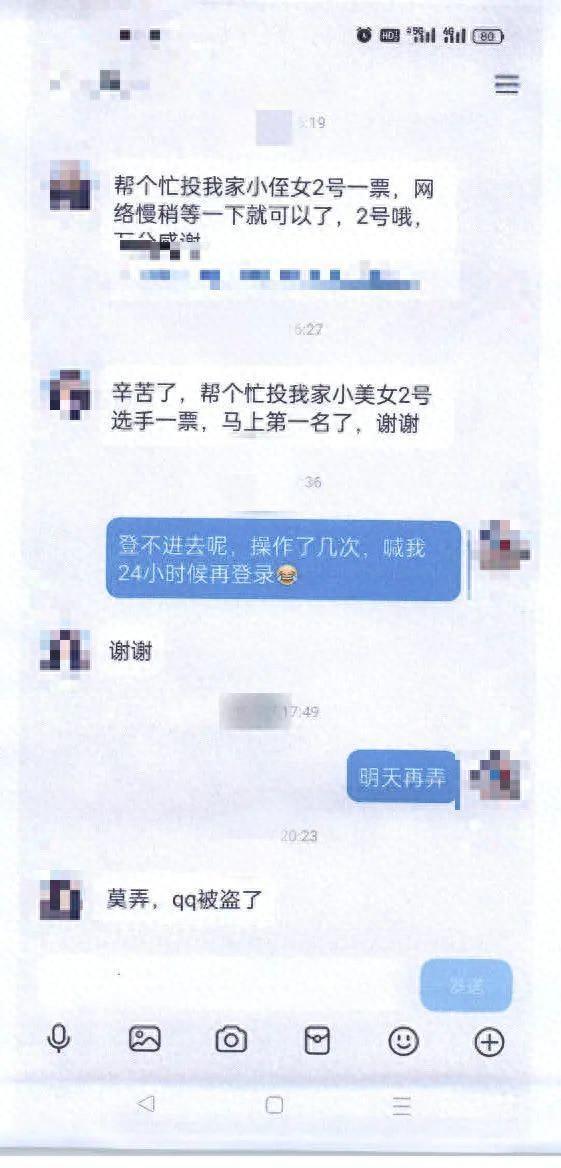
我就帮忙投个票,怎么钱包空了?
Huan Qiu Wang· 2025-07-20 01:58
Core Viewpoint - Recent incidents in Guang'an City highlight a new type of online fraud where scammers steal users' QQ accounts to send fake voting links to friends, leading to unauthorized transactions and financial losses [1][4][10]. Case Summaries Case 1: Zhang's Experience - Zhang received a "help my child vote" link from a trusted QQ contact and entered sensitive banking information, resulting in unauthorized purchases totaling 25,018.49 yuan on her JD account [4][10]. Case 2: Wang's Oversight - Wang also clicked on the same voting link from a QQ friend, leading to unauthorized deductions of 14,725 yuan from his bank account linked to JD White Bar after entering his password and verification code [7][10]. Fraud Characteristics - **High Deception**: Scammers impersonate friends to send phishing links, exploiting trust to lower victims' defenses [10]. - **Access Acquisition**: Victims unknowingly provide sensitive information on fake sites, granting scammers access to their accounts [10]. - **Excessive Theft**: Scammers make high-value purchases and utilize installment payments to maximize victims' losses [10]. Recommendations - It is advised to share this information with family and friends, especially older individuals who may be more susceptible to such scams [10].
当心!快手、淘宝等平台出现诈骗店铺,故意发错货实施诈骗
Bei Jing Ri Bao Ke Hu Duan· 2025-07-12 05:49
Core Viewpoint - Recent reports indicate a rise in online shopping scams where fraudsters exploit after-sales service as a means to lure victims into financial traps [1][2][3] Group 1: Scam Techniques - Fraudsters intentionally send incorrect or low-quality products to customers, prompting them to contact customer service, which leads to a scam under the guise of after-sales compensation [1][2] - Victims are often directed to scan QR codes or add customer service representatives on private messaging platforms, allowing scammers to evade platform oversight [2][3] - Scammers use various tactics, including promising refunds, additional compensation for positive reviews, and investment opportunities, to manipulate victims into transferring money [2][3] Group 2: Victim Experiences - One victim, Mr. Li, was lured into a scam after receiving the wrong product and was promised compensation through a series of tasks, ultimately losing tens of thousands of yuan [1] - Another victim, Ms. Wang, was convinced to invest in a fraudulent scheme after being promised high returns, resulting in a loss of 50,000 yuan [2] - A third victim, Ms. Zhang, faced threats of legal action and family repercussions, which pressured her into transferring a significant amount of money to the scammers [3] Group 3: Law Enforcement Response - Beijing police have identified a surge in fraudulent online shops across various platforms, with a wide range of products being sold [3] - Authorities emphasize that legitimate businesses will never require customers to transfer money or perform tasks for after-sales service [3][4] - Police urge social media and e-commerce platforms to enhance monitoring and provide clear warnings to consumers about potential scams [4]

想靠刷单赚钱反被骗?小心掉进诈骗陷阱!
Sou Hu Cai Jing· 2025-07-01 17:38
Core Viewpoint - The article highlights a case of online fraud involving a consumer who was misled into participating in a "part-time order brushing" scheme, resulting in significant financial loss due to unauthorized transactions on a fuel app [3][4][9]. Group 1: Incident Overview - A consumer named Ms. Wu from Chengdu, Sichuan, reported being scammed after attempting to earn extra income through a "part-time order brushing" opportunity she found online [3]. - Ms. Wu was guided to download a fuel app and recharge her account, leading to unauthorized transactions shortly after her deposits [4][5]. - The total amount Ms. Wu recharged was 4,700 yuan, with subsequent unauthorized expenditures totaling 3,151.71 yuan occurring within a minute [5][8]. Group 2: Fraud Mechanism - The fuel app's representative indicated that Ms. Wu likely fell victim to a scam by inadvertently disclosing sensitive information such as her mobile verification code and transaction password [9]. - An industry expert noted that the app's registration and fuel card activation processes require consumer authentication, suggesting that the fraud occurred due to Ms. Wu being manipulated into revealing her credentials [10]. Group 3: Consumer Warnings - The Chengdu Public Security Bureau's anti-fraud center issued warnings to consumers about the dangers of "order brushing" schemes, emphasizing that any request for upfront payment under the guise of easy earnings is likely a scam [11]. - Consumers are advised to avoid enabling "screen sharing" with unknown individuals, as this can lead to real-time access to sensitive information and potential theft of funds [11].
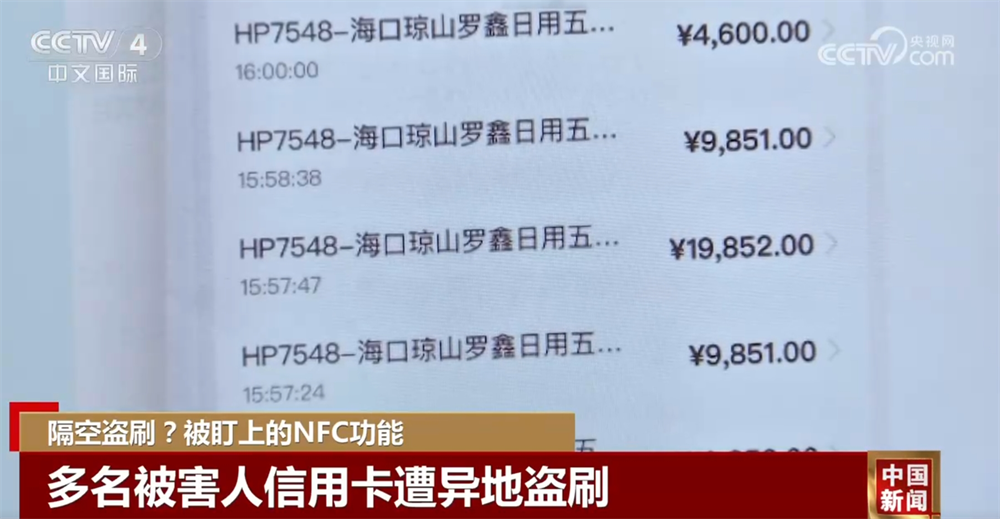
不法分子利用手机NFC功能进行盗刷 守护“钱袋子” 这些关键信息要牢记↓
Yang Shi Wang· 2025-06-30 07:15
Core Viewpoint - A recent case of credit card fraud in Beijing highlights the vulnerabilities associated with NFC technology and electronic wallets, where victims' credit cards were fraudulently charged without physical loss or duplication of cards [1][3]. Group 1: Incident Overview - Multiple victims reported unauthorized transactions totaling over 1 million yuan within two days, with one victim alone losing over 70,000 yuan [3]. - The fraud involved binding victims' credit card information to the perpetrators' electronic wallets using NFC-enabled phones [5][7]. Group 2: Methodology of Fraud - The criminal group used phishing tactics, sending messages about "ETC anomalies" to lure victims into providing their banking information on fraudulent websites [5]. - Once the information was obtained, the fraudsters could link the victims' credit cards to their own NFC-enabled devices for unauthorized transactions [7][11]. Group 3: Technology and Security Implications - NFC technology, while convenient for payments, has been exploited by criminals for remote theft, emphasizing the need for users to safeguard their personal information [9][13]. - Experts suggest that the NFC feature itself is not inherently insecure, but the misuse of personal data is a significant risk factor [11][13].