
西电东送

Search documents
地上逛吃、地下供电 西安商圈下藏着一个“电力大拿”
Yang Shi Xin Wen Ke Hu Duan· 2025-10-06 17:01
Core Insights - China's energy sector is rapidly transitioning to green energy during the "14th Five-Year Plan," with a focus on building a robust power grid that integrates renewable energy sources [1][3] - The province of Shaanxi has achieved a renewable energy consumption rate of over 90% for five consecutive years, significantly contributing to its trillion-yuan economy [1] - The construction of advanced infrastructure, such as the underground 330 kV substation and the 750 kV transmission project, is enhancing the efficiency and reliability of electricity supply in the region [1][3] Energy Infrastructure Development - Shaanxi has completed 75 projects during the "14th Five-Year Plan," improving the electricity distribution network and ensuring a stable power supply [1] - The 750 kV transmission project spanning 1,271 kilometers will enable rapid delivery of green electricity from northern Shaanxi to 40 million households in the central region [1][3] - The Zhen'an pumped storage power station is designed to optimize energy storage and generation, allowing for better management of renewable energy sources [1][2] Environmental Impact - The Zhen'an pumped storage power station can absorb surplus wind and solar energy, saving approximately 11.7 million tons of standard coal annually [3] - The high-voltage direct current projects in Shaanxi are expected to save 18 million tons of standard coal per year for the central region [3] - The largest "green battery" in Northwest China is projected to reduce carbon dioxide emissions by 305,000 tons annually [2]
他们的节日,在万家灯火之间
Xin Hua She· 2025-10-04 03:32
Core Insights - The article highlights the ongoing construction of the Aba-Chengdu East 1000 kV ultra-high voltage AC transmission project, which is a key initiative under China's 14th Five-Year Plan for electricity [1] - The project aims to connect two substations and facilitate the stable transmission of clean electricity to the Chengdu metropolitan area, supporting the Chengdu-Chongqing economic circle and the "West-to-East Power Transmission" initiative [1] Group 1: Project Overview - The project involves a challenging construction environment, including high-altitude work and adverse weather conditions, with over 5,000 workers dedicated to the project during the National Day holiday [1] - The use of advanced technologies, such as "ten-split conductor" technology and drone-assisted inspections, is emphasized to enhance operational efficiency and safety [1][2] Group 2: Operational Efficiency - The efficiency of inspections has significantly improved, with a reduction in manpower and time required for transformer inspections, now taking only half an hour with drones compared to the previous six personnel over ten hours [3] - The cumulative electricity transmission from the Sichuan-Chongqing ultra-high voltage project has exceeded 13.6 billion kWh, showcasing the project's impact on regional power supply [3] Group 3: Community Engagement - During the National Day holiday, power company teams are actively ensuring electricity supply in popular tourist areas, with initiatives to check and maintain power lines and emergency power sources [2][3] - The presence of power company personnel in various locations underscores their commitment to providing reliable electricity and supporting local communities during peak tourist seasons [3]
我国水电世界第一,最大的3座水电站位于湖北、四川与云南三省
Sou Hu Cai Jing· 2025-10-03 08:07
Core Insights - Hydropower is a sustainable and environmentally friendly energy source that utilizes the natural energy of river water flow without consuming water resources [1] - China has the world's richest hydropower resources, with a theoretical hydropower capacity of 694 million kilowatts and an annual theoretical generation capacity of 6.08 trillion kilowatt-hours, ranking first globally [1] Historical Development - The history of hydropower in China began in 1905 with the establishment of the first hydropower station in Taiwan, followed by the first hydropower station on the mainland in 1912 [3] - By 1949, the total installed hydropower capacity in China was 16.3 thousand kilowatts, which grew to 115 million kilowatts by 2005, maintaining the world's leading position [3] - As of August 2010, China's total installed power capacity exceeded 900 million kilowatts, with hydropower capacity surpassing 200 million kilowatts [3] Major Hydropower Projects - The Xiluodu and Baihetan hydropower stations are key components of China's "West-to-East Power Transmission" project, with Xiluodu having an installed capacity of 12.6 million kilowatts and ranking fourth in the world for annual generation [3] - Baihetan is the largest hydropower project under construction globally and will become China's second-largest hydropower station upon completion [3] Importance of Hydropower - The Three Gorges Dam is the largest hydropower station in the world and plays a crucial role in flood control, power generation, and navigation along the Yangtze River [5] - Hydropower stations significantly contribute to China's energy security, with Sichuan, Yunnan, and Hubei provinces leading in hydropower generation [7]

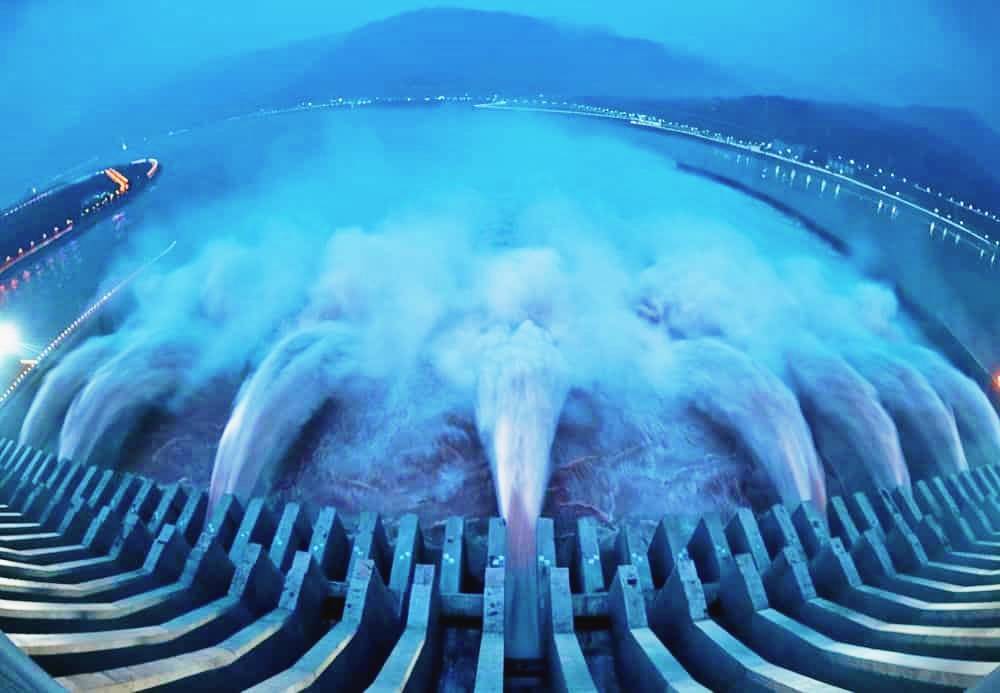
经济发展取得新成就(新时代画卷·决战决胜“十四五”)
Ren Min Ri Bao· 2025-10-01 22:30
Economic Growth and Development - China's economy has crossed significant milestones, reaching over 110 trillion yuan, 120 trillion yuan, and 130 trillion yuan during the "14th Five-Year Plan" period, with an expected growth to around 140 trillion yuan by 2025 [19] - The innovation capability is continuously improving, with R&D investment intensity projected to reach 2.68% in 2024, surpassing the average level of EU countries [19] - The three major economic regions—Beijing-Tianjin-Hebei, Yangtze River Delta, and Guangdong-Hong Kong-Macau Greater Bay Area—account for over 40% of the national economy in 2024 [19] Green Development - National forest coverage has reached 25.09%, an increase of approximately 2 percentage points since 2020 [19] - By 2024, the energy consumption per unit of GDP is expected to decrease by 11.6% compared to the end of the "13th Five-Year Plan," making China one of the fastest countries in energy intensity reduction globally [19] - The installed capacity of renewable energy generation has historically surpassed that of coal power, establishing the world's largest clean power system [19] Trade and Openness - The number of free trade pilot zones in China has reached 22, covering all regions [19] - China has become one of the top three trading partners for 157 countries and regions [19] - In 2024, the total import and export volume with countries involved in the Belt and Road Initiative is projected to reach 22.07 trillion yuan, accounting for over 50% of China's total trade [19] Social Development - Resident income growth is in sync with economic growth, and the income gap between urban and rural areas has further narrowed [19] - By the end of 2024, the urbanization rate of the permanent population is expected to reach 67%, an increase of 3.11 percentage points since the end of 2020 [19] - The scale of employed population from poverty alleviation efforts has remained stable at over 30 million for four consecutive years [19]
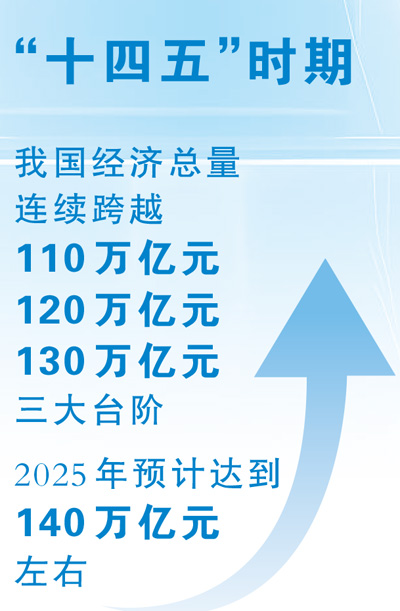
新发展理念引领高质量发展
Ren Min Ri Bao· 2025-10-01 22:03
Economic Growth and Development - China's economy has crossed significant milestones, reaching over 110 trillion, 120 trillion, and 130 trillion yuan during the "14th Five-Year Plan" period, with an expected GDP of around 140 trillion yuan by 2025, indicating substantial economic strength [1] - The country has achieved historic accomplishments in social and economic development under the new development philosophy of innovation, coordination, green, openness, and sharing, marking a solid step towards high-quality development [1] Innovation and R&D - Research and development (R&D) investment intensity is projected to increase to 2.68% in 2024, surpassing the average level of EU countries, with the total number of R&D personnel being the highest in the world [1] - China has made significant advancements in fields such as artificial intelligence, quantum technology, manned spaceflight, and deep space exploration, achieving multiple global "firsts" [1] Regional Development - By 2024, the economic output of the Beijing-Tianjin-Hebei, Yangtze River Delta, and Guangdong-Hong Kong-Macau Greater Bay Area regions is expected to account for over 40% of the national economy [1] - The integration of eastern region advantages in industry, technology, and capital with western region resource endowments is emphasized, with the "West-East Power Transmission" capacity exceeding 300 million kilowatts and the "East Data West Computing" hubs accounting for over 70% of national computing power [1] Green Development - National forest coverage has reached 25.09%, an increase of approximately 2 percentage points since 2020 [1] - By 2024, energy consumption per unit of GDP is expected to decrease by 11.6% compared to the end of the "13th Five-Year Plan," making China one of the fastest countries in terms of energy intensity reduction globally [1] - The installed capacity of renewable energy generation has historically surpassed that of coal power, establishing the world's largest clean power generation system [1] Openness and Trade - The number of free trade pilot zones in China has reached 22, covering all regions of the country [2] - China has become one of the top three trading partners for 157 countries and regions, with imports and exports to Belt and Road Initiative countries totaling 22.07 trillion yuan in 2024, accounting for over 50% of China's total trade [2] Social Development and Income Growth - Resident income growth has kept pace with economic growth, and the income gap between urban and rural areas has further narrowed [2] - By the end of 2024, the urbanization rate of the permanent population is expected to reach 67%, an increase of 3.11 percentage points since the end of 2020 [2] - The number of employed individuals from poverty alleviation efforts has remained stable at over 30 million for four consecutive years [2]
光耀雪域十四载 “电力天路”的扩容升级与精神守望
Zhong Guo Neng Yuan Wang· 2025-09-29 09:40
Core Viewpoint - The completion of the Qinghai-Tibet DC Phase II expansion project significantly enhances the power transmission capacity of the Qaidam Converter Station, doubling its maximum transmission power from 600,000 kW to 1,200,000 kW, thereby supporting the green development of Tibet and reinforcing the national "West-East Power Transmission" strategy [1][2]. Group 1: Project Development and Achievements - The Qaidam Converter Station has evolved from dual to quadruple converters over 14 years, becoming a benchmark for DC projects in high-altitude and cold regions of China [2]. - Since its initial operation in 2011, the station has transmitted 13.86 billion kWh of electricity to Tibet, with 9.84 billion kWh sent after the successful power reversal in 2015 [2]. - The expansion project, which began in May 2024, aims to upgrade the converter stations in Qaidam and Lhasa, enhancing the transmission capacity to 1,200,000 kW and upgrading the control systems [3]. Group 2: Technological Innovations and Challenges - The Qaidam Converter Station has faced severe challenges such as low temperatures, oxygen deficiency, and complex geological conditions, necessitating strong technological innovation and talent development [5][6]. - Innovations include the development of a "DC control system switching logic optimization technology," which has significantly improved system reliability and has been patented [6]. - The station has achieved over 20 national patents and has addressed 15 core operational challenges in high-altitude environments, contributing to the safety and efficiency of the Qinghai-Tibet interconnected project [6][7]. Group 3: Environmental and Social Responsibility - The Qinghai-Tibet DC transmission line, spanning 1,038 kilometers, is the highest and longest DC project in the world, requiring careful consideration of ecological protection and social responsibility [10]. - Initiatives such as the installation of artificial bird nests have been implemented to protect local wildlife while ensuring the safety of the power grid [10]. - The use of drones for inspections has been upgraded to a regular practice, enhancing operational efficiency and safety in extreme environments [11].
大同~怀来~天津南特高压交流工程山西侧配套电源送出工程全面开工
Zhong Guo Neng Yuan Wang· 2025-09-29 09:39
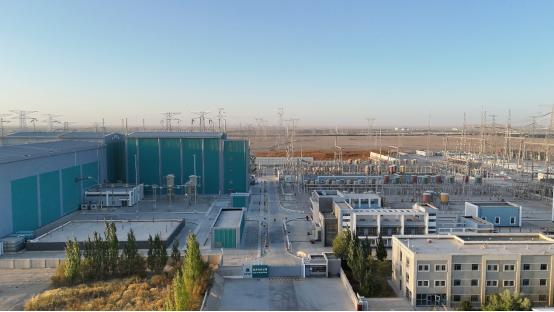
工程还将进一步强化晋北与京津冀地区的资源优势互补和产业分工协作,促进传统产业 改造提升和新兴产业融合集群发展。 【责任编辑:刘澄谚 】 工程投运后可为大同~怀来~天津南1000千伏特高压交流工程提供安全可靠的电力支 撑,增强华北电网"西电东送"能力,每年将向京津唐地区输送电量约182亿千瓦时,更好满 足京津唐负荷增长需求;同时还将有效发挥火电机组的深度调节作用,提升晋北地区清洁能 源利用率,促进新能源高质量发展。 9月29日,大同~怀来~天津南1000千伏特高压交流工程山西侧配套电源送出工程全面 开工建设。 工程起于装机容量均为200万千瓦的湖东电厂、同热三期电厂,止于大同1000千伏特高 压变电站,新建线路长度110.409公里,铁塔275基,预计将于2026年9月30日建成投运。工 程总投资约9.45亿元,将带动上下游产业投资近20亿元。 ...
苏能股份:“蒙电送苏”项目取得重要进展,“西电东送”再添高效电源点
Quan Jing Wang· 2025-09-29 03:38
Core Viewpoint - Jiangsu Xukang Energy Co., Ltd. (referred to as "Sunan Co., 600925.SH") has made significant progress in its Uralai 2×1000MW high-efficiency ultra-supercritical coal-fired power generation project, with the 1 unit (1000MW) successfully completing 168 hours of full-load trial operation and officially entering commercial operation on September 24, 2025 [1] Group 1: Project Progress - The Uralai project is part of the "Mengdian Song Su" project, which is a key component of China's "West-to-East Power Transmission" strategy, converting Inner Mongolia's energy advantages into economic benefits while meeting Jiangsu's growing electricity demand [1][2] - The newly operational unit has been included in the fourth batch of major technological equipment in the energy sector announced by the National Energy Administration, featuring innovative combustion technology for stable, efficient, and clean burning of high-moisture, low-calorific lignite [2] Group 2: Market Impact - The commercial operation of the new unit is expected to enhance Jiangsu's energy security and strengthen Sunan Co.'s strategic position in the regional energy security system, potentially opening new profit avenues for the company [2] - The lignite unit offers significant advantages in fuel cost control compared to bituminous coal units, and it has achieved notable optimization in key economic and technical indicators such as unit construction cost, power generation coal consumption, and operational efficiency [2] Group 3: Business Development - Sunan Co. has been advancing its coal, thermal power, and new energy businesses simultaneously, with recent approvals for expanding coal production capacity and multiple new energy projects, including solar and storage initiatives, now operational [3] - The company aims to continue optimizing its industrial layout centered on coal, coal power, and new energy, while increasing the proportion of green energy to contribute to the development of a new energy system and support regional economic growth [3]

黄河干流装机最大水电站今年发电量突破40亿千瓦时
Zhong Guo Xin Wen Wang· 2025-09-26 13:34
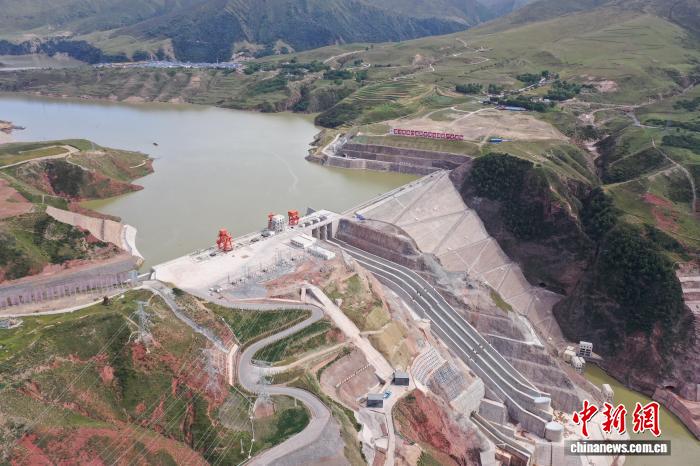
Core Viewpoint - The Malda Dam Hydropower Station has achieved a significant milestone by surpassing 4 billion kilowatt-hours of electricity generation in 2023, highlighting its role as a key power source in China's energy strategy [1][5]. Group 1: Project Overview - The Malda Dam Hydropower Station is located on the Yellow River in Qinghai Province, with an average elevation of 3,300 meters, making it the highest and largest hydropower station on the Yellow River [3]. - The total installed capacity of the station is 2.32 million kilowatts, consisting of four units of 550,000 kilowatts and one unit of 120,000 kilowatts [3]. - It serves as a backbone power source for China's "West-to-East Power Transmission" and "Qinghai Electricity into Henan" initiatives [3]. Group 2: Operational Achievements - As of September 26, 2023, the station has optimized its operations by enhancing water utilization efficiency and equipment reliability through smart station construction and operational adjustments [3]. - The station successfully managed flood conditions with a peak flow of 1,548 cubic meters per second, ensuring efficient water resource allocation and safe operation [3]. - Since the first unit was connected to the grid on April 1, 2024, the cumulative electricity generation has exceeded 6.9 billion kilowatt-hours, meeting the annual electricity needs of approximately 1.725 million households [5]. Group 3: Environmental Impact - The operation of the Malda Dam has led to a reduction of approximately 2.07 million tons of standard coal consumption and a decrease in carbon dioxide emissions by about 7.71 million tons [5]. - Additionally, the station has contributed to a reduction of sulfur dioxide emissions by approximately 28,700 tons [5].
±800千伏青豫特高压工程青海段完成年度检修
Zhong Guo Dian Li Bao· 2025-09-24 03:17
Core Points - The Qinghai-Henan ±800 kV UHVDC project has successfully completed its annual maintenance, ensuring reliable power supply for the upcoming winter peak [1][2] - This project is the world's first long-distance transmission corridor for renewable energy and plays a crucial role in China's "West-to-East Power Transmission" initiative [1] - Since its operation, the project has delivered 86.8 billion kWh of clean electricity to Henan, significantly reducing coal consumption and carbon emissions [1] Group 1 - The annual maintenance of the Qinghai section of the UHVDC project was conducted to ensure the safety and reliability of the power grid [2] - A total of 500 maintenance personnel were involved in the inspection of the converter station and the 231 km DC line, covering 433 towers [2] - The maintenance work included a comprehensive evaluation of equipment status and the development of a detailed maintenance plan to ensure safety and quality [2]