AI医疗

Search documents
AI医疗板块2月9日涨1.31%,创新医疗领涨,主力资金净流入5.87亿元
Sou Hu Cai Jing· 2026-02-09 09:28
Core Insights - The AI healthcare sector experienced a rise of 1.31% on February 9, with Innovative Medical leading the gains [1] - The Shanghai Composite Index closed at 4123.09, up by 1.41%, while the Shenzhen Component Index closed at 14208.44, up by 2.17% [1] Market Flow - On the same day, the AI healthcare sector saw a net inflow of 587 million yuan from major funds, while retail investors experienced a net outflow of 105 million yuan [1] - The overall fund flow in the AI healthcare sector indicates a mixed sentiment, with major funds investing while retail investors withdrew [1]


反向NewCo+顶尖人才,华检医疗重构AI医疗格局,易笑加盟成关键一步
Zhi Tong Cai Jing· 2026-02-09 01:55
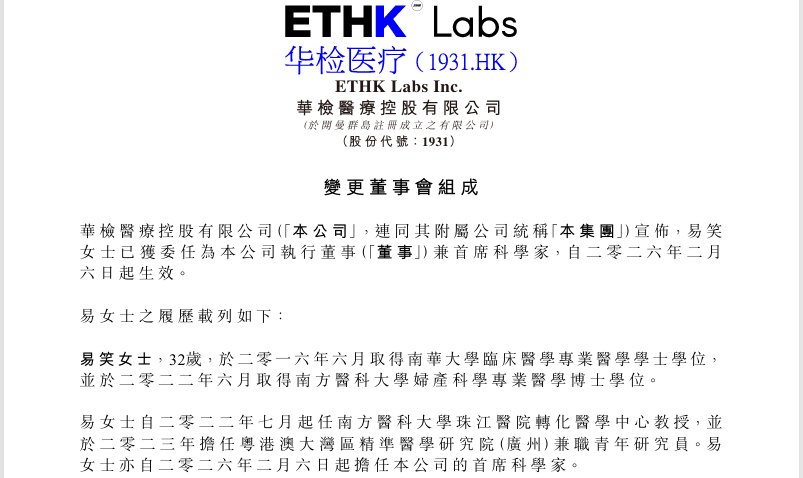
当华检医疗(01931)的股价在低迷中徘徊,一则看似平常的人事任命公告,正成为扭转战局的关键落子。 2月6日晚间,华检医疗宣布,年仅32岁的顶尖科学家易笑博士获委任为公司执行董事兼首席科学家。 图片来源:华检医疗2月6日公告 在华检医疗股价持续承压、投资者信心亟待提振的当下,易笑的加盟绝非简单的"技术吉祥物"。其背后,是华检 医疗正试图以中国庞大的医疗市场生态为"筹码",重构全球AI医疗技术价值分配格局的宏大叙事。 本文将深度解读,这位手握Science Advances顶刊论文、自主研发再生医学"基石材料"EBN的青年科学家,如何与 华检医疗的三大曲线战略协同,成为公司从"资本并购"迈向"生态引力"时代的核心引擎。 一、 破解估值困局:华检医疗的"反向NewCo"为何是颠覆性创新? 面对全球顶尖AI医疗资产估值高企、跨境数据合规壁垒森严的时代性挑战,华检医疗没有选择重资本并购的"红 海"路径,而是开创性地推出了"反向NewCo"全球合作范式。这一模式的精髓在于 "以生态入股权,替代资本所有 权"。 具体而言,华检医疗不会直接斥巨资收购海外技术公司,而是与拥有经全球验证的尖端AI技术或产品的海外合作 伙伴,在 ...
卓正医疗上市首日股价飙升,健康服务消费龙头迎来价值重估时刻
Zhi Tong Cai Jing· 2026-02-09 01:50
此外,一众知名基石投资者亦为公司市场价值提供背书:包括金域医学、小鹏汽车董事长何小鹏先生, 及明略科技、微盟集团、库洛游戏、手回集团等腾讯生态企业,其中腾讯集团作为公司重要战略股东持 有近20%股份。 此次IPO,卓正医疗可谓收获了资本市场的热烈反响:公开发售阶段获2730.73倍认购,暗盘交易亦持续 火热,富途证券暗盘一度上涨105%,报122.9港元/股,不计手续费每手(50股)最高赚3150港元;老虎 证券暗盘一度涨97%,报118.2港元/股,每手可赚超2915港元。 2025年2月6日,卓正医疗(02677)正式于香港联合交易所主板挂牌上市。上市首日,公司股价大幅飙 涨,盘中最高抵达90.25港元高点,较发行价59.9港元上涨50.67%,最终收于68.5港元。 实际上,资本市场的热烈反馈,早已在另一组数字中埋下了伏笔:2024年,卓正医疗总就诊人次达90 万,平均每位客户年就诊近4次;家庭会员达10.8万户,平均每户会员家庭年消费超过6次;会员续费率 和患者回头率持续攀升,截至2025年8月分别达到67%与82.7%,超八成患者选择复购。 这些数字的背后,是数十万家庭与患者,早早用另一种方式给卓正 ...
反向NewCo+顶尖人才,华检医疗(01931)重构AI医疗格局,易笑加盟成关键一步
智通财经网· 2026-02-09 01:05
当华检医疗(01931)的股价在低迷中徘徊,一则看似平常的人事任命公告,正成为扭转战局的关键落子。 图片来源:华检医疗2月6日公告 在华检医疗股价持续承压、投资者信心亟待提振的当下,易笑的加盟绝非简单的"技术吉祥物"。其背后,是华检 医疗正试图以中国庞大的医疗市场生态为"筹码",重构全球AI医疗技术价值分配格局的宏大叙事。 本文将深度解读,这位手握Science Advances顶刊论文、自主研发再生医学"基石材料"EBN的青年科学家,如何与 华检医疗的三大曲线战略协同,成为公司从"资本并购"迈向"生态引力"时代的核心引擎。 一、 破解估值困局:华检医疗的"反向NewCo"为何是颠覆性创新? 智通财经APP获悉,2月6日晚间,华检医疗宣布,年仅32岁的顶尖科学家易笑博士获委任为公司执行董事兼首席 科学家。 面对全球顶尖AI医疗资产估值高企、跨境数据合规壁垒森严的时代性挑战,华检医疗没有选择重资本并购的"红 海"路径,而是开创性地推出了"反向NewCo"全球合作范式。这一模式的精髓在于 "以生态入股权,替代资本所有 权"。 具体而言,华检医疗不会直接斥巨资收购海外技术公司,而是与拥有经全球验证的尖端AI技术或产 ...
AI医疗“远水难救近火”润达医疗预亏近5亿元
Zhong Guo Jing Ying Bao· 2026-02-08 16:19
Core Viewpoint - RunDa Medical (603108.SH) has announced a projected net loss for 2025, estimating a loss between 5.65 billion to 4.71 billion yuan, reflecting significant operational challenges due to industry-wide price reductions and macroeconomic pressures [2][3] Financial Performance - The company's net profit for 2023 saw a year-on-year decline of 62.16%, with a further drop of 78.94% in 2024 [2] - For the first three quarters of 2025, the net profit was reported at -1.63 billion yuan, compared to a profit of 50.42 million yuan in the same period last year [2] - Overall revenue decreased by approximately 15% compared to the previous year [3] Industry Challenges - The IVD (in vitro diagnostics) sector is facing challenges due to centralized procurement policies that have led to price reductions, impacting revenue and profit margins [3][7] - The implementation of centralized procurement has resulted in lower product prices and delayed payment cycles from public hospitals, exacerbating financial pressures on the company [3][4] Subsidiary Performance - Some subsidiaries of RunDa Medical have not met profitability expectations, leading to an anticipated goodwill impairment provision of 180 million to 220 million yuan [4] - The company has noted that accounts receivable collection periods have lengthened due to financial pressures on hospitals, although the risk of bad debts remains low [4][5] Business Segments - RunDa Medical's business is divided into three main segments: commercial, industrial, and emerging AI medical services, all of which are experiencing varying degrees of pressure [6] - The commercial segment, which is the main revenue driver, reported a revenue decline of 8.34% in 2024, with further declines in specific areas such as centralized testing services and third-party laboratory services [6] Future Outlook - The company is focusing on AI medical and digital business as future growth areas, with the medical information business showing a 40.73% revenue increase in the first half of 2025 [8] - However, the new business segments are not expected to compensate for the decline in traditional business in the short term [8][9] - RunDa Medical plans to leverage its technological expertise in smart healthcare to enhance its service offerings and operational efficiency [9][10]

摩根士丹利2026重磅信号:医疗估值密码已变,告别概念炒作,拥抱效率革命
GLP1减重宝典· 2026-02-08 14:20
Core Viewpoint - The article emphasizes a "silent revolution" in the healthcare sector driven by AI, where traditional medical giants are leveraging AI to enhance operational efficiency and cash flow, moving away from the hype surrounding pure AI startups [4][5]. Group 1: Capital Shift - Smart money is rapidly withdrawing from chasing "pure AI tools" and is instead investing heavily in traditional healthcare giants like Medtronic, Intuitive Surgical, GE Healthcare, and Boston Scientific that are systematically transforming themselves with AI [4][5]. - The underlying logic of this capital shift is a complete migration of valuation paradigms, favoring tangible operational improvements over mere technological advancements [5]. Group 2: Operational Alpha - The concept of "Operational Alpha," proposed by Bessemer Venture Partners, focuses on whether AI can enable a company to perform the work of ten people more efficiently and cost-effectively [7]. - Investors are now prioritizing quantifiable financial improvements, such as reducing clinical evaluation report preparation time from 400 hours to 140 hours, which can lead to significant early cash flow [7][10]. Group 3: Efficiency Revolution - The efficiency revolution is driven by three main arteries that enhance cash flow for healthcare giants: 1. **Accelerating Value Realization**: AI can reduce the time required for clinical evaluation reports, significantly speeding up product market entry and increasing net present value [10]. 2. **Optimizing Supply Chain and Inventory**: AI-driven predictive algorithms can release $400 million to $600 million in operational cash by optimizing inventory management [11]. 3. **Enhancing Customer Lifetime Value**: AI transforms products into long-term solutions, increasing customer reliance and stabilizing cash flow [12]. Group 4: Challenges for AI Startups - Pure AI medical startups are facing a capital winter due to three major hurdles: integration challenges with complex hospital IT systems, high compliance costs associated with new regulations, and data barriers that prevent access to high-quality training data [13][15]. - Investors are now more inclined to support established companies with stable cash flows and customer networks that are effectively using AI to enhance efficiency, rather than taking risks on startups that must overcome significant technological and regulatory obstacles [15]. Group 5: M&A Trends - The 2026 M&A landscape will focus on "efficiency enhancement" rather than mere scale expansion, with acquisitions aimed at integrating companies that can directly improve operational efficiency [16]. - Notable examples include Tempus acquiring Paige for its AI cancer detection software and extensive data set, and Stryker acquiring Inari Medical for its real-time surgical data processing capabilities [16]. Group 6: Future Industry Dynamics - The narrative of "disrupting giants" is shifting towards becoming indispensable components within the efficiency arsenal of larger companies, with startups needing to demonstrate quantifiable cash return improvements to attract investment [17][19]. - Investors must shift their due diligence focus from the allure of technology to the ability of businesses to accelerate cash returns, emphasizing the importance of free cash flow trends and cash turnover days [19].




业绩与股价背离?港股医药基本面转暖,重视低位吸筹窗口期!
Xin Lang Cai Jing· 2026-02-08 12:09
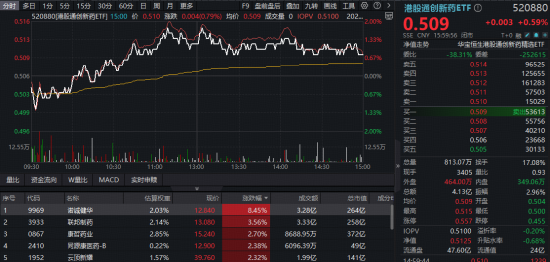
Group 1: Market Overview - The Hong Kong pharmaceutical sector showed significant recovery on February 6, with innovative drugs experiencing a rebound, particularly the Hong Kong Stock Connect Innovative Drug ETF (520880), which rose by nearly 2% after opening lower [1][8] - Notable stocks included Nocera Health, which surged over 12%, projecting revenues of 2.37 billion yuan for 2025, a year-on-year increase of approximately 134%, and an expected net profit of around 630 million yuan, marking its first profit [1][8] Group 2: Company Performance - Companies such as Rongchang Biopharmaceutical and CanSino Biologics also reported profitability, with net profit forecasts exceeding 100% year-on-year growth [1][8] - Ark Health announced a profit forecast of 7 to 10 million yuan for 2025, indicating a turnaround from losses, and raised approximately 144.3 million HKD to accelerate the development of its AI-driven chronic disease management platform [3][10] Group 3: ETF Insights - The Hong Kong Stock Connect Innovative Drug ETF (520880) and the Hong Kong Stock Connect Medical ETF (159137) are highlighted as effective investment vehicles, with the former focusing entirely on innovative drug development companies, where the top ten weighted stocks account for over 73% [6][12] - The Hong Kong Stock Connect Medical ETF (159137) has shown strong performance, with 9 out of 10 disclosed component stocks expected to report profits, and several companies projected to double their net profits year-on-year [3][10]
华盖资本许小林:中国将诞生万亿医疗公司,四个方向迎来爆发
GLP1减重宝典· 2026-02-07 04:43
Core Viewpoint - The Chinese healthcare industry is at a historical turning point, transitioning from "following innovation" to "leading innovation," with the emergence of trillion-dollar companies becoming a tangible future rather than a distant dream [4][5]. Industry Milestones - By the end of 2025, significant milestones include Eli Lilly becoming the first healthcare company with a market value exceeding $1 trillion, the Hong Kong Stock Exchange leading global financing with over $36 billion, and 3SBio's $1.25 billion upfront payment, indicating China's innovative drugs gaining international pricing power [4][5][7]. Transformation of China's Healthcare Industry - China has evolved from being a major pipeline buyer to a core seller in global business development (BD) transactions, now accounting for 20% of the market, particularly in areas like Antibody-Drug Conjugates (ADC) [7]. - Despite this progress, there remains a significant gap in original innovation compared to the U.S., which is a key reason for the shift in national policy towards new drug innovation [7][8]. Investment Directions - **Direction One**: Investing in original innovations based on top Chinese research institutions is expected to yield high returns, despite the high risks associated with crossing the "valley of death" in technology and commercialization [8][10]. - **Direction Two**: Embracing "three no" companies (no revenue, no profit, not listed) with genuine innovative technologies is becoming a core strategy for professional funds, supported by a robust capital market that allows for high valuations [11][13]. - **Direction Three**: The integration of AI in healthcare is evolving from a mere enabling tool to a creator of new entities, with AI expected to play significant roles in clinical diagnosis, drug development, and even home health management [14][16]. - **Direction Four**: A new era of Chinese multinational corporations (MNCs) is anticipated, with several leading healthcare companies expected to surpass a market value of one trillion, leveraging both internal innovation and global acquisitions [17][19]. Future Outlook - The future of the Chinese healthcare industry is characterized by a convergence of policy, capital, technology (especially AI), and market dynamics, creating an environment ripe for investment in original innovations, pure innovation companies, and AI-driven healthcare solutions [19].

美的医疗推出业界首个DR智能体,释放医生70%重复性劳动
2 1 Shi Ji Jing Ji Bao Dao· 2026-02-06 14:44
Core Insights - The launch of the first DR intelligent system by Wandong Medical, a subsidiary of Midea Medical, establishes a comprehensive ecosystem integrating hardware, core algorithms, imaging cloud, and clinical scenarios in the high-end DR market [2][9] Group 1: Technological Innovation - The DR intelligent system leverages over 4 million cross-domain chest DR imaging data to build a multimodal diagnostic model, overcoming traditional AI limitations of single-point recognition [5] - The system introduces a "deep thinking" reasoning engine that simulates clinical thought processes, enabling multi-step logical deductions for complex or multi-lesion images [5] Group 2: Workflow Transformation - The core value of the Wandong DR intelligent system lies in reshaping clinical workflows by automating the entire imaging process, allowing for one-click smart positioning, imaging, AI image quality control, and automatic detection of common chest diseases [3][5] - The system generates structured diagnostic reports seamlessly, bridging the gap between image acquisition and diagnostic analysis [3] Group 3: Clinical Efficiency and Quality - In high-load scenarios such as health check centers and emergency departments, the intelligent system significantly enhances clinical value by reducing chest X-ray analysis time to minutes, freeing up over 70% of physicians' repetitive reading time [7] - It provides a "second pair of eyes" for less experienced primary care physicians, reducing the risk of missed or misdiagnosed cases [7] Group 4: Ecosystem and Market Impact - The collaboration between Midea Medical and its ecosystem partners signifies a shift from isolated innovations in high-end medical equipment to a comprehensive intelligent transformation across the entire chain [9] - This technology not only improves diagnostic efficiency and consistency but also injects expert-level capabilities into grassroots healthcare, promoting the standardization of quality medical resources [9]

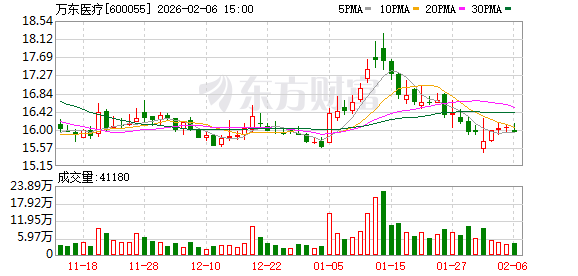
业绩提振,港股医药回暖!诺诚健华领涨创新药,520880摸高2%!港股通医疗ETF华宝底部四连阳
Xin Lang Cai Jing· 2026-02-06 09:49
Core Viewpoint - The Hong Kong pharmaceutical sector is experiencing a significant rebound, particularly in innovative drugs, with several companies reporting strong earnings forecasts and positive growth trends [1][8]. Group 1: Innovative Drug Sector - The Hong Kong Stock Connect Innovative Drug ETF (520880) saw a rise of nearly 2% after opening lower, indicating strong investor interest [1][8]. - Innovent Biologics (诺诚健华) led the gains with a rise of over 12%, projecting revenues of 2.37 billion yuan for 2025, a year-on-year increase of approximately 134%, and an expected net profit of around 630 million yuan, marking its first profit [1][8]. - Other companies like Rongchang Biopharmaceutical and CanSino Biologics also reported profitability, with net profit growth exceeding 100% year-on-year [1][8]. Group 2: Medical Sector - The medical sector is also showing positive momentum, with AI healthcare and CXO-related stocks active; Ark Health (方舟健客) led with a 4.71% increase [3][10]. - Ark Health forecasts a profit of 7 to 10 million yuan for 2025, indicating a turnaround from previous losses, and raised approximately 144.3 million HKD to accelerate the development of its AI-driven chronic disease management platform [3][10]. - Among the 10 component stocks of the Hong Kong Stock Connect Medical ETF (159137) that disclosed earnings forecasts, 9 are expected to be profitable, with several companies anticipating net profit growth of over 100% [3][10]. Group 3: Market Trends and Investment Opportunities - Despite the positive earnings outlook, the recent performance of the pharmaceutical sector has diverged from these fundamentals, with the Hong Kong Stock Connect Innovative Drug ETF (520880) experiencing four consecutive weeks of declines [5][12]. - The current market conditions may present a favorable opportunity for accumulation in the Hong Kong pharmaceutical sector, particularly through ETFs, which offer higher efficiency and flexibility [5][12]. - Investors are encouraged to consider the Hong Kong Stock Connect Innovative Drug ETF (520880) and its associated funds for a comprehensive exposure to innovative drug companies, with the top ten holdings accounting for over 73% of the portfolio [6][12].