ESG投资

Search documents
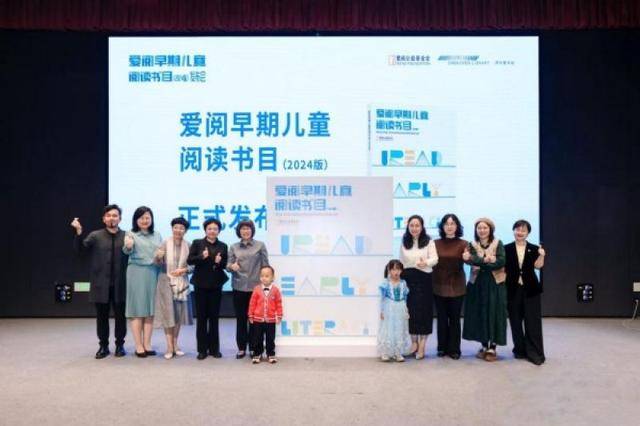
什么是真正的“教育投资”?一份免费书单给出这样的答案
Sou Hu Cai Jing· 2025-12-02 21:05
Core Viewpoint - The article highlights the contrasting approach of the AiYue Public Welfare Foundation in the education sector, focusing on long-term value through early childhood development education, as opposed to the short-term profit-seeking behavior of capital in the education industry [2][10]. Group 1: Strategic Philanthropy - The AiYue Foundation's model emphasizes "strategic philanthropy," which prioritizes social benefits such as improving national reading literacy and optimizing educational resource allocation over direct financial returns [2][6]. - The foundation has invested significant resources over eight years to create a comprehensive reading list, which serves as a reliable guide for parents and educators amidst the overwhelming supply of over 40,000 new children's books each year [2][4]. Group 2: Quality Consensus in Children's Books - The foundation established a rigorous public selection mechanism to create a "quality consensus" in the children's book market, addressing the challenge of information overload faced by parents and educators [2][4]. - The selection process involves a multi-disciplinary team of experts who evaluate books based on six principles: child-friendliness, literary quality, artistic value, interactivity, scientific accuracy, and diversity [4][6]. Group 3: Market Impact and Consumer Behavior - The free reading list significantly reduces decision-making costs and anxiety for consumers, shifting their purchasing behavior from impulsive buying to informed investment in quality books [7][8]. - The initiative is fostering a cultural shift towards valuing "quality reading" over "utilitarian reading," encouraging parents to view reading as a means of enjoyment and personal growth [7][8]. Group 4: Industry Transformation - The demand for quality recommendations is driving structural adjustments in the creative and publishing sectors, leading to an increase in the proportion of original Chinese children's books and a broader range of themes [8][9]. - The foundation's credibility as a neutral "standard setter" is helping to correct market failures caused by information asymmetry, promoting a healthier industry transition from "traffic-driven" to "quality-driven" competition [6][9]. Group 5: Long-term Investment in Human Capital - The foundation's approach is framed within the ESG (Environmental, Social, and Governance) investment context, suggesting that the long-term social returns from early reading investments may outweigh immediate financial metrics [10][11]. - The emphasis on early reading as a foundational investment in human capital is expected to yield higher talent quality and lower educational correction costs in the future [11][12]. Group 6: Insights for Commercial Capital - The AiYue model provides a reference for commercial capital exploring ESG pathways, demonstrating that supporting credible third-party standard-setting organizations can lead to industry-wide quality upgrades and shared long-term social benefits [13][14]. - The foundation's commitment to long-term value creation, rather than immediate returns, offers a significant lesson for the commercial sector in navigating the balance between short-term growth and sustainable impact [13][14].

银华基金:以责任赋能公益 坚持做长期正确的事
第一财经· 2025-12-02 11:46
Core Viewpoint - The article emphasizes the commitment of Yinhua Fund to social responsibility through various public welfare projects, showcasing the integration of financial expertise with community support and education initiatives [1][9]. Group 1: Social Responsibility Initiatives - Yinhua Fund has actively engaged in social responsibility by implementing 132 public welfare projects and donating nearly 33 million yuan, demonstrating a strong commitment to community support [1][8]. - The company has focused on education as a key area of its public welfare efforts, launching the "Yinhua Flower Book House" project in 2016 to provide books to underprivileged schools [3][4]. - The establishment of the Shenzhen Yinhua Public Welfare Foundation in 2019 marked a shift towards a more systematic approach to public welfare, creating a comprehensive education support ecosystem [3][4]. Group 2: Educational Support Programs - The "Yinhua Flower Village Education Support Plan" includes four sub-projects aimed at enhancing educational quality and accessibility in rural areas [3][5]. - In 2022, the foundation supported 284 students from low-income families and provided professional training for 67 rural female teachers and 13 educational researchers [5][7]. - The foundation's approach to education has evolved from simple donations to a more sustainable model that includes experiential learning and teacher development [5][6]. Group 3: Broader Poverty Alleviation Efforts - Yinhua Fund has extended its social responsibility efforts to include ecological poverty alleviation, supporting local industries and improving healthcare services in underdeveloped areas [7][8]. - The company has initiated ecological projects, such as establishing a 200-acre seedling base in Inner Mongolia and supporting water supply projects in areas facing water scarcity [7][8]. - The "Warm Sun Rescue Plan" was created to assist individuals facing severe hardships due to illness or disasters, providing financial aid to cover essential expenses [7][8]. Group 4: Commitment to Transparency and ESG - Yinhua Fund has achieved a perfect score of 100 in the China Foundation Transparency Index for four consecutive years, reflecting its commitment to transparency and public trust in its charitable activities [9]. - The company integrates ESG factors into its investment practices, aligning social responsibility with long-term investment returns [9]. - The foundation's evolution from scattered charitable efforts to a systematic operation underlines its dedication to responsible financial practices and community engagement [9].

香港中资公募怎么挑?一篇看懂6家“国家队”隐藏技能
Sou Hu Cai Jing· 2025-12-02 01:13
本篇我们将视角转向中资公募机构。作为香港资本市场的重要参与者,中资公募基金机构近年来发展迅 速,依托母公司强大的投研能力、跨境业务协同机制以及离岸人民币市场的独特优势,逐步构建起具有 本土化深度与国际化广度兼备的竞争力。 香港处理着全球约80%的人民币支付业务,是最大的人民币离岸中心。中资公募机构凭借这一区位优 势,结合QFII、RQFII、沪深港通、债券通、跨境理财通等政策工具,形成了"境内—香港"资金、客户 与资产的高效双向流动机制,打造出低成本、高效率的跨境一体化平台。 以下,我们选取六家在香港市场具有代表性的中资公募机构,从产品体系、投资策略、业务特色、适用 场景等维度进行系统梳理,以供投资者参考。 一、中银国际资管(BOCI AM) 关键词:银行系、全币种、港股通医药冠军 生态位:香港最大银行系资管,人民币清算量市占率35%,母公司中银香港坐拥200万零售户口。 产品线:80余只公募,货—债—股—多资产"闭环",人民币、美元、港元三币种一键切换。 年度黑马:中银港股通医药混合发起A,2025年以来收益+102%,同类第一,规模从年初4亿飙至87亿 港元。 在之前文章中,我们系统梳理了九家具有代表性的 ...
基金市场与ESG产品周报20251201:各类行业主题基金净值上涨,被动资金减仓股票型ETF-20251201
EBSCN· 2025-12-01 13:29
- The report does not contain any quantitative models or factors related to construction, testing, or evaluation[1][2][3] - The report primarily focuses on market performance, fund issuance, ESG products, and ETF tracking without discussing quantitative models or factors[4][6][70] - No relevant quantitative models or factors are mentioned in the provided content[39][56][76]
全部撤回!券商资管子公司公募牌照申请退潮;券商CIO密集“换新”,数字化从后勤变引擎 | 券商基金早参
Mei Ri Jing Ji Xin Wen· 2025-12-01 01:45
|2025年12月1日 星期一| NO.1 累计捐款超4亿港元!50余家金融机构支援香港大埔 点评:券商资管子公司公募牌照申请集体撤回,反映行业转型压力加剧。随着2025年底资管新规大限临 近,券商资管面临清盘、转私募或管理人变更等路径选择,或引发市场对券商资管业务前景的重新评 估。券商板块短期情绪或受扰动,但长期看,行业规范化发展有利于市场健康。整体而言,资管行业加 速出清,将推动资本市场结构优化。 NO.4 公募基金发行11月迎来"小阳春",基金发行近千亿元 公募基金发行市场在11月迎来一轮"小阳春"。Wind数据显示,截至11月30日,当月新成立公募基金总规 模达966.16亿元,逼近千亿元大关,表明投资者认购热情高涨。全月共计新成立基金136只,发行市场 呈现量价齐升的积极态势,凸显年末资金配置需求增加。 点评:11月公募基金发行近千亿,显示市场信心回暖,资金入场意愿增强。此举将为A股带来增量资 金,尤其利好蓝筹股和核心资产板块,推动市场结构优化。基金公司管理规模扩张,盈利能力有望提 升,头部机构受益更显著。整体来看,发行回暖反映投资者风险偏好修复,对市场流动性形成支撑,有 望提振年末行情,但需关注资 ...
ESG热点洞察系列报告之三:欧盟SFDR2.0解析:国际ESG投资影响与中国市场启示
CMS· 2025-11-30 14:28
- The report does not contain specific quantitative models or factors related to financial engineering or quantitative analysis. It focuses on the SFDR 2.0 framework, ESG investment trends, and implications for the Chinese market[1][3][14]

我国成全球最大绿色债券市场
中国能源报· 2025-11-30 00:45
Core Viewpoint - China's green bond market has transitioned from "scale expansion" to "quality and efficiency improvement" [3] Group 1: Market Performance - Global green bond issuance has decreased by 11% year-on-year to $506 billion, while China's green bond issuance has increased by 92% to $101.8 billion, accounting for 20% of the global market [3] - From 2016 to 2024, the issuance scale of China's green bonds grew from 201.8 billion RMB to 683.3 billion RMB, with an average annual growth rate of 16.5% [5] - The total outstanding scale of green bonds in China increased from 2,039 billion RMB to 21,621 billion RMB, with an average annual growth rate of 34.3% [5] Group 2: Innovation and New Products - There has been a strong growth in innovative green bond varieties, with transition bonds seeing a year-on-year increase of 53.6% in 2024 [8] - New products such as sustainable development-linked bonds and low-carbon transition-linked bonds are significantly supporting high-carbon industries [8] - The issuance of green rural revitalization bonds accelerated in Q3 2025, reaching 20.725 billion RMB, marking a historical high for quarterly issuance [8] Group 3: International Influence and Standards - The scale of green bonds held by foreign institutions in China increased from 200 million RMB to 31.88 billion RMB from 2016 to 2024, with an average annual growth rate of 40% [11] - China's green bond standards are closely aligned with international capital market standards, making them an important reference for ESG investments [11] - The report suggests enhancing the sustainable bond standard system and improving information disclosure standards to boost international influence [12]

高校基金会如何在资本市场创出一片天?
Sou Hu Cai Jing· 2025-11-29 07:51
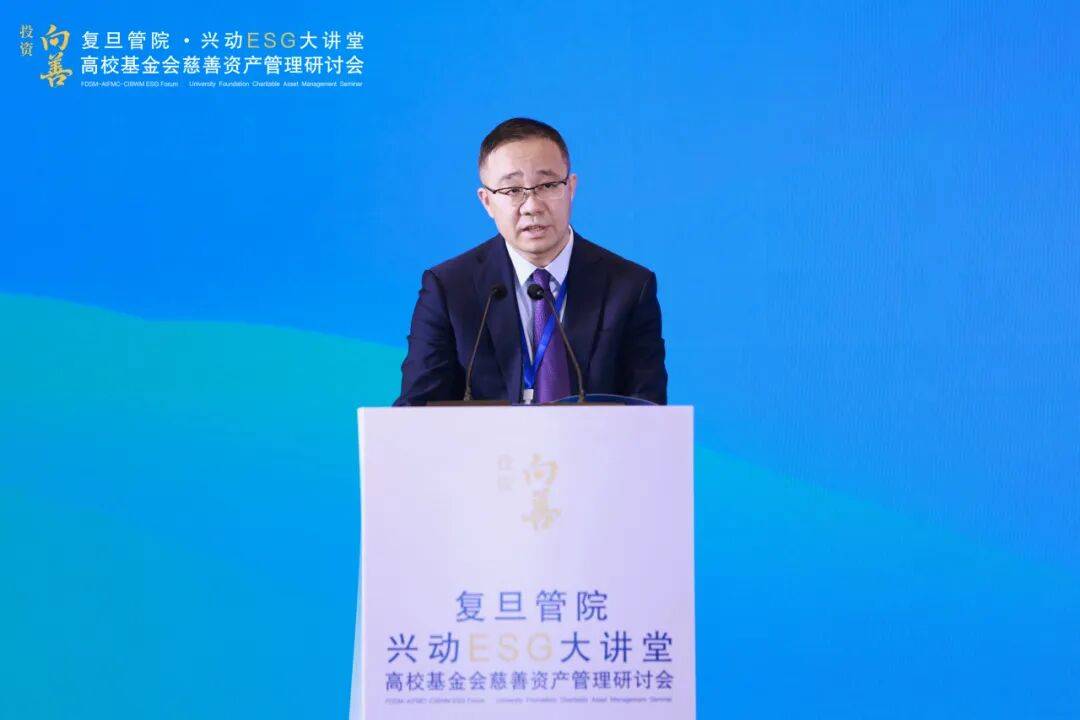
Core Viewpoint - The rise of university foundations is crucial for providing long-term support for education, and their ability to navigate capital markets for stable investment opportunities will determine their sustainable development in the new era [1][31]. Group 1: Investment Strategies and Market Conditions - The Chinese economy demonstrates strong resilience amid various challenges, and companies with sustainable profitability are becoming more apparent [3]. - In a low-interest-rate environment, equity assets are increasingly recognized for their continued attractiveness, making it essential to focus on companies with core competitiveness for excess returns [3]. - ESG investment is highlighted as a significant force for promoting coordinated economic, environmental, and social development, representing an innovative investment philosophy [5]. Group 2: Characteristics of University Foundations - University foundations are characterized by long-term funding, public asset status, and strict liquidity requirements, which pose unique challenges for asset management [8]. - The goal is to achieve a trillion RMB in asset scale for university foundations in the future, drawing on international experiences to enhance their contributions to society [8][19]. Group 3: Sustainable Investment Principles - The principle of "investing for good" emphasizes financial sustainability and the importance of generating positive social impacts through investments [16]. - Collaborating with institutions that align with investment philosophies is crucial for achieving long-term value and supporting companies with positive market or social impacts [18]. - The long-term advantages of university foundations allow them to capitalize on undervalued opportunities in the market, fostering a virtuous cycle of investment and fundraising [19]. Group 4: Asset Allocation and Risk Management - The fundamental principle of asset allocation is that all returns are compensation for risk taken, necessitating a careful balance between risk exposure and expected returns [10][11]. - ESG factors should be integrated into investment decisions to enhance stability and mitigate potential negative risks, even if they do not significantly boost returns [25]. - A diversified investment strategy that includes low-correlation assets is recommended to maintain balanced performance across different risk environments [27]. Group 5: Future Market Outlook - The current market environment suggests a preference for a slow bull market, with caution advised regarding potential overvaluation in certain sectors, particularly technology [22][29]. - The management of university foundations is experiencing robust growth, with a reported annual compound growth rate exceeding 9% for "Double First-Class" universities from 2020 to 2023 [31].
远东发展(00035) - 2026 Q2 - 业绩电话会
2025-11-27 15:07
Financial Data and Key Metrics Changes - Adjusted revenue reached HKD 4.9 billion, with cash profits of HKD 203 million, primarily driven by property development revenue of HKD 3.2 billion [3][5] - Net loss attributable to shareholders was HKD 988 million, influenced by non-cash adjustments including impairment losses totaling HKD 281 million [5][6] - The adjusted net gearing ratio improved to 64.9%, down 2.7 points compared to the end of March [6][13] Business Line Data and Key Metrics Changes - Property development revenue decreased to HKD 3.2 billion from HKD 3.6 billion year-on-year, but profit margin increased from 31.3% to 34.9% [25][26] - Hotel revenue increased by 10% to nearly HKD 1 billion, with significant contributions from Dorsett Kai Tak [4][35] - Car park revenue decreased by 10% to HKD 343 million, while gaming revenue increased by 11% to HKD 2,018 million [43][45] Market Data and Key Metrics Changes - The company reported strong sales momentum in Manchester, with prices increasing from GBP 380 to over GBP 580 per sq ft, reflecting over 50% growth [27] - In Hong Kong, the Pavilion Forest project has seen strong sales, with over 700 units sold out of 1,300 [32] - The hotel market in Hong Kong is showing improvement, with occupancy rates trending upwards [35] Company Strategy and Development Direction - The company aims to accelerate project completions to optimize cash flow and reduce debt levels, maintaining a robust development pipeline of approximately HKD 62 billion [25][28] - Focus on divesting non-core assets and transitioning towards an asset-light business model [49] - The company is restructuring investments in Queensland and expects to increase its stake in the Queens Wharf Brisbane project to 50% [9][10] Management's Comments on Operating Environment and Future Outlook - Management expressed cautious optimism regarding the Hong Kong property market stabilization and anticipated no further material impairments [51][52] - The company expects to further reduce its gearing ratio and improve cash flow visibility from pre-sales and completed projects [47][48] - Future hotel revenue is projected to grow with the stabilization of new hotels and ongoing operational improvements [49] Other Important Information - The company has entered into agreements to dispose of non-core assets, including a car park in Chatswood, Sydney, for AUD 3.7 million [8][43] - The company is actively involved in community support efforts following a recent fire incident in Hong Kong [1][24] Q&A Session Summary Question: Any plans for the Yaru project and potential impairments? - Management hopes for no further impairments, citing recent sales performance in the Pavilion Forest project [51] Question: What is the company's strategy regarding perpetual bonds? - The priority is on reducing bank loans, with a focus on leveraging the HKD 61 billion development pipeline [59]

泰康资产:打造绿色金融可持续发展样板 做负责任投资者
Sou Hu Cai Jing· 2025-11-27 03:51
随着国家"双碳"战略的深入推进,绿色金融已成为金融业服务实体经济高质量发展的重要抓手。中央金融工作会议明确将绿色金融作为金融"五篇大文章"之 一,为金融机构指明了发展方向。 作为国内领先的资产管理公司,泰康资产积极响应国家政策号召,践行绿色金融,走出了一条兼具社会价值与商业可持续的泰康资产特色绿色金融发展之 路。 打造科学治理架构 护航ESG可持续发展 泰康资产的ESG组织架构主要包括三个层级:董事会、风险控制委员会和ESG绿色金融工作小组。ESG绿色金融工作小组作为具体执行机构,根据各类资金 特殊属性,充分授权各业务条线根据资金特点制定适应性的管理策略。 泰康资产建立了完备的ESG绿色金融制度流程体系。一方面,制定了《ESG绿色金融管理细则》,在制度层面对绿色金融工作的组织架构及职能,投融资流 程管理,ESG风险管理等内容进行了明确和规范;另一方面,泰康资产发布了涵盖公开市场权益、固定收益和另类投资的《ESG投资工作流程管理备忘 录》,对现投资研究流程操作手册形成有效补充,充分考量与结合资产公司投资实际,为打造具有泰康资产特色的ESG投研文化奠定坚实的实践基础。 共同应对气候变化、推进碳中和目标实现已是全球 ...