
战略性新兴产业

Search documents
资产总额超90万亿元国资央企新动能新优势加快塑造
Zheng Quan Shi Bao· 2025-09-17 18:09
(文章来源:证券时报) 现代化产业体系建设方面,5年来,国资央企战略性新兴产业发展力度空前,相关投资年均增速超过 20%。产业转型升级步伐不断加快,"人工智能+"专项行动累计布局应用场景超过800个,数字化转型行 动打造了智能工厂1854个,万元产值能耗、万元产值二氧化碳排放量分别下降12.8%、13.9%。高端 化、智能化、绿色化正在成为央企的鲜明特征。 国务院国资委副主任袁野以央企投资和央企控股上市公司的情况为重点,介绍了国资央企"十四五"期 间"进"的态势持续巩固。数据显示,2021年—2024年,央企累计完成固定资产投资总额19万亿元,年均 增速达到6.3%;去年四季度以来,以市场化方式发行的稳增长扩投资专项债拟发行总规模达到5000亿 元,有力促进了"两重""两新"项目投资。同时,上市公司质量进一步提高,一批"硬科技"企业成功登陆 科创板,长江电力、中航成飞等标志性重组项目顺利实施,投资者回报水平持续提高。截至目前,央企 控股上市公司市值超过22万亿元,较"十三五"末增长近50%;"十四五"以来,累计实施现金分红2.5万亿 元,成为维护资本市场平稳运行的重要力量。 "十四五"以来,国务院国资委接续推 ...
“十四五”以来央企控股上市公司累计现金分红2.5万亿元
Zheng Quan Ri Bao· 2025-09-17 16:13
Group 1 - In 2024, central enterprises' investment in strategic emerging industries will exceed 40% of total investment, with operating revenue approaching 30% [1] - Cumulative investment in strategic emerging industries by central enterprises during the "14th Five-Year Plan" period reached 8.6 trillion yuan, significantly higher than the "13th Five-Year Plan" period [1] - Central enterprises are focusing on nine strategic emerging industries and six future industries, enhancing their capabilities in integrated circuits, biotechnology, and new energy vehicles [1] Group 2 - In 2024, operating revenue from strategic emerging industries surpassed 11 trillion yuan, with an 8 percentage point increase in revenue contribution over the past two years [2] - The "AI+" initiative has accelerated the application of general and industry-specific models, facilitating the digital transformation of traditional industries [2] - Central enterprises have created over 800 application scenarios in 16 key industries, with plans to release 40 high-value scenarios at the 2025 World Artificial Intelligence Conference [2] Group 3 - The quality of listed companies has improved, with central enterprise-controlled listed companies' market value exceeding 22 trillion yuan, a nearly 50% increase since the end of the "13th Five-Year Plan" [3] - Central enterprises have implemented cash dividends totaling 2.5 trillion yuan during the "14th Five-Year Plan," contributing to the stability of the capital market [3] - The State-owned Assets Supervision and Administration Commission (SASAC) aims to strengthen and optimize state-owned capital and enterprises to enhance their role in national economic development [3] Group 4 - During the "14th Five-Year Plan," central enterprises have actively pursued strategic professional restructuring, focusing on strategic security and public service [4] - Six groups of ten enterprises have been restructured through market-oriented methods, and nine new central enterprises have been established [4] - SASAC plans to enhance core functions and competitiveness through systematic and innovative approaches to further improve the efficiency of state-owned capital allocation [4]
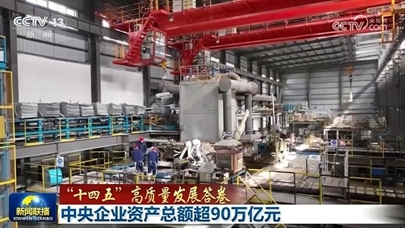
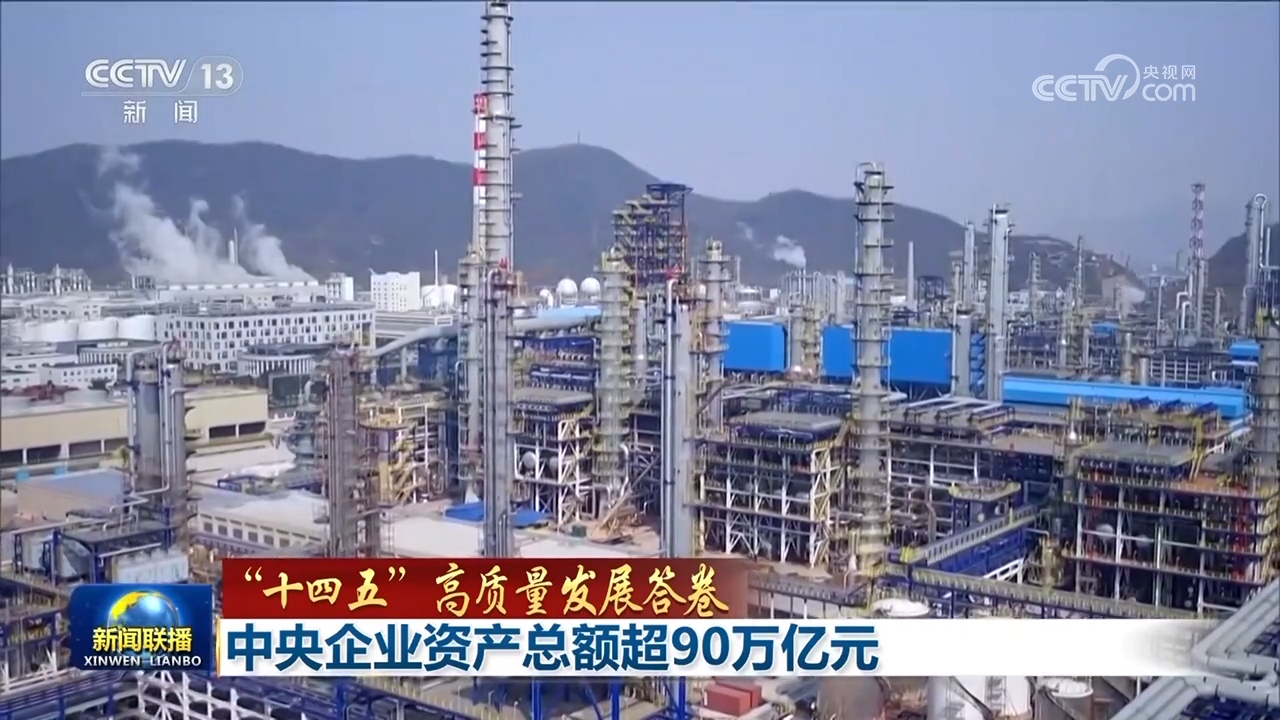
中央企业资产总额超90万亿元
Yang Shi Wang· 2025-09-17 15:26
"十四五"以来,中央企业资产总额从不到70万亿元增长至超过90万亿元,利润总额从1.9万亿元增 长至2.6万亿元,年均增速分别达到7.3%、8.3%。规模稳步增长的同时,中央企业的质量效率也在显著 提升。"十四五"期间,中央企业积极承担国家重大科技任务,研发经费年均增长约6.5%,连续三年超过 1万亿元,其中,基础研究投入占比为8.8%。同时,加快布局战略性新兴产业,在相关领域的投资年均 增速超过20%,累计投资达8.6万亿元。 "十四五"期间,国企改革三年行动和改革深化提升行动接续推进,6组10家企业实施战略性重组,9 家新的中央企业组建成立,邮轮运营等领域的专业化整合扎实开展,国有资本的配置和运行效率不断提 升。 0:00/1:42 在国务院新闻办公室今天(9月17日)举行的"高质量完成'十四五'规划"系列主题新闻发布会上, 国务院国资委相关负责人介绍,"十四五"以来,中央企业质效双升,科技创新成果不断涌现,有力支撑 国民经济发展。 ...

大力推动国资央企战略性专业化重组整合 国资委发布会要点汇总
Di Yi Cai Jing· 2025-09-17 15:07
Group 1 - The central enterprises are confident in completing the main reform tasks by the end of this year, following the implementation of the State-owned Enterprise Reform Deepening and Enhancement Action [1] - The next steps will focus on enhancing core functions and competitiveness through strategic professional restructuring and integration of state-owned enterprises [2] - The total assets of central enterprises have exceeded 90 trillion yuan, with total profits increasing from 1.9 trillion yuan to 2.6 trillion yuan, reflecting annual growth rates of 7.3% and 8.3% respectively [3] Group 2 - Central enterprises have consistently invested over 1 trillion yuan in R&D for three consecutive years, with the input intensity rising from 2.6% to 2.8% [4] - During the "14th Five-Year Plan" period, nine new central enterprises were established, optimizing the layout and structure of state-owned enterprises [5] - Central enterprises have contributed over 10 trillion yuan in taxes and fees since the beginning of the "14th Five-Year Plan," supporting essential product supply and basic network operations [6] Group 3 - Central enterprises have distributed a total of 2.5 trillion yuan in cash dividends since the start of the "14th Five-Year Plan," with their market capitalization exceeding 22 trillion yuan, marking a nearly 50% increase since the end of the "13th Five-Year Plan" [7] - Cumulative investment in strategic emerging industries by central enterprises has reached 8.6 trillion yuan, significantly increasing compared to the "13th Five-Year Plan" period, with notable advancements in various high-tech fields [8]
国资委 最新发声!
Zheng Quan Shi Bao· 2025-09-17 14:37
9月17日,国新办举行"高质量完成'十四五'规划"系列主题新闻发布会,请国务院国资委主任张玉卓介 绍砥砺奋进"十四五",中央企业高质量发展情况,并答记者问。 要点如下: 中央企业资产总额已超过90万亿元 "十四五"以来中央企业累计上交税费超过10万亿元 张玉卓表示,"十四五"以来中央企业累计上交税费超过10万亿元,向社保基金划转国有股权1.2万亿 元。 中央企业控股上市公司市值超过22万亿元 "十四五"以来累计分红2.5万亿元 张玉卓表示,截至目前,中央企业控股上市公司市值超过22万亿元,较"十三五"增长近50%。"十四 五"以来,累计实现现金分红2.5万亿元,成为维护资本市场平稳运行的重要力量。 张玉卓表示,"十四五"以来,高质量发展迈出新步伐,经营质效保持稳中向好。中央企业资产总额从不 到70万亿元,增长到超过90万亿元,利润总额从1.9万亿元,增长到2.6万亿元,年均增速分别达到了 7.3%和8.3%,更为重要的是质量效率显著提升。营业收入利润率从6.2%提升到6.7%。全员劳动生产率 每人每年从59.4万元增长到81.7万元。国有资本回报率,净资产收益率等指标都持续改善。 中央企业研发经费连续三年超过 ...
研发投入超万亿、持续布局新兴产业 央企深改凸显科技“硬实力”
Bei Jing Shang Bao· 2025-09-17 13:33
Core Insights - The "14th Five-Year Plan" has seen central enterprises' total assets increase from less than 70 trillion yuan to over 90 trillion yuan, with total profits rising from 1.9 trillion yuan to 2.6 trillion yuan, reflecting annual growth rates of 7.3% and 8.3% respectively [2][3][4] - The focus on technological innovation has led to R&D expenditures exceeding 1 trillion yuan for three consecutive years, with an increase in investment intensity from 2.6% to 2.8% [5][6] - Central enterprises have strategically invested 8.6 trillion yuan in emerging industries during the "14th Five-Year Plan," significantly enhancing their capabilities in sectors like integrated circuits and biotechnology [7][8] Financial Performance - Central enterprises' total assets have surpassed 90 trillion yuan, with profits increasing to 2.6 trillion yuan, indicating a strong financial performance during the "14th Five-Year Plan" [2][3] - The operating income profit margin has improved from 6.2% to 6.7%, showcasing enhanced quality and efficiency [3] R&D and Innovation - R&D spending has consistently exceeded 1 trillion yuan, contributing to significant advancements in key technologies and the establishment of 474 national-level R&D platforms [5][6] - Central enterprises have made breakthroughs in critical technologies, including those in the fields of integrated circuits and industrial software, enhancing their innovation capabilities [6][7] Strategic Development - The focus on strategic emerging industries has led to a cumulative investment of 8.6 trillion yuan, with notable growth in sectors such as new energy vehicles and advanced manufacturing [7][8] - The "AI+" initiative aims to further integrate artificial intelligence into central enterprises, enhancing their competitiveness and resilience in the global market [8] Future Outlook - Central enterprises are expected to continue their reform and innovation efforts, aiming for a transition from quantitative expansion to qualitative improvement, thereby strengthening their core competitiveness and supporting national technological independence [8]

“十四五”以来中央企业资产总额从不到70万亿元增至超过90万亿元
Mei Ri Jing Ji Xin Wen· 2025-09-17 13:31
Core Insights - The central enterprises in China have shown significant growth in assets and profits during the "14th Five-Year Plan" period, with total assets increasing from less than 70 trillion yuan to over 90 trillion yuan and total profits rising from 1.9 trillion yuan to 2.6 trillion yuan, reflecting an annual growth rate of 7.3% and 8.3% respectively [2][3] Group 1: High-Quality Development - The quality and efficiency of central enterprises have improved, with the operating income profit margin increasing from 6.2% to 6.7% and labor productivity rising from 594,000 yuan to 817,000 yuan per employee per year [2][3] - Central enterprises have made significant strides in technological innovation, with R&D expenditure exceeding 1 trillion yuan for three consecutive years and the investment intensity increasing from 2.6% to 2.8% [2][3] Group 2: Modern Industrial System - Progress has been made in building a modern industrial system, with a focus on strategic emerging industries such as new-generation information technology, new energy, and high-end equipment, leading to the creation of world-class industrial clusters [3][4] - The central enterprises have implemented over 800 application scenarios under the "AI+" initiative and established 1,854 smart factories, resulting in a reduction of energy consumption and carbon emissions per unit of output by 12.8% and 13.9% respectively [3][4] Group 3: Strategic Emerging Industries - Central enterprises have invested a total of 8.6 trillion yuan in strategic emerging industries during the "14th Five-Year Plan," significantly increasing their investment compared to the "13th Five-Year Plan" [4][5] - The revenue from strategic emerging industries is projected to exceed 11 trillion yuan in 2024, with contributions from new-generation information technology and high-end equipment sectors surpassing 1 trillion yuan each [5]
【“十四五”高质量发展答卷】中央企业资产总额超90万亿元
Yang Shi Wang· 2025-09-17 12:08
央视网消息(新闻联播):在国务院新闻办公室9月17日举行的"高质量完成'十四五'规划"系列主题新闻发布会上,国务院国资委相关负责人介绍,"十四 五"以来,中央企业质效双升,科技创新成果不断涌现,有力支撑国民经济发展。 "十四五"期间,国企改革三年行动和改革深化提升行动接续推进,6组10家企业实施战略性重组,9家新的中央企业组建成立,邮轮运营等领域的专业化整合 扎实开展,国有资本的配置和运行效率不断提升。 "十四五"以来,中央企业资产总额从不到70万亿元增长至超过90万亿元,利润总额从1.9万亿元增长至2.6万亿元,年均增速分别达到7.3%、8.3%。规模稳步 增长的同时,中央企业的质量效率也在显著提升。"十四五"期间,中央企业积极承担国家重大科技任务,研发经费年均增长约6.5%,连续三年超过1万亿 元,其中,基础研究投入占比为8.8%。同时,加快布局战略性新兴产业,在相关领域的投资年均增速超过20%,累计投资达8.6万亿元。 ...
“十四五”央企重组成绩单:6组10企整合,9家新央企诞生,国有资本配置和运营效率提升
Hua Xia Shi Bao· 2025-09-17 10:09
Core Insights - The State-owned Assets Supervision and Administration Commission (SASAC) reported significant achievements in the restructuring of central enterprises during the "14th Five-Year Plan" period, focusing on enhancing core functions and competitiveness [2][3] - A total of 10 enterprises were strategically restructured, and 9 new central enterprises were established, targeting key sectors such as equipment manufacturing, mineral resources, and energy security [3][4] - The restructuring efforts are aligned with national strategic needs, emphasizing not just revenue but also fulfilling strategic tasks [2][4] Restructuring and Integration - The restructuring of central enterprises is characterized by a strategic orientation, with 6 groups of 10 enterprises restructured through market-oriented methods [3][4] - New enterprises established include China Star Network Group for satellite internet, China Logistics Group for comprehensive logistics services, and China Mineral Resources Group for resource security [3][4] - The restructuring aims to enhance industrial collaboration, reduce redundant investments, and improve resource allocation efficiency, creating a "1+1>2" effect [3][4] Focus on Public Services - The restructuring also aims to optimize public services, ensuring high-quality and low-cost services to meet public needs [4] - New central enterprises are designed to address critical national security and strategic needs, such as resource security and green transformation [4][5] Investment in Emerging Industries - Central enterprises have significantly increased investments in strategic emerging industries, totaling 8.6 trillion yuan during the "14th Five-Year Plan" period, marking a substantial increase from the previous plan [5][6] - Key sectors include integrated circuits, biotechnology, and new energy vehicles, with notable advancements in cutting-edge fields like humanoid robots and superconducting quantum computing [5][6] Future Directions - The focus for future restructuring will include strategic emerging industries, critical links in industrial chains, and public welfare sectors [6][7] - Central enterprises aim to enhance core functions and competitiveness, with a goal of becoming "world-class enterprises" through systematic and innovative restructuring [7] - The restructuring pace is expected to double in the "15th Five-Year Plan" period, particularly in areas related to national security and social welfare [7]

“十四五”以来中央企业在战略性新兴产业领域累计投资8.6万亿元
Xin Hua She· 2025-09-17 09:43
Group 1 - The core viewpoint is that central enterprises have invested a total of 8.6 trillion yuan in strategic emerging industries since the beginning of the 14th Five-Year Plan, highlighting the importance of these industries for overall development [1] - Central enterprises are focusing on strategic emerging industries as a key work area, implementing various initiatives such as industrial renewal and AI+ actions to enhance their layout in new fields [1] - Significant acceleration in the development of sectors like integrated circuits, biotechnology, and new energy vehicles has been observed, with breakthroughs in cutting-edge fields such as humanoid robots and superconducting quantum computing [1] Group 2 - In 2024, central enterprises are projected to achieve over 11 trillion yuan in revenue from strategic emerging industries, with an 8 percentage point increase in revenue contribution over the past two years [2] - The establishment of venture capital funds focusing on technology attributes and emerging fields is aimed at early, small, long-term, and hard technology investments [2] - The development of strategic emerging industries is expected to continue with increased efforts to create new pillar industries that lead future competition and enhance new productive forces [2]