
新能源等

Search documents
迎接全国两会特稿|向新:科技创新展现硬核实力
Jing Ji Ri Bao· 2026-02-28 02:18
Group 1 - China's technological innovation achievements have shown significant progress, including breakthroughs in manned lunar missions and advancements in high-temperature superconducting technology [1][3] - The "14th Five-Year Plan" has seen a steady increase in R&D investment, with an average annual growth rate of 10%, aiming for a R&D intensity of 2.8% by 2025, surpassing the OECD average [3][4] - The establishment of a national laboratory system and the reorganization of key laboratories have strengthened China's strategic scientific capabilities, with the total number of R&D personnel ranking first globally [4][5] Group 2 - The dual empowerment of technological innovation and industrial upgrading has been pivotal in forming new productive forces, driving high-quality economic development [5][6] - China has made significant strides in traditional industries transitioning to high-end, intelligent, and green production, with notable achievements in various sectors such as construction and mining [5][6] - The rapid development of strategic emerging industries and future industries has effectively compensated for growth gaps caused by traditional industry adjustments, supporting macroeconomic stability [6][7] Group 3 - The "15th Five-Year Plan" is a critical phase for building a strong technological nation, focusing on enhancing the overall effectiveness of the national innovation system and increasing independent innovation capabilities [7][8] - By 2025, the proportion of basic research funding is expected to reach 7.08%, with China leading in high-level international journal publications and patent applications [7][8] - The cultivation of over 600,000 technology and innovation SMEs and 50,400 high-tech enterprises is crucial for stabilizing the industrial supply chain [8]
“A+H”扩容不只是上市路径之变
Sou Hu Cai Jing· 2026-02-27 02:00
Core Viewpoint - The acceleration of A-share companies listing in Hong Kong reflects a restructuring of capital and industrial logic, driven by the global capital flow reconfiguration and China's transition to high-quality economic development [1][2]. Governance Aspect - The "A+H" listing model requires companies to adhere to dual regulatory frameworks, enhancing corporate governance standards and compliance, which leads to improved internal control systems and transparency [1][2]. Pricing Aspect - Companies listed in both A-shares and H-shares are subjected to two distinct pricing systems, which can create valuation discrepancies. This cross-market comparison encourages companies to respond to valuation differences with performance improvements, thus promoting rational valuation and resource allocation efficiency [3][4]. Industrial Aspect - The "A+H" model supports hard technology companies that require significant long-term capital for R&D. By accessing the Hong Kong market, these companies can connect with long-term capital sources, facilitating research expansion and overseas acquisitions [4][5]. Strategic Aspect - The influx of emerging industry companies into the Hong Kong market enhances its structure and provides global investors with diverse options for investing in China's new economy. This dual interaction strengthens capital ties and increases the weight of Chinese assets in global portfolios [5][6].
经济第一大省,再添一个“万亿级”
3 6 Ke· 2026-02-12 02:16
Core Insights - Guangdong's ultra-high-definition video industry cluster is projected to achieve a revenue of 1,080.306 billion yuan by 2025, marking it as the province's tenth trillion-level industry cluster and the first of its kind in the nation [1][2]. Group 1: Industry Development - The "chip shortage and screen shortage" previously hindered the development of China's electronic information industry, with display panels once ranking as the fourth largest import commodity [1]. - Since 2017, Guangdong has been at the forefront of developing the ultra-high-definition video industry, leveraging its comprehensive manufacturing supply chain and large-scale market [1]. - Guangdong has established a complete industry chain covering content production, network transmission, terminal presentation, core components, and industry applications, with over 60,000 related enterprises [1]. Group 2: Economic Impact - The trillion-level industry cluster is characterized by significant scale effects, outstanding innovation capabilities, and strong resilience in the supply chain, which can lower costs and enhance efficiency through upstream and downstream collaboration [1]. - The province has maintained a pace of one trillion-level industry cluster breakthrough per year, with the automotive industry becoming the eighth in 2023 and the new energy industry cluster surpassing one trillion yuan in 2024 [2]. Group 3: Future Prospects - The next potential trillion-level industry cluster is expected to be the biopharmaceutical and health industry cluster, aiming to exceed one trillion yuan by 2027, with the pharmaceutical industrial scale exceeding 500 billion yuan [3]. - Other industries such as semiconductors and integrated circuits, new energy storage, and low-altitude economy also show potential for advancement [3].
能源强国建设“大家谈”︱国家能源集团:坚定不移担当能源强国建设主力军
国家能源局· 2026-02-10 07:05
Core Viewpoint - The article emphasizes the strategic importance of building an energy powerhouse in China, highlighting it as essential for national security, high-quality development, and international competitiveness in the evolving global energy landscape [3][4][6]. Group 1: Importance of Energy Powerhouse - Energy is a crucial material foundation and driving force for economic and social development, recognized as a "national priority" [4]. - The goal of building an energy powerhouse was first proposed in the 2021 Central Economic Work Conference and has since been integrated into national planning, reflecting a deep understanding of energy development dynamics [4][5]. - The construction of an energy powerhouse is seen as a core foundation for national security, aiming to create a self-sufficient and efficient energy supply system to ensure stability in economic and social operations [4][5]. Group 2: Dimensions of Energy Powerhouse Construction - The construction of an energy powerhouse is viewed as a transition from "scale expansion" to "quality and efficiency" in energy development, focusing on a shift from high-carbon to clean and low-carbon energy [5][6]. - It is essential to enhance security capabilities, green development, innovation-driven growth, energy service capabilities, and international influence to effectively respond to global energy challenges [6][7]. Group 3: Role of State-Owned Enterprises - The State Energy Group is committed to leading the construction of an energy powerhouse, aligning with the spirit of the 20th National Congress and subsequent meetings [7][8]. - The company aims to strengthen political leadership, ensure safety in energy supply, and promote green and low-carbon transitions while enhancing innovation and international cooperation [8][9][10]. Group 4: Future Directions and Goals - The company plans to build a modern energy system by 2030, focusing on energy security, green transformation, technological innovation, and institutional reforms [11]. - The commitment to international cooperation and risk management is emphasized, with a focus on enhancing core competitiveness in global energy markets [10][11].


南财快评:啥是未来产业?
2 1 Shi Ji Jing Ji Bao Dao· 2026-02-04 13:47
Core Insights - The current economic challenges are attributed to a transition period where traditional industries are declining while future industries are still maturing, leading to a gap in growth and profitability [1][2] Group 1: Future Industries - Future industries are defined by cutting-edge technologies, are in the early stages of industrialization, and have disruptive potential, focusing on six areas: future intelligence, future networks, future life, future energy, future aerospace, and future materials [1] - Each of the six areas has corresponding products, but they have not yet achieved large-scale commercialization [1] Group 2: Guangdong's Economic Strengths - Guangdong, as China's largest economy, has a robust industrial base with projected industrial revenue exceeding 19 trillion by 2025, maintaining the top GDP position for 37 consecutive years [2] - The province leads in industrial robot production (44% of national output) and accounts for a quarter of the national output in new energy vehicles and AI core industries, providing fertile ground for future industries [2] - Guangdong has strong innovation capabilities, with a record of nine consecutive years of regional innovation leadership, and a high efficiency in technology conversion across the entire supply chain [2] Group 3: Supportive Policies and Funding - The province has established a 150 billion yuan "patient capital" guiding fund, with 100 billion yuan directed towards future industries, emphasizing long-term investment over short-term returns [2] - Strategic initiatives include advancing technologies like 6G and embodied intelligence, creating platforms, and promoting scenarios to accelerate the transition of future industries from laboratories to production lines [2] Group 4: Future Growth Potential - The next growth cycle will favor those who are willing to invest in future industries and embrace transformation, indicating a significant opportunity for businesses and individuals to find their place in this industrial change [3]
中金:黄金巨震,A股如何反应?
Xin Lang Cai Jing· 2026-02-03 03:14
Market Performance - The A-share market showed weakness today, with the Shanghai Composite Index falling by 2.5% [1][5] - Major indices experienced declines, including the CSI 300 down 2.1%, the STAR 50 down 3.9%, and the ChiNext Index down 2.5% [1][5] - The trading volume today was 2.6 trillion yuan, a decrease of approximately 0.26 trillion yuan compared to the previous trading day [1][5] External Factors - The adjustment in the A-share market is primarily attributed to increased external uncertainties, including the nomination of Kevin Walsh as the next Federal Reserve Chairman, which has affected expectations for U.S. monetary policy [2][6] - Global commodity prices have sharply declined, impacting market sentiment and risk appetite, with significant drops in gold and other commodities [2][6] Investment Strategy - The current market volatility presents opportunities for bottom-fishing, as the underlying positive factors such as ample liquidity and improving performance remain unchanged [3][7] - The market is expected to continue supporting Chinese assets in 2026, driven by the restructuring of international order and domestic industrial innovation trends [3][7] Sector Focus - Suggested areas for investment include: 1. Growth sectors such as AI technology, cloud computing, and innovative pharmaceuticals, which are entering a growth cycle [4][8] 2. Export-oriented sectors, particularly in home appliances, engineering machinery, and gaming, which are seen as stable growth opportunities [4][8] 3. Cyclical sectors like chemicals and renewable energy, which may benefit from improving supply-demand dynamics [4][8] 4. High-dividend stocks, which are attractive for long-term investors seeking stable cash flow [4][8]
中金:A股出现较大调整 短期波动已开始提供逢低布局机会
智通财经网· 2026-02-03 01:04
Core Viewpoint - The A-share market experienced significant adjustments due to increased external uncertainties, including the nomination of the next Federal Reserve Chairman affecting expectations for U.S. monetary easing and a global decline in commodity prices impacting market sentiment [1][3] Market Performance - The A-share market showed weak performance today, with the Shanghai Composite Index falling by 2.5%. The market has been in a correction phase since January 13 due to high turnover rates and overheated sentiment. Major indices, including the CSI 300 and the ChiNext Index, also saw declines of 2.1% and 2.5% respectively, while the STAR Market Index dropped by 3.9% [2][3] External Factors - The adjustment in the A-share market is primarily attributed to external uncertainties, such as the nomination of Kevin Walsh as the next Federal Reserve Chairman, which has altered market expectations for monetary policy. Walsh's previous hawkish stance has led to reduced expectations for a dovish shift in Fed policy, causing market volatility [3][4] - Additionally, a significant drop in global commodity prices has affected risk appetite and sentiment in equity markets. The price of gold, which had surged earlier, saw a decline of over 20% from its peak, contributing to a broader sell-off in commodities and impacting investor sentiment [3][4] Investment Strategy - The current market volatility presents opportunities for bottom-fishing investments. Despite the fluctuations, positive factors such as ample liquidity, improving earnings, and industry trends remain unchanged. The company suggests that the short-term volatility has begun to create opportunities for strategic investments [4][5] - In the medium term, the company emphasizes that the restructuring of international order and the resonance with China's industrial innovation trends are the core drivers of the current market rally and the revaluation of Chinese assets. These conditions are expected to continue supporting the performance of Chinese assets through 2026 [4][5] Sector Focus - The company recommends focusing on several sectors for investment: 1. Growth sectors such as AI technology, which is expected to enter an application phase by 2026, with opportunities in optical modules and cloud computing infrastructure [5] 2. Export-oriented sectors, including home appliances, engineering machinery, and gaming, which are seen as certain growth opportunities [5] 3. Cyclical sectors that are nearing improvement points in supply-demand dynamics, such as chemicals and renewable energy [5] 4. High-dividend quality stocks, which are expected to attract long-term capital due to their stable cash flows and dividend certainty [5]
3.9万亿元投入厚蓄硬核实力
Sou Hu Cai Jing· 2026-01-25 23:11
Group 1 - China's R&D expenditure reached 39,262 billion yuan in 2025, maintaining its position as the second-largest in the world, with an R&D intensity of 2.8%, surpassing the OECD average for the first time [2] - The continuous increase in R&D investment is a result of policy guidance, market-driven forces, and active participation from enterprises, with over 77% of R&D funding coming from businesses [3] - More than 570 industrial enterprises are among the global top 2,500 in R&D investment, highlighting the strengthening of enterprises as the main contributors to R&D [3] Group 2 - China's innovation index ranks among the top ten globally, with over 5 million effective invention patents and leading the world in PCT international patent applications for six consecutive years [4] - By 2025, the added value of equipment manufacturing and high-tech manufacturing industries is expected to account for 36.8% and 17.1% of the total industrial added value, respectively [4] - The number of artificial intelligence companies is projected to exceed 6,000 by 2025, with the core industry scale expected to surpass 1.2 trillion yuan [4] Group 3 - There is a need to optimize the structure of R&D investment, increasing the proportion of basic research, which is essential for technological innovation [4] - Regional disparities in R&D resources need to be addressed, particularly in the central and western regions of China, through policy guidance and collaboration between industry, academia, and research [4] - A more efficient mechanism for the transformation of research results into industrial applications is necessary to prevent technological achievements from remaining unused [5]
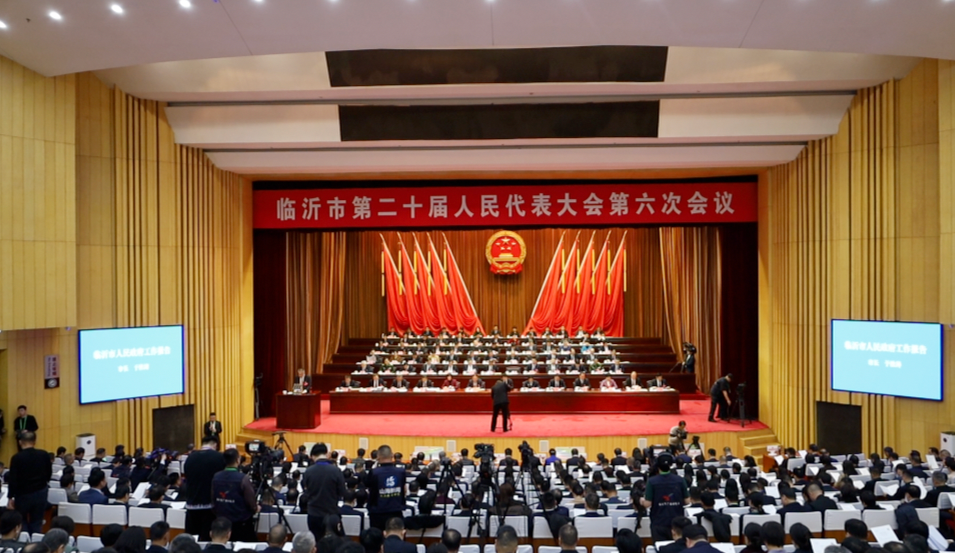
读懂这几个热词,就能看到未来的临沂
Qi Lu Wan Bao· 2026-01-19 08:43
Core Insights - The article discusses the strategic goals set by Linyi City for the next five years, aiming to become a "provincial regional sub-center" and a "trillion-yuan city" by focusing on key industries, private economy, and technological innovation [1][11]. Group 1: Industrial Development - Linyi has identified 13 key industrial chains that will reshape its industrial landscape, including high-end stainless steel, advanced special steel, and green agricultural processing [3][4]. - The contribution rate of these key industrial chains to the growth of industrial output value has reached 93.3%, with high-end stainless steel and advanced special steel becoming significant growth drivers [4]. - Despite recent industrial growth, Linyi's total industrial output remains in the middle tier within the province, indicating a need for further transformation and cluster effect enhancement [3][4]. Group 2: Private Economy - The private sector plays a crucial role in Linyi's economy, with 1 in 7 residents being a private business owner, contributing over 90% of the city's revenue and industrial tax [5]. - Linyi ranks 25th in China's vibrant private economy cities, with a net inflow of private enterprises maintaining high growth for five consecutive years [5]. - The local government emphasizes the importance of creating a favorable business environment to support the growth of private enterprises [5][6]. Group 3: Technological Innovation - Linyi is prioritizing technological innovation as a key driver for development, with initiatives like the "Artificial Intelligence+" action plan aimed at integrating technology with industry [7][8]. - The city plans to establish a research institute system to enhance the integration of research and industrial chains, focusing on fostering innovation among enterprises [8]. - The government aims to enhance the city's innovation capabilities and accelerate the transformation of technological achievements into practical applications [7][8]. Group 4: Internationalization of Commerce - Linyi's marketplace has evolved into a modern trade and logistics hub, with plans to enhance its international commercial presence [9][10]. - In 2025, Linyi established 30 new overseas warehouses and organized numerous trade activities, achieving significant growth in cross-border e-commerce exports [9]. - The city is working on a systematic approach to address challenges in international trade, including enhancing local production and creating a global supply chain network [10]. Group 5: Focus on Livelihood Improvement - The overarching goal of Linyi's development strategy is to improve the quality of life for its residents, with a commitment to maintaining high public spending on social welfare [12]. - Specific targets include job creation, social security enhancements, and educational improvements, reflecting a clear trajectory towards better living standards [12]. - The city's development plans are designed to ensure that economic growth translates into tangible benefits for the local population [12].
首台、首次、首飞!见证创新中国步履铿锵
Xin Lang Cai Jing· 2026-01-17 08:25
Group 1 - The core viewpoint emphasizes the importance of technological innovation as a foundation for national strength and corporate success, highlighting recent breakthroughs in various technological fields in China [1] - The article outlines significant achievements in China's technological advancements during the "14th Five-Year Plan" period, including the operation of the "Tianhe" space station and the success of the "Chang'e 6" lunar mission [1] - It stresses the need for continuous reform in the technology system and the importance of integrating innovation with industry to enhance productivity and address existing challenges [2] Group 2 - The article discusses China's global technological cooperation, mentioning partnerships with over 160 countries and initiatives aimed at promoting international scientific collaboration [3] - It highlights the role of Chinese technology in improving infrastructure and operational efficiency in various regions, such as Brazil, South Africa, and Singapore [3] - The future outlook suggests that with the implementation of innovation policies and an optimized environment, China's path in technological innovation will lead to significant contributions to high-quality development [4]