
战略性新兴产业

Search documents
“十四五”央企成绩单发布
Di Yi Cai Jing· 2025-09-17 09:22
Core Insights - Since the "14th Five-Year Plan," the total assets of central enterprises have increased from less than 70 trillion yuan to over 90 trillion yuan, with total profits rising from 1.9 trillion yuan to 2.6 trillion yuan, achieving average annual growth rates of 7.3% and 8.3% respectively [2] - The investment in strategic emerging industries has seen an average annual growth rate exceeding 20%, with over 800 application scenarios developed under the "AI+" initiative and the establishment of 1,854 smart factories as part of the digital transformation efforts [2][4] - Central enterprises have contributed over 10 trillion yuan in taxes and transferred 1.2 trillion yuan of state-owned equity to social security funds [2] Group 1: Strategic Emerging Industries - Central enterprises have focused on nine strategic emerging industries and six future industries, with cumulative investments in these sectors reaching 8.6 trillion yuan since the "14th Five-Year Plan," significantly higher than during the "13th Five-Year Plan" [4] - The revenue from strategic emerging industries is projected to exceed 11 trillion yuan in 2024, with contributions from new generation information technology and high-end equipment sectors each surpassing 1 trillion yuan [4] - Central enterprises' installed capacity for renewable energy generation accounts for approximately half of the national total, and the market size for industrial software exceeds 20% of the national market [4] Group 2: Corporate Restructuring and Integration - The State-owned Assets Supervision and Administration Commission (SASAC) has advanced the reform actions and achieved significant results, with six groups of ten enterprises undergoing strategic restructuring and nine new central enterprises being established [7][8] - The restructuring efforts focus on enhancing national security, industry leadership, and public service, with market-oriented approaches being employed to optimize the layout and structure of state-owned enterprises [8][9] - SASAC emphasizes the importance of professional, systematic, legal, and efficient supervision, implementing tailored assessment plans for central enterprises to improve operational efficiency and capital allocation [7][9]


“十四五”央企成绩单发布
第一财经· 2025-09-17 09:10
Core Insights - The article highlights the significant growth and achievements of central enterprises in China during the "14th Five-Year Plan" period, with total assets increasing from less than 70 trillion yuan to over 90 trillion yuan and total profits rising from 1.9 trillion yuan to 2.6 trillion yuan, reflecting annual growth rates of 7.3% and 8.3% respectively [3][4] Group 1: Strategic Development - Central enterprises have focused on developing strategic emerging industries as a key option for optimizing layout structure and achieving high-quality development, with cumulative investments in these industries reaching 8.6 trillion yuan, significantly higher than during the "13th Five-Year Plan" [7] - The revenue from strategic emerging industries is projected to exceed 11 trillion yuan in 2024, with contributions to overall revenue increasing by 8 percentage points over the past two years, indicating a strong growth trajectory in sectors like new generation information technology and high-end equipment [7] - Central enterprises have established nearly 1,000 venture capital funds focusing on technology and emerging fields, promoting a new model of industry-finance integration [8] Group 2: Reform and Optimization - The State-owned Assets Supervision and Administration Commission (SASAC) has made substantial progress in state-owned enterprise reforms, optimizing layout structures and enhancing the efficiency of state capital allocation, with over 70% of revenue from central enterprises now coming from sectors critical to national security and public welfare [9] - A total of 10 enterprises have undergone strategic restructuring, and 9 new central enterprises have been established, focusing on enhancing industrial collaboration and addressing issues like resource dispersion [11] - The SASAC emphasizes the importance of providing high-quality public services through resource integration, as seen in the establishment of the China Resource Recycling Group, which aims to promote green economic transformation [12]

榜单见证中国大企业发展态势向好
Ren Min Ri Bao· 2025-09-17 08:46
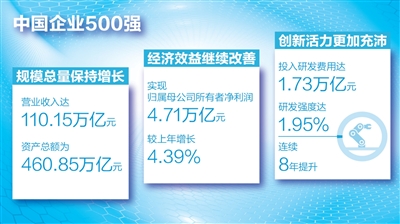
Core Viewpoint - Since the "14th Five-Year Plan," China's top 500 enterprises have made new strides in seeking progress while maintaining stability, enhancing development momentum, and playing a significant role in industrial upgrading, innovation capability enhancement, and international competition [1][2]. Group 1: Performance Metrics - The threshold for entering the "2025 China Enterprise 500" list has increased for 23 consecutive years, reaching 47.96 billion yuan, up by 579 million yuan from the previous year [1]. - The top 500 enterprises achieved a total operating income of 11.015 trillion yuan, an increase from the previous year, and a net profit attributable to the parent company of 471 billion yuan, growing by 4.39% [2]. - The number of enterprises with revenues exceeding 100 billion yuan increased from 222 in 2020 to 267 in 2024, an increase of 45 [2]. Group 2: International Engagement - The entry threshold for the "2025 China Top 100 Multinational Companies" list is 22.173 billion yuan, up by 2.333 billion yuan or 11.76% from the previous year [2]. - Total overseas assets reached 11.96 trillion yuan, with an average multinational index of 15.56%, an increase of 0.21 percentage points from the previous year [2]. Group 3: Innovation and R&D - The threshold for the "2025 China Top 100 Leading Enterprises in Strategic Emerging Industries" is 45.921 billion yuan, up by 6.407 billion yuan from the previous year [3]. - Revenue from strategic emerging businesses reached 14.31 trillion yuan, growing by 11.88%, with total assets of 22.41 trillion yuan, an increase of 20.29% [3]. - R&D expenditure by the top 500 enterprises reached 1.73 trillion yuan, with an R&D intensity of 1.95%, marking a new high and an increase for eight consecutive years [3][4]. Group 4: Structural Optimization - The operating income of the top 500 enterprises grew from 89.83 trillion yuan in 2020 to 110.15 trillion yuan in 2024, a growth of 22.62% [4]. - The total assets increased from 343.58 trillion yuan to 460.85 trillion yuan, a growth of 34.13% [4]. - The contribution to total revenue growth from manufacturing, services, and other sectors was 40.48%, 40.29%, and 19.23%, respectively [6]. Group 5: Future Directions - Chinese enterprises are encouraged to increase long-term stable investments in basic research and key common technologies, leveraging the country's vast application scenarios to break through critical core technologies [7][8]. - A new collaborative innovation system that integrates market orientation and deep integration of industry, academia, and research is recommended to enhance the competitiveness of Chinese enterprises [8].
杭州力推科技创新、产业创新深度融合
Mei Ri Shang Bao· 2025-09-17 08:25
Core Viewpoint - The core viewpoint of the news is that Hangzhou aims to enhance its manufacturing sector's quality and innovation through a series of strategic initiatives, particularly focusing on artificial intelligence and emerging industries, as outlined in the draft opinions for future development [1][2][3]. Group 1: Goals and Targets - By 2030, Hangzhou aims to achieve the "two highs and one optimization" goal, with industrial added value growth exceeding GDP and service sector growth, and further optimization of the manufacturing structure [1]. - Specific quantitative targets include reaching 620 billion yuan in industrial added value, over 170 billion yuan in manufacturing investment, and a digital economy core industry added value accounting for more than 31.5% of GDP [1]. - The number of large-scale industrial enterprises is expected to exceed 8,500, with 750 "specialized, refined, and innovative" enterprises and 2,000 new high-tech enterprises added annually [1]. Group 2: Artificial Intelligence Focus - The draft emphasizes building an "advanced manufacturing empowerment system led by artificial intelligence" over the next five years, focusing on the entire AI industry chain and emerging industry clusters [2]. - By 2030, the core AI industry is projected to generate over 600 billion yuan in revenue, with more than 1,000 large-scale enterprises in the sector [2]. - The initiative includes incentives for developing proprietary industrial models and encourages the creation of AI-enabled applications in manufacturing [2]. Group 3: Strategic Emerging Industries - The draft outlines a forward-looking layout for cultivating strategic emerging industries, aiming to develop advanced manufacturing clusters and five major industrial ecosystems [3]. - By 2030, the five industrial ecosystems are expected to exceed 23 trillion yuan in scale, with visual intelligence becoming the first trillion-yuan industry chain [3]. - The plan includes expanding eight billion-yuan industry chains in AI, integrated circuits, and network communications, along with the establishment of several hundred billion-yuan industry chains in various sectors [3].
高质量完成“十四五”规划 | “十四五”以来中央企业在战略性新兴产业领域累计投资8.6万亿元
Xin Hua She· 2025-09-17 08:24
Core Insights - The central enterprises have invested a total of 8.6 trillion yuan in strategic emerging industries since the beginning of the "14th Five-Year Plan" [1] - The focus on strategic emerging industries has led to significant advancements in fields such as integrated circuits, biotechnology, and new energy vehicles, with breakthroughs in cutting-edge areas like humanoid robots and superconducting quantum computing [1] - The revenue from strategic emerging industries for central enterprises is projected to exceed 11 trillion yuan in 2024, with a contribution increase of 8 percentage points over the past two years [2] Investment and Development Strategies - Central enterprises are implementing various initiatives such as industrial renewal and the "AI+" action plan to strengthen their presence in new fields and sectors [1] - The development of strategic emerging industries is expected to create new pillar industries that will lead future competition and enhance new productive forces [2] - A focus on integrating industrial chains has led to the release of nearly 10,000 supply-demand lists, and the establishment of venture capital funds targeting technology-driven and emerging sectors [2]
广东战新产业创业投资基金成立,出资额30亿元
Nan Fang Du Shi Bao· 2025-09-17 08:07
Group 1 - Guangdong Zhanxin Industry Venture Capital Fund was established on September 15 with a total investment of 3 billion RMB, focusing on private equity investment, investment management, and asset management [1] - The fund is backed by several partners including Guangdong New Energy Storage Industry Investment Fund, ICBC Capital Management, and Guangdong Energy Group [1] - The Guangdong Provincial State-owned Assets Supervision and Administration Commission plans to increase investments in strategic emerging industries and high-tech enterprises, with a total subscription scale of approximately 70 billion RMB for various funds [1] Group 2 - "Strategic Emerging Industries" are characterized by significant technological breakthroughs, high market demand potential, low resource consumption, and substantial employment opportunities [2] - These industries include seven major sectors: new generation electronic information, digital and fashion, high-end equipment, green and low-carbon, new materials, biomedicine and health, and marine economy [2] - The sectors encompass 20 major clusters such as semiconductors, artificial intelligence, renewable energy, and high-performance materials [2]

关于央企重组,国资委最新发声
2 1 Shi Ji Jing Ji Bao Dao· 2025-09-17 07:28
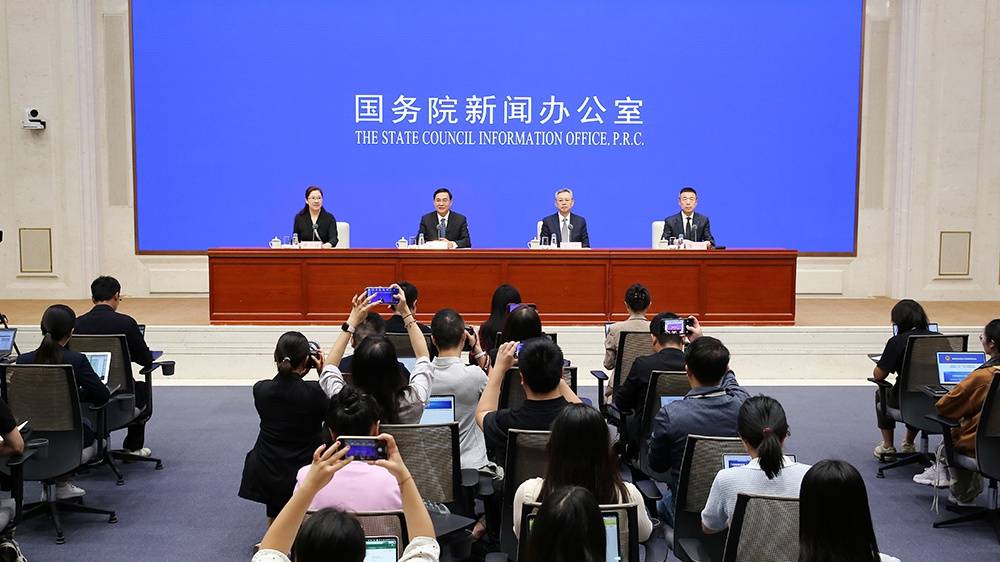
Core Insights - The State-owned Assets Supervision and Administration Commission (SASAC) reported significant achievements in the restructuring and integration of central enterprises during the 14th Five-Year Plan period, with 10 enterprises restructured and 9 new central enterprises established [3][4] Group 1: Restructuring and Integration - The restructuring efforts focused on enhancing national strategic support, with key industries and sectors being prioritized for integration to strengthen the state-owned economy [3] - The integration aimed to improve industrial collaboration, addressing issues like redundant investments and resource dispersion, exemplified by the merger of Ansteel Group and Benxi Steel Group [4] - Public service optimization was also a focus, with the establishment of the China Resource Recycling Group to promote green transformation and the integration of medical resources to enhance healthcare services [5] Group 2: Financial Performance - Central enterprises' total assets increased from less than 70 trillion yuan to over 90 trillion yuan, with total profits rising from 1.9 trillion yuan to 2.6 trillion yuan, reflecting annual growth rates of 7.3% and 8.3% respectively [7] - The operating income profit margin improved from 6.2% to 6.7%, and labor productivity increased from 594,000 yuan to 817,000 yuan per employee annually [7] - Economic Value Added (EVA) has grown from over 380 billion yuan to approximately 1.2 trillion yuan since 2010, indicating enhanced value creation capabilities [7] Group 3: Future Directions - Central enterprises are embracing new fields and accelerating the formation of new growth points, with investments in strategic emerging industries expected to exceed 40% of total investments in 2024 [8] - Fixed asset investments by central enterprises are projected to reach 19 trillion yuan from 2021 to 2024, with an average annual growth rate of 6.3% [8] - The market performance of central enterprises' listed companies has improved, with their market capitalization exceeding 22 trillion yuan, marking a nearly 50% increase since the end of the 13th Five-Year Plan [9]

高质量完成“十四五”规划丨“十四五”以来中央企业在战略性新兴产业领域累计投资8.6万亿元
Xin Hua Wang· 2025-09-17 07:27
新华社北京9月17日电(记者王悦阳、王希)国务院国资委副主任袁野17日在国新办举行的"高质量 完成'十四五'规划"系列主题新闻发布会上介绍,"十四五"以来,中央企业在战略性新兴产业领域累计投 资达8.6万亿元。 袁野表示,国资央企把发展战略性新兴产业作为一项牵引性、全局性工作,深入实施中央企业产业 焕新、未来产业启航、"AI+"等专项行动,持续加强新领域新赛道布局,取得很好效果。 【纠错】 【责任编辑:张樵苏】 "战略性新兴产业的持续投入,有效拓展了企业发展空间。"袁野说。 数据显示,2024年中央企业在战略性新兴产业领域的营业收入突破11万亿元,近两年营收贡献度提 升8个百分点,新一代信息技术、高端装备等5个领域的收入均超过万亿元。 开展产业链融通发展共链行动,以新兴产业为重点,发布供需清单近万项;设立创投基金,聚焦科 技属性、技术价值、新兴领域,积极投早、投小、投长期、投硬科技;"AI+"专项行动落地落实,一批 通用大模型、行业模型加速应用,赋能传统产业数智化转型……随着战略性新兴产业的加快布局,中央 企业发展模式也受到深刻影响。 袁野表示,发展战略性新兴产业需要久久为功,将持续加大战略性新兴产业布局力度 ...
央企聚焦战略性新兴产业 ,“十四五”以来累计投资8.6万亿元
Sou Hu Cai Jing· 2025-09-17 07:01
Core Viewpoint - The press conference highlighted the achievements of central enterprises in China during the "14th Five-Year Plan" period, focusing on high-quality development and strategic investments in emerging industries [3][4]. Group 1: Strategic Investments - Central enterprises have focused on nine strategic emerging industries and six future industries, leading to a systematic layout that has significantly increased investment to 8.6 trillion yuan during the "14th Five-Year Plan," a substantial rise compared to the "13th Five-Year Plan" [3]. - Development in key sectors such as integrated circuits, biotechnology, and new energy vehicles has accelerated, with breakthroughs in cutting-edge fields like humanoid robots and superconducting quantum computing [3]. Group 2: Revenue Growth - Central enterprises are projected to exceed 11 trillion yuan in revenue from strategic emerging industries in 2024, with an 8 percentage point increase in revenue contribution over the past two years [4]. - Five sectors, including new generation information technology and high-end equipment, are expected to each generate over 1 trillion yuan in revenue [4]. - The cumulative installed capacity of renewable energy generation by central enterprises accounts for approximately half of the national total, and the industrial software market size represents over 20% of the national market [4]. Group 3: Development Models - The acceleration of strategic emerging industries has led to new development models, including the establishment of nearly 1,000 supply-demand lists to promote industry cooperation [4]. - Central enterprises have set up venture capital funds totaling close to 100 billion yuan, focusing on technology-driven and emerging fields, fostering a new model of industry-finance integration [4]. - The implementation of the "AI+" initiative has facilitated the application of general and industry-specific models, effectively enabling the digital transformation of traditional industries [4].
第十届“创客中国” 山东省区域赛圆满落幕
Qi Lu Wan Bao· 2025-09-17 07:00
省工业和信息化厅党组副书记、副厅长、一级巡视员安文建在致辞中表示,第十届"创客中国"山东省区域赛的关 注度和参与度再创新高,为广大创客搭建了创新创业的竞技舞台,是山东中小企业活力与潜力的集中展现。省工 业和信息化厅将认真贯彻落实省委、省政府决策部署,以科技创新为核心引擎,以产业链补链强链为关键抓手, 持续推动产业能级跃升,为创新创业培育更肥沃的土壤、打造更优质的生态。 今年是"创客中国"落地山东的第十年,本届大赛项目更加聚焦前沿技术,1127个参赛项目中,新兴产业占比超八 成,其中新材料、智能装备和生物医药领域分别占比21%、20.2%、19.4%,充分展现了战略性新兴产业的蓬勃发 展态势和强劲发展动能。 9月16日,第十届"创客中国"山东省区域赛颁奖典礼在济南举办,省工业和信息化厅、共青团山东省委、省科技 厅、省人力资源社会保障厅等单位领导和投融资机构、行业专家、企业代表出席活动。 经过初赛、复赛、决赛的层层选拔,50个优秀项目脱颖而出,其中,菏泽市"高端氧化铝陶瓷基板的研发及产业 化"项目、泰安市"新能源退役锂电池资源化再生利用"项目分别荣获企业组、创业组一等奖。 回望十年征程,"创客中国"山东赛已成为推 ...
