
物联网

Search documents
探路者6.78亿元并购构筑技术护城河 “感知+显示”芯片矩阵形成
Zheng Quan Ri Bao Wang· 2025-12-02 13:26
Core Insights - The acquisition of 51% stakes in Shenzhen Betel Electronic Technology Co., Ltd. and Shanghai Tongtu Semiconductor Technology Co., Ltd. for approximately 678 million yuan marks a strategic shift for the company from an outdoor consumer brand to an "intelligent interactive technology platform" [1][2] - This move aims to build a unique ecological moat combining "outdoor scenarios + smart chips" [1] Group 1: Acquisition Details - The acquisition targets two high-barrier segments: Betel focuses on human-computer interaction and biometric recognition, holding the largest market share in fingerprint sensors for smart locks and security [1][2] - Shanghai Tongtu, with its RISC-V architecture-based display bridge SoC chips, also ranks first in its niche market, extending its capabilities to AI scenarios such as facial and vehicle detection [1][2] Group 2: Financial Commitments - Betel's profit commitments for 2026 to 2028 are set at no less than 33.7 million yuan, 47.7 million yuan, and 68.6 million yuan, totaling 150 million yuan [2] - Shanghai Tongtu has a similar profit commitment of 150 million yuan for the same period, providing clear growth expectations for the listed company [2] Group 3: Business Synergies - Betel's products complement the existing G2 Touch subsidiary, allowing for product bundling and a complete solution for overlapping customer bases [2] - Shanghai Tongtu's video compression and display technologies will enable the development of high-value chips in collaboration with the group's subsidiaries, expanding the application areas into multimedia, smart driving, and machine vision [2][3] Group 4: Strategic Importance - This strategic acquisition is a significant move for the company amid global innovation in smart terminals and the trend of semiconductor localization [3] - By integrating Betel's and Shanghai Tongtu's core technologies, the company strengthens its capabilities in smart sensing and image processing, establishing a complete technology chain from basic chips to system solutions [3]

新股消息 | 传音控股递表港交所 公司手机销量在全球新兴市场排名第一
Zhi Tong Cai Jing· 2025-12-02 13:14
Company Overview - Transsion Holdings, a leading provider of smart terminal products and mobile internet services, focuses on the design, research and development, production, sales, and brand operation of mobile phones [3][5] - The company has established a strong brand presence in emerging markets, particularly in Africa, where it is known as the "King of Africa" due to its significant market share and brand influence [3][6] - Transsion Holdings operates three main smartphone brands: TECNO, targeting mid-to-high-end consumers; Infinix, aimed at young consumers; and itel, which emphasizes cost-effectiveness and reliability for the mass market [5][6] Market Position - According to Frost & Sullivan, Transsion Holdings ranks first in the global emerging markets for mobile phone sales, with a market share of 24.1% as of 2024 [1][6] - In Africa, the company holds a dominant position with a market share of 61.5%, benefiting from the transition from feature phones to smartphones and the growing demand driven by economic development and consumer upgrades [6][8] - The company also leads in the emerging Asia-Pacific and Middle Eastern markets, with market shares of 15.4% and 22.8%, respectively [6] Financial Performance - For the fiscal years ending December 31, 2022, 2023, and projected for 2024, Transsion Holdings reported revenues of RMB 46.60 billion, RMB 62.29 billion, and RMB 68.72 billion, respectively [8] - The gross profit for the same periods was RMB 9.25 billion, RMB 14.44 billion, and RMB 14.34 billion, with corresponding gross profit margins of 19.9%, 23.2%, and 20.9% [9] - The net profit for the fiscal years was RMB 2.47 billion, RMB 5.59 billion, and RMB 5.60 billion, indicating a strong profitability trend [10] Industry Overview - The global mobile phone market is projected to reach USD 0.5 trillion by 2024, with a compound annual growth rate (CAGR) of 4.6% from 2024 to 2029 [12] - The mobile internet services market is expected to grow significantly, from USD 2.9 trillion in 2024 to USD 7.6 trillion by 2029, with a CAGR of 21.5% [12][14] - Emerging markets are experiencing a rapid increase in mobile internet penetration, expected to rise from 46% in 2024 to 53% by 2029, indicating substantial growth potential in both smartphone and mobile internet service markets [14][16] Emerging Market Dynamics - The smartphone market in emerging markets is anticipated to grow from USD 134.4 billion in 2020 to USD 171.1 billion by 2024, with a CAGR of 6.2% [16] - The number of smartphones sold in emerging markets is projected to increase from 624.6 million units in 2020 to 648.5 million units by 2024, with Africa being the fastest-growing region [21] - The IoT product market in emerging markets is expected to grow from USD 81 billion in 2020 to USD 135.5 billion by 2024, driven by advancements in network infrastructure and technology [25]


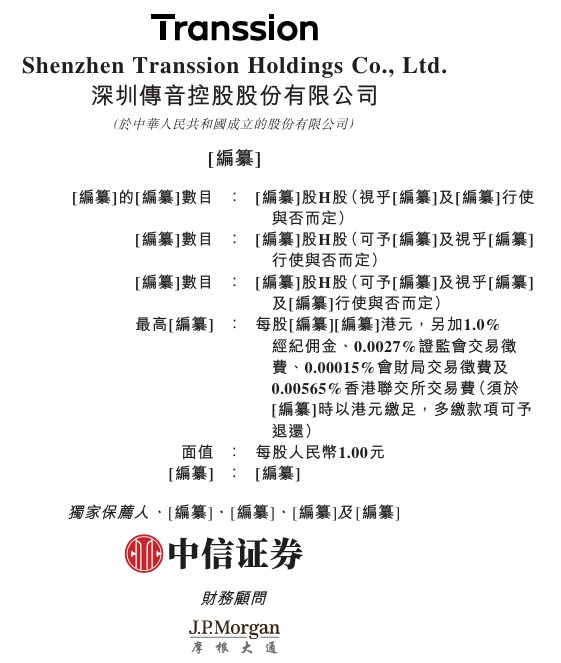
新股消息 | 传音控股(688036.SH)递表港交所 公司手机销量在全球新兴市场排名第一
智通财经网· 2025-12-02 13:11
Core Viewpoint - Transsion Holdings has submitted an application to list on the main board of the Hong Kong Stock Exchange, with CITIC Securities as its sole sponsor. The company ranks first in the global emerging markets for mobile phone sales, holding a market share of 24.1% according to Frost & Sullivan [1][4]. Company Overview - Transsion Holdings is a leading provider of smart terminal products and mobile internet services, primarily focusing on the design, research and development, production, sales, and brand operation of mobile phones. The company has established brand recognition in emerging markets, particularly in Africa, and has expanded into mobile internet services and IoT products, creating an ecosystem of products, services, and brands [4][6]. - Since its establishment in 2013, Transsion has focused on emerging markets, especially Africa, where it is known as the "King of Africa" due to its significant market share and brand influence. The company has successfully replicated its business model in various emerging markets [4][7]. Business Highlights - Transsion operates three main smartphone brands: TECNO, targeting mid-to-high-end consumers; Infinix, aimed at young consumers; and itel, which emphasizes cost-effectiveness and reliability for the mass market. In addition to smartphones, the company offers mobile internet services and IoT products [6][7]. - In Africa, Transsion holds a market share of 61.5% in smartphone sales, benefiting from the transition from feature phones to smartphones, driven by economic development and consumer upgrades [7]. Financial Performance - The company reported revenues of RMB 46.60 billion in 2022, RMB 62.29 billion in 2023, and projected revenues of RMB 68.72 billion in 2024, with a six-month revenue of RMB 29.08 billion for 2025 [9]. - Gross profit figures were RMB 9.25 billion in 2022, RMB 14.44 billion in 2023, and projected RMB 14.34 billion in 2024, with corresponding gross profit margins of 19.9%, 23.2%, and 20.9% respectively [10]. - The net profit for the years 2022, 2023, and projected for 2024 is RMB 2.47 billion, RMB 5.59 billion, and RMB 5.60 billion respectively [11]. Industry Overview - The global mobile phone market has shown strong growth since 2010, with a market size of USD 0.5 trillion in 2024, expected to reach USD 0.6 trillion by 2029, reflecting a CAGR of 4.6% from 2024 to 2029. The mobile internet services market is projected to grow from USD 2.9 trillion in 2024 to USD 7.6 trillion by 2029, with a CAGR of 21.5% [13][14]. - The emerging markets' mobile internet penetration rate is currently at 46%, expected to rise to 53% by 2029, indicating significant growth potential in the smartphone and mobile internet services sectors [14]. - The smartphone market in emerging markets is projected to grow from USD 134.4 billion in 2020 to USD 171.1 billion in 2024, with a CAGR of 6.2% [16].
解码消费新业态新模式新场景 毕马威发布第五届“消费50”榜单
Zheng Quan Ri Bao Wang· 2025-12-02 12:49
从每届榜单上榜企业的变化趋势来看,成立10年及以上的企业比例逐年增长,表明榜单企业正趋向成熟 化、稳定化,行业格局逐渐成熟,市场竞争日益激烈,也侧面显示出能够上榜的5年以下初创企业在商 业模式、产品创新以及消费者洞察等方面表现突出。 为支持上榜企业实现可持续发展,毕马威还为入选企业提供包括品牌价值提升、资本市场接洽、产业生 态融合等全链条服务,企业将获得来自多个维度的优势资源通道。 毕马威中国零售及消费品行业主管合伙人林启华表示,通过毕马威的专业交流平台,相关企业可以得到 持续赋能,更好地适应国内国际产业链、供应链生态协同,更有能力应对阶段性发展挑战,实现更高质 量发展。随着第五届"消费50"评选的成功举办及榜单发布,毕马威将开启产业赋能新篇章,这些优秀的 消费企业也将在多方助力下,在更多领域获得发展机遇,推动中国消费产业迈向新高度。 本报讯 (记者毛艺融)12月2日,毕马威发布"毕马威第五届消费50榜单"。自2021年首次推出首届"毕 马威新国货50榜单"以来,毕马威消费50系列评选已成功举办五届,逐步构建起覆盖创新、ESG、运营 效率、用户体验等多维度的评估体系。五年来,榜单累计发掘数百家优秀企业,涵盖美 ...
中金黄金:生产的黄金产品绝大部分为标准金,通过金交所网上交易平台出售
Jin Rong Jie· 2025-12-02 10:09
Core Viewpoint - The company, Zhongjin Gold, primarily produces standard gold products sold through online trading platforms, indicating no current involvement in electronic component-related gold materials or partnerships with upstream and downstream enterprises in that sector [1]. Group 1 - An investor inquired about Zhongjin Gold's involvement in gold materials for electronic components, particularly in light of increasing demand for high-precision, low-power chips due to advancements in AI and IoT technologies [1]. - Zhongjin Gold's response confirmed that the majority of its gold products are standard gold, with no mention of specific electronic component applications or collaborations in that area [1].

2025世界物联网500强排行榜发布:中国上榜企业居世界第一 华为蝉联榜首
Feng Huang Wang· 2025-12-02 09:21
凤凰网科技讯 12月2日,世界物联网500强企业排行榜发布。世界物联网大会执委会副主席兼秘书长何 强在主题报告中表示:本届排行榜中国上榜企业居世界第一,美国其次。华为再次占领榜首,海尔集团 稳居前八强,本源量子、星链物联、Deepseek等高新前沿科技企业和人工智能企业首次登上排行榜。 榜单前10名分别是:华为、微软、中国航天科技(000901)集团、中国航天科工集团、施耐德电气、博 世集团、中国电信(601728)集团、海尔集团、中国移动(600941)集团、俄罗斯航天集团。 ...

立达信跌0.96%,成交额7724.31万元,今日主力净流入-284.83万
Xin Lang Cai Jing· 2025-12-02 07:46
Core Viewpoint - The company, Lida Xin, is experiencing a decline in stock price and has a significant overseas revenue proportion, benefiting from the depreciation of the RMB. Group 1: Company Overview - Lida Xin is primarily engaged in the research, manufacturing, sales, and service of LED lighting products, smart home, and smart building IoT products. The main revenue sources are lighting products and accessories (64.10%), IoT products and accessories (25.14%), home appliances and accessories (8.04%), and other products (1.56%) [7] - As of September 30, the number of shareholders increased to 14,600, with an average of 34,370 circulating shares per person, a decrease of 13.88% [8] - The company was established on April 7, 2015, and went public on July 20, 2021 [7] Group 2: Financial Performance - For the period from January to September 2025, Lida Xin achieved a revenue of 4.947 billion, a year-on-year increase of 0.13%, while the net profit attributable to the parent company was 127 million, a decrease of 54.35% [8] - The company has distributed a total of 585 million in dividends since its A-share listing, with 523 million distributed over the past three years [9] Group 3: Market Activity - On December 2, Lida Xin's stock price fell by 0.96%, with a trading volume of 77.2431 million and a turnover rate of 0.87%, resulting in a total market capitalization of 8.835 billion [1] - The stock has seen a net outflow of 2.8483 million from major investors today, with a lack of clear trends in major holdings [4][5] Group 4: Strategic Partnerships and Innovations - The company has partnered with Huawei's HarmonyOS to explore new forms of smart living in the intelligent lighting sector, leveraging the open-source HarmonyOS for device interconnectivity [2] - Lida Xin has developed algorithm models for security monitoring, including facial recognition and sound detection, which have been successfully integrated into its smart monitoring and sensing products [2] Group 5: International Business Strategy - As of the 2024 annual report, overseas revenue accounted for 89.22% of total revenue, benefiting from the depreciation of the RMB [3] - The company has taken preemptive measures for inventory in anticipation of market changes, including price adjustments for some products to mitigate tariff impacts [2]

觅睿科技IPO上会前删除7500万元补流项目,预计2025年增收不增利
Sou Hu Cai Jing· 2025-12-02 06:47
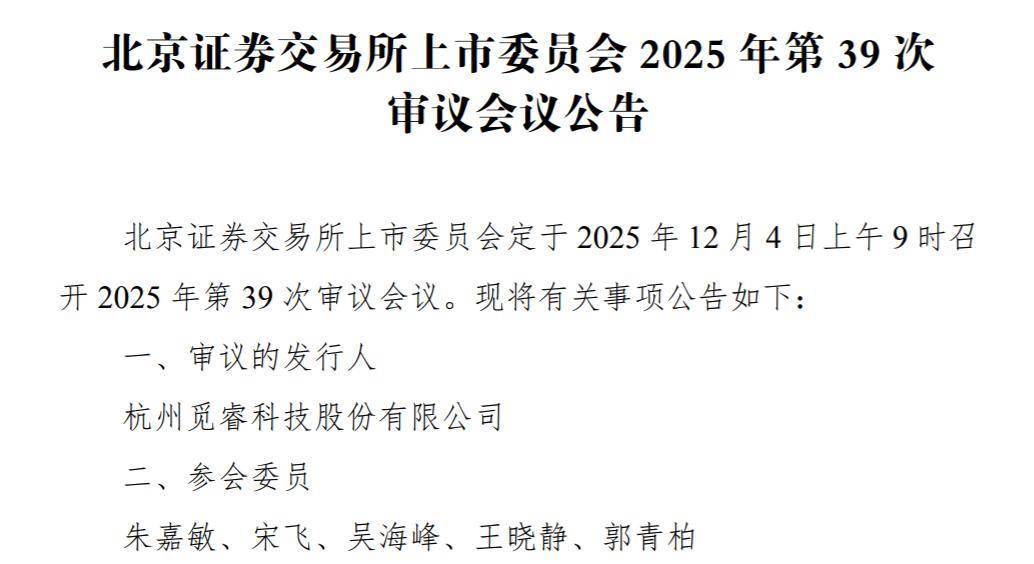
Core Viewpoint - Hangzhou Mirui Technology Co., Ltd. is set to hold its listing meeting on December 4, with Guosen Securities as the sponsor, focusing on smart network cameras and IoT video products [2] Financial Performance - The total assets of the company increased from 261.61 million yuan in 2022 to 476.97 million yuan in 2025, showing a growth trend [3] - Shareholder equity rose from 159.97 million yuan in 2022 to 295.12 million yuan in 2025, indicating improved financial stability [3] - Operating revenue for 2022 to 2025 is projected to grow from 548.55 million yuan to 743 million yuan, while net profit is expected to increase from 39.07 million yuan to 32.07 million yuan in the same period [3][4] Ownership Structure - The controlling shareholder and actual controller of Mirui Technology is Yuan Haizhong, who holds 65.66% of the shares directly and controls an additional 32.34% through an investment company, totaling 98% control [6] Fundraising and Use of Proceeds - The company plans to raise 314 million yuan, down from an initial target of 395 million yuan, with funds allocated for headquarters and brand development, as well as R&D center construction [6] Dividend Distribution - In 2023, the company distributed a cash dividend of 12.5 yuan per 10 shares, totaling 51.02 million yuan, without issuing new shares or converting capital reserves [7]
共建“一带一路”投资合作升温,企业家与学者怎么看
Di Yi Cai Jing· 2025-12-02 06:44
今年前10个月,我国企业在共建"一带一路"国家非金融类直接投资2341.5亿元人民币,同比增长 22.3%。 从港口到电站,从铁路到电商,在共建"一带一路"倡议框架下,中国海外投资的步伐在加快。 近日,第九届"一带一路"与全球治理国际学术论坛在复旦大学举行。本届论坛由复旦大学和"一带一 路"智库合作联盟联合主办,复旦大学一带一路及全球治理研究院和中联部当代世界研究中心承办, 以"开拓'一带一路'的广度和深度"为主题,共同探讨"一带一路"在新时代背景下的新发展、新机遇和新 挑战。 中铁二十四局集团有限公司海外部总经理张百芹在发言中回顾了中国通过共建"一带一路"对非洲基础设 施的深度参与。从坦赞铁路到埃塞俄比亚非盟疾控中心为代表的中非合作标志性大项目,再到惠及非洲 多国的公路、桥梁等一大批基础设施项目,不仅极大地改善了当地的交通状况,为当地经济发展注入了 新的活力,还为当地创造了大量的就业机会,培养了许多专业技术人才。 据新华社消息,当地时间11月20日,坦赞铁路激活项目开工仪式在卢萨卡举行。坦、赞两国领导人表 示,愿同中方通力协作,积极落实中非合作论坛北京峰会成果,将铁路激活项目打造成共同推进现代化 建设的精品 ...
兆易创新跌2.00%,成交额39.78亿元,主力资金净流出1.79亿元
Xin Lang Zheng Quan· 2025-12-02 05:33
Group 1 - The core viewpoint of the news is that Zhaoyi Innovation's stock has experienced fluctuations, with a notable increase of 95.90% year-to-date, despite a recent decline in the last 20 days [1] - As of December 2, Zhaoyi Innovation's stock price was 208.56 CNY per share, with a market capitalization of 139.29 billion CNY [1] - The company has seen significant trading activity, with a net outflow of 1.79 million CNY in principal funds on December 2, and notable buying and selling volumes [1] Group 2 - Zhaoyi Innovation, established on April 6, 2005, specializes in the research, sales, and technical support of integrated circuit storage chips, with 68.55% of its revenue coming from storage chips [2] - The company reported a revenue of 6.832 billion CNY for the first nine months of 2025, reflecting a year-on-year growth of 20.92%, and a net profit of 1.083 billion CNY, up 30.18% year-on-year [2] - As of September 30, 2025, the number of shareholders increased by 14.31% to 157,500, while the average circulating shares per person decreased by 12.18% to 4,231 shares [2] Group 3 - Zhaoyi Innovation has distributed a total of 1.948 billion CNY in dividends since its A-share listing, with 639 million CNY distributed in the last three years [3] - The top ten circulating shareholders include significant institutional investors, with notable reductions in holdings for several ETFs [3]
