数字金融

Search documents
凝心聚力共奋进 奋楫扬帆谱新篇|潍坊银行全力打造高质量发展的标杆银行
Qi Lu Wan Bao· 2025-09-28 13:07
Core Viewpoint - The article highlights the achievements and strategic initiatives of Weifang Bank in promoting high-quality development, aligning with national financial policies, and enhancing its service offerings to support local economic growth [2][38]. Group 1: Company Overview - Weifang Bank, established in August 1997, is the largest local state-owned bank in Weifang City, with over 3,100 employees and 134 branches [2]. - As of the end of August, Weifang Bank's total assets reached 332 billion yuan, with deposits of 265.5 billion yuan and loans of 193 billion yuan, reflecting growth rates of 9.2%, 12.1%, and 11.7% respectively since the beginning of the year [2]. Group 2: Strategic Focus Areas - The bank emphasizes serving urban and rural residents, small and medium-sized enterprises, and the local economy, with a dual focus on safety and profitability [2]. - Key operational strategies include structural adjustment, risk control, compliance strengthening, cost reduction, customer base expansion, and brand creation [2]. Group 3: Party Building and Corporate Culture - Weifang Bank actively explores high-quality party building to support corporate development, focusing on leadership, execution, and cultural empowerment [4]. - The bank has implemented a series of measures to enhance internal control and compliance, ensuring a strong foundation for risk management [8]. Group 4: Financial Innovation and Services - The bank has developed over 60 specialized credit products tailored to regional economic needs, including the "Quality Loan" and "Plant Variety Rights Pledge Loan" [15]. - Weifang Bank is undergoing a digital transformation, launching the "Smart Enterprise Banking 3.0" system to enhance service efficiency and customer experience [19]. Group 5: Social Responsibility and Community Engagement - The bank engages in various social responsibility initiatives, including anti-fraud campaigns and volunteer services, positively impacting the community [25][26]. - Weifang Bank has received recognition for its volunteer services and community support efforts, enhancing its reputation as a socially responsible institution [36]. Group 6: Future Development Goals - The bank aims to become a benchmark for high-quality development by focusing on technology finance, green finance, inclusive finance, pension finance, and digital finance [53]. - Weifang Bank is committed to aligning its strategies with national financial policies and enhancing its service capabilities to support local economic growth [53].

华夏银行App是否带来新突破?互动体验有提升,但产品购买流程待优化
Xin Lang Cai Jing· 2025-09-28 07:15
Core Insights - The core evaluation of the Huaxia Bank mobile banking app resulted in a score of 76.725 out of 100, reflecting improvements in user experience, functionality, and security, but highlighting areas needing further enhancement [1][10][36] User Experience - The app has undergone a version upgrade, enhancing features such as investment and fund sections, and improving search interactions and video customer service [1][10][36] - Despite visual improvements in customer service and messaging interfaces, the actual user experience has not significantly improved, with persistent functional shortcomings [1][10][36] - The app's user journey experiences issues when users encounter obstacles, indicating a need for better prompts and follow-up services [1][10][36] Functionality - The app supports various login methods, including mobile number, ID number, and bank card number, as well as quick login options via facial recognition and fingerprint [4][16] - Key features include account management, fund transfers, and investment options, but the purchasing process for financial products still requires optimization [27][28][30] - The app has introduced a separate "Asset Overview" feature, but the overall functionality related to income and expenditure details remains underdeveloped [1][10][27] Performance and Security - The app's security measures include automatic logout after inactivity and password error limits, with a recent penetration test revealing one risk point on the Android version [33] - Privacy policies are clearly stated, and users can manage third-party application authorizations, although compliance issues were noted in some tests [33] - Performance testing indicated that the app's memory usage is high, and its average frame rate per second (FPS) is lower compared to competitors [33] Development and Innovation - The app has made strides in adapting to older users with a "care version" that simplifies navigation and access to essential functions [34][35] - However, the app lacks a comprehensive membership growth system and has limited content to support diverse investment decision-making [35][36] - Continuous updates have improved the app's interface and functionality, but deeper systemic issues remain unresolved, necessitating further optimization [36]


数智引领普惠金融高质量发展
Zhong Guo Jing Ji Wang· 2025-09-28 06:19
Core Insights - The 2025 China Inclusive Finance International Forum emphasized the importance of digital intelligence in leading new developments in inclusive finance [1][2] - Inclusive finance has a long history in China, evolving from credit cooperatives in the 1930s to modern financial system reforms, aiming to provide affordable financial services to all social strata [1] - The sustainability of commercial operations is crucial for mobilizing financial institutions and social capital to serve inclusive finance [1] Group 1 - Wu Xiaoqiu highlighted that inclusive finance reflects the level of financial welfare and service equity in the country, requiring market-oriented operations to meet diverse financial needs across different income and wealth levels [2] - Two main paths to meet the changing financial demands are innovation, particularly in financial instruments, and technological advancements that expand the customer base for financial services [2] - Inclusive finance is a vital means to satisfy the diverse financial needs of the population, necessitating innovation and technological progress within the financial sector [2] Group 2 - Tu Guangshao stated that advancing inclusive finance requires expanding service coverage and providing user-friendly, precise financial products [2] - There is a need to empower the inclusive groups to effectively use financial tools and services, while also promoting the integration of digital and green finance with inclusive finance [2] - Comprehensive solutions should be offered to small and micro enterprises to reduce costs and enhance their access to financial services [2]
刘晓春谈科技与金融:科技要对接真需求,谨防被“割韭菜”
Nan Fang Du Shi Bao· 2025-09-28 06:17
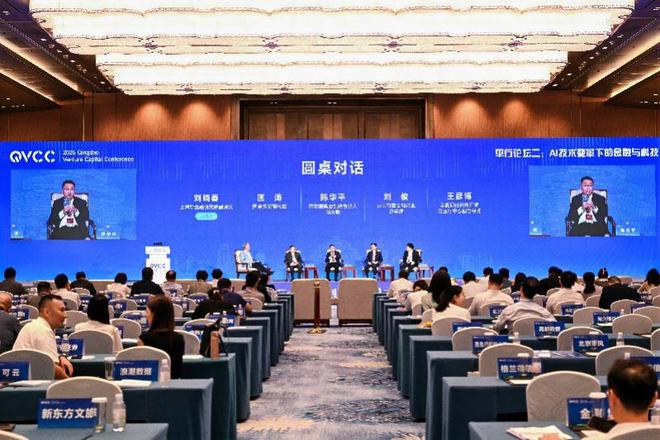
Group 1 - The 2025 Qingdao Venture Capital Conference highlighted the trend of technology investment, particularly in artificial intelligence, which is attracting a significant portion of investment funds while other sectors remain relatively quiet [1][4] - The "2025 Venture Capital Industry Annual White Paper" indicates a noticeable concentration of capital in the global venture capital market by mid-2025, with a shift in China's venture capital industry towards a new paradigm focused on hard technology innovation and "patient capital" [1][9] - Liu Xiaochun, Vice President of Shanghai New Finance Research Institute, emphasized the importance of technology addressing real needs and the necessity to guard against risks associated with technological investments [1][4] Group 2 - Liu Xiaochun discussed stablecoins, comparing them to traditional payment methods, and highlighted that their utility is limited to specific scenarios, particularly where traditional currency transactions are hindered [4][5] - He warned against the speculative nature of stablecoins and the potential for exploitation, citing a recent Ponzi scheme involving a stablecoin that resulted in significant financial losses for investors [5][8] - The trend of investing in hard technology is gaining momentum, with encouragement from the government for early, small, and long-term investments in this area, despite the challenges posed by technological barriers and rapid iterations [8][9] Group 3 - The ongoing U.S.-China tech competition is creating substantial market opportunities for domestic innovation and replacement in critical technology sectors, such as chip design and new energy vehicles [9] - Liu Xiaochun noted that technology requires financial backing for growth, and the integration of technology and finance is crucial for the success of tech enterprises [9] - While technology can enhance risk management in financial institutions, it also introduces new types of risks, necessitating a balanced approach to risk management that does not solely rely on technology [9]
区块链为底座的新金融时代
Jing Ji Guan Cha Wang· 2025-09-28 01:20
Core Insights - The Hong Kong Stablecoin Regulation, passed on May 21, 2025, has led to a rapid development phase in the market, with major financial and tech firms expressing intentions to apply for stablecoin licenses, indicating strong demand for such licenses in Hong Kong [2] - The regulatory framework emphasizes high standards and compliance, requiring applicants to have substantial capital, robust risk management systems, and clear application scenarios, aiming to balance safety and innovation [2][6] - Stablecoins, which are digital assets pegged to fiat currencies, are gaining traction as they provide a more stable alternative to volatile cryptocurrencies like Bitcoin, making them suitable for daily transactions and cross-border settlements [3][4] Industry Trends - The global regulatory landscape for stablecoins is shifting, with increasing recognition of their potential to enhance financial stability and facilitate cross-border transactions, particularly in the context of China's strategic push for compliance-driven stablecoin development through Hong Kong [4][5] - Stablecoins are seen as a tool for promoting the internationalization of the Renminbi and enhancing the resilience of financial infrastructure, offering faster and more transparent cross-border settlement solutions compared to traditional banking networks [5][6] - The interaction between stablecoins and Real World Assets (RWA) is expected to create a new financial model in Hong Kong, where stablecoins serve as a monetary layer and RWAs represent the asset layer, enhancing liquidity and investment opportunities [8][10] Regulatory Developments - Hong Kong's regulatory approach aims to create a sustainable and replicable ecosystem for digital assets, with a focus on compliance and risk management, while also attracting global capital and projects [6][7] - The U.S. government is also advancing stablecoin regulation, recognizing their commercial potential and the need to maintain the dollar's dominance in the digital finance landscape [7][8] - The establishment of a clear regulatory framework is crucial for the successful integration of stablecoins and RWAs into the financial system, ensuring that innovation does not compromise financial stability [12][13] Recommendations for Financial Institutions - Financial institutions in Hong Kong should develop a systematic understanding of stablecoins and RWAs, focusing on their impact on traditional financial logic and risk management [15][16] - Institutions are advised to prioritize standard financial RWAs due to their higher maturity and compliance advantages, which can help build trust and reduce costs [16] - Strengthening compliance capabilities and establishing high-level trust with regulators is essential for navigating the evolving landscape of stablecoins and RWAs [17][18]


金融盛会!就在今天
Zhong Guo Zheng Quan Bao· 2025-09-28 00:33
Group 1 - The financial industry in China is experiencing significant growth and achievements, reflecting a robust development trajectory over the decades [1] - The upcoming 2025 Insurance and Trust Industry High-Quality Development Conference will focus on the theme "Long Money, Long Investment, Long Green," emphasizing the importance of these sectors in supporting the real economy and enhancing social welfare [2][4] - The Chinese government is implementing structural reforms in the financial supply side, introducing policies to improve service quality, risk management, and innovation within financial institutions [2] Group 2 - The insurance and trust industries are presented with new development opportunities and challenges, necessitating a strategic alignment with policy directions and an enhancement of core competitiveness [2] - Financial technology is highlighted as a key enabler for innovation in service models, aimed at meeting diverse customer needs [2] - Strengthening risk management is identified as a critical issue for ensuring financial security within the industry [2] Group 3 - The Golden Bull Awards, organized by China Securities Journal, are recognized as one of the most credible and influential awards in China's capital market, promoting healthy development in the asset management industry [3]
创新对台金融服务 福州自贸片区首单“台青创业贷”落地
Zhong Guo Jing Ying Bao· 2025-09-27 10:41
Core Insights - Innovation in financial services for Taiwan is a key area of financial reform in the China (Fujian) Pilot Free Trade Zone, with a focus on digital technology to enhance services [1] Group 1: Financial Products and Initiatives - The "Taiwan Youth Entrepreneurship Loan" has been launched in the Fuzhou Free Trade Zone, with the first phase completing assessments and credit preparations for three Taiwanese enterprises, with a maximum credit limit of 500,000 yuan [1] - This loan is part of nine key measures to support Taiwanese youth entrepreneurship, aiming to optimize the business environment for Taiwanese enterprises in Fuzhou [1] - The loan initiative is a collaboration between the Fuzhou Free Trade Zone Management Committee and Qifu Technology, focusing on credit assessment, financial service innovation, and empowering Taiwanese youth entrepreneurship [1] Group 2: Technology and Data Utilization - Qifu Technology's Chief Risk Officer revealed that the "Taiwan Youth Entrepreneurship Loan" was developed based on research into the unique financing needs of Taiwanese youth, utilizing a self-developed "Small and Micro Enterprise Credit Assessment Intelligent System" [2] - The credit assessment integrates traditional data such as business operations and tax payments with unique local data, enabling precise credit profiling for Taiwanese enterprises [2] - The initiative reflects a growing consensus among Taiwanese entrepreneurs that "doing foreign trade means finding free trade," highlighting Fujian's role as a primary destination for Taiwanese enterprises [2] Group 3: Training and Collaboration - In addition to the loan, Qifu Technology has initiated a "Dual-Track Entrepreneurship Empowerment Program," which includes establishing a training base for Taiwanese youth focused on AI risk control and digital finance [2] - The program also aims to create a "Fujian-Taiwan Financial Technology Innovation Alliance" to connect Taiwanese entrepreneurs with industry resources and accelerate the transformation of innovative results [2]


贵州银行中报出炉:深耕“五篇大文章”,数字化转型驱动区域高质量发展
2 1 Shi Ji Jing Ji Bao Dao· 2025-09-27 02:27
Core Viewpoint - Guizhou Bank has demonstrated steady growth in its mid-year performance for 2025, with total assets exceeding 600 billion yuan and a focus on serving the real economy through various financial initiatives [1][2][3][4][5][6] Financial Performance - As of June 30, 2025, Guizhou Bank's total assets reached 603.75 billion yuan, a 2.33% increase from the beginning of the year [1] - The bank reported operating income of 6.102 billion yuan and a net profit of 2.129 billion yuan, reflecting year-on-year growth of 2.26% and 0.31% respectively [1] - The net interest margin improved by 0.22 percentage points to 1.90%, indicating strong operational resilience [1] Service to the Real Economy - Guizhou Bank has actively engaged in five key areas: technology finance, green finance, inclusive finance, pension finance, and digital finance, achieving significant results [2][3][4] - In technology finance, the bank's loan balance reached 9.812 billion yuan, with a year-on-year increase of 21.57% [2] - The green finance loan balance was 61.293 billion yuan, growing by 4.4% from the start of the year [2] - Inclusive finance efforts supported 58,500 clients, with a loan balance of 54.067 billion yuan [3] - Pension finance loans increased by 57.22% to 1.621 billion yuan [3] - Digital finance loans reached 4.005 billion yuan, marking a 28.57% increase [3] Digital Transformation - Guizhou Bank has prioritized digital transformation as a key driver for high-quality development, integrating it with the five key areas of focus [4][5][6] - The bank has made significant advancements in data governance and standardization, enhancing its data-driven decision-making capabilities [4] - The implementation of an intelligent risk control system has improved risk management, with a non-performing loan ratio of 1.69%, down 0.03 percentage points from the beginning of the year [5] - The bank has deployed artificial intelligence technologies to enhance operational efficiency, with over 4,300 users served by its intelligent Q&A system [6] Future Outlook - Guizhou Bank aims to continue its digital transformation, enhancing its service model, operational capabilities, and risk management to support the high-quality development of the local economy [6]
2025年券商“五篇大文章”专项评价结果揭晓
Zhong Guo Zheng Quan Bao· 2025-09-26 20:48
Core Viewpoint - The China Securities Association has recently communicated the evaluation results of securities companies for the 2025 financial "Five Major Articles" initiative, with CITIC Securities ranking first in seven quantitative evaluation categories [1][4]. Group 1: Evaluation Results - CITIC Securities leads in seven quantitative evaluation categories, showcasing the advantages of top-tier securities firms in key areas [1][4]. - The evaluation period covers the previous year from January 1 to December 31, with 107 participating firms' data collected and verified [1][4]. Group 2: Key Rankings - In the underwriting of technology innovation bonds, the top five firms are CITIC Securities (128.19 billion), CITIC Jiantou (89.86 billion), Guotai Junan (63.68 billion), CICC (58.80 billion), and Huatai Securities (34.22 billion) [2]. - For equity financing of technology enterprises, the leading firms are CITIC Securities (27.04 billion), CITIC Jiantou (20.93 billion), CICC (20.22 billion), Guotai Junan (15.16 billion), and Huatai Securities (12.23 billion) [2]. - In major asset restructuring transactions for technology enterprises, the top firms are CITIC Securities (32.07 billion), CITIC Jiantou (15.39 billion), China Galaxy (11.50 billion), CICC (7.62 billion), and Shenyin Wanguo (1.70 billion) [2]. Group 3: Green and Private Enterprise Bonds - The top five firms in underwriting green and low-carbon transition bonds are CITIC Securities (16.54 billion), CITIC Jiantou (12.29 billion), Guotai Junan (11.14 billion), CICC (8.84 billion), and China Merchants Securities (5.41 billion) [3]. - For private enterprise bond underwriting, the leading firms are China Merchants Securities (38.15 billion), GF Securities (31.89 billion), Ping An Securities (18.56 billion), CICC (13.01 billion), and Huatai Securities (12.57 billion) [3]. Group 4: Pension Products and Evaluation Framework - The top five firms in the distribution of personal pension products are GF Securities (17.18 million), China Merchants Securities (13.91 million), Guotai Junan (13.78 million), China Galaxy (12.74 million), and Industrial Securities (11.42 million) [3]. - The evaluation results will be incorporated into the 2025 classification evaluation of securities firms, with a scoring system that excludes basic scores for fairness [3][4]. Group 5: Evaluation Methodology - The evaluation framework consists of quantitative indicators (90 points), qualitative indicators (10 points), and additional items (5 points), with a focus on the contribution and service capabilities of firms in key financial areas [4][5]. - The quantitative indicators emphasize technology finance, which holds the highest weight of 50 points, while green finance, inclusive finance, pension finance, and digital finance each account for 10 points [4][5].

人民币国际化迎来“数字引擎” 上海成为核心枢纽
Guo Ji Jin Rong Bao· 2025-09-26 19:58
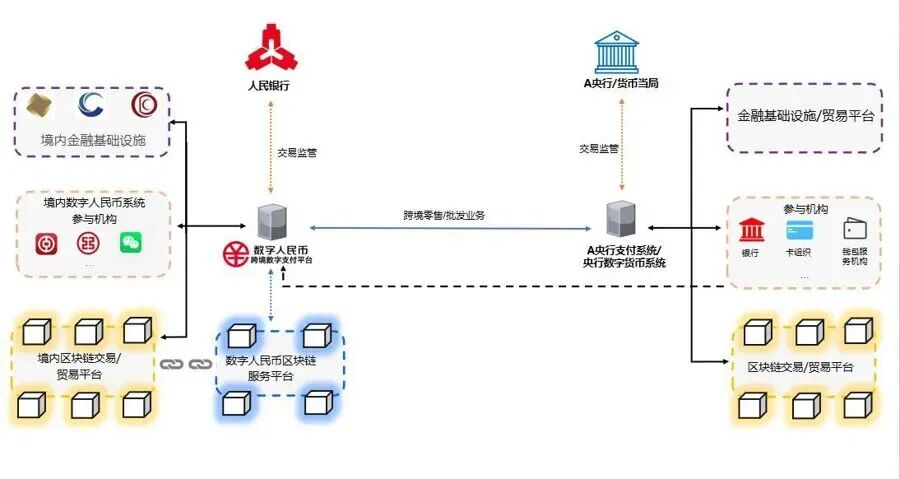
Core Viewpoint - The establishment of the Digital Renminbi International Operation Center in Shanghai marks a significant step towards the internationalization of the digital renminbi, facilitating cross-border payment and blockchain services, and enhancing the global influence of the renminbi [5][6][10]. Group 1: Digital Renminbi Platforms - The Digital Renminbi International Operation Center has developed three main platforms: a cross-border digital payment platform, a blockchain service platform, and a digital asset platform, aimed at addressing traditional cross-border payment challenges and enhancing transaction efficiency [7][8]. - The blockchain service platform and digital asset platform are built on the same blockchain infrastructure, allowing for integrated operations and improved regulatory compliance [4][8]. Group 2: Internationalization of Renminbi - The operation of the Digital Renminbi International Operation Center signifies a shift from domestic trials to international applications, enhancing the renminbi's role in global trade and investment [6][10]. - The center aims to create new opportunities for the renminbi in international transactions, particularly in countries involved in the Belt and Road Initiative, thereby increasing China's influence in the global monetary system [6][10]. Group 3: Shanghai as a Financial Hub - Shanghai was chosen for the Digital Renminbi International Operation Center due to its comprehensive financial market, high degree of openness, and established financial technology ecosystem, positioning it as a key node in the global financial network [9][10]. - The center's operation is expected to significantly enhance Shanghai's international financial status, potentially generating over 100 billion yuan in added value to the digital finance industry by 2030 [10].