数字孪生

Search documents
天桥起重上半年业绩同比增长 产品积极交付多领域客户
Zheng Quan Ri Bao Wang· 2025-08-16 03:59
Core Insights - The company, Zhuzhou Tianqiao Crane Co., Ltd., reported a revenue of approximately 795 million yuan for the first half of 2025, representing a year-on-year growth of 15.42%, and a net profit attributable to shareholders of approximately 36.35 million yuan, which is a significant increase of 109.32% [1][2] Group 1: Company Performance - The company has delivered multiple products to clients in various industries such as non-ferrous metals, ports, and hydropower, leading to notable increases in sales revenue and profit metrics [1] - The company is integrating advanced technologies like artificial intelligence to enhance product performance, with expectations of releasing more significant results in the future [1][2] Group 2: Market Demand and Supply Dynamics - The demand for non-ferrous metals is rising due to the explosion of the new energy industry, prompting smelting enterprises to increase their procurement of handling equipment [2] - The supply side is experiencing a transition as handling equipment from 2019 to 2020 is being gradually replaced, with smelting enterprises simultaneously conducting capacity replacement and technological upgrades, leading to a noticeable increase in demand for advanced, energy-efficient handling equipment [2] Group 3: Future Developments - The company is developing new products that integrate crane robotics with artificial intelligence technology, having completed version iterations and is working on constructing industrial models for special application environments [2] - The company aims to enhance its intelligent system solutions for the non-ferrous industry, summarizing relevant standards and promoting technologies such as precise anti-sway, AI recognition, and centralized control scheduling from aluminum smelting to other fields [2]

一年为企业投融资超20亿元!增城低碳总部园探路科技金融
Sou Hu Cai Jing· 2025-08-16 01:41
Core Insights - The article highlights the development of the Zengcheng Low Carbon Headquarters Park as a hub for technology-driven enterprises, focusing on fostering innovation and providing financial support to small and medium-sized enterprises (SMEs) [1][9] Group 1: Financial Support and Ecosystem - The park has attracted over 20 financial institutions, including commercial banks and investment funds, creating a comprehensive capital empowerment system for enterprises from startup to maturity, with over 2 billion yuan in financing provided in 2024 alone [1][3] - Various financing products are offered, including short-term credit products tailored for SMEs, with online approval processes allowing loans to be disbursed within three days [2][3] - The park has issued over 20 billion yuan in loans to resident companies, supporting numerous enterprises with financing exceeding 10 million yuan each [3] Group 2: Innovation and Entrepreneurship - The park has hosted the China Innovation and Entrepreneurship Competition for three consecutive years, serving as a significant platform for resource aggregation and providing financing connections for winning projects [7][8] - The integration of advanced technologies such as digital twins and AI in companies like Guangdong Yuan Neng Xing Tai demonstrates the park's focus on facilitating the commercialization of innovative research [7][8] Group 3: Comprehensive Services - The park has established six public service platforms to cater to the diverse needs of enterprises at different stages, including talent introduction, entrepreneurial incubation, and technology-market connections [9] - A collaborative initiative with various financial and securities institutions aims to create a nurturing environment for companies preparing for public listings, with 14 companies currently in the pipeline for potential listing [9][10]


禾赛科技二季度营收同比增长超50% 获丰田汽车旗下品牌激光雷达定点
Zheng Quan Shi Bao Wang· 2025-08-15 04:28
Group 1: Financial Performance - In Q2 2025, the company achieved revenue of 710 million yuan, representing a year-on-year growth of 53.9%, marking five consecutive quarters of revenue growth [1] - The net profit for the same quarter reached 44.1 million yuan (approximately 6.2 million USD), significantly exceeding the GAAP profitability target [1] Group 2: Market Demand and Delivery - The total delivery volume of Hesai's LiDAR in Q2 reached 352,100 units, a year-on-year increase of 306.9%, with ADAS deliveries at 303,564 units, up 275.8% [2] - In the first half of the year, total LiDAR deliveries amounted to 547,900 units, a growth of 276.2%, surpassing the total for 2024 [2] - The company delivered 48,500 units of LiDAR for robotics in Q2, a substantial increase of 743.6%, with a total of 98,300 units delivered in the first half, reflecting a growth of 692.9% [2] Group 3: Strategic Partnerships - The company announced a partnership with a joint venture brand of Toyota to supply LiDAR for their new energy vehicles, set to begin mass production in 2026 [3] - Currently, the company has established mass production partnerships with 24 domestic and international automotive manufacturers, with recent agreements involving 20 models from nine leading automakers [3]
重磅!京东入局低空经济,重仓低空经济的通用航空ETF(159231)涨超1%
Xin Lang Ji Jin· 2025-08-15 02:45
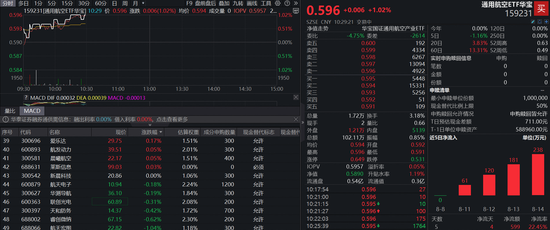
Group 1 - The low-altitude economy and military aviation sectors are showing active performance, with stocks like Zhuhai Guanyu rising by 8%, Yingliu Co. increasing over 6%, and Zhenxin Technology up by over 4% [1] - The General Aviation ETF Huabao (159231) has seen a price increase of 1.02% and has attracted a net inflow of 5.99 million yuan over four consecutive days [1] - A strategic cooperation agreement was signed between JD Technology Group and Guizhou Hongwan Market Service Group to develop a "low-altitude economy smart community" project, focusing on smart community management and drone logistics [2][3] Group 2 - The project aims to create a "million-level resident quality of life solution" by leveraging JD Technology's strengths in AI and digital twin technology, combined with the application scenarios of the Huaguoyuan urban complex [3] - Yunnan Province has introduced measures to support the low-altitude economy, including an annual issuance of 20 million yuan in consumption vouchers and the establishment of 10 free low-altitude flight check-in points [3] - The General Aviation ETF Huabao (159231) covers 50 constituent stocks related to military and civilian aviation, with over 46% of state-owned enterprises and more than 20% from the top ten military industrial groups [4]
禾赛二季度净利润突破4000万远超盈利目标:上半年出货量已超2024年全年
IPO早知道· 2025-08-15 02:11
Core Viewpoint - Hesai Technology (NASDAQ:HSAI) has demonstrated significant growth in the second quarter of 2025, with a revenue increase of over 50% year-on-year and a net profit exceeding 40 million RMB, surpassing GAAP profitability targets [4][8][10]. Financial Performance - In Q2 2025, Hesai achieved revenue of 710 million RMB (approximately 98.6 million USD), marking a year-on-year growth of 54% [4][10]. - The net profit for the second quarter reached 44.1 million RMB (approximately 6.2 million USD), a significant turnaround from a net loss of 72.1 million RMB in the same period last year [10]. Product Delivery and Market Position - Total delivery of Hesai's LiDAR units reached 352,095 in Q2 2025, representing a year-on-year increase of 306.9% [6]. - The delivery of ADAS products was 303,564 units, up 275.8% year-on-year, while the robot sector saw a staggering 743.6% increase with 48,531 units delivered [6]. - In the first half of 2025, total LiDAR deliveries exceeded the entire volume for 2024, with a total of 547,913 units delivered, reflecting a growth of 276.2% year-on-year [10]. Strategic Partnerships and Collaborations - Hesai has secured partnerships with 24 automotive manufacturers for mass production, including collaborations with major clients such as Geely, Great Wall Motors, and Changan Automobile [16]. - The company has established a platform-level cooperation with one of its top two clients in the ADAS sector, which will enhance the standardization of LiDAR across their entire model range [14][16]. - In the international market, Hesai has entered the C-sample stage with a leading European automotive manufacturer, paving the way for mass production in 2026 [11]. Technological Advancements and Industry Standards - Hesai's JT series LiDAR has achieved a record delivery of over 100,000 units within five months, becoming the preferred choice for leading robotic lawn mower manufacturers [19]. - The company has also led the drafting of the national standard for vehicle-mounted LiDAR (GB/T 45500-2025), which sets performance and reliability requirements for the industry [21]. Future Outlook - The company expresses confidence in sustainable growth and long-term value creation for shareholders, driven by strong demand in both the ADAS and robotics sectors [10].


常熟企业给“大国重器”装上“AI大脑”
Xin Hua Ri Bao· 2025-08-14 21:43
Core Viewpoint - Jiangsu Province's Science and Technology Department has announced the proposed project list for the 2025 frontier technology R&D projects, with a focus on advancing key technologies in the construction industry, particularly through the development of an intelligent operation system for shield tunneling machines [1] Group 1: Project Overview - The project titled "Key Technology R&D for Intelligent Operation System Driven by Digital Twin for Shield Tunneling Machines" has been selected for funding [1] - The shield tunneling machine, known as the "steel pangolin," is essential for tunnel excavation and underground engineering [1] Group 2: Challenges Addressed - Traditional shield tunneling machines face several challenges, including low integration of heterogeneous sensor data, difficulties in lifecycle data continuity, poor real-time geological perception, and weak adaptive capabilities in intelligent decision-making under abnormal conditions [1] Group 3: Collaborative Efforts - The company, China Communications Construction Company Tianhe Machinery Manufacturing Co., Ltd., is collaborating with Southeast University, Central South University, and Suzhou Rail Transit Technology Innovation Research Institute to develop an integrated system with independent intellectual property rights [1] Group 4: R&D Investment and Achievements - In recent years, Changshu has focused on breakthroughs in key core technologies, resulting in over 20 project approvals and more than 50 million yuan in funding support, which has leveraged over 400 million yuan in R&D investment [1]
豪尔赛: 2025年半年度报告
Zheng Quan Zhi Xing· 2025-08-14 16:27
Core Viewpoint - The report highlights a significant decline in the company's financial performance for the first half of 2025, with a 46.60% decrease in revenue and a net loss of 33.71 million yuan, indicating challenges in the lighting and new energy sectors due to macroeconomic conditions and increased competition [2][8][12]. Company Overview and Financial Indicators - The company, HES Technology Group Co., Ltd., is listed on the Shenzhen Stock Exchange under the stock code 002963 [2]. - The total revenue for the reporting period was 158.06 million yuan, down from 296.02 million yuan in the same period last year [2]. - The net profit attributable to shareholders was -33.71 million yuan, a decrease of 538.56% compared to the previous year [2]. - The company reported a basic and diluted earnings per share of -0.22 yuan, reflecting a 540% decline [2]. Business Operations - The company operates under a "Smart+" strategic layout, focusing on three main business segments: smart lighting, smart tourism, and smart city solutions, supported by its subsidiary in new energy [8][12]. - The smart lighting segment integrates modern information technology and aims to enhance urban environments through innovative lighting solutions [8][12]. - The smart tourism segment leverages VR, AR, and AI technologies to create immersive cultural experiences, contributing to the growth of nighttime tourism [4][10]. - The smart city segment utilizes advanced technologies to support urban renewal and digital transformation, enhancing the quality of urban life [5][11]. Industry Development - The lighting industry is experiencing a downturn due to a slowdown in macroeconomic growth and reduced investment in real estate, with a reported 11.2% decline in real estate development investment [8][9]. - The urbanization process and government policies are expected to drive growth in the lighting sector, with initiatives aimed at enhancing urban environments and promoting sustainable development [9][10]. - The new energy sector is rapidly expanding, with significant growth in the sales of new energy vehicles and charging infrastructure, supported by government policies promoting green energy [12][13]. Competitive Advantages - The company holds the highest industry qualifications in lighting engineering, which enhances its competitive edge in large-scale projects [15][20]. - The company emphasizes quality management and has established a strong brand reputation in the market, recognized for its design and construction quality [20][21]. - The company invests heavily in research and development, holding numerous patents and participating in the formulation of industry standards, which strengthens its technological capabilities [18][21]. Recent Developments - The company has successfully secured several key projects, including innovative nighttime tourism initiatives and significant lighting engineering contracts [16][17]. - The new energy subsidiary has formed strategic partnerships to advance green energy solutions and has been recognized as a leading brand in the charging and swapping industry [17][18]. - The company is committed to enhancing its governance structure and compliance management to ensure sustainable growth [19].

今天国际股价下跌2.59% 实控人解除质押1300万股
Sou Hu Cai Jing· 2025-08-14 14:33
Core Viewpoint - The company, focusing on smart manufacturing and logistics integration, is experiencing a decline in stock price and has seen significant shareholder activity regarding stock pledges [1]. Group 1: Stock Performance - As of August 14, 2025, the stock price of the company is 12.41 yuan, down by 0.33 yuan or 2.59% from the previous trading day [1]. - The stock opened at 12.74 yuan, reached a high of 12.81 yuan, and a low of 12.38 yuan, with a trading volume of 99,900 lots and a total transaction value of 126 million yuan [1]. Group 2: Company Overview - The company operates in the internet services, robotics, and digital twin sectors, specializing in smart manufacturing and intelligent logistics systems [1]. - It provides solutions for automated warehousing and logistics distribution [1]. Group 3: Shareholder Activity - The controlling shareholder, Shao Jianwei, has released a pledge of 13 million shares, which accounts for 8.23% of his holdings and 2.87% of the company's total shares [1]. - As of the announcement date, Shao Jianwei has a total of 59.5 million shares pledged, representing 37.68% of his total holdings [1]. Group 4: Financial Performance - In the first quarter of 2025, the company reported revenue of 705 million yuan and a net profit attributable to shareholders of 69.91 million yuan [1]. Group 5: Capital Flow - Today, the company experienced a net outflow of main funds amounting to 25.968 million yuan, which is 0.49% of its circulating market value [1]. - Over the past five days, the cumulative net outflow of main funds reached 30.656 million yuan, representing 0.57% of its circulating market value [1].

凡拓数创:“AI 3D+水利水务”是公司推动“AI 3D”核心发展战略的主要应用场景之一
Zheng Quan Ri Bao· 2025-08-13 12:13
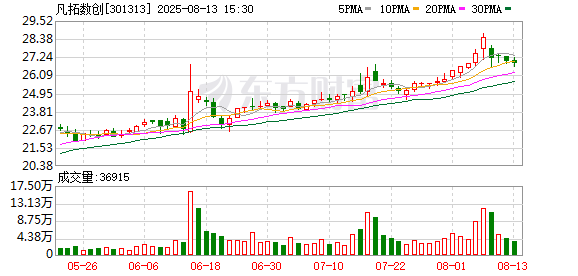
(文章来源:证券日报) 证券日报网讯凡拓数创8月13日在互动平台回答投资者提问时表示,"AI3D+水利水务"是公司推 动"AI3D"核心发展战略的主要应用场景之一,也是公司目前业务布局的重点。公司重点聚焦水利水务 领域,通过并购广州中工水务信息科技有限公司和浙江禹贡信息科技有限公司,强化在该领域的业务能 力。其中,中工水务聚焦于排水行业信息化建设,向城市排水行政管理部门和水务运营企业提供智慧排 水技术服务,提供排水管理全要素一张图、排水运行态势感知一张网、排水设施动态更新、管网数据智 能诊断、巡检养护系统、内涝应急调度系统、排水单元模块、污水厂巡检、农污设施模块、排水业务监 管平台等软件产品;浙江禹贡则是一家深耕于智慧水利的创新型数字化公司,成立以来一直将水利数字 化、智能化、智慧化作为核心业务和技术研发方向,致力于智慧水网、数字孪生、人工智能应用等领域 产品体系创立、研发和推广应用,为水利管理部门、机构提供各类信息化建设项目的规划设计、建设实 施、运行维护、服务管理等全方位的综合服务。公司还设立全资子公司广东凡拓智水科技有限公司,统 筹智慧水利水务新产品、新技术的研发,并推动AI3D数字孪生技术在水利行业的 ...
AI迎来关键转折,空间智能爆发临界点已至?
3 6 Ke· 2025-08-13 10:39
Core Insights - The emergence of spatial intelligence marks a new era where AI can not only see but also understand, reason, and create in the three-dimensional world [1][12] - Spatial intelligence is essential for AI's interaction with the physical environment, serving as a foundation for advancements in robotics, autonomous driving, virtual reality, and content creation [1][12] - The integration of AI and spatial intelligence is a key technology for implementing national "AI+" initiatives, reshaping the three-dimensional physical world [3] Importance of Spatial Intelligence - The primary goal of spatial intelligence is to enable AI to understand and interact with three-dimensional spaces, moving beyond mere visual recognition [3][12] - Spatial intelligence is poised to drive AI beyond current limitations, similar to how visual capabilities have propelled biological intelligence [3][12] Challenges in Developing Spatial Intelligence - The complexity of spatial intelligence surpasses that of language models due to the dynamic nature of the three-dimensional world [6][7] - Four core challenges in spatial intelligence include dimensional complexity, non-ideal information acquisition, the duality of generation and reconstruction, and data scarcity [6][7] Levels of Spatial Intelligence Development - The development of spatial intelligence can be categorized into five progressive levels, from basic 3D attribute reconstruction to incorporating physical laws and constraints [8][11] - Each level represents a step in enhancing AI's cognitive abilities, from observing to understanding physical interactions [11] Applications of Spatial Intelligence - Spatial intelligence enhances applications in various fields, including autonomous driving, where it predicts behaviors and adjusts driving strategies for safety and efficiency [12][13] - In urban management, digital twin technology is being utilized to create detailed 3D models of cities, facilitating real-time data analysis and decision-making [15][16] - In healthcare, spatial intelligence aids in the three-dimensional reconstruction of medical imaging data, improving diagnostic accuracy and surgical navigation [17]