世界货币格局

Search documents
美债不会一夜崩盘,但会缓缓退位,十年后世界货币格局将大变天!
Sou Hu Cai Jing· 2026-02-23 13:30
Group 1 - The total U.S. national debt has surpassed $38.5 trillion, resulting in a debt burden of $12 for every newborn [1] - The interest payment on the national debt for this year is projected to be $1.24 trillion, exceeding the total military spending [1] - The probability of a U.S. debt crisis occurring between 2020 and 2027 is estimated to be less than 5% due to several factors [3] Group 2 - The U.S. government has a debt ceiling set at $41.1 trillion until 2027, providing ample borrowing capacity [3] - The Federal Reserve can intervene by purchasing large amounts of debt if necessary, as seen during past market crises [3] - Major foreign holders of U.S. debt, such as China and Japan, are unlikely to allow a collapse due to the significant losses they would incur [3] Group 3 - The U.S. is likely to utilize debt refinancing as a strategy to manage its debt crisis, allowing it to extend repayment periods and reduce interest payments [5] - In 2026, approximately $9.1 trillion of U.S. debt will mature, prompting the government to issue new bonds to replace older, higher-interest debt [5] Group 4 - The structure of buyers for U.S. debt has changed, with traditional central bank buyers becoming more cautious and some withdrawing from the market [6] - Current buyers include hedge funds, pension funds, and asset management companies, which prioritize profit and may exit quickly if market conditions change [6] Group 5 - Global central banks are diversifying their reserves by purchasing gold, with over 800 tons bought in 2025, as a hedge against the declining trust in the U.S. dollar [8] - Gold is viewed as a stable asset that does not rely on creditworthiness, providing a safeguard in an era of increasing monetary instability [8] Group 6 - The U.S. debt is unlikely to collapse suddenly but may gradually lose its dominance in the global currency system over the next 10 to 20 years [9] - The future currency landscape may feature multiple currencies coexisting, including the euro and the renminbi, alongside the U.S. dollar [9]

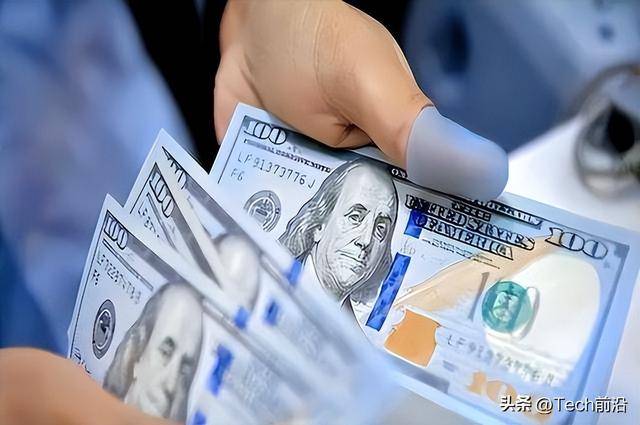
中国釜底抽薪,再抛售61亿美债,一次逼这5接盘国,特朗普急了,说要访华
Sou Hu Cai Jing· 2026-01-17 19:29
Core Viewpoint - The article discusses the ongoing trend of central banks, particularly in China, reducing their holdings of U.S. Treasury bonds while increasing gold reserves, indicating a strategic shift in asset allocation to mitigate risks associated with U.S. debt and the dollar's dominance in global finance [3][5][7]. Group 1: Central Bank Actions - China's central bank has been reducing its U.S. Treasury holdings for nine consecutive months, indicating a deliberate strategy rather than a reaction to liquidity issues [1][3]. - The global central banks' gold holdings surpassed U.S. Treasury holdings for the first time since 1996, reflecting a broader trend away from dollar-denominated assets [3][5]. - China's gold reserves are approximately 2,300 tons, and the country has maintained foreign exchange reserves above $3.3 trillion, demonstrating financial stability [3][5]. Group 2: Reasons for Reducing U.S. Treasury Holdings - The U.S. national debt has exceeded $38.4 trillion, with a debt-to-GDP ratio of 128%, raising concerns about systemic risks associated with U.S. debt [5]. - The U.S. has increasingly weaponized the dollar through sanctions, prompting countries to diversify their reserves to avoid dependency on U.S. assets [5][7]. - Reducing U.S. Treasury holdings aligns with China's goal of promoting the international use of the renminbi, which has increased its share in global payments to 6.8% by 2025 [5][7]. Group 3: Global Trends in U.S. Treasury Holdings - While China is reducing its U.S. Treasury holdings, countries like Japan and the UK are increasing theirs, with Japan adding $2.6 billion and the UK adding $10.6 billion in November [9][10]. - Japan's motivations include currency management, profit from higher U.S. bond yields, and political alignment with the U.S. [9][10]. - The UK aims to maintain its status as a global dollar trading center and to hedge against its own debt risks by increasing U.S. Treasury holdings [10]. Group 4: Implications of Reduced U.S. Treasury Holdings - The reduction in U.S. Treasury holdings by major countries could lead to higher borrowing costs for the U.S. government as demand decreases [7][9]. - The ongoing reduction may influence U.S. economic policies, prompting actions from U.S. officials, including potential diplomatic engagements to address financial tensions [12].
首席经济学家黄文涛:2026年全球宏观十大机遇
Xin Lang Cai Jing· 2025-12-30 23:42
Core Viewpoint - The global macroeconomic landscape is undergoing rapid restructuring, driven by technological revolutions, competition for scarce resources, and changes in the world currency system. The report outlines ten major investment opportunities for 2026 that align with these macro trends [3][42]. Group 1: Major Investment Opportunities - Opportunity 1: Gold will continue to be accumulated, maintaining a strong position for precious metals [4][6]. - Opportunity 2: Silver is undergoing a value reassessment, with strategic metal resources emerging [11][50]. - Opportunity 3: Electricity and energy will lead the way, solidifying the foundation for industrial construction [15][53]. - Opportunity 4: New technologies and manufacturing will accelerate the integration of commercial applications [17][57]. - Opportunity 5: The construction of a unified market will accelerate the release of consumer demand [19][59]. - Opportunity 6: Enterprises will continue to expand overseas and international trade will remain robust [21][62]. - Opportunity 7: The capital market's "new four bulls" will optimize resource allocation [25]. - Opportunity 8: The role of Hong Kong as an international financial center will be further strengthened [27]. - Opportunity 9: The internationalization of the Renminbi and the benefits of Asia-Pacific economic integration will be realized [30]. - Opportunity 10: The shift to a loose monetary policy in the U.S. will favor capital inflows into emerging markets [33]. Group 2: Economic Trends and Implications - The technological revolution is reshaping production and consumption paradigms across various industries [5][45]. - The competition among debt economies for scarce resources is altering global demand and reserves for raw materials [5][45]. - The structure of world currencies is experiencing significant changes in valuation, payment, reserve, financing, and reinvestment [5][45].