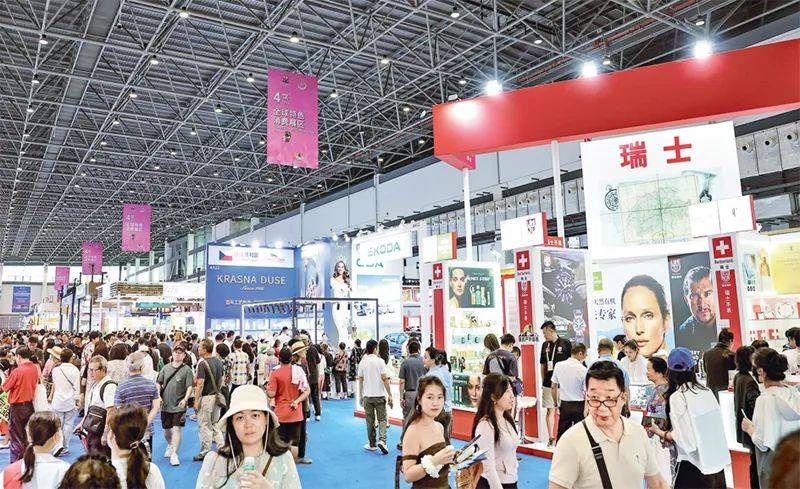
中国经济长期向好

Search documents
经济日报金观平:中国经济长期向好具有坚实支撑
Jing Ji Ri Bao· 2025-12-09 22:08
Group 1 - The core viewpoint emphasizes that China's economy is stable and progressing, with significant advancements in various sectors, marking a strong start for the new century-long goals [1] - The past five years have seen effective responses to various challenges, leading to improvements in both hard and soft power, indicating a solid foundation for future economic development [1][2] - The unique advantages of China's economy, such as organizational and mobilization capabilities, are highlighted as essential for enhancing resilience against challenges [2] Group 2 - High-quality development is identified as the primary task for building a modern socialist country, with macroeconomic governance being continuously improved to unlock development potential [3] - Policies such as childcare subsidies and support for personal consumption loans have been implemented to stimulate economic growth and enhance the stability of the economy [3] - The recognition of economic work patterns has deepened, providing strategic wisdom for navigating complex economic challenges [3][4]
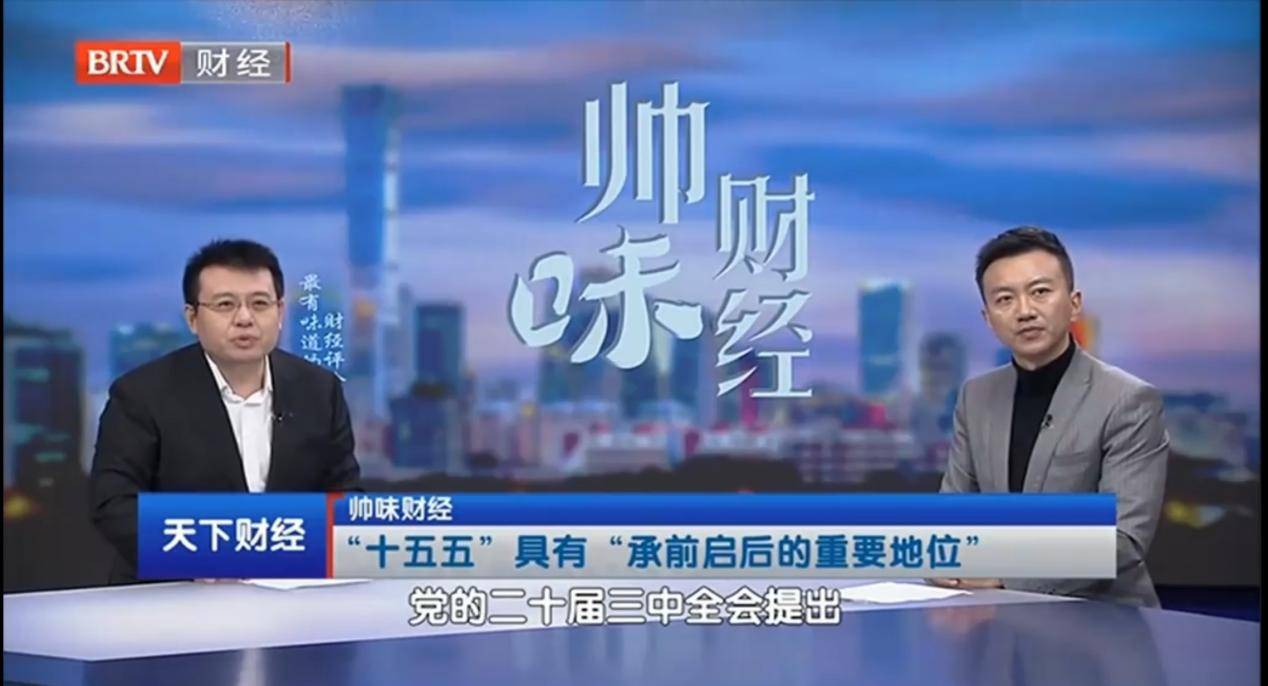
知名经济学家杜帅评论:“十五五” 现代化进程的关键中继与改革攻坚期
Sou Hu Cai Jing· 2025-11-17 09:09
Core Viewpoint - The "15th Five-Year Plan" (2026-2030) is a critical transitional phase for China, serving as a bridge between the "14th Five-Year Plan" and the "16th Five-Year Plan," and is essential for achieving socialist modernization by 2035 [1] Strategic Positioning - The "15th Five-Year Plan" is a unique observation and transition period to assess previous development outcomes and accumulate momentum for future acceleration [3] - It is a completion point for over 300 major reform tasks from the 20th National Congress, with specific milestones set for 2026-2029 to ensure reforms translate into tangible results [3] - This period is also a window for China to align with global rule restructuring, particularly in international trade and digital governance, which will impact its competitive position in global agreements like CPTPP and DEPA [3] Industrial Development Focus - The emphasis on "real economy" and "manufacturing reasonable proportion" is not merely about expanding capacity but is centered on "value-oriented" scientific layout [4] - As of the first half of 2025, China's manufacturing value added accounted for 25.7% of GDP, indicating a need to balance between too high and too low proportions to avoid resource strain and economic vulnerability [4] - The goal is to shift from a "scale-oriented" approach to a "value-oriented" one, focusing on core component R&D, independent intellectual property breakthroughs, and technological innovation to drive high-end, intelligent, and green transformation in manufacturing [4] Governance Philosophy Upgrade - The report elevates the concept of "people-centered" governance to "people first," emphasizing investment in human capital as a key infrastructure focus [6] - Over 120 reform tasks directly address critical life stages from birth to end-of-life, with quantifiable and accountable targets to ensure tangible improvements in quality of life [6] - The plan aims to convert demographic dividends into quality dividends through vocational training and equalization of public services, ensuring inclusivity in modernization efforts [6] Economic Long-Term Outlook - Despite challenges, the long-term positive trend of China's economy during the "15th Five-Year Plan" remains intact, supported by three main advantages: a vast market, latecomer advantages for industrial upgrades, and sustained competitive edge through technological innovation [8] - The large population and middle-income group provide a solid market foundation, while China's manufacturing scale and complete industrial system are unmatched globally [8] - The country can leverage its latecomer status to adopt advanced international practices in emerging fields like AI and quantum technology, exemplified by its rapid advancements in the renewable energy sector [8] Conclusion - The "15th Five-Year Plan" is positioned as a pivotal period for China to deepen reforms, strengthen industries, and enhance livelihoods, laying a solid foundation for achieving socialist modernization [9]

农业银行协助财政部在香港发行40亿美元主权债券
Xin Hua Cai Jing· 2025-11-06 11:06
Core Insights - The issuance of $4 billion sovereign bonds by the Agricultural Bank of China in collaboration with the Ministry of Finance was successfully completed in Hong Kong, indicating strong international market confidence in China's sovereign credit [1] - The bonds included two maturities: $2 billion for 3-year bonds at an interest rate of 3.646% and $2 billion for 5-year bonds at an interest rate of 3.787% [1] - The offering received an overwhelming response with a subscription scale of $118.2 billion, nearly 30 times the issuance amount, reflecting robust confidence in China's long-term economic prospects [1] Summary by Categories Issuance Details - The Agricultural Bank of China acted as a joint lead underwriter for the issuance of $4 billion sovereign bonds [1] - The bonds were split into two categories: 3-year and 5-year, each amounting to $2 billion [1] - The interest rates for the bonds were set at 3.646% for the 3-year bonds and 3.787% for the 5-year bonds [1] Market Reception - The bonds were met with enthusiastic demand, achieving a subscription level of $118.2 billion, which is approximately 30 times the amount issued [1] - This high level of interest signifies the international market's strong recognition of China's sovereign credit [1] Strategic Implications - The issuance serves as a high-quality investment option for the offshore market and signals China's commitment to advancing high-level opening-up to the international community [1] - The Agricultural Bank of China provided essential support through its global sales and professional pricing capabilities, indicating its role in expanding China's sovereign bond international financing channels [1]

中国经济长期向好的大势不会改变
Sou Hu Cai Jing· 2025-05-10 08:06
Economic Development - China's economic development has faced challenges but continues to progress despite external uncertainties and rising protectionism [1] - The country remains committed to high-quality development, with a belief that long-term positive trends will not be altered by temporary changes [1] Industry and Market Structure - China has a complete industrial system and vast market potential, being the only country with all industrial categories recognized by the UN [3] - The nation has maintained its position as the world's largest manufacturing country for 15 consecutive years, producing over 40% of major industrial products globally [3] - With a population of over 1.4 billion, China has a significant middle-income group that drives consumption, especially as GDP per capita exceeds $10,000 [3] New Economic Drivers - China is fostering new economic drivers through high-quality development and innovation, focusing on integrating technology and industry [4] - Key sectors such as digital economy, new energy vehicles, and AI are rapidly growing, contributing to economic growth [4] - By 2024, the core digital economy's value added is expected to reach around 10% of GDP, while the "three new" economies will account for 18% [4] Trade and Global Engagement - Despite external challenges, China's goods export value has increased by over 50% since 2018, maintaining its status as the world's largest goods trader [5] - China has become a major trading partner for over 150 countries, with trade with Belt and Road Initiative countries exceeding 50% of total trade by 2024 [5] Policy and Economic Resilience - China has demonstrated strong macroeconomic control capabilities, successfully navigating past financial crises and the COVID-19 pandemic [6] - In 2024, proactive policies are expected to support economic stability and growth, with a toolbox of measures ready to address external uncertainties [6] Institutional Advantages - Since the 18th National Congress, China has improved its socialist market economy, enhancing economic resilience and vitality [7] - The leadership under Xi Jinping and the implementation of over 300 reform measures are expected to further stimulate productivity and innovation [7]